Aperçu en situation
 Partager
 Partager
 Détails
 Guide imprimable

 Télécharger
 Articles similaires
 Radiographie
 Voir le diaporama
 Statistiques
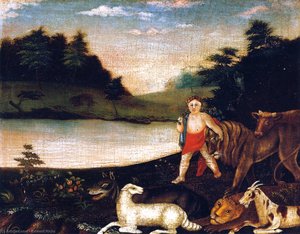
Peaceable Kingdom


 Afficher la suite
Reproduction à l'huile faite à la main
Huile sur toile peinte à la main, avec cadre et dimensions personnalisés, réalisée sur commande par nos artistes. ( Passer au format impression Passer au format image numérique)




P118B €10

P118H €10

P118W €10

P438Z €10

P508JH €12

P508YH €12

P805H €10

P805Z €10

P919BZ €10

P919G €10

P919XJ €10

P959ZH €10

P968JZ €12

W106C €8

W218G €10

W218JH €8

W218Y €10

W307PJ €10

W316G €10

W316PJ €8

W316Y €10

W398PJ €8

W4111J €10

W500HY €15

W500JH €15

W692G €12

W849H €8

W940BG €15

W953PJ €8




Choisissez parmi nos formats prédéfinis qui respectent les proportions originales de l’œuvre.

Saisissez la largeur et la hauteur souhaitées, pour s'adapter à votre cadre ou à votre mur. Cette œuvre est peinte à la main ; ainsi, pour un format de forme différente, l'artiste peut peindre un peu plus autour du tableau ou réduire légèrement les bords — c'est vous qui choisissez. Nous vous envoyons une maquette numérique pour approbation avant que la peinture ne commence. L'image présentée sur cette page ne reflète pas le résultat réel — seule la maquette le fait.
Après la commande, l’équipe OriginalUniqueArt.com contactera le client par e-mail pour recueillir ses instructions et lui fournira une maquette d’aperçu
Livraison dans le monde entier () en 3 à 4 semaines au lieu des 5 semaines habituelles. (21 octobre). Aucun compromis sur la qualité.

Livraison express gratuite dans le monde entier

Toile de lin de haute qualité

Assurance transport complète

Garantie de remboursement des droits de douane

Garantie de fidélité des couleurs

Garantie de retour de 100 jours (uniquement en cas de défaut)

Garantie de remboursement à 100%

Tarifs dégressifs sur quantité
 L'option verre n'est disponible que pour les dimensions inférieures à 110 cm.

Peaceable Kingdom
Technique de reproduction
Format de la reproduction
-


Prix total final
€ 262
The Serene Vision of Peaceable Kingdom
Edward Hicks’s “Peaceable Kingdom” – painted in 1832 – isn't merely a pastoral scene; it’s a profound meditation on Quaker faith, the harmony between humanity and nature, and the enduring promise of a better world. This iconic work, now housed within the collection of the Smithsonian American Art Museum, transcends its simple depiction of animals grazing in a verdant field to become a powerful symbol of utopian ideals and spiritual aspiration. Hicks, a devout Quaker himself, imbued this painting with his deeply held beliefs, transforming a commonplace landscape into a vibrant tableau of peace and fellowship.
The scene unfolds within a rolling hillside bathed in the soft glow of an afternoon sun. Cows, sheep, goats, and horses – rendered with meticulous detail and a remarkable sense of warmth – mingle peacefully amongst themselves. A small group of figures, recognizable as Quakers, are present, not as observers but as active participants in this idyllic community. A boat rests gently on a nearby stream, hinting at journeys undertaken and destinations yet to be discovered. The composition is carefully balanced, creating a feeling of stability and contentment – a visual representation of the Quaker belief in a world governed by reason and compassion.
A Painter’s Technique: Hicks's Distinctive Style
Hicks was renowned for his distinctive style, often described as “Pennsylvania Dutch.” He employed a technique known as "grisaille," working primarily in shades of gray before adding color. This approach allowed him to establish the forms and values of the scene with precision before introducing vibrant hues. His brushwork is remarkably smooth and detailed, particularly evident in the rendering of the animals’ coats and the textures of the foliage. He utilized a glazing technique – applying thin layers of translucent paint over dried underlayers – to build up depth and luminosity, creating an almost ethereal quality within the painting.
Notably, Hicks's use of color is deliberately restrained, favoring muted greens, browns, and blues. This palette contributes to the overall sense of tranquility and reinforces the painting’s spiritual message. He avoided dramatic contrasts or overly bright colors, opting instead for a harmonious blend that evokes a feeling of quiet reverence. The subtle variations in tone create a remarkable sense of depth and atmosphere, drawing the viewer into this peaceful world.
Symbolism and Quaker Ideals
“Peaceable Kingdom” is rich with symbolic meaning, deeply rooted in Quaker theology. The animals themselves represent different aspects of God’s creation – cows symbolizing abundance, sheep representing innocence, goats embodying resilience, and horses signifying strength. The presence of the Quakers underscores the importance of community, social justice, and peaceful living—core tenets of the Quaker faith. The boat symbolizes journeys both literal and metaphorical, suggesting a quest for spiritual enlightenment and a commitment to spreading peace and goodwill.
Furthermore, the painting reflects Hicks’s belief in the “Inner Light,” the inherent goodness within each individual. The harmonious interaction between humans and animals suggests that this light can be cultivated through virtuous living and a connection with nature. The idyllic setting represents a vision of utopia – a world where conflict is resolved through reason and compassion, and where all beings coexist in harmony.
A Legacy of Peace: Reproduction and Inspiration
“Peaceable Kingdom” has resonated deeply throughout American art history and continues to inspire viewers today. Its enduring appeal lies not only in its beautiful depiction of a pastoral scene but also in its profound message of hope and peace. Reproductions, such as those offered by OriginalUniqueArt.com, allow this timeless masterpiece to be enjoyed in homes and galleries worldwide. When selecting a reproduction, consider the quality of materials used – a faithful rendering will capture the subtle nuances of Hicks’s original technique and ensure that the painting's serene beauty is preserved for generations to come.
Questions et réponses
Quel format d'impression pour «Peaceable Kingdom» de Edward Hicks convient à la pièce recommandée ?
Dans une Living Room, nous suggérons un format d'impression de Large pour « Peaceable Kingdom ».
Est-ce que «Peaceable Kingdom» de Edward Hicks est dans le domaine public ?
Concernant les droits d'auteur, « Peaceable Kingdom » est dans le dans le domaine public - ses droits d'auteur ont expiré.
Qui a créé « Peaceable Kingdom » et dans quel style s'inscrit cette œuvre ?
Edward Hicks a créé « Peaceable Kingdom » au sein du mouvement Quaker Folk Art.
Biographie de l'artiste
Première Vie et Contexte
- Né: 4 avril 1780, à Attleboro (aujourd'hui Langhorne), comté de Bucks, Pennsylvanie
- Décédé: 23 août 1849
- Ses parents étaient anglicans, mais il a été élevé par Matron Elizabeth Twining, une quaker. Cela l'a introduit aux croyances des quakers à un jeune âge.
- Apprenti chez William et Henry Tomlinson, fabricants de calèches, dès l'âge de treize ans, où il a appris les techniques de peinture de carrosserie.
- A quitté la firme en 1800 pour travailler indépendamment comme peintre de maisons et de carrosseries.
Ministère Quaker et Développement Artistique
- Accepté dans la Société des Amis en 1803 et a commencé à assister régulièrement aux réunions des quakers.
- A épousé Sarah Worstall, également quaker, et est devenu prédicateur itinérant dans tout Philadelphie.
- Pour subvenir aux besoins de sa famille, il a élargi sa peinture pour inclure des objets ménagers, du matériel agricole et des enseignes de tavernes.
- A brièvement abandonné la peinture ornementale en 1815 en raison de difficultés financières, mais l'a reprise en 1816.
Style Artistique et Œuvres Clés
- Artiste Autodidacte: Hicks était largement autodidacte, développant un style d'art populaire unique.
- Influence Quaker: Son travail reflétait les croyances des quakers en la "lumière intérieure", mettant l'accent sur l'expérience spirituelle personnelle. Cela se manifeste dans ses compositions simples et son accent mis sur la nature.
- La Série du Royaume Pacifique: Sa série la plus célèbre, comprenant 62 versions, dépeint une vision de l'harmonie entre les humains et les animaux, représentant la paix et la coexistence.
- Tableaux Notables:
- Royaume Pacifique (31) – Exposé à la Yale University Art Gallery
- Chutes du Niagara – Exposé au Abby Aldrich Rockefeller Folk Art Center
- George Washington avec son armée traversant le Delaware – Également exposé au Abby Aldrich Rockefeller Folk Art Center
- Royaume Pacifique (34) - Dépeint l'arche de Noé dans une peinture à l'huile sereine.
- Tombe de William Penn à Jordans en Angleterre - Une représentation de la campagne anglaise mettant en valeur le patrimoine quaker.
Héritage et Importance Historique
- Icône de l'Art Populaire: Edward Hicks est reconnu comme une figure importante de l'art populaire américain, connu pour son style distinctif et ses thèmes récurrents.
- Représentation des Valeurs Quaker: Ses peintures fournissent des informations précieuses sur les croyances et les valeurs de la Société des Amis au XIXe siècle.
- Vision Artistique Unique: Hicks a mélangé la foi religieuse à l'expression artistique, créant un ensemble d'œuvres qui sont à la fois visuellement attrayantes et spirituellement significatives.
- Appréciation Continue: Ses œuvres sont exposées dans les principaux musées et continuent d'être étudiées et appréciées pour leur importance historique et artistique.

Edward Hicks
1780 - 1849 , États-Unis d'Amérique
En bref
- Artistic Movement Or Style: Art populaire
- Date De Décès: 23 août 1849
- Date De Naissance: 4 avril 1780
- Full Name: Edward Hicks
- Nationalité: Américain
- Notable Artworks:
- Peaceable Kingdom (31)
- Falls of Niagara
- George Washington Crossing Delaware
- Peaceable Kingdom of the Branch
- Grave of William Penn
- Place De Naissance (Ville Et Pays): Attleboro, États-Unis
Articles connexes

Edward Hicks’ ‘Peaceable Kingdom’: American Folk Art & the Shaping of a National Identity
Explore the profound symbolism & historical context of Edward Hicks’ ‘Peaceable Kingdom.’ Discover how this iconic American folk art masterpiece reflects Quaker values and shaped a nation's identity. Learn more at OriginalUniqueArt.
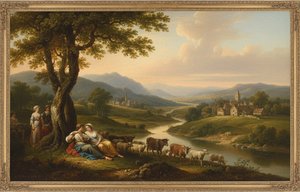
Idyllic Visions: Exploring the Pastoral Tradition in Western Art – Themes, Techniques & Enduring Appeal
Explore the rich history of pastoral art from classical Arcadia to contemporary interpretations. Discover key artists, themes & collecting tips at OriginalUniqueArt.
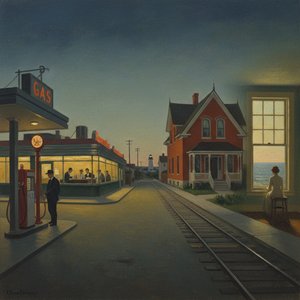
Edward Hopper : Les 25 Œuvres Maîtresses d'un Artiste Américain Intemporel | OriginalUniqueArt
Plongez dans l'univers poignant d'Edward Hopper avec les 25 œuvres incontournables du maître américain. Découvrez la lumière, l'isolation et le réalisme unique de ses tableaux iconiques. Reproductions de qualité muséale sur OriginalUniqueArt.com. Explorez la collection en ligne.

Grant Wood & American Regionalism: Identity, Myth & the Rural Landscape
Explore the world of Grant Wood & American Regionalism with OriginalUniqueArt. Discover the symbolism behind 'American Gothic', recurring themes, and the movement's lasting impact on art history. High-quality reproductions available.

Réalisme Américain : 10 Chefs-d'œuvre Incontournables pour une Déco Inspirée
Plongez au cœur du Réalisme Américain avec 10 chefs-d'œuvre d'Edward Hopper, Andrew Wyeth et plus. Découvrez l'histoire et les techniques de ces artistes emblématiques. Reproductions de tableaux de qualité musée sur OriginalUniqueArt.com !