Aperçu en situation
 Partager
 Partager
 Détails
 Guide imprimable

 Télécharger
 Articles similaires
 Radiographie
 Voir le diaporama
 Statistiques
Peaceable Kingdom (12)


 Afficher la suite
Reproduction à l'huile faite à la main
Huile sur toile peinte à la main, avec cadre et dimensions personnalisés, réalisée sur commande par nos artistes. ( Passer au format impression Passer au format image numérique)




P118B €10

P118H €10

P118W €10

P438Z €10

P508JH €12

P508YH €12

P805H €10

P805Z €10

P919BZ €10

P919G €10

P919XJ €10

P959ZH €10

P968JZ €12

W106C €8

W218G €10

W218JH €8

W218Y €10

W307PJ €10

W316G €10

W316PJ €8

W316Y €10

W398PJ €8

W4111J €10

W500HY €15

W500JH €15

W692G €12

W849H €8

W940BG €15

W953PJ €8




Choisissez parmi nos formats prédéfinis qui respectent les proportions originales de l’œuvre.

Saisissez la largeur et la hauteur souhaitées, pour s'adapter à votre cadre ou à votre mur. Cette œuvre est peinte à la main ; ainsi, pour un format de forme différente, l'artiste peut peindre un peu plus autour du tableau ou réduire légèrement les bords — c'est vous qui choisissez. Nous vous envoyons une maquette numérique pour approbation avant que la peinture ne commence. L'image présentée sur cette page ne reflète pas le résultat réel — seule la maquette le fait.
Après la commande, l’équipe OriginalUniqueArt.com contactera le client par e-mail pour recueillir ses instructions et lui fournira une maquette d’aperçu
Livraison dans le monde entier () en 3 à 4 semaines au lieu des 5 semaines habituelles. (22 octobre). Aucun compromis sur la qualité.

Livraison express gratuite dans le monde entier

Toile de lin de haute qualité

Assurance transport complète

Garantie de remboursement des droits de douane

Garantie de fidélité des couleurs

Garantie de retour de 100 jours (uniquement en cas de défaut)

Garantie de remboursement à 100%

Tarifs dégressifs sur quantité
 L'option verre n'est disponible que pour les dimensions inférieures à 110 cm.

Peaceable Kingdom (12)
Technique de reproduction
Format de la reproduction
-


Prix total final
€ 262
A Vision of Eternal Harmony
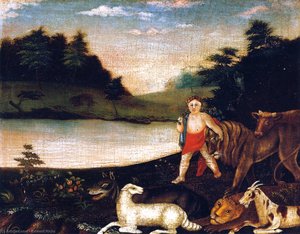
In the quiet, profound depths of Edward Hicks’s 1826 masterpiece, Peaceable Kingdom (12), we encounter more than just a painting; we enter a spiritual sanctuary. This captivating oil on canvas serves as a window into a utopian realm where the boundaries between the wild and the domestic dissolve into a singular, breathtaking peace. At the heart of this composition, a young boy cradles a lion cub with an intimacy that defies nature, standing beside a steady horse in a scene that radiates innocence and safety. The landscape is alive with a gentle congregation of cows, sheep, and birds, all coexisting in a state of grace that feels both otherworldly and deeply grounded in the American pastoral tradition.
The technique employed by Hicks reflects his unique journey as a self-taught artist and Quaker minister. Using oil on canvas, he achieved a rich, vibrant texture that breathes life into every creature depicted. There is a rhythmic quality to the way the animals are arranged, guiding the viewer’s eye through a lush, natural setting framed by soft, verdant trees. The light in the painting does not merely illuminate the subjects; it seems to emanate from within the scene itself, highlighting the symbolic purity of the boy and the cub. For collectors and decorators, this work offers a profound sense of tranquility, making it an exquisite centerpiece for any space seeking to evoke calm, stability, and a connection to the natural world.
Symbolism and the Quaker Spirit
To understand Peaceable Kingdom (12), one must look through the lens of Hicks’s profound religious convictions. As a man shaped by the Quaker principles of simplicity and the "inner light," Hicks utilized his brush to manifest the biblical prophecy of Isaiah, where predators and prey dwell together without fear. The inclusion of the lion cub—a creature typically feared—held so tenderly by a human child, serves as a powerful metaphor for the triumph of peace over violence and the reconciliation of all living things. This is not merely a pastoral landscape; it is a theological statement rendered in pigment.
Every element within the frame contributes to this narrative of universal harmony. The presence of various species, from the heavy-set cattle to the delicate birds, represents a diverse yet unified creation. Even the subtle inclusion of a book in the lower corner invites contemplation on knowledge, faith, and the recorded history of human spiritual evolution. For those looking to adorn their homes with art that carries deep intellectual and emotional weight, this painting provides an endless well of inspiration. It is a testament to the idea that even in a fractured world, the vision of a peaceful, unified existence remains a beautiful and attainable aspiration.
An Enduring Legacy for Modern Interiors
For the discerning interior designer or art enthusiast, a high-quality reproduction of this work offers much more than aesthetic appeal. It brings a sense of historical gravity and narrative depth to a room. The Peaceable Kingdom (12) possesses a timeless quality that transcends era; its soft palette and emotive subject matter complement both classical traditional settings and contemporary spaces that value organic, soulful elements. Whether placed in a sunlit library or a quiet study, the painting acts as a meditative focal point, inviting guests to pause and reflect on the beauty of coexistence.
Owning a piece inspired by Hicks’s vision allows one to curate an environment defined by serenity and grace. The artwork’s ability to bridge the gap between the wildness of nature and the tenderness of human emotion makes it a versatile and impactful choice for any sophisticated collection. It remains a cornerstone of American folk art, reminding us that even centuries after its creation, the dream of a peaceful kingdom continues to resonate with the human heart.
Questions et réponses
Quel est l'usage recommandé pour une impression de « Peaceable Kingdom (12) » ?
L'utilisation suggérée pour «Peaceable Kingdom (12)» de Edward Hicks est Conversation. Elle peut également servir à d'autres fins.
Quels sont les pseudonymes ou autres noms sous lesquels Edward Hicks est connu ?
D'autres noms répertoriés pour Edward Hicks, créateur de « Peaceable Kingdom (12) », incluent Isaac Hicks, Elias Hicks.
Quelle couleur domine la composition de «Peaceable Kingdom (12)» de Edward Hicks ?
La couleur qui ressort le plus dans « Peaceable Kingdom (12) » est le Phthalo Green (#282638). La couleur dominante est un atout précieux pour harmoniser une œuvre d'art avec un intérieur.
Biographie de l'artiste
Première Vie et Contexte
- Né: 4 avril 1780, à Attleboro (aujourd'hui Langhorne), comté de Bucks, Pennsylvanie
- Décédé: 23 août 1849
- Ses parents étaient anglicans, mais il a été élevé par Matron Elizabeth Twining, une quaker. Cela l'a introduit aux croyances des quakers à un jeune âge.
- Apprenti chez William et Henry Tomlinson, fabricants de calèches, dès l'âge de treize ans, où il a appris les techniques de peinture de carrosserie.
- A quitté la firme en 1800 pour travailler indépendamment comme peintre de maisons et de carrosseries.
Ministère Quaker et Développement Artistique
- Accepté dans la Société des Amis en 1803 et a commencé à assister régulièrement aux réunions des quakers.
- A épousé Sarah Worstall, également quaker, et est devenu prédicateur itinérant dans tout Philadelphie.
- Pour subvenir aux besoins de sa famille, il a élargi sa peinture pour inclure des objets ménagers, du matériel agricole et des enseignes de tavernes.
- A brièvement abandonné la peinture ornementale en 1815 en raison de difficultés financières, mais l'a reprise en 1816.
Style Artistique et Œuvres Clés
- Artiste Autodidacte: Hicks était largement autodidacte, développant un style d'art populaire unique.
- Influence Quaker: Son travail reflétait les croyances des quakers en la "lumière intérieure", mettant l'accent sur l'expérience spirituelle personnelle. Cela se manifeste dans ses compositions simples et son accent mis sur la nature.
- La Série du Royaume Pacifique: Sa série la plus célèbre, comprenant 62 versions, dépeint une vision de l'harmonie entre les humains et les animaux, représentant la paix et la coexistence.
- Tableaux Notables:
- Royaume Pacifique (31) – Exposé à la Yale University Art Gallery
- Chutes du Niagara – Exposé au Abby Aldrich Rockefeller Folk Art Center
- George Washington avec son armée traversant le Delaware – Également exposé au Abby Aldrich Rockefeller Folk Art Center
- Royaume Pacifique (34) - Dépeint l'arche de Noé dans une peinture à l'huile sereine.
- Tombe de William Penn à Jordans en Angleterre - Une représentation de la campagne anglaise mettant en valeur le patrimoine quaker.
Héritage et Importance Historique
- Icône de l'Art Populaire: Edward Hicks est reconnu comme une figure importante de l'art populaire américain, connu pour son style distinctif et ses thèmes récurrents.
- Représentation des Valeurs Quaker: Ses peintures fournissent des informations précieuses sur les croyances et les valeurs de la Société des Amis au XIXe siècle.
- Vision Artistique Unique: Hicks a mélangé la foi religieuse à l'expression artistique, créant un ensemble d'œuvres qui sont à la fois visuellement attrayantes et spirituellement significatives.
- Appréciation Continue: Ses œuvres sont exposées dans les principaux musées et continuent d'être étudiées et appréciées pour leur importance historique et artistique.

Edward Hicks
1780 - 1849 , États-Unis d'Amérique
En bref
- Artistic Movement Or Style: Art populaire
- Date De Décès: 23 août 1849
- Date De Naissance: 4 avril 1780
- Full Name: Edward Hicks
- Nationalité: Américain
- Notable Artworks:
- Peaceable Kingdom (31)
- Falls of Niagara
- George Washington Crossing Delaware
- Peaceable Kingdom of the Branch
- Grave of William Penn
- Place De Naissance (Ville Et Pays): Attleboro, États-Unis
Articles connexes
Majestic Lions: Capturing the Power and Soul of the King of Beasts through Art History
Explore the majesty of the King of Beasts through art history. From Baroque drama to Romantic realism, discover how master painters capture the power and soul of lions in exquisite oil reproductions and fine art prints for discerning collectors.
Edward Hopper : Les 25 Œuvres Maîtresses d'un Artiste Américain Intemporel | OriginalUniqueArt
Plongez dans l'univers poignant d'Edward Hopper avec les 25 œuvres incontournables du maître américain. Découvrez la lumière, l'isolation et le réalisme unique de ses tableaux iconiques. Reproductions de qualité muséale sur OriginalUniqueArt.com. Explorez la collection en ligne.

Edward Hicks’ ‘Peaceable Kingdom’: American Folk Art & the Shaping of a National Identity
Explore the profound symbolism & historical context of Edward Hicks’ ‘Peaceable Kingdom.’ Discover how this iconic American folk art masterpiece reflects Quaker values and shaped a nation's identity. Learn more at OriginalUniqueArt.
Edward Wilkins Waite: A Victorian Vision of Surrey's Serene Landscapes & Artistic Legacy
Explore the serene landscapes of Edward Wilkins Waite (1854-1924), a prolific Victorian painter celebrated for his depictions of Surrey's countryside. Discover his artistic influences, career highlights & collecting guide.
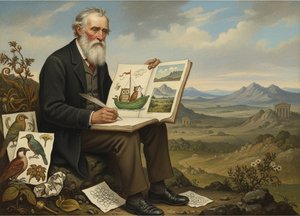
Edward Lear: A Life Beyond Nonsense – Landscape, Illustration & the Poetics of Isolation
Explore the life of Edward Lear beyond his nonsense poems. Discover his stunning landscape paintings, travel illustrations & the poignant themes of isolation in this expert art history analysis.