Menu
Aperçu en situation Visualiser en RA Passer au format impression Passer au format numérique Envoyer
Détails de l'œuvre Guide Ajouter aux favoris Télécharger l'image Articles similaires Radiographie Diaporama Statistiques

Summer

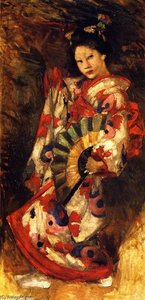
Vibrant Post-Impressionist colors and Japanese-inspired patterns define this joyful 1891 summer scene by Edward Atkinson Hornel featuring figures in a lush landscape, inviting you to explore this Scottish masterpiece.

Meta Description: Découvrez Edward Atkinson Hornel : peintre écossais des paysages et fleurs, influencé par le Japonisme et les Glasgow Boys. Explorez son style vibrant et son héritage au cœur du mouvement artistique britannique !

Reproduction à l'huile faite à la main

Huile sur toile peinte à la main, avec cadre et dimensions personnalisés, réalisée sur commande par nos artistes. ( Passer au format impression Passer au format numérique)

Corner sample of the P118B picture frame: polystyrène moulé, 5 cm wide and 3 cm thick
P118B €10
Corner sample of the P118H picture frame: polystyrène moulé, 5 cm wide and 3 cm thick
P118H €10
Corner sample of the P118W picture frame: polystyrène moulé, 5 cm wide and 3 cm thick
P118W €10
Corner sample of the P438Z picture frame: polystyrène moulé, 5.5 cm wide and 3.5 cm thick
P438Z €10
Corner sample of the P508JH picture frame: polystyrène moulé, 7 cm wide and 3.5 cm thick
P508JH €12
Corner sample of the P508YH picture frame: polystyrène moulé, 7 cm wide and 3.5 cm thick
P508YH €12
Corner sample of the P805H picture frame: polystyrène moulé, 5 cm wide and 3.5 cm thick
P805H €10
Corner sample of the P805Z picture frame: polystyrène moulé, 5 cm wide and 3.5 cm thick
P805Z €10
Corner sample of the P919BZ picture frame: polystyrène moulé, 7 cm wide and 3.5 cm thick
P919BZ €10
Corner sample of the P919G picture frame: polystyrène moulé, 7 cm wide and 3.5 cm thick
P919G €10
Corner sample of the P919XJ picture frame: polystyrène moulé, 7 cm wide and 3.5 cm thick
P919XJ €10
Corner sample of the P959ZH picture frame: polystyrène moulé, 5 cm wide and 3 cm thick
P959ZH €10
Corner sample of the P968JZ picture frame: polystyrène moulé, 6 cm wide and 4 cm thick
P968JZ €12
Corner sample of the W106C picture frame: bois massif, 5 cm wide and 3 cm thick
W106C €8
Corner sample of the W218G picture frame: bois massif, 5 cm wide and 3 cm thick
W218G €10
Corner sample of the W218JH picture frame: bois massif, 5 cm wide and 3 cm thick
W218JH €8
Corner sample of the W218Y picture frame: bois massif, 5 cm wide and 3 cm thick
W218Y €10
Corner sample of the W307PJ picture frame: bois massif, 6 cm wide and 3 cm thick
W307PJ €10
Corner sample of the W316G picture frame: bois massif, 6 cm wide and 3 cm thick
W316G €10
Corner sample of the W316PJ picture frame: bois massif, 6 cm wide and 3 cm thick
W316PJ €8
Corner sample of the W316Y picture frame: bois massif, 6 cm wide and 3 cm thick
W316Y €10
Corner sample of the W398PJ picture frame: bois massif, 5 cm wide and 3 cm thick
W398PJ €8
Corner sample of the W4111J picture frame: bois massif, 6.5 cm wide and 3.5 cm thick
W4111J €10
Corner sample of the W500HY picture frame: bois massif, 7 cm wide and 5 cm thick
W500HY €15
Corner sample of the W500JH picture frame: bois massif, 7 cm wide and 5 cm thick
W500JH €15
Corner sample of the W692G picture frame: bois massif, 8 cm wide and 4 cm thick
W692G €12
Corner sample of the W849H picture frame: bois massif, 5 cm wide and 3 cm thick
W849H €8
Corner sample of the W940BG picture frame: bois massif, 7.5 cm wide and 4.5 cm thick
W940BG €15
Corner sample of the W953PJ picture frame: bois massif, 6 cm wide and 3.5 cm thick
W953PJ €8

Format standard
sur mesure
CM
INCH

Choisissez parmi nos formats prédéfinis qui respectent les proportions originales de l’œuvre.

largeur
hauteur

Saisissez la largeur et la hauteur souhaitées, pour s'adapter à votre cadre ou à votre mur. Cette œuvre est peinte à la main ; ainsi, pour un format de forme différente, l'artiste peut peindre un peu plus autour du tableau ou réduire légèrement les bords — c'est vous qui choisissez. Nous vous envoyons une maquette numérique pour approbation avant que la peinture ne commence. L'image présentée sur cette page ne reflète pas le résultat réel — seule la maquette le fait.

Exemples de personnalisation possibles : remplacer un visage par la photo du client ; ajouter un animal de compagnie (par exemple, remplacer un chat par un chien) ; inclure un message caché en arrière-plan ; modifier le paysage ou les éléments de l'arrière-plan.
Après la commande, l’équipe OriginalUniqueArt.com contactera le client par e-mail pour recueillir ses instructions et lui fournira une maquette d’aperçu

Livraison dans le monde entier () en 3 à 4 semaines au lieu des 5 semaines habituelles. (27 octobre). Aucun compromis sur la qualité.

Livraison express gratuite dans le monde entier

Toile de lin de qualité supérieure
Assurance transport complète
Garantie de remboursement des droits de douane
Garantie de fidélité des couleurs
Politique de retour de 100 jours (uniquement en cas de défaut)
Garantie de remboursement à 100%
Offre de tarifs dégressifs

Prix total

€ 263

Summer

Technique de reproduction

Format de la reproduction

-

Prix total

€ 263

Informations clés

  • Notable elements or techniques: Bold brushstrokes, vibrant colors, pattern
  • Subject or theme: Women and children in natural settings
  • Artist: Edward Atkinson Hornel
  • Year: 1891
  • Artistic style: Post-Impressionism, Japanese art influence
The painting Summer by Edward Atkinson Hornel is a stunning representation of the season, characterized by vibrant colors and a sense of joy. Created in 1891, this oil on canvas piece is a prime example of Hornel's unique style, which blends elements of Post-Impressionism with a distinctive Scottish flair.

The Artist's Inspiration

Edward Atkinson Hornel was a Scottish artist known for his captivating depictions of landscapes and figures. His work often featured women and children in natural settings, showcasing his ability to capture the beauty of the human form. In Summer, Hornel has symbolized the season through the figure of a girl chasing a butterfly, surrounded by lush greenery and vibrant flowers.

The Painting's Style and Technique

The painting's style is reminiscent of Japanese art, with its flat, decorative design and emphasis on pattern and color. The use of bold brushstrokes and vivid hues creates a sense of energy and movement, drawing the viewer into the scene. As noted by OriginalUniqueArt.com, Hornel's technique is characterized by a focus on capturing the emotional and psychological depth of his subjects.

Notable Features and Similar Works

Some notable features of Summer include its use of symbolism, with the butterfly representing freedom and joy. The painting is also notable for its sense of movement and energy, created through the use of bold brushstrokes and vibrant colors. Similar works by Edward Atkinson Hornel can be found at the Walker Art Gallery in Liverpool, including A Galloway Idyll and Blossom Time, Brighouse Bay. For more information on these paintings, visit OriginalUniqueArt.com.
The Summer painting by Edward Atkinson Hornel is a beautiful representation of the season, characterized by its vibrant colors and sense of joy. As a masterpiece of Scottish art, it continues to inspire and delight audiences today. For those interested in learning more about Hornel's work, visit Wikipedia or explore the collection at Walker Art Gallery.

Questions et réponses

Pour quelle pièce «Summer» de Edward Atkinson Hornel est-il recommandé ?

L'espace recommandé pour «Summer» de Edward Atkinson Hornel est un Living Room. Cette suggestion peut bien entendu être adaptée à votre intérieur.

Où puis-je trouver des œuvres d'art similaires à «Summer» de Edward Atkinson Hornel ?

Retrouvez les œuvres similaires à «Summer» de Edward Atkinson Hornel sur la page Œuvres similaires.

Quelle est l'harmonie des couleurs de «Summer» de Edward Atkinson Hornel ?

«Summer» de Edward Atkinson Hornel présente une harmonie de couleurs Strong Color Unity.


Biographie de l'artiste

Edward Atkinson Hornel: Scottish Painter of Landscapes & Florals, Influenced by Japonisme

Edward Atkinson Hornel (1864 – 1933) occupies a prominent position in the annals of late Victorian and early twentieth-century Scottish art, inextricably linked to the Glasgow Boys movement and profoundly shaped by Japanese aesthetics. Born in Bacchus Marsh, Victoria, Australia—a heritage rooted in his Scottish ancestry—Hornel’s formative years instilled within him an unwavering appreciation for both landscape painting and meticulous botanical detail. Following his family's relocation back to Kirkcudbright in 1866, he embarked upon a path of formal artistic training at Edinburgh Art School and Antwerp under Professor Verlat, cultivating skills that would become the hallmark of his distinctive style—a style characterized by bold color palettes and textural experimentation. Returning to Scotland in 1885, Hornel discovered kindred spirits in George Henry, establishing a collaborative partnership that yielded masterpieces such as “Druids Bringing In The Mistletoe” (1890). This ambitious depiction of druidic ritual wasn’t merely aesthetically pleasing; it represented a deliberate challenge to prevailing artistic conventions. Hornel and Henry's technique—a masterful layering of paint surfaces through scraping, roughening, smoothing, and staining—prioritized expressive effect over photographic realism, mirroring the broader ethos of Impressionism. This method ensured that every brushstroke conveyed emotion and atmosphere, capturing the essence of the subject matter rather than simply reproducing its visual appearance. The year 1893–94 witnessed Hornel and Henry undertaking a transformative voyage to Japan—a journey that irrevocably altered their artistic sensibilities. Inspired by Japanese decorative design principles and spatial arrangements championed by artists like Hiroshige, they immersed themselves in the culture of Edo, absorbing techniques and philosophies that would inform their subsequent work. This experience fostered a more atmospheric approach characterized by refined color harmonies and nuanced drawing—elements that combined sensual appeal with poetic contemplation—reflecting the burgeoning interest in Japonisme within European artistic circles. The influence of Japanese art is palpable in Hornel’s later paintings, particularly those depicting gardens and landscapes bathed in soft, diffused light. Hornel's decision to forgo membership to the Royal Scottish Academy in 1901 signaled a deliberate redirection of his artistic energies toward Glasgow Art Club—where he continued to exhibit annually—demonstrating a commitment to fostering dialogue within the Scottish art community. This choice underscored Hornel’s belief that artistic innovation thrived best when nurtured by peer critique and collaboration. He established Broughton House in Kirkcudbright, meticulously designing it along Japanese garden lines—a project that served as both his personal sanctuary and an embodiment of his artistic vision. The house became a focal point for artistic activity, attracting fellow artists and fostering an environment conducive to experimentation with color and texture. Hornel’s oeuvre comprises celebrated pieces housed in museums across Britain—Aberdeen, Buffalo, Bradford, St. Louis—demonstrating the enduring resonance of his distinctive style within the broader context of British art history. His paintings exemplify the Glasgow Boys' commitment to Impressionistic principles while simultaneously reflecting the influence of Japonisme and Pre-Raphaelitism, securing his place as a pivotal figure in shaping the aesthetic landscape of the Edwardian era. Notably, “Summer” (1891), created with Henry, exemplifies this fusion of styles—a testament to Hornel’s ability to synthesize diverse artistic traditions into a cohesive visual language. His legacy extends beyond individual artworks; Broughton House itself stands as a symbol of artistic patronage and cultural preservation—a lasting monument to Hornel's dedication to fostering creativity and enriching the intellectual life of Kirkcudbright.
Edward Atkinson Hornel

Edward Atkinson Hornel

1864 - 1933 , Australie

L'essentiel de l'artiste

  • Artistic Movement Or Style: Glasgow Boys
  • Artists Who Influenced This Artist:
    • George Henry
    • James Hornell
  • Date Of Birth: 1864
  • Date Of Death: 1933
  • Full Name: Edward Atkinson Hornel
  • Nationality: Scottish
  • Notable Artworks:
    • Druids Bringing in the Mistletoe
    • Japanese Figures in a Garden
  • Place Of Birth: Kirkcudbright, Scotland
Explorez des œuvres d'art classées par thèmes, styles et caractéristiques.