
 Aperçu en situation
 Envoyer
 Partager
 Détails de l'œuvre
 Guide
Guide

 Télécharger l'image
 Articles similaires
 Radiographie
 Diaporama
 Statistiques
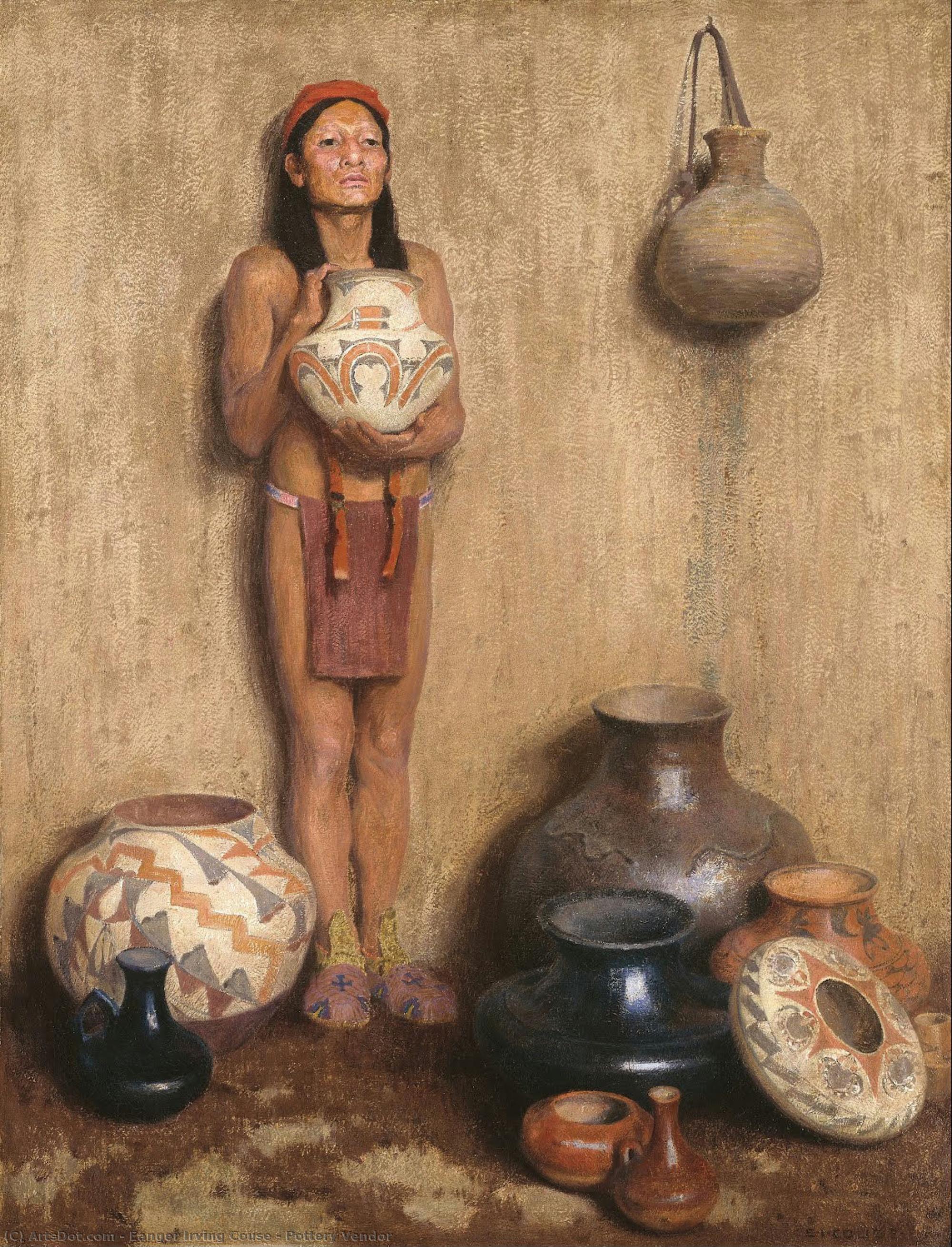
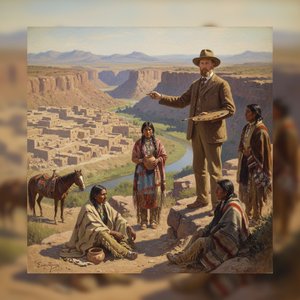
Pottery Vendor


 Lire la suite
Reproduction à l'huile faite à la main
Huile sur toile peinte à la main, avec cadre et dimensions personnalisés, réalisée sur commande par nos artistes. ( Passer au format impression Passer au format numérique)




P118B €10

P118H €10

P118W €10

P438Z €10

P508JH €12

P508YH €12

P805H €10

P805Z €10

P919BZ €10

P919G €10

P919XJ €10

P959ZH €10

P968JZ €12

W106C €8

W218G €10

W218JH €8

W218Y €10

W307PJ €10

W316G €10

W316PJ €8

W316Y €10

W398PJ €8

W4111J €10

W500HY €15

W500JH €15

W692G €12

W849H €8

W940BG €15

W953PJ €8




Choisissez parmi nos formats prédéfinis qui respectent les proportions originales de l’œuvre.

Saisissez la largeur et la hauteur souhaitées, pour s'adapter à votre cadre ou à votre mur. Cette œuvre est peinte à la main ; ainsi, pour un format de forme différente, l'artiste peut peindre un peu plus autour du tableau ou réduire légèrement les bords — c'est vous qui choisissez. Nous vous envoyons une maquette numérique pour approbation avant que la peinture ne commence. L'image présentée sur cette page ne reflète pas le résultat réel — seule la maquette le fait.
Après la commande, l’équipe OriginalUniqueArt.com contactera le client par e-mail pour recueillir ses instructions et lui fournira une maquette d’aperçu
Livraison dans le monde entier () en 3 à 4 semaines au lieu des 5 semaines habituelles. (27 octobre). Aucun compromis sur la qualité.

Livraison express gratuite dans le monde entier

Toile de lin de qualité supérieure

Assurance transport complète

Garantie de remboursement des droits de douane

Garantie de fidélité des couleurs

Politique de retour de 100 jours (uniquement en cas de défaut)

Garantie de remboursement à 100%

Offre de tarifs dégressifs
 L'option verre n'est disponible que pour les dimensions inférieures à 110 cm.

Pottery Vendor
Technique de reproduction
Format de la reproduction
-


Prix total
€ 263
Eanger Irving Couse: A Pioneer of Southwestern Impressionism
Eanger Irving Couse (1866-1936) stands as a cornerstone in the annals of American art, particularly within the burgeoning movement known as Southwestern Impressionism. Born amidst the industrial fervor of Saginaw, Michigan, his artistic trajectory wasn’t merely driven by personal ambition; it was fundamentally shaped by an unwavering fascination with Native American culture and the breathtaking landscapes of the Southwest – a passion that would propel him to forge a unique path between European academic tradition and the burgeoning spirit of modern art. Rejecting formal schooling at sixteen, Couse embarked on a self-directed artistic education, immersing himself in studies at the Art Institute of Chicago before venturing westward to embrace the transformative influence of Taos Pueblo. This pivotal relocation ignited his creative vision and cemented his dedication to portraying Native American life with profound respect and sensitivity—a commitment that distinguishes him from many of his contemporaries.The Painting: Pottery Vendor – A Portrait of Resilience
“Pottery Vendor,” executed in 1916, exemplifies Couse’s distinctive style—characterized by luminous color palettes and loose brushstrokes that capture the immediacy of observation. The painting depicts a woman gracefully holding two vases, her posture conveying both strength and serenity. This isn't simply a depiction of commerce; it’s an encapsulation of daily life within the Taos Pueblo community, meticulously rendered with meticulous attention to detail. Scattered throughout the canvas are additional vases—a deliberate compositional element that underscores the importance of craftmanship and artistic expression within Native American culture. The artist skillfully utilizes dappled sunlight to illuminate the scene, creating a sense of warmth and inviting viewers into the intimate atmosphere of the Pueblo village.Technique & Impressionistic Vision
Couse’s technique leans heavily on Impressionist principles—specifically capturing fleeting moments of light and color rather than striving for photographic realism. He achieves this through layering thin washes of pigment onto the canvas, allowing colors to blend organically and creating a shimmering effect that mimics the natural radiance of Southwestern skies. The artist's brushstrokes are visible yet blended seamlessly, conveying movement and texture without sacrificing clarity. This approach reflects Couse’s belief in portraying the world as perceived by the senses—a cornerstone of Impressionism’s philosophical underpinning. He meticulously studied the effects of light on surfaces, striving to convey not just what he saw but how it felt.Symbolic Resonance & Cultural Respect
Beyond its aesthetic qualities, “Pottery Vendor” carries significant symbolic resonance. The vases themselves represent artistry and tradition—symbols deeply ingrained in Native American culture where craftsmanship is revered as a vital component of identity and heritage. Furthermore, the woman’s dignified posture embodies resilience and perseverance – qualities admired within Pueblo communities who have endured centuries of hardship while maintaining their cultural traditions. Couse's portrayal avoids stereotypical representations, instead presenting a nuanced portrait that honors the dignity and complexity of Native American life. He sought to elevate his subjects beyond mere depictions of circumstance, conveying an understanding of their inner spirit.Emotional Impact & Legacy
“Pottery Vendor” transcends its formal elements to evoke a palpable sense of tranquility and connection with nature—a hallmark of Southwestern Impressionism’s emotional core. The painting invites contemplation on themes of beauty, simplicity, and cultural preservation. Couse's work continues to inspire artists and collectors alike, serving as a testament to his unwavering commitment to artistic integrity and cultural sensitivity. He remains an influential figure in the history of American art, demonstrating how observation combined with empathy can yield profoundly beautiful and meaningful results. His legacy resides not only in his stunning canvases but also in his pioneering role in fostering cross-cultural understanding—a contribution that resonates powerfully within today’s artistic landscape.Questions et réponses
Quel sujet et quelle atmosphère «Pottery Vendor» de Eanger Irving Couse associe-t-elle ?
«Pottery Vendor» de Eanger Irving Couse allie native american, pottery vendor, southwest landscape, vase arrangement, portraiture, impressionism, rural life, decorative art à une atmosphère Serene.
Quelle technique a été utilisée pour «Pottery Vendor» de Eanger Irving Couse ?
«Pottery Vendor» de Eanger Irving Couse est réalisé en Acrylic On Canvas. Les reproductions visent à restituer l'aspect de cette technique.
Quelle harmonie de couleurs «Pottery Vendor» de Eanger Irving Couse présente-t-il ?
«Pottery Vendor» de Eanger Irving Couse présente une harmonie de couleurs Unified Palette.
Biographie de l'artiste
Première Vie et Formation
- Né: 3 septembre 1866, Saginaw, Michigan
- Décédé: 26 avril 1936
- Origine: Saginaw, États-Unis d'Amérique
- Un intérêt précoce pour les cultures amérindiennes s’est développé pendant son enfance à proximité des tribus Chippewa.
- A brièvement fréquenté l'Art Institute de Chicago puis la National Academy of Design à New York City.
- A étudié à l'École des Beaux-Arts et à l'Académie Julian sous William-Adolphe Bouguereau à Paris pendant dix ans. Il a principalement peint des paysages de la côte normande.
Carrière Artistique et Développement
- Après son retour aux États-Unis, il a passé du temps à New York City et a peint chaque été dans divers endroits.
- A commencé à passer les étés à Taos, au Nouveau-Mexique, vers 1898.
- A étudié et peint la vie et la culture des Indiens de Taos.
- Est devenu membre fondateur et premier président de la Taos Society of Artists en 1915.
- A développé un style distinctif représentant la vie amérindienne, soulignant souvent des scènes paisibles et idylliques.
- Son travail a été influencé par sa formation académique à Paris et par ses observations de la culture amérindienne.
Œuvres Majeures et Reconnaissance
- Elk-foot of the Taos Tribe: Considéré comme son chef-d'œuvre, acheté pour la collection nationale d’art des États-Unis.
- The Captive: Œuvre de jeunesse représentant un sujet amérindien, exposée au Salon de Paris en 1892.
- De nombreuses peintures commandées par le Santa Fe Railway entre 1914 et 1936, utilisées comme matériel publicitaire.
- A reçu des prix décernés par diverses institutions, dont la National Academy of Design (Altman Prize), le Salmagundi Club (Isidor Prize) et la Pennsylvania Academy of Fine Arts (Lippincott Prize).
- Ses œuvres sont conservées dans de nombreux musées à travers les États-Unis et à l'international.
Signification Historique et Héritage
- A contribué de manière significative au développement de l’art américain de l’Ouest, en particulier les représentations des Amérindiens.
- A aidé à établir Taos comme un centre artistique important.
- Sa représentation de la vie amérindienne a offert une perspective différente de celles plus stéréotypées courantes à l'époque.
- La maison et l’atelier d’Eanger Irving Couse—Joseph Henry Sharp Studios sont inscrits au registre national des lieux historiques, préservant ainsi son héritage pour les générations futures.
- Son travail continue d’être exposé et étudié, fournissant un aperçu de l'histoire de l'art américain et de la représentation culturelle.
Vie Personnelle
- A épousé Virginia Walker en 1889.
- A eu un fils, Kibbey Couse.
- Virginia a joué un rôle important dans le soutien à sa carrière artistique et a fourni des critiques constructives.
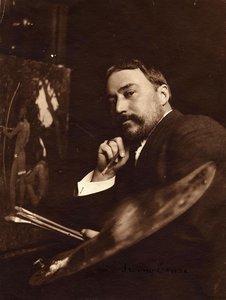
Eanger Irving Couse
1866 - 1936 , États-Unis d'Amérique
L'essentiel de l'artiste
- Artistes Influents:
- William-Adolphe Bouguereau
- Tony Robert Fleury
- Date De Décès: 26 avril 1936
- Date De Naissance: 3 septembre 1866
- Lieu De Naissance: Saginaw, États-Unis
- Mouvement Artistique: Impressionnisme
- Nationalité: Américain
- Nom Complet: Eanger Irving Couse
- Œuvres Notables:
- Elk-foot of the Taos tribe
- Taos pueblo - moonlight
- The captive
Articles connexes

Frederick Childe Hassam: American Impressionism's Chronicler of Light & Modern Life
Explore the captivating world of Frederick Childe Hassam, a pioneer of American Impressionism. Discover his iconic paintings capturing light, urban life & coastal beauty. Learn about his legacy and influence on American art history.

Grant Wood & American Regionalism: Identity, Myth & the Rural Landscape
Explore the world of Grant Wood & American Regionalism with OriginalUniqueArt. Discover the symbolism behind 'American Gothic', recurring themes, and the movement's lasting impact on art history. High-quality reproductions available.
Capturing the Light: A Journey Through the Soul of American Impressionism and the Hudson River School
Explore the luminous beauty of American Impressionism and the Hudson River School. Discover a curated journey through light, landscape, and history, celebrating the enduring legacy of masters through exquisite, hand-painted oil reproductions for the discerning art lover.
Capturer la Lumière d'une Nation : Exploration du Mouvement Impressionniste Américain
Explorez le mouvement impressionniste américain : ses origines, figures clés comme Winslow Homer et son héritage durable. Découvrez l'art, les colonies d'artistes et l'influence de la peinture sur le motif. Expertise OriginalUniqueArt.
Eanger Irving Couse: Bridging Tradition & Modernity in American Southwest Art
Explore the life & art of Eanger Irving Couse, a pivotal figure in Southwestern Impressionism and founder of the Taos Society of Artists. Discover his captivating paintings & legacy.


