

 Aperçu en situation
 Envoyer
 Partager
 Détails de l'œuvre

 Télécharger
 Articles similaires
 Radiographie
 Diaporama
October Morning


 Lire la suite
Giclées et impressions d'art
Impressions giclées ou sur toile de qualité musée, avec une production rapide et des finitions au choix. ( Commander la reproduction peinte à la main Télécharger l'image haute résolution)




P118B $10

P118H $10

P118W $10

P438Z $10

P508JH $12

P508YH $12

P805H $10

P805Z $10

P919BZ $10

P919G $10

P919XJ $10

P959ZH $10

P968JZ $12

W106C $8

W218G $10

W218JH $8

W218Y $10

W307PJ $10

W316G $10

W316PJ $8

W316Y $10

W398PJ $8

W4111J $10

W500HY $15

W500JH $15

W692G $12

W849H $8

W940BG $15

W953PJ $8




Choisissez parmi nos formats prédéfinis qui respectent les proportions originales de l’œuvre.

Vous pouvez saisir vos propres dimensions pour vous adapter à un cadre ou à un espace spécifique. Si la taille sélectionnée ne correspond pas aux proportions de l'image originale, nous recadrerons l'œuvre ou étendrons l'image avec une bordure en miroir ou une couleur unie. Une maquette numérique vous sera envoyée pour approbation avant le début de la production.
Veuillez noter que l'aperçu à l'écran ne reflète pas le recadrage ou l'extension réelle. Seule la maquette montrera avec précision la composition finale.
Bien que des tailles personnalisées soient disponibles, nous vous recommandons de choisir une dimension dans la liste prédéfinie afin de préserver les proportions originales.
Livraison dans le monde entier () en 2 semaines au lieu des 4/5 semaines habituelles. (14 août)

Livraison express gratuite dans le monde entier

Toile de lin de qualité supérieure

Assurance transport complète

Garantie de remboursement des droits de douane

Garantie de fidélité des couleurs

Politique de retour de 60 jours (uniquement en cas de défaut)

Garantie de remboursement à 100%

Offre de tarifs dégressifs
 L'option verre n'est disponible que pour les dimensions inférieures à 110 cm.

October Morning
Giclées et impressions d'art
Format de la reproduction
-


Prix total
$ 80
Description de la pièce
October Morning: A Symphony of Autumnal Light by Dwight William Tryon
Dwight William Tryon’s “October Morning” isn't merely a landscape painting; it’s an immersion into the heart of a fleeting autumnal moment, captured with a delicate precision and imbued with a profound sense of tranquility. Painted in 1921, during a period when American art was increasingly embracing tonalism – a style prioritizing mood and atmosphere over sharp detail – this piece exemplifies Tryon's signature approach: a quiet contemplation of the natural world rendered through subtle color shifts and luminous washes.
The scene unfolds within a gently sloping meadow, bisected by a meandering stream reflecting the soft hues of the sky. A carefully arranged row of trees dominates the midground, their branches reaching upwards like supplicating arms, each leaf painted with an almost impossibly delicate gradation of greens, yellows, and ochres – a testament to Tryon’s mastery of layering thin glazes of oil paint. These aren't the bold, vibrant colors of Impressionism; instead, they are muted, atmospheric, evoking the fading warmth of the sun as it dips below the horizon. The distant trees recede into a hazy blue-grey, creating an illusion of depth and vastness that draws the viewer’s eye into the painting’s serene embrace.
The Tonalist's Palette: Technique and Style
Tryon’s technique is characterized by its meticulous attention to light and shadow. He employed a ‘wet-on-wet’ approach, applying paint while it was still wet on the canvas, allowing colors to blend seamlessly and creating soft edges that contribute to the painting's ethereal quality. The absence of harsh outlines or defined forms reinforces this sense of atmospheric depth. The use of thin glazes – multiple layers of translucent color applied over each other – builds up the image gradually, resulting in a luminous surface that seems to glow from within. This technique is deeply rooted in the Barbizon school of painting, which emphasized capturing the essence of nature rather than its literal representation.
Notably, Tryon’s work aligns with the broader artistic currents of his time. Influenced by James McNeill Whistler's emphasis on tonal harmony and color relationships, he sought to evoke a feeling of quiet contemplation and spiritual connection through his art. His paintings are often described as “luminist,” though he predates the more formalized Luminist movement, sharing its core principles of capturing fleeting moments of light and atmosphere.
Symbolism and Emotional Resonance
“October Morning” is rich in symbolic meaning, reflecting a deep connection to the rhythms of nature. The row of trees, stretching towards the horizon, can be interpreted as a symbol of resilience and endurance – mirroring the steadfastness of nature through the changing seasons. The stream, flowing gently across the meadow, represents the passage of time and the cyclical nature of life. The muted colors evoke feelings of peace, nostalgia, and melancholy—a poignant reminder of the beauty of impermanence.
More than just a depiction of a landscape, “October Morning” is an invitation to pause, reflect, and connect with the natural world. It’s a painting that speaks to our deepest longings for tranquility and connection, offering a moment of respite from the complexities of modern life. The soft light and muted colors create a sense of warmth and serenity, inviting the viewer to lose themselves in the beauty of this autumnal scene.
A Legacy of Serenity: Tryon’s Enduring Appeal
Dwight William Tryon's work continues to resonate with audiences today due to its timeless appeal. His paintings capture a sense of quietude and beauty that transcends time, offering viewers a glimpse into the heart of nature. His dedication to capturing subtle nuances of light and color has earned him recognition as one of America’s most important landscape painters. Reproductions of “October Morning” are prized by collectors and interior designers alike, bringing a touch of serenity and autumnal charm to homes and galleries around the world.
Biographie de l'artiste
Première Vie et Formation
- Dwight William Tryon est né le 13 août 1849 à Hartford, dans le Connecticut, de Anson Tryon et Delia O. Roberts.
- La mort précoce de son père l'a laissé élevé par sa mère sur la ferme de ses grands-parents à East Hartford.
- Il s’est intéressé naturellement à l’art, étudiant des manuels d’instruction artistique dans une librairie où il travaillait.
- Tryon a commencé à esquisser la campagne environnante pendant son temps libre.
- Il a vendu sa première peinture en 1870 et s'est fait connaître localement avant de gagner en reconnaissance à la National Academy of Design en 1873.
Développement Artistique et Influences
- En 1876, Tryon a étudié formellement l’art en France sous Jacquesson de la Chevreuse et à l'École des Beaux-Arts. Il a également reçu des instructions de Charles-François Daubigny, Henri Harpignies et Jean Baptiste-Antoine Guillemet.
- Initialement, son style penchait vers le luminisme avant de passer à l’école Barbizon, influencé par des artistes comme George Inness et Alexander Helwig Wyant.
- Malgré une exposition à l'impressionnisme en France, Tryon est resté fidèle à l'esthétique Barbizon.
- Son travail a été considérablement influencé par James McNeill Whistler, ce qui se reflète dans son style tonaliste.
Style Mature et Œuvres Notables
- À la fin des années 1880, Tryon a développé son style emblématique, caractérisé par un groupe ou une rangée brisée d'arbres au milieu du décor, souvent avec des teintes automnales, séparant un ciel lumineux au-dessus et un marais ou un pâturage en premier plan.
- Il peignait fréquemment des paysages marins à l’aide de pastel pour représenter des scènes expansives d’eau, de ciel et de plage dans diverses conditions météorologiques.
- Parmi ses œuvres notables figure *Salt-Marsh, December*, qui a remporté le premier prix lors de l'Exposition Centennial du Tennessee en 1897.
- Ses peintures ont été exposées à l’échelle nationale, avec une préférence pour la Pennsylvania Academy of Fine Arts et la Montross Gallery.
Mécénat et Reconnaissance
- Charles Lang Freer est devenu le principal mécène de Tryon, acquérant des douzaines de ses œuvres et collaborant à la conception intérieure de sa maison de Detroit. De nombreuses peintures se trouvent aujourd'hui à la galerie Freer d’art.
- Tryon a reçu le prix Carnegie lors de l'Exposition Carnegie en 1908.
- Il était membre de plusieurs organisations artistiques prestigieuses, notamment la Society of American Artists, l'American Watercolor Society et le National Institute of Arts and Letters (aujourd’hui l'American Academy of Arts and Letters).
Vie ultérieure et Héritage
- En 1887, il a construit une maison d'été à South Dartmouth, dans le Massachusetts, qui est devenue son domicile.
- Il a enseigné au Smith College de 1886 à 1923, établissant la Tryon Gallery of Art.
- Dwight William Tryon est décédé le 1er juillet 1925 des suites d'un cancer.
- Son héritage réside dans sa contribution au tonalisme américain et sa capacité à capturer des paysages atmosphériques et des paysages marins avec une couleur délicate et un sentiment raffiné. Ses œuvres sont conservées dans des collections prestigieuses telles que le Smithsonian American Art Museum et la Freer Gallery of Art.

Dwight William Tryon
1849 - 1925 , États-Unis d'Amérique
L'essentiel de l'artiste
- Artistic Movement Or Style: Tonalisme, École de Barbizon
- Artists Who Influenced This Artist:
- James McNeill Whistler
- George Inness
- Alexander Helwig Wyant
- Date Of Birth: 13 août 1849
- Date Of Death: 1er juillet 1925
- Full Name: Dwight William Tryon
- Nationality: Américain
- Notable Artworks: ['Salt-Marsh, December']
- Place Of Birth: Hartford, États-Unis
Articles connexes
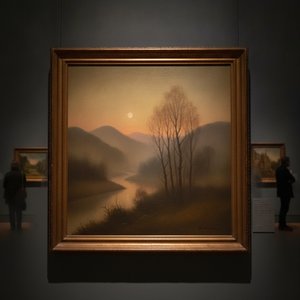
Tonalism Explained: The Art of Mood, Mist, and Masterful Color in Landscape Painting
Discover the evocative world of Tonalism. Explore how masters like Whistler and Tryon used mist, shadow, and subtle color to capture profound mood and atmosphere in landscape art. An expert guide for fine art enthusiasts and collectors.
Top 10 Paysages Iconiques : Voyage Artistique & Décoration d'Intérieur
Découvrez les 10 plus beaux paysages de l'histoire de l'art : Monet, Van Gogh et bien d'autres. Explorez leur technique unique et trouvez l'inspiration pour votre décoration intérieure avec OriginalUniqueArt.com. Œuvres exceptionnelles à découvrir !

Constable : Les 25 Chefs-d'Œuvre du Maître Anglais | OriginalUniqueArt
Plongez dans l'univers de John Constable avec les 25 œuvres incontournables du maître anglais. Découvrez l'histoire, la technique et l'émotion derrière ses paysages romantiques. Reproductions de qualité muséale sur OriginalUniqueArt.com.

Évocations de lieux : Un voyage historique à travers l'art du paysage
Explorez l'histoire fascinante de la peinture de paysage à travers les chefs-d'œuvre du Romantisme. Découvrez Friedrich, Turner et Aivazovski et laissez-vous inspirer par la beauté sauvage et le sublime. Reproduction d'art de qualité chez OriginalUniqueArt.
Serene Visions: Exploring Themes of Tranquility in Art History & Contemporary Practice
Explore the history of serene landscape art & discover artists who evoke tranquility. Find the perfect calming artwork for your home with expert guidance from OriginalUniqueArt.


