
 Aperçu en situation
 Envoyer
 Partager
 Détails de l'œuvre

 Télécharger
 Articles similaires
 Radiographie
 Diaporama
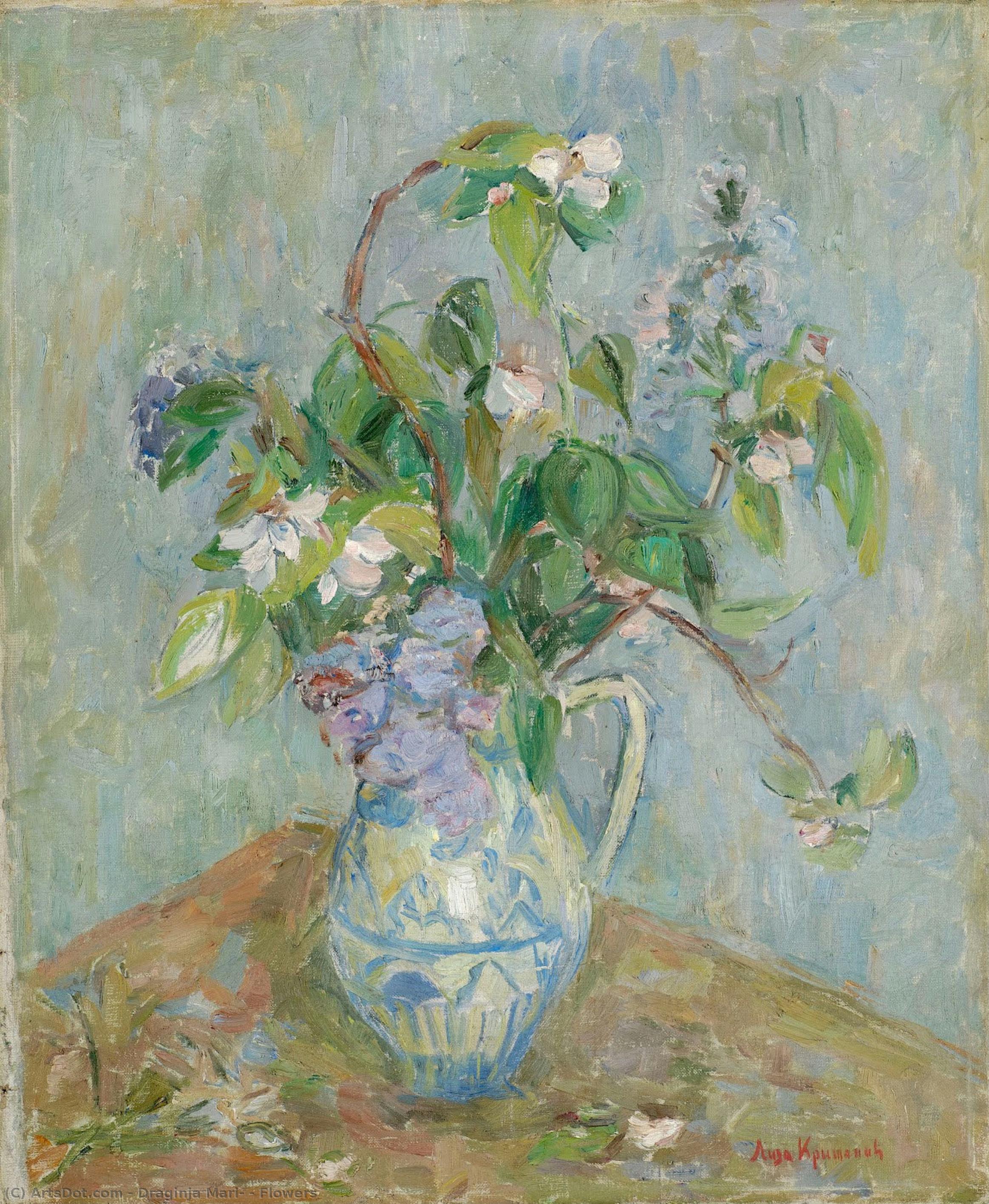
Flowers
 1951
1951 38.0 x 46.0 cm
 Pavle Beljanski Memorial Collection
 Lire la suite
Reproduction à l'huile faite à la main
Huile sur toile peinte à la main, avec cadre et dimensions personnalisés, réalisée sur commande par nos artistes. ( Acheter l'impression Acheter l'image)




































Choisissez parmi nos formats prédéfinis qui respectent les proportions originales de l’œuvre.

Vous pouvez saisir vos propres dimensions pour l'adapter à un cadre ou à un espace spécifique. Si la taille sélectionnée ne correspond pas aux proportions de l'image d'origine, nous recadrerons l'œuvre ou prolongerons la peinture avec des éléments peints à la main supplémentaires. Une maquette numérique vous sera envoyée pour approbation avant le début de la production.
Veuillez noter que l'aperçu à l'écran ne reflète pas le recadrage ou l'extension réels. Seule la maquette montrera fidèlement la composition finale.
Bien que des tailles personnalisées soient disponibles, nous vous recommandons de sélectionner une dimension dans la liste prédéfinie afin de préserver les proportions d'origine.
Après la commande, l’équipe OriginalUniqueArt.com contactera le client par e-mail pour recueillir ses instructions et lui fournira une maquette d’aperçu
Livraison dans le monde entier () en 3 à 4 semaines au lieu des 5 semaines habituelles. (12 août). Aucun compromis sur la qualité.

Livraison express gratuite dans le monde entier

Toile de lin de qualité supérieure

Assurance transport complète

Garantie de remboursement des droits de douane

Garantie de fidélité des couleurs

Politique de retour de 60 jours (uniquement en cas de défaut)

Garantie de remboursement à 100%

Offre de tarifs dégressifs
 L'option verre n'est disponible que pour les dimensions inférieures à 110 cm.

Flowers
Technique de reproduction
Format de la reproduction
-


Prix total
$ 300
Description de l'œuvre
Biographie de l'artiste
Early Life and Artistic Style
Draginja Liza Marić Križanić, born in Kosjerić, Serbia (1905), embarked on an artistic journey marked by profound connections to both her homeland and European avant-garde movements. Her familial roots lay in a lineage of educators—Stamenko Marić, a respected teacher himself, and Jelena Raković—who instilled in Liza a lifelong passion for learning and intellectual curiosity. The disruption caused by the First World War profoundly impacted her formative years; her father’s deployment as a soldier to Salonica severed familial ties, while Liza, alongside Dragoslav Marić, relocated to Užice and Prizren amidst the turbulent backdrop of Serbian history. Finally, in 1923, Liza pursued her academic ambitions at Belgrade University, enrolling in French language studies—a decision driven by an unwavering desire for artistic refinement that would lead her to Paris. Her formative years were shaped by encounters with influential figures like Desanka Maksimović, Serbia’s celebrated poetess and novelist, fostering a collaborative spirit that would define her artistic trajectory. Together, they explored the transformative power of art during their visits to iconic Parisian landmarks—the Louvre Museum, numerous galleries—absorbing inspiration from lectures on aesthetics and art history at Sorbonne University. Liza's personal life blossomed alongside her burgeoning artistic talent as she found companionship in Pierre Križanić, a fellow artist who would become her husband in 1926. Their home in Jevremova Street 49 became a hub for Belgrade’s intellectual elite—including Ivo Andrić and Petar Milosavljević—creating an environment conducive to artistic experimentation and dialogue. ### Artistic Training and Parisian Influences Liza Marić honed her skills under the tutelage of Andrea Lhote, an internationally acclaimed instructor at the École Internationale d'Art André Lhote in Paris (1924-1925), immersing herself in a rigorous curriculum focused on mastering painting techniques. This period witnessed crucial artistic discoveries—a fascination with Impressionism and its exploration of light and color—which would subsequently permeate her oeuvre. Notably, Liza’s Parisian acquaintances included Sava Šumanović, another Serbian artist who had traveled abroad during the twenties, enriching her artistic perspective and fostering connections within a vibrant international art community. She also befriended Zora Petrović, whose collaborative spirit mirrored Liza's own dedication to artistic exploration. Her artistic explorations extended beyond formal instruction; Liza actively engaged with the avant-garde currents shaping Parisian culture—particularly Cubism—influenced by artists like Picasso and Braque. This exposure broadened her stylistic horizons and encouraged her to experiment with innovative approaches to representation. Her Parisian sojourn culminated in a solo exhibition at Mitrović Gallery (1925), marking an early milestone in her artistic career and establishing herself as a rising talent within the Serbian art scene. ## Dalmatian Landscapes: Echoes of Van Gogh Liza Marić’s artistic vision found its most compelling expression in her depictions of Dalmatia—the Croatian coastline—where she captured the breathtaking beauty of the Mediterranean landscape with remarkable sensitivity and precision. Her canvases resonate deeply with the stylistic hallmarks of Vincent van Gogh, whom she admired immensely for his masterful use of color and expressive brushstrokes. Marić’s landscapes are characterized by vibrant hues—deep blues mirroring the Adriatic Sea, fiery reds reflecting the sun-drenched hillsides—creating an immersive experience for the viewer that evokes the emotional intensity of Van Gogh's paintings. She meticulously observed the nuances of light and atmosphere, striving to convey not merely visual accuracy but also a palpable sense of emotion. ## Themes and Recurring Motifs Marić’s artistic repertoire encompassed diverse subjects—fishing scenes portraying the daily life of Dalmatian fishermen, portraits capturing individual personalities with nuanced detail, and nude figures exploring themes of femininity and vulnerability—demonstrating her versatility as an artist and her willingness to tackle challenging artistic concepts. Her fascination with olive trees swaying in the Maestral wind—a powerful Adriatic gale—became a recurring motif in her paintings, symbolizing resilience and adaptability amidst natural forces. These images are imbued with a profound appreciation for the rhythms of nature and convey a sense of contemplative stillness. ## Legacy and Influence Draginja Marić’s artistic legacy extends beyond her individual artworks; she profoundly impacted the development of Color Expressionism within Yugoslavia—a movement that championed emotional intensity and subjective experience as paramount to artistic achievement. Her pioneering spirit inspired subsequent generations of Serbian artists, fostering a tradition of lyrical painting rooted in observation and emotion. Liza Križanić's contribution to Yugoslavian art history remains significant, securing her place among the foremost figures of her time and cementing her enduring influence on Serbian visual culture.
Draginja Marić
1905 - 1982 , Serbie
L'essentiel de l'artiste
- Artistic Movement Or Style: Color Expressionism
- Artists Or Movements Influenced By This Artist: ['Yugoslav Art']
- Artists Who Influenced This Artist: ['Van Gogh']
- Date Of Birth: 1905
- Date Of Death: 1982
- Full Name: Draginja Marić Križanić
- Nationality: Serbian
- Notable Artworks:
- Dalmatian Landscapes
- Brač Island Paintings
- Place Of Birth: Kosjerić, Serbia

