Aperçu en situation
 Envoyer
 Partager
 Détails de l'œuvre
 Guide
Guide

 Télécharger l'image
 Articles similaires
 Radiographie
 Diaporama
 Q&A
Q&A Statistiques
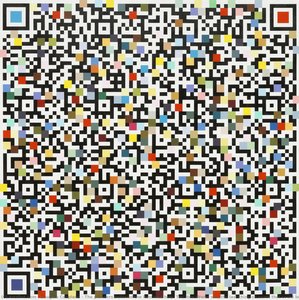
Thomson No. 3 (Sunset Bay)


 Lire la suite
L’œuvre d'art présentée sur cette page est protégée par le droit d'auteur, ce qui signifie que nous ne pouvons légalement créer ou vendre de reproduction identique. Cette protection est appliquée en vertu d'accords internationaux tels que la Convention de Berne et par les lois nationales, notamment celles énoncées par le Loi américaine sur le droit d'auteur - Titre 17.
Cette méthode est pleinement conforme aux réglementations sur le droit d'auteur car elle ne repose pas sur la copie ou la duplication de l'œuvre protégée. Il s'agit plutôt d'une réinterprétation créative — une nouvelle peinture qui s'inspire de l'original sans pour autant lui être identique.
Giclées et impressions d'art
Impressions giclées ou sur toile de qualité musée, avec une production rapide et des finitions au choix. ( Commander la reproduction peinte à la main Passer au format numérique)




P118B €10

P118H €10

P118W €10

P438Z €10

P508JH €12

P508YH €12

P805H €10

P805Z €10

P919BZ €10

P919G €10

P919XJ €10

P959ZH €10

P968JZ €12

W106C €8

W218G €10

W218JH €8

W218Y €10

W307PJ €10

W316G €10

W316PJ €8

W316Y €10

W398PJ €8

W4111J €10

W500HY €15

W500JH €15

W692G €12

W849H €8

W940BG €15

W953PJ €8




Choisissez parmi nos formats prédéfinis qui respectent les proportions originales de l’œuvre.

Saisissez la largeur et la hauteur souhaitées pour qu'elles s'adaptent à votre cadre ou à votre mur. Une impression peut être recadrée, mais jamais agrandie au-delà de l'image originale ; ainsi, un format de forme différente entraînera la perte d'une partie de l'image. Nous vous envoyons une maquette numérique pour approbation avant toute impression. L'image présentée sur cette page ne montre pas le recadrage réel — seule la maquette le permet.
Livraison dans le monde entier () en 2 semaines au lieu des 4/5 semaines habituelles. (29 octobre)

Livraison express gratuite dans le monde entier

Toile de lin de qualité supérieure

Assurance transport complète

Garantie de remboursement des droits de douane

Garantie de fidélité des couleurs

Politique de retour de 100 jours (uniquement en cas de défaut)

Garantie de remboursement à 100%

Offre de tarifs dégressifs
 L'option verre n'est disponible que pour les dimensions inférieures à 110 cm.

Thomson No. 3 (Sunset Bay)
Giclées et impressions d'art
Format de la reproduction
-


Prix total
€ 71
The Genesis of a Fragmented Vision
Douglas Coupland’s “Thomson No. 3 (Sunset Bay)” isn't merely a depiction of a sunset over rolling hills; it’s an interrogation, a deliberate dismantling and reimagining of the very notion of ‘Canadianness.’ Born from a digital alchemy – a process of meticulously reducing iconic landscapes to their most fundamental geometric components – this artwork invites us to consider what remains when the romanticism of nature is stripped bare. Coupland began his exploration with degraded digital images of masterpieces by Emily Carr, the Group of Seven, and Tom Thomson, artists deeply intertwined with the formation of Canada’s visual identity. He then employed a unique, almost architectural language, breaking down these familiar vistas into a series of angular planes and bold blocks of color, creating an effect both strikingly modern and profoundly nostalgic.
The work's foundation lies in the legacy of Tom Thomson, a tragically short-lived artist whose evocative depictions of Ontario’s wilderness captured the spirit of a nascent nation. Coupland’s choice to reference Thomson is particularly potent; the painter’s romanticized portrayal of nature – his emphasis on light, color, and the sublime beauty of the Canadian landscape – provides a crucial counterpoint to the geometric austerity of Coupland's approach. Coupland isn’t simply replicating these scenes; he’s using them as a springboard for a commentary on how we perceive and represent our national identity in the 21st century.
Deconstructing the Sublime: A Geometric Language
Technically, “Thomson No. 3 (Sunset Bay)” is a masterful example of digital painting, executed with an almost clinical precision. Coupland’s process involved manipulating these images through sophisticated software, reducing them to their essential shapes and colors. The result is a flattened, abstracted landscape where the familiar forms of hills and sky are rendered as interlocking triangles and polygons. This deliberate simplification isn't intended to diminish the beauty of the original scenes; rather, it forces us to reconsider how we experience them. The absence of traditional perspective creates a sense of detachment, inviting the viewer to actively engage with the composition and interpret its meaning.
Coupland’s use of color is equally significant. The palette – dominated by warm oranges, yellows, and reds – evokes the drama of a sunset, yet these colors are presented in a deliberately flat, almost schematic manner. This contrasts sharply with the nuanced gradations of light and shadow found in traditional landscape paintings. The effect is both visually arresting and subtly unsettling, suggesting that even our most cherished memories and experiences can be reduced to their basic components.
Symbolism and the Shifting Landscape of Identity
Beyond its purely formal qualities, “Thomson No. 3 (Sunset Bay)” carries a potent symbolic weight. By referencing both Tom Thomson and the Group of Seven – two pivotal figures in Canadian art history – Coupland raises questions about how we define ‘Canadianness’ today. The artwork suggests that this identity is no longer solely rooted in a romanticized connection with nature, but rather shaped by contemporary tools and perspectives. The geometric abstraction can be interpreted as a metaphor for the fragmented and increasingly mediated reality of modern life.
Furthermore, Coupland's choice to utilize degraded digital images adds another layer of meaning. These aren’t pristine reproductions; they are remnants of a bygone era, hinting at the ephemeral nature of memory and representation. The artwork becomes a meditation on how our understanding of the past is constantly being reshaped by technology and cultural shifts. The title itself – “Thomson No. 3 (Sunset Bay)” – subtly underscores this process of deconstruction and reinterpretation.
A Contemporary Masterpiece: Reproduction and Reflection
“Thomson No. 3 (Sunset Bay)” is a compelling work that transcends the boundaries between art history, digital technology, and cultural commentary. Its striking visual impact, combined with its layered symbolism, makes it a significant addition to Coupland’s body of work. A high-quality reproduction captures much of the original's power, offering an accessible way to engage with this thought-provoking piece. Consider framing this artwork in a contemporary setting – its bold geometric forms will complement a range of interior design styles, sparking conversation and inviting contemplation about the nature of Canadian identity.
Questions et réponses
L'œuvre « Thomson No. 3 (Sunset Bay) » dispose-t-elle d'un aperçu en réalité augmentée ?
« Thomson No. 3 (Sunset Bay) » dispose d'un aperçu en réalité augmentée : la page Aperçu en RA de l'œuvre vous permet de la visualiser dans votre propre espace sur un appareil compatible.
Quelle couleur domine la composition de «Thomson No. 3 (Sunset Bay)» de Douglas Coupland ?
Bois flotté (#d78a64) est la couleur dominante de «Thomson No. 3 (Sunset Bay)» de Douglas Coupland.
Quelle ambiance "Thomson No. 3 (Sunset Bay)" apporterait-elle à une pièce ?
Avec son atmosphère Sérénité, « Thomson No. 3 (Sunset Bay) » est idéal pour une Salon.
Biographie de l'artiste
Douglas Coupland : Une Biographie
- Né: Vancouver, Canada (30 décembre 1961)
- Origine: OriginalUniqueArt
- Statut: Vivant
Premières années et percée littéraire
- Le parcours de Douglas Coupland a commencé à Vancouver, au Canada, le 30 décembre 1961. Ses premières années ont façonné ses observations perspicaces de la culture contemporaine, qui allaient plus tard définir son œuvre.
- Il a acquis une reconnaissance généralisée avec la publication de son premier roman, "Generation X : Tales for an Accelerated Culture", en 1991. Cette œuvre majeure a profondément résonné auprès d'une génération confrontée à l'identité et au but dans un monde en évolution rapide.
- Le roman a popularisé des termes tels que « Generation X » et « McJob », consolidant la place de Coupland en tant que commentateur culturel et capturant l'esprit du temps.
Évolution en tant qu’artiste et designer
- Au-delà de son succès littéraire, Coupland a cultivé une pratique artistique diversifiée englobant les arts visuels et le design. Il a écrit 13 romans, deux recueils de nouvelles, sept livres non fictionnels et de nombreux scénarios pour le cinéma et la télévision.
- Son œuvre d'art visuel a été présentée dans des lieux prestigieux tels que la Vancouver Art Gallery et la McMichael Canadian Art Collection.
- L’exploration artistique de Coupland s’étend à des médiums innovants comme les codes QR, qu’il intègre dans ses peintures pour révéler des messages cachés lorsqu'ils sont numérisés – alliant abstraction et fonctionnalité.
Thèmes artistiques clés et œuvres notables
- Série de codes QR : La série de peintures intégrant des codes QR de Coupland exemplifie son approche unique, fusionnant la technologie et l'art pour offrir un commentaire concis.
- Série Dead Grads : Cette série poignante sert de hommage aux jeunes vies tragiquement interrompues, avec des titres tels que « Gun », « Car Crash » et « Overdose » évoquant une profonde réflexion.
- Silver Boogeyman : Une œuvre saisissante qui révèle le visage d'Osama ben Laden lorsqu'elle est vue à travers un smartphone, démontrant la capacité de Coupland à provoquer la pensée et à remettre en question la perception.
- The Ice Storm : Une sculpture monumentale en acier reflétant l’identité canadienne et la fragilité, mettant en valeur son exploration des thèmes nationaux.
- God : Une collage mixte présentant des éléments symboliques tels que « Lord Jim » et un ‘D’ géométrique, démontrant ses techniques de superposition et ses compétences en design graphique.
Reconnaissance et héritage
- Les contributions de Coupland à la littérature et aux arts ont été largement reconnues, lui valant le titre d'Officer of the Order of Canada et une adhésion à l'Order of British Columbia.
- Son œuvre continue de résonner auprès du public dans le monde entier, suscitant un dialogue sur la culture contemporaine, la technologie et les questions sociétales.
- Il reste une figure importante des arts et des lettres canadiennes, connu pour ses observations perspicaces et son expression artistique innovante.

Douglas Coupland
1961 - , Canada
L'essentiel de l'artiste
- Artistic Movement Or Style: Art contemporain, Pop Art
- Date Of Birth: 30 décembre 1961
- Full Name: Douglas Coupland
- Nationality: Canadien
- Notable Artworks:
- Jumbo Boogeyman...
- Silver Boogeyman
- Dieu
- La tempête de glace
- Le poète
- Thomson No. 5...
- Place Of Birth (City And Country): Vancouver, Canada
Articles connexes

Kandinsky : Les 25 Œuvres Maîtresses d'un Pionnier de l'Art Abstrait | OriginalUniqueArt
Plongez dans l'univers vibrant de Kandinsky ! Découvrez les 25 œuvres majeures du pionnier de l'art abstrait. Explorez son expressionnisme, ses couleurs audacieuses et l'histoire fascinante derrière chaque tableau. Reproductions d'exception sur OriginalUniqueArt.com.

Neo-Abstract Art: The High-Impact Evolution of Modern Visual Energy and Geometric Sophistication
Discover the power of Neo-Abstract art. Explore how bold geometric forms and high-impact visual energy are redefining modern design. Learn to curate sophisticated, high-energy spaces with the latest trends in contemporary abstraction and structural color.

Beyond Form & Color: Geometric Abstraction's Evolution in 20th/21st Century Art
Explore the evolution of geometric abstraction from Cubism to contemporary art. Discover key artists like Malevich & Mondrian, investment insights, and expert collecting advice at OriginalUniqueArt.
Beyond the Lines: The High-Impact Trend Forecast of Geometric Abstraction
Discover the high-impact world of Geometric Abstraction. From Cubist roots to modern urban trends, explore how bold shapes and colors redefine contemporary design. Elevate your space with expert art insights and custom-made abstract masterpieces.

Abstraction Géométrique : Les 10 Chefs-d'œuvre qui ont Marqué l'Histoire de l'Art
Plongez au cœur de l'abstraction géométrique avec OriginalUniqueArt.com ! Découvrez les 10 œuvres majeures de Mondrian, Malevitch et Kandinsky qui ont révolutionné l'art moderne. Inspirez votre décoration intérieure avec des reproductions de tableaux exceptionnelles. Explorez la collection en ligne !