Partager
 Partager
 Détails
 Guide imprimable

 Télécharger
 Articles similaires
 Voir le diaporama
 Statistiques
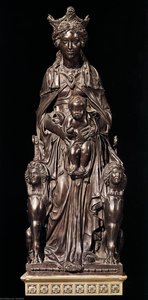
Crucifixion
 Bronze
- Sculpture
- Renaissance Sculpture
 1465
1465- Renaissance
 93.0 x 70.0 cm
 Musée National du Bargello
 Afficher la suite
Giclées et impressions d'art
Impressions giclées ou sur toile de qualité musée, avec une production rapide et des finitions au choix. ( Acheter la peinture faite à la main Passer au format image numérique)




































Choisissez parmi nos formats prédéfinis qui respectent les proportions originales de l’œuvre.

Saisissez la largeur et la hauteur souhaitées pour qu'elles s'adaptent à votre cadre ou à votre mur. Une impression ne peut être que découpée, elle ne peut jamais être agrandie au-delà de l'image originale ; ainsi, un format de forme différente entraînera la perte d'une partie de l'image. Nous vous envoyons une maquette numérique pour approbation avant toute impression. L'image présentée sur cette page ne montre pas le recadrage réel — seule la maquette le permet.
Livraison dans le monde entier () en 2 semaines au lieu des 4/5 semaines habituelles. (21 octobre)

Livraison express gratuite dans le monde entier

Toile de lin de haute qualité

Assurance transport complète

Garantie de remboursement des droits de douane

Garantie de fidélité des couleurs

Garantie de retour de 100 jours (uniquement en cas de défaut)

Garantie de remboursement à 100%

Tarifs dégressifs sur quantité
 L'option verre n'est disponible que pour les dimensions inférieures à 110 cm.

Crucifixion
Giclées et impressions d'art
Format de la reproduction
-


Prix total final
€ 70
A Moment Frozen in Time: Donatello’s Crucifixion
The bronze sculpture “Crucifixion” by Donatello stands as an enduring testament to the artistic fervor of the Florentine Renaissance, capturing not merely a biblical narrative but also the profound emotional complexities inherent within it. Created in 1465 for Santa Croce Basilica in Florence, this masterpiece transcends its religious subject matter to become a cornerstone of humanist ideals and sculptural innovation.The Artist’s Vision: Classical Influence Meets Spiritual Depth
Donatello (1386-1466), born into a family of sculptors, emerged as one of the foremost figures shaping the artistic landscape of his era. His formative years were steeped in classical sculpture—the rediscovery and emulation of Greek and Roman forms fueled an unprecedented stylistic revolution. Unlike preceding medieval art, which prioritized stylized representations and symbolic ornamentation, Donatello championed anatomical accuracy and naturalistic detail, mirroring the humanist preoccupation with human form and intellect. This commitment to realism is palpable throughout his oeuvre, most notably in “David,” a monumental statue that redefined nude sculpture and cemented Donatello’s reputation as a pioneer of Renaissance aesthetics.Technical Mastery: Bronze Casting and Anatomical Precision
The Crucifixion exemplifies Donatello's unparalleled technical skill. Crafted from bronze—a material chosen for its durability and ability to capture subtle nuances of form—the sculpture underwent a complex casting process, utilizing the lost wax method. This technique allowed for exceptional precision in replicating human anatomy, resulting in a remarkably lifelike depiction of Jesus Christ on the cross. Donatello meticulously studied cadavers to achieve an unprecedented level of anatomical accuracy, surpassing previous artistic conventions and establishing a new standard for sculptural representation. The surface finish is polished to a luminous sheen, enhancing the sculpture’s visual impact and conveying a sense of solemn grandeur.Symbolism and Narrative Resonance: A Reflection of Renaissance Thought
Beyond its technical brilliance, “Cruifixion” resonates deeply with the philosophical currents of the Renaissance. The sculpture portrays Jesus Christ in agony—a deliberate choice that underscores the humanist preoccupation with human suffering and mortality. Unlike depictions emphasizing divine majesty, Donatello’s portrayal focuses on Christ's physical torment, prompting contemplation on themes of compassion, sacrifice, and redemption. The positioning of Christ’s body—with arms outstretched—is a deliberate allusion to classical iconography, symbolizing humility and acceptance of divine judgment. Furthermore, the sculpture’s placement within Santa Croce Basilica served as a powerful visual reminder of Christian faith and spiritual devotion.Emotional Impact: A Timeless Expression of Suffering
“Cruifixion” continues to captivate viewers centuries after its creation due to its profound emotional impact. Donatello skillfully conveys Christ's anguish through subtle gestures and facial expressions—a testament to his mastery of psychological realism. The sculpture’s solemn atmosphere evokes feelings of empathy and reverence, prompting reflection on the human condition and the significance of faith. Its enduring presence within Santa Croce Basilica ensures that “Cruifixion” remains a poignant symbol of Christian piety and artistic excellence, inspiring awe and contemplation for generations to come.Further Exploration
For those interested in delving deeper into Donatello’s legacy, consider visiting Museo Nazionale del Bargello in Florence, where David resides alongside numerous other sculptures showcasing his distinctive style. Examining reproductions of “Crucifixion” can offer valuable insight into the artistic innovations that defined the Florentine Renaissance and solidified Donatello's place as one of history’s greatest sculptors.Questions et réponses
À quel mouvement artistique appartient «Crucifixion» de Donatello ?
« Crucifixion » est une œuvre de Renaissance Sculpture. Ce mouvement indique la tradition artistique à laquelle l'œuvre appartient.
Dans quel mouvement et à quelle époque s'inscrit «Crucifixion» de Donatello ?
Dans «Crucifixion» de Donatello, le mouvement Renaissance Sculpture rencontre l'époque Renaissance.
Quelle émotion «Crucifixion» de Donatello dégage-t-il ?
Le ton émotionnel relevé pour «Crucifixion» de Donatello est Mélancolique. Il résume le sentiment exprimé par l'œuvre.
Biographie de l'artiste
Premières années et carrière
Œuvres clés et innovations L'œuvre la plus célèbre de Donatello, David, était la première sculpture masculine nue autoportante depuis l'Antiquité. Commandée par la famille Médicis, elle mettait en valeur son style innovant et son expertise technique. Parmi les autres œuvres notables figurent :- , créé pour le campanile de Santa Maria del Fiore à Florence, se caractérisait par de forts détails portraitistiques.
- Un crucifix (1425) pour Santa Croce, qui représentait le Christ dans un moment d’agonie.
Style artistique et héritage
Le style de Donatello peut être divisé en phases générales, commençant par le développement de l'expressivité et du monumentalité classique. Son travail n'a pas été immédiatement accepté par la communauté, mais est finalement devenu le plus populaire, influençant d’autres cours italiennes et des artistes européens. Mouvements artistiques clés :Vie personnelle et style de travail
Donatello était connu pour être aimable et apprécié, mais peu doué sur le plan commercial dans sa carrière. Il avait tendance à accepter plus de commandes qu’il ne pouvait en gérer, achevant souvent les œuvres avec retard ou en les confiant à d'autres sculpteurs. Œuvres d'art notables et artistes :- Leonardo da Vinci: Annonciation (détail)
- Amico Aspertini: Statua di pan/leone che azzanna un cavallo
- Michelangelo Buonarroti: Tondo Pitt
Musées et collections d'art :
- Museo della Collegiata (Empoli, Italie): un joyau caché de la Renaissance, présentant des œuvres de Francesco Botticini et Raffaello Botticini.
- Le mouvement artistique de la première Renaissance italienne

Donatello
1386 - 1466 , Italie
En bref
- Artistic Movement Or Style: Renaissance primitive
- Artists Or Movements Influenced By This Artist: ['Michel-Ange Buonarroti']
- Date Of Birth: c. 1386
- Date Of Death: 1466
- Full Name: Donatello (Donato di Niccolò)
- Nationality: Italienne
- Notable Artworks:
- David
- St. Louis de Toulouse
- Sacrifice d'Isaac
- Crucifix (1425)
- Place Of Birth: Florence, Italie
Articles connexes

Les 10 Chefs-d'œuvre en Bronze qui ont Révolutionné l'Art : Collection OriginalUniqueArt
Plongez dans l'univers fascinant des 10 chefs-d'œuvre en bronze qui ont marqué l'histoire de l'art. Découvrez Rodin, Degas et les secrets de ces sculptures iconiques. Reproductions d'art exceptionnelles sur OriginalUniqueArt.com – Explorez la collection !

The Enduring Legacy of Bronze: A Historical & Artistic Exploration for the Collector
Explore the rich history & enduring appeal of bronze sculpture with expert insights for collectors at OriginalUniqueArt. Learn about casting techniques, iconic artists, collecting tips & contemporary interpretations.
The Enduring Legacy of Bronze: History, Technique & Artistic Expression for the Collector
Explore the rich history & enduring appeal of bronze sculpture with expert insights for collectors at OriginalUniqueArt. Learn about casting techniques, iconic artists, and collecting tips.
L'Héritage Durable de la Sculpture en Bronze : Histoire, Techniques et Interprétations Contemporaines
Explorez l'histoire fascinante de la sculpture en bronze, des techniques ancestrales aux créations contemporaines. Conseils d'experts pour collectionneurs et passionnés d'art.

Les 10 Chefs-d'œuvre Bronzes Qui Ont Révolutionné la Sculpture | OriginalUniqueArt
Plongez dans l'univers fascinant des 10 sculptures en bronze les plus emblématiques de l'histoire de l'art. Rodin, Degas et autres maîtres révélés ! Découvrez leur histoire, leurs techniques et trouvez l'œuvre parfaite pour sublimer votre intérieur sur OriginalUniqueArt.com.