
 Aperçu en situation
 Envoyer
 Partager
 Détails de l'œuvre
 Guide
Guide

 Télécharger l'image
 Articles similaires
 Radiographie
 Diaporama
 Statistiques
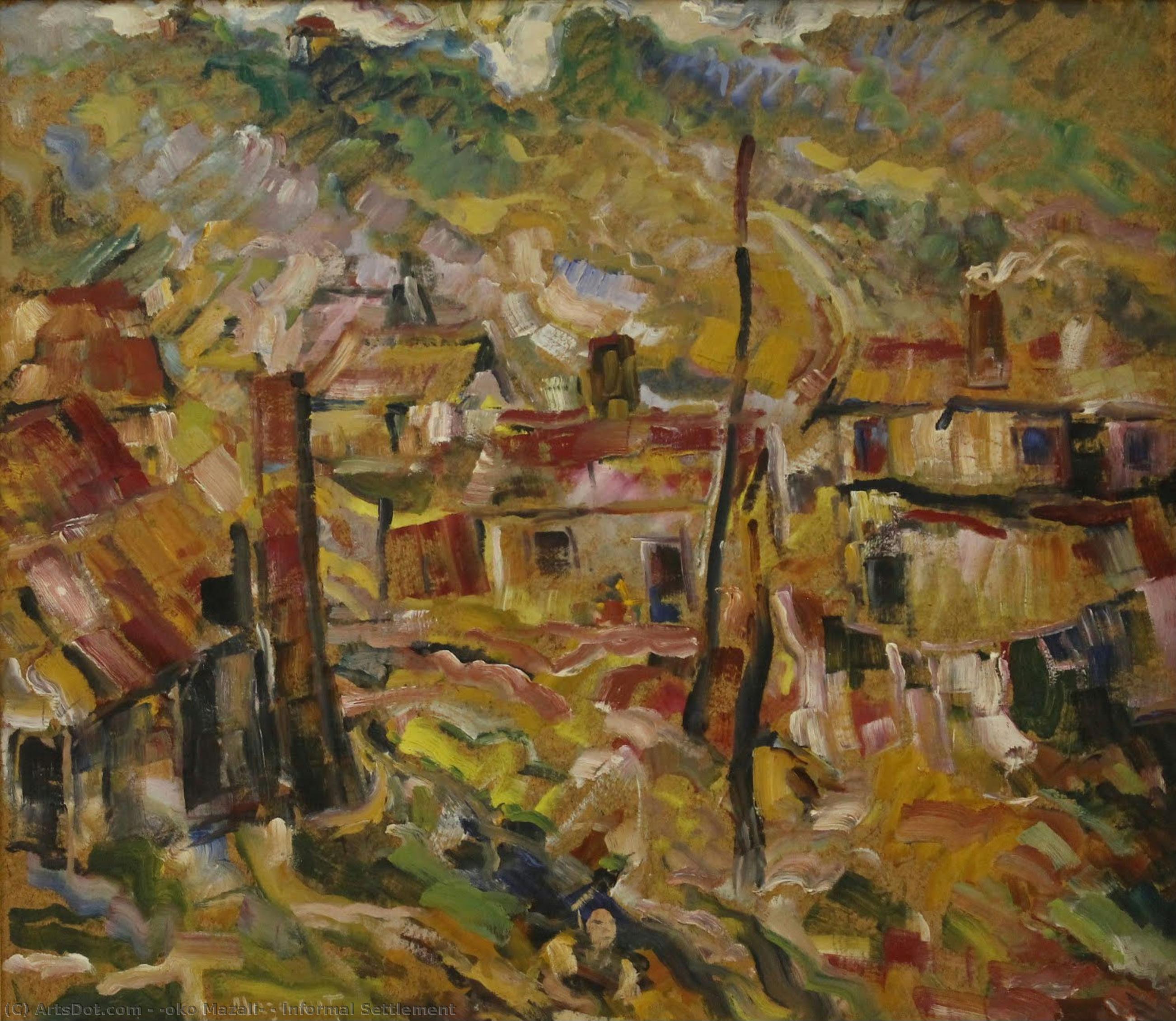
Informal Settlement


 Lire la suite
L’œuvre d'art présentée sur cette page est protégée par le droit d'auteur, ce qui signifie que nous ne pouvons légalement créer ou vendre de reproduction identique. Cette protection est appliquée en vertu d'accords internationaux tels que la Convention de Berne et par les lois nationales, notamment celles énoncées par le Loi américaine sur le droit d'auteur - Titre 17.
Cette méthode est pleinement conforme aux réglementations sur le droit d'auteur car elle ne repose pas sur la copie ou la duplication de l'œuvre protégée. Il s'agit plutôt d'une réinterprétation créative — une nouvelle peinture qui s'inspire de l'original sans pour autant lui être identique.
Giclées et impressions d'art
Impressions giclées ou sur toile de qualité musée, avec une production rapide et des finitions au choix. ( Commander la reproduction peinte à la main Passer au format numérique)




P118B €10

P118H €10

P118W €10

P438Z €10

P508JH €12

P508YH €12

P805H €10

P805Z €10

P919BZ €10

P919G €10

P919XJ €10

P959ZH €10

P968JZ €12

W106C €8

W218G €10

W218JH €8

W218Y €10

W307PJ €10

W316G €10

W316PJ €8

W316Y €10

W398PJ €8

W4111J €10

W500HY €15

W500JH €15

W692G €12

W849H €8

W940BG €15

W953PJ €8




Choisissez parmi nos formats prédéfinis qui respectent les proportions originales de l’œuvre.

Saisissez la largeur et la hauteur souhaitées pour qu'elles s'adaptent à votre cadre ou à votre mur. Une impression peut être recadrée, mais jamais agrandie au-delà de l'image originale ; ainsi, un format de forme différente entraînera la perte d'une partie de l'image. Nous vous envoyons une maquette numérique pour approbation avant toute impression. L'image présentée sur cette page ne montre pas le recadrage réel — seule la maquette le permet.
Livraison dans le monde entier () en 2 semaines au lieu des 4/5 semaines habituelles. (26 octobre)

Livraison express gratuite dans le monde entier

Toile de lin de qualité supérieure

Assurance transport complète

Garantie de remboursement des droits de douane

Garantie de fidélité des couleurs

Politique de retour de 100 jours (uniquement en cas de défaut)

Garantie de remboursement à 100%

Offre de tarifs dégressifs
 L'option verre n'est disponible que pour les dimensions inférieures à 110 cm.

Informal Settlement
Giclées et impressions d'art
Format de la reproduction
-


Prix total
€ 70
A Vibrant Tapestry of Life: Exploring Đoko Mazalić’s Informal Settlement
In the evocative masterpiece Informal Settlement, painted in 1962, the renowned Bosnian master Đoko Mazalić invites us into a world that breathes with the rhythm of communal existence. This work is far more than a mere depiction of a mountain village; it is a soulful window into a way of life where humanity, nature, and architecture exist in a delicate, bustling harmony. As the eye wanders across the canvas, one is immediately struck by the vividness of the scene, where the rugged contours of the mountains serve as a protective cradle for a community teeming with vitality. Mazali::ć captures a moment frozen in time, yet vibrating with the energy of a thousand small, daily interactions.
The composition is a masterclass in narrative layering. Within this mountainous enclave, the artist meticulously places elements that suggest both movement and stillness. A dog rests near the threshold of a home, while a horse stands poised on the periphery, grounding the scene in the rustic reality of pastoral life. The presence of a church, marked by its humble cross, provides a spiritual anchor to the landscape, suggesting that faith and tradition are the bedrock upon which these dwellings are built. Through his brush, the village becomes a living organism, where every figure—whether standing in quiet contemplation or moving through the streets—contributes to a larger story of resilience and togetherness.
Technique and the Mastery of Light
Mazalić’s technique in Informal Settlement showcases the stylistic versatility that defined his illustrious career. Having refined his skills at the Academy of Fine Arts in Budapest, he brought a sophisticated understanding of color theory and light to the Bosnian landscape. In this piece, the artist employs a palette that is both earthy and luminous, using light to define the textures of stone, wood, and fabric. The interplay of shadows across the hills creates a sense of depth that pulls the viewer into the heart of the settlement, making the mountains feel tangible and immense.
The brushwork serves to enhance the atmosphere of the piece; it is deliberate yet fluid, capturing the "lively and bustling" essence mentioned in historical accounts. There is a rhythmic quality to how he depicts the various buildings, ranging from simple huts to more structured dwellings, creating a visual cadence that mimics the heartbeat of the village itself. For collectors and interior designers, this painting offers a profound sense of warmth and structural complexity, making it an ideal centerpiece for spaces that require a touch of historical depth and organic beauty.
A Legacy of Connection and Nostalgia
To behold Informal Settlement is to experience a deep sense of nostalgia for a simpler, more interconnected era. Mazalić, a pivotal figure in the Bosnian art scene, had an unparalleled ability to interpret the natural world through a lens of human emotion. This painting does not merely document a location; it celebrates the spirit of the community. The way the figures are scattered throughout the landscape suggests a lack of isolation, emphasizing a social fabric that is tightly woven and inseparable from the land itself.
For those seeking to adorn their homes with art that inspires conversation and emotional resonance, this reproduction offers an unparalleled opportunity. It brings into a modern interior the timeless charm of the 1960s Balkan landscape, providing a sophisticated balance of rustic character and academic excellence. Owning a piece of Mazalić’s legacy is an invitation to reflect on our own connections to place, community, and the enduring beauty of the natural world.
Questions et réponses
Où est-il recommandé d'exposer le format Landscape de « Informal Settlement » ?
Le format Landscape de «Informal Settlement» de Đoko Mazalić est idéal pour une Coffee Shop. Le format et l'espace s'associent pour définir l'emplacement parfait d'une reproduction.
L'œuvre «Informal Settlement» de Đoko Mazalić, conservée au Galerie Nationale de Bosnie-Herzégovine, peut-elle faire l'objet de reproductions légales ?
L'original « Informal Settlement » se trouve au Galerie Nationale de Bosnie-Herzégovine, et l'œuvre est toujours protégé par le droit d'auteur.
À quelle étape de la carrière de Đoko Mazalić appartient « Informal Settlement » (1962) ?
Datée de 1962, l'œuvre « Informal Settlement » appartient à la période Late Period de Đoko Mazalić.
Biographie de l'artiste
Early Life and Education
Đoko Mazalić, a pivotal figure in Bosnian art history, was born in 1888 in Bosanska Kostajnica, a town nestled within the heart of Bosnia and Herzegovina. He emerged as one of the first generation of artists to receive formal training at an academy, marking a significant step forward for artistic development in the region. Alongside renowned contemporaries like Gabrijel Jurkić, Petar Tiješić, and Špiro Bočarić, Mazalić embarked on his artistic journey at the Academy of Fine Arts in Budapest between 1910 and 1914. This period of study exposed him to a diverse range of European artistic movements, profoundly influencing his own evolving style. Beyond painting, Mazalić demonstrated a multifaceted intellectual curiosity, delving into pedagogy as a long-standing drawing instructor, restoration of old paintings, monument conservation, the scientific study of painting techniques, and art criticism – showcasing an uncommon breadth of knowledge for an artist of his time.Artistic Career and Style
Mazalić’s artistic legacy is defined by remarkable stylistic versatility and unwavering quality. His paintings, particularly his evocative landscapes, stand as some of his most celebrated works, revealing a unique interpretation of the Bosnian landscape. A prime example of this talent is “Motif from Vranduk” (1920), where he masterfully captures the essence of the natural world through meticulous detail and atmospheric perspective. His work wasn’t confined to a single style; it embraced influences ranging from magical realism and Pointillism to plein air techniques, classicism, and even hints of Expressionism – though he never fully embraced abstraction, occasionally suggesting its potential within his compositions. Thematically, Mazalić's repertoire was equally diverse, encompassing folklore motifs, vibrant city scenes, civic portraits, captivating animal studies, sacred subjects, allegorical representations, and, above all, the landscapes of Bosnia and Herzegovina, which remained a constant source of inspiration. Remarkably, his body of work largely avoids depictions of other regions, suggesting a deep connection to his homeland. The subtle shifts in color palettes and painting techniques across different periods reveal an artist constantly adapting and refining his craft, yet maintaining a consistent level of artistic integrity.Teaching and Historical Contributions
From 1923 until 1945, Đoko Mazalić dedicated himself to the role of educator, serving as a professor of drawing in grammar schools in Sarajevo and Travnik. This commitment extended beyond mere instruction; he played a crucial role in shaping the artistic landscape of Sarajevo, leaving an indelible mark on generations of aspiring artists. His influence can still be felt within the works of those who followed in his footsteps. Furthermore, Mazalić was deeply involved in the cultural life of Sarajevo, contributing significantly to the establishment of the Art Gallery of the National Museum of Bosnia and Herzegovina in 1930, where he served as its manager on a voluntary basis until 1943. His intellectual pursuits extended beyond painting; he authored two significant scholarly works: “The Art of Painting in Bosnia and Herzegovina in the Turkish Era” (1965), which earned him the July 27th Award from the Socialist Republic of Bosnia and Herzegovina, and “A Lexicon of Artists of Bosnia and Herzegovina” (1967). He passed away in Sarajevo on February 28, 1975, with his final wish being that his estate be donated to his hometown.Notable Works and Legacy
Mazalić’s artistic output is characterized by a remarkable depth and breadth of subject matter. Some of his most recognized works include “Landscape” (1913), now housed in the National Gallery of Bosnia and Herzegovina, "Motif from Vogošća" (1930) also held at the National Gallery of Bosnia and Herzegovina, and “Village under Snow” (1930), another significant piece within the gallery’s collection. These works, along with numerous others, demonstrate his ability to capture both the grandeur and intimacy of the Bosnian landscape and its people. His retrospective exhibition in 1970 at the National Gallery of Bosnia and Herzegovina served as a powerful testament to his enduring legacy, solidifying his place as one of the most important figures in Bosnian art history. Mazalić’s artistic approach—a blend of meticulous observation, technical skill, and profound emotional resonance—continues to inspire artists and art enthusiasts alike, ensuring that his contribution to Bosnian culture will be remembered for generations to come.Related Artists
Đoko Mazalić's artistic journey was intertwined with those of several other prominent figures in Bosnian art during the early 20th century. Key collaborators and influences included Gabrijel Jurkić, Petar Tiješić, and Špiro Bočarić – artists who shared a commitment to exploring the beauty and complexities of Bosnia and Herzegovina through their own unique artistic visions.
Đoko Mazalić
1888 - 1975 , Bosnie-Herzégovine
L'essentiel de l'artiste
- Artistic Movement Or Style: Paysages et portraits
- Artists Or Movements Influenced By This Artist: ['Expressionnisme']
- Artists Who Influenced This Artist:
- Gabrijel Jurkić
- Petar Tiješić
- Špiro Bočarić
- Date Of Birth: 1888-04-23
- Date Of Death: 1975-02-28
- Full Name: Đoko Mazalić
- Nationality: Bosnian
- Notable Artworks:
- Motif de Vranduk (1920)
- Motif de Vogošća (1930)
- Village sous la neige (1930)
- Place Of Birth: Bosanska Kostajnica, BH
Articles connexes

Les 10 Chefs-d'œuvre du Paysage Romantique : Artistes et Décor d'Intérieur
Plongez dans l'émotion du Romantisme avec les 10 plus beaux paysages de Friedrich, Turner & Delacroix. Découvrez leur histoire et trouvez l'inspiration déco idéale sur OriginalUniqueArt.com !

Évocations de lieux : Un voyage historique à travers l'art du paysage
Explorez l'histoire fascinante de la peinture de paysage à travers les chefs-d'œuvre du Romantisme. Découvrez Friedrich, Turner et Aivazovski et laissez-vous inspirer par la beauté sauvage et le sublime. Reproduction d'art de qualité chez OriginalUniqueArt.

Hokusai : Les 25 Œuvres Maîtresses d'un Génie Japonais | OriginalUniqueArt
Plongez dans l'univers de Katsushika Hokusai avec les 25 œuvres incontournables du maître japonais. Découvrez l'histoire, les techniques d'ukiyo-e et la beauté intemporelle de 'La Grande Vague'. Reproductions tableaux de qualité muséale sur OriginalUniqueArt.com.

Constable : Les 25 Chefs-d'Œuvre du Maître Anglais | OriginalUniqueArt
Plongez dans l'univers de John Constable avec les 25 œuvres incontournables du maître anglais. Découvrez l'histoire, la technique et l'émotion derrière ses paysages romantiques. Reproductions de qualité muséale sur OriginalUniqueArt.com.

Capturing Nostalgia: The Timeless Allure and Art History of Village Scene Landscapes
Explore the profound beauty of village scene art. From Impressionist light to pastoral realism, discover how timeless landscapes capture nostalgia through expert artistry and historical depth. Perfect for collectors seeking evocative, museum-quality landscape inspirations.