
 Aperçu en situation
 Envoyer
 Partager
 Détails de l'œuvre
 Guide
Guide

 Télécharger l'image
 Articles similaires
 Radiographie
 Diaporama
 Q&A
Q&A Statistiques
Edinburgh from the Castle

- 122.0 x 213.0 cm


 Lire la suite
Giclées et impressions d'art
Impressions giclées ou sur toile de qualité musée, avec une production rapide et des finitions au choix. ( Commander la reproduction peinte à la main Passer au format numérique)




P118B €10

P118H €10

P118W €10

P438Z €10

P508JH €12

P508YH €12

P805H €10

P805Z €10

P919BZ €10

P919G €10

P919XJ €10

P959ZH €10

P968JZ €12

W106C €8

W218G €10

W218JH €8

W218Y €10

W307PJ €10

W316G €10

W316PJ €8

W316Y €10

W398PJ €8

W4111J €10

W500HY €15

W500JH €15

W692G €12

W849H €8

W940BG €15

W953PJ €8




Choisissez parmi nos formats prédéfinis qui respectent les proportions originales de l’œuvre.

Saisissez la largeur et la hauteur souhaitées pour qu'elles s'adaptent à votre cadre ou à votre mur. Une impression peut être recadrée, mais jamais agrandie au-delà de l'image originale ; ainsi, un format de forme différente entraînera la perte d'une partie de l'image. Nous vous envoyons une maquette numérique pour approbation avant toute impression. L'image présentée sur cette page ne montre pas le recadrage réel — seule la maquette le permet.
Livraison dans le monde entier () en 2 semaines au lieu des 4/5 semaines habituelles. (1 novembre)

Livraison express gratuite dans le monde entier

Toile de lin de qualité supérieure

Assurance transport complète

Garantie de remboursement des droits de douane

Garantie de fidélité des couleurs

Politique de retour de 100 jours (uniquement en cas de défaut)

Garantie de remboursement à 100%

Offre de tarifs dégressifs
 L'option verre n'est disponible que pour les dimensions inférieures à 110 cm.

Edinburgh from the Castle
Giclées et impressions d'art
Format de la reproduction
-


Prix total
€ 71
Edinburgh from the Castle by David Roberts
David Roberts’s “Edinburgh from the Castle” stands as a cornerstone of Victorian landscape painting and a testament to the artist's meticulous observation and masterful execution. Completed in 1847, this monumental oil on canvas captures a panoramic vista of Edinburgh city viewed from Arthur’s Seat, offering viewers an unparalleled glimpse into Scotland’s capital during a period of significant urban expansion and artistic fervor.A Vision of Victorian Grandeur
Roberts's style embodies the Romantic spirit tempered by scientific accuracy—a hallmark of the era. He eschewed fantastical embellishments in favor of a rigorously detailed depiction of the cityscape, prioritizing topographical precision alongside atmospheric perspective. The painting’s ambition wasn’t merely to record what was seen; it aimed to convey the grandeur and dynamism of Edinburgh's burgeoning industrial age against the backdrop of Scotland’s ancient hills. This juxtaposition speaks volumes about Victorian sensibilities – a fascination with both progress and heritage.Technique and Detail: Roberts's Legacy
Roberts employed a technique characterized by smooth, blended brushstrokes—a hallmark of his style—allowing him to achieve remarkable tonal gradation and convincingly simulate the hazy air of the Scottish highlands. Layers upon layers of pigment were applied with painstaking care, capturing the subtle nuances of light and shadow across the castle walls and rooftops. The artist’s meticulous attention to detail extends beyond mere representation; it imbues the scene with a palpable sense of presence, inviting contemplation on the scale and beauty of the natural world alongside human settlement. Roberts's use of glazing techniques further enhanced the luminosity and depth of color, resulting in an image that glows with warmth and vibrancy.Symbolism Within the Landscape
Arthur’s Seat dominates the composition, representing Scotland’s geological history and serving as a visual anchor for the viewer’s gaze. The castle itself symbolizes power, authority, and tradition—elements crucial to understanding Victorian Britain's social and political landscape. Furthermore, the scattered figures within the painting – laborers, merchants, and tourists – embody the diverse population of Edinburgh at the time, reflecting the city’s role as a hub of commerce and culture. Roberts subtly communicates these ideas through his careful positioning of elements within the frame.Emotional Resonance: Capturing the Spirit of Place
“Edinburgh from the Castle” transcends mere visual representation; it evokes a profound emotional response. The painting's expansive scale inspires awe, while its luminous colors convey a sense of optimism and vitality. It captures not only the physical beauty of Edinburgh but also its spirit—a blend of rugged wilderness and civilized sophistication. This artwork continues to resonate with audiences today because it successfully communicates the grandeur of Victorian Scotland and remains an enduring symbol of artistic excellence. Its impact on subsequent landscape painters is undeniable, cementing Roberts’s place as one of Scotland's most celebrated artists.Questions et réponses
Quelle est l'émotion qui se dégage de «Edinburgh from the Castle» de David Roberts ?
Le ton émotionnel identifié pour «Edinburgh from the Castle» de David Roberts est Tranquil. Il résume le sentiment qui se dégage de l'œuvre.
Qui est l'artiste derrière « Edinburgh from the Castle » ?
« Edinburgh from the Castle » a été créé par David Roberts. Les informations présentes sur cette page décrivent l'œuvre originale de David Roberts.
Quelle taille de reproduction est suggérée pour «Edinburgh from the Castle» de David Roberts ?
Pour «Edinburgh from the Castle», un format d'impression de Large est recommandé. D'autres tailles sont disponibles avec les mêmes proportions.
Biographie de l'artiste
David Roberts : Une Vie dans l'Art
David Roberts (1796-1864) était un peintre écossais célébré pour ses scènes orientalistes détaillées et ses lithographies méticuleuses. Son œuvre fournit une documentation visuelle inestimable du Moyen-Orient au XIXe siècle, reliant la représentation artistique à l'enregistrement historique.
Jeunesse et Carrière
Né le 24 octobre 1796 à Stockbridge près d’Édimbourg, la jeunesse de Roberts a été marquée par une formation pratique. À l’âge de dix ans, il a commencé un apprentissage chez le peintre et décorateur Gavin Beugo. Cette expérience fondamentale lui a inculqué un solide ensemble de compétences techniques, qu'il a complétées par des études artistiques le soir.
Son travail professionnel initial comprenait la décoration du château de Scone en 1815. Il a ensuite évolué vers la peinture de décors pour le cirque de James Bannister, perfectionnant ses compétences dans la création d’environnements immersifs. Ces premières expériences ont jeté les bases de son succès ultérieur en tant que peintre orientaliste renommé.
Voyage Artistique et Influences
Le développement artistique de Roberts a été façonné par une fascination croissante pour différentes cultures et paysages. Bien qu’initialement axé sur la décoration théâtrale, il a progressivement évolué vers des poursuites artistiques plus indépendantes. Ses voyages en Espagne en 1832 ont été déterminants, suscitant un intérêt pour les détails architecturaux et les lieux exotiques.
Cependant, ce sont ses longs voyages en Égypte et au Proche-Orient (1838-1840) qui ont véritablement défini sa carrière. Ces voyages lui ont fourni une multitude de croquis et d’observations qu'il a ensuite traduits dans ses œuvres les plus célèbres. Son style n'a pas été fortement influencé par un seul artiste, mais plutôt développé grâce à l'observation attentive et à la maîtrise technique.
Œuvres Notables et Réalisations
Roberts est surtout connu pour La Terre Sainte, la Syrie, l’Idumée, l’Arabie, l’Égypte et le Nubiens – une série d'impressions lithographiques méticuleuses. Ces images ont capturé la grandeur des sites antiques et l’animation de la vie contemporaine dans la région.
- Impressions : Ses impressions ont été largement diffusées et sont devenues très influentes pour façonner les perceptions européennes du Moyen-Orient.
- Peintures : Il a également produit de nombreuses peintures à l'huile, souvent de grande taille, représentant des paysages vastes et des merveilles architecturales.
En 1841, Roberts a été élu membre de la Royal Academy – une reconnaissance significative de ses contributions au monde de l’art.
Style Artistique et Caractéristiques
Le style artistique de Roberts se caractérise par :
- Orientalisme : Un accent fort sur la représentation de scènes du Moyen-Orient, reflétant la fascination européenne pour “l'Orient”.
- Attention aux détails : Son œuvre est réputée pour sa précision et son exactitude dans le rendu des détails architecturaux, des costumes et des paysages.
- Paysages et vues urbaines : Il a habilement combiné des sensibilités romantiques avec une observation détaillée, créant des représentations évocatrices à la fois de l’environnement naturel et des milieux urbains.
Héritage et Importance Historique
L'œuvre de David Roberts a joué un rôle crucial dans la popularisation du Moyen-Orient auprès du public européen. Ses images ont fourni une fenêtre visuelle sur une région qui était largement inconnue de beaucoup, influençant les voyages, l’étude et la représentation artistique.
Ses impressions ont servi de documents historiques importants, préservant des images de sites qui ont depuis changé ou disparu. Il a laissé une marque indélébile sur le monde de l'art, inspirant des générations d'artistes suivantes et continuant à captiver les spectateurs aujourd’hui.

David Roberts
1796 - 1864 , Royaume-Uni
L'essentiel de l'artiste
- Artistic Movement Or Style: Orientalisme
- Artists Or Movements Influenced By This Artist: ['Orientalisme']
- Artists Who Influenced This Artist: ['George Clarkson Stanfield']
- Date Of Birth: 24 octobre 1796
- Full Name: David Roberts
- Nationality: Britannique
- Notable Artworks: ['La Terre Sainte, la Syrie, l’Idumée, l’Arabie, l’Égypte et le Nubiens']
- Place Of Birth: Stockbridge (Écosse)
Articles connexes

Hubert Robert: Picturing Ruins, Preserving Memory – A Study of Romantic Antiquarianism & Artistic Innovation
Explore the captivating world of Hubert Robert, master of Romantic landscape painting & 'capriccio' ruins. Discover his historical context, artistic innovations, and collecting insights with OriginalUniqueArt.
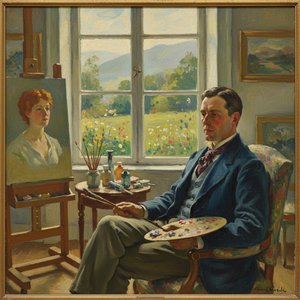
Francis Cadell: A Study in Scottish Colourism & Intimate Portraiture
Explore the captivating world of Francis Campbell Cadell, a leading Scottish Colourist. Discover his elegant Edinburgh interiors, vibrant portraits & unique style. Learn about his influences and enduring legacy with OriginalUniqueArt.
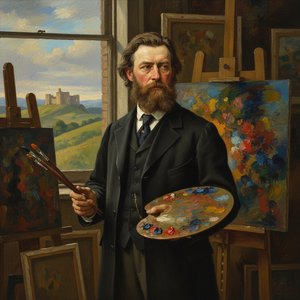
George Paul Chalmers: Rediscovering the Angus Rembrandt & Scottish Colourist Roots
Explore the captivating world of George Paul Chalmers (1833-1878), a pivotal Scottish painter. Discover his landscapes, portraits & connection to the Aesthetic Movement and Colourists. Learn about this 'Angus Rembrandt's' legacy with OriginalUniqueArt.

David Roberts: A Scottish Pioneer of Topographical Art & Orientalist Vision
Explore the captivating world of David Roberts, a pioneering Scottish painter renowned for his detailed Orientalist scenes & stunning Egyptian landscapes. Discover his legacy and find museum-quality reproductions at OriginalUniqueArt.
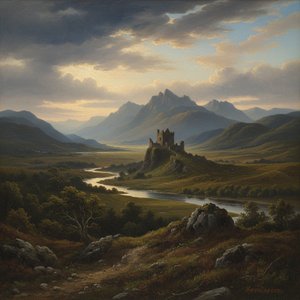
Alexander Nasmyth: Picturing Scotland's Romantic Landscape – Innovation & Identity
Explore the life & art of Alexander Nasmyth, a pivotal figure in Scottish Romantic landscape painting. Discover his iconic works, including portraits of Robert Burns, and learn about his lasting influence on national identity. Fine art reproductions available.


