
 Peinture à l'huile
 Tout sur Circus

































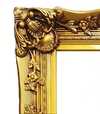
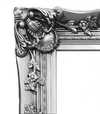

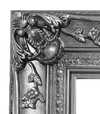


 Pour les œuvres ou reproductions dont un côté mesure plus de 105 cm (environ 41 pouces), le cadre sera expédié sous forme de kit démonté. Cette méthode garantit une livraison sécurisée et prévient tout dommage pendant le transport.


A Street Parade in Motion
The canvas depicts a crowded street parade composed of numerous figures moving through an urban setting. At the center of the composition, a group of clowns occupies the foreground, their forms defined by simplified shapes and bold outlines. Several umbrellas are positioned among the crowd, their tilted angles creating diagonal lines that direct the eye across the scene. The figures, including musicians and performers, overlap one another, creating a sense of dense, continuous movement. Buildings form a backdrop behind the procession, rendered with flattened perspective and minimal depth. The color palette relies on saturated tones of yellow, blue, red, and brown, applied with loose, expressive brushstrokes that leave a visible texture on the surface.
Compositional Elements and Technique
The application of oil paint on canvas results in a surface characterized by uneven, painterly textures. The lighting remains flat and even across the entire scene, avoiding deep shadows or a single, defined light source. This lack of chiaroscuro contributes to a dreamlike quality in the depiction of the performers. The technical execution emphasizes the following characteristics:
- Simplified, stylized forms in the depiction of costumes and facial features.
- A flattened perspective that prioritizes the arrangement of figures over realistic spatial depth.
- Loose brushwork that focuses on the essence of the movement rather than meticulous detail.
- A color scheme dominated by primary and earthy tones.
Style and Artistic Context
The work is executed in a folk art or naïve style, prioritizing emotional expression through simplified geometry. This approach avoids the precise rendering found in academic realism, opting instead for a direct and unembellished representation of the subject. The composition reflects the influence of the Hungarian landscape school through its focus on tonal harmony, even as the subject matter shifts toward a social scene. The circus theme functions as a symbol of spectacle and public gathering, presenting a scene of organized chaos through the use of saturated colors and rhythmic, overlapping shapes.
Questions et réponses
Est-ce que Circus est peint à la main ou est-ce une impression ?
Peint à la main : un peintre professionnel reproduit Circus à l'huile sur une toile en lin.
Quelle taille choisir pour Circus ?
Les tailles vont de 26.6 x 37.6 cm (€336) à 169.4 x 240.1 cm (€1690) ; le tableau sur cette page présente les principales étapes et leurs prix respectifs.
Quel est le délai de livraison ?
La livraison prend 4 à 5 semaines, avec une expédition express mondiale gratuite ; une option de production urgente est proposée sur cette page. Vous pouvez la retourner sous 100 jours pour un remboursement intégral, sans condition.
Quelle technique David Jandi a-t-il utilisée pour Circus ?
Oil On Canvas
 Aperçu en situation

 Envoyer
 Partager
 Détails de l'œuvre
 Fiche pédagogique


 Télécharger l'image
 Articles similaires
 Radiographie
 Diaporama
 Questions et réponses

 Statistiques


