
() ·
 On your wall: 4 m wide, sofa 2 m
A painting made for you, by hand
Reproduction à l'huile faite à la main
Huile sur toile peinte à la main, avec cadre et dimensions personnalisés, réalisée sur commande par nos artistes. ( Passer au format impression Passer au format numérique)
Biographie de l'artiste
Pierre-Jean David d'Angers (1788-1856) : Explorez les sculptures et portraits néoclassiques de ce célèbre artiste français. Connu pour ses œuvres monumentales comme la frise du Panthéon, il a immortalisé des figures héroïques.
 Lire la suite
from ·
Chapter 1
How large should it be?
Slide to change the size; the wall on the left shows it at its real scale. The proportions of the original are kept.
Choisissez parmi nos formats prédéfinis qui respectent les proportions originales de l’œuvre.

Saisissez la largeur et la hauteur souhaitées, pour s'adapter à votre cadre ou à votre mur. Cette œuvre est peinte à la main ; ainsi, pour un format de forme différente, l'artiste peut peindre un peu plus autour du tableau ou réduire légèrement les bords — c'est vous qui choisissez. Nous vous envoyons une maquette numérique pour approbation avant que la peinture ne commence. L'image présentée sur cette page ne reflète pas le résultat réel — seule la maquette le fait.
Chapter 2
How should it arrive?
Choose the edges of the stretched canvas
Choose your frame

White €1

Blurside €1

Extended €1

P118B €10

P118H €10

P118W €10

P438Z €10

P508JH €12

P508YH €12

P805H €10

P805Z €10

P919BZ €10

P919G €10

P919XJ €10

P959ZH €10

P968JZ €12

W106C €8

W218G €10

W218JH €8

W218Y €10

W307PJ €10

W316G €10

W316PJ €8

W316Y €10

W398PJ €8

W4111J €10

W500HY €15

W500JH €15

W692G €12

W849H €8

W940BG €15

W953PJ €8

H24-GOLD €30

H24-SILVER €30

H36-GOLD €45

H36-SILVER €45
Sous cadre
Moulding: . Overall size with the frame: .
Chapter 3
Who paints it, and should anything change?
After order, OriginalUniqueArt.com team will email client for instructions and provide a mockup preview
Livraison dans le monde entier () en 3 à 4 semaines au lieu des 5 semaines habituelles. (29 octobre). Aucun compromis sur la qualité.
Chapter 4
The finishing touches
A nameplate, as in a museum?
Détails de la plaque en bronze gravée
This elegant plaque features the artist's name and the title of the artwork, finely engraved for a timeless presentation.
It is made from bronze with a refined, elegant finish. The text is precisely laser-engraved for a sharp and permanent result. Measuring 9x2 cm, the plaque is compact yet easy to read. It's built to be durable and scratch-resistant, offering a professional, museum-quality look. Mounting is simple thanks to the included adhesive backing.
Détails de la plaque en acrylique transparent
The plaque includes essential engraved details such as the artist's name, the title of the artwork, the date it was created, the type of media used-like oil on canvas or watercolor-a brief description of the piece, and a QR code that links to the complete artwork information.
It is crafted from clear acrylic, offering a sleek, modern appearance. The text is UV-engraved in black to ensure strong visual contrast. With a size of 10x15 cm, it ensures optimal readability. It comes equipped with two metal hooks for secure wall mounting. The plaque is designed to be weather-resistant, making it suitable for various environments, and it includes interactive features that work seamlessly with smartphone scanning.
Détails de la plaque en acrylique noir
This elegant plaque includes engraved information such as the artist's name, the title of the artwork, the date it was created, the type of media used (like oil on canvas or watercolor), a short description of the artwork, and a QR code for quick access to more information.
The plaque itself is made from refined black acrylic with a premium finish. The text is laser-engraved in white for high contrast and readability. Its size is 10x15 cm, designed to be easy to read. It comes with two metal hooks for professional mounting. The design is sleek and fits any interior style. It is also weather-resistant and durable, with built-in digital integration for mobile compatibility.
A protective varnish?
When do you need it?
Chapter 5
Your painting, as you ordered it

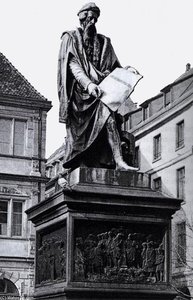
Gutenberg
Technique de reproduction
Format de la reproduction
-

Artiste de prestige
Plus de détails, de finesse et un temps de production accru
-

Cadre de reproduction
-
-
Pour les œuvres ou reproductions dont un côté mesure plus de 105 cm (environ 41 pouces), le cadre sera expédié sous forme de kit démonté. Cette méthode garantit une livraison sécurisée et prévient tout dommage pendant le transport.
Assemblage professionnel requis - ce produit n'est pas destiné au bricolage (DIY).
Le kit doit être assemblé et la toile tendue par un encadreur professionnel expérimenté, en utilisant de la colle à bois (non fournie), une pince à tendre la toile et des serre-joints pour maintenir les traverses d'équerre pendant le séchage de la colle. Un assemblage incorrect ou une tension inégale de la toile peut endommager l'œuvre de manière irréversible et n'est pas couvert par notre garantie.
 Pour les œuvres ou reproductions dont un côté mesure plus de 105 cm (environ 41 pouces), le cadre sera expédié sous forme de kit démonté. Cette méthode garantit une livraison sécurisée et prévient tout dommage pendant le transport.
Toutes les baguettes en bois massif sont incluses, découpées avec précision à la taille requise.
À assembler avec les vis fournies, ainsi qu'avec de la colle à bois pour les assemblages d'angles (non fournie), à prévoir par votre encadreur.
L'utilisation d'outils professionnels est requise et non incluse : une pince à tendre la toile (tendeur) et des serre-joints pour maintenir les baguettes bien d'équerre pendant le séchage de la colle.
Important :
L'assemblage des angles nécessite de la colle à bois, les barres doivent être maintenues avec des serre-joints jusqu'au séchage complet de la colle, et le tendage de la toile sur le châssis assemblé nécessite une pince à tendre la toile. Aucun de ces éléments n'est inclus dans le kit. Veuillez consulter un encadreur professionnel expérimenté avant de commander ce format.

Cartel
-
-

Vernis de protection
Vernis brillant (intensifie les couleurs, protège de la lumière et de l'humidité)
-

Personnaliser mon œuvre
Exemples de personnalisation : remplacer le visage par une photo du client ; ajouter un animal de compagnie (par exemple, remplacer un chat par un chien) ; inclure un message caché en arrière-plan ; modifier le paysage ou les éléments d'arrière-plan.
-

Livraison urgente
Livraison dans le monde entier () en 3 à 4 semaines au lieu des 5 semaines habituelles. (29 octobre). Aucune concession sur la qualité.
-
Livraison express
Livraison dans le monde entier () sous 5 semaines. (5 novembre).
Inclus
Prix total
€ 265
L'option verre n'est disponible que pour les dimensions inférieures à 110 cm.
Included with every order
- Livraison express gratuite dans le monde entier
- Toile de lin de qualité supérieure
- Assurance transport complète
- Garantie de remboursement des droits de douane
- Garantie de fidélité des couleurs
- Politique de retour de 100 jours (uniquement en cas de défaut)
- Garantie de remboursement à 100%
- Offre de tarifs dégressifs


In numbers
- 1840the year it was painted
- 29frames to choose from
- standard sizes, in its own proportions
- 5weeks to paint and deliver it
About the original


David D'Angers
1788 - 1856, France
L'essentiel de l'artiste
- Artistic Movement Or Style: Néoclassicisme
- Artists Who Influenced This Artist:
- Michelangelo Buonarroti
- Jacques-Louis David
- Date Of Birth: 12 mars 1789
- Date Of Death: 4 janvier 1856
- Full Name: Pierre-Jean David d’Angers
- Nationality: Français
- Notable Artworks:
- Pantéon
- Équestre Gobert
- Place Of Birth: Angers, France
Biographie de l'artiste
Pierre-Jean David d’Angers : Le Sculpteur de l'Idéalisme Héroïque
Pierre-Jean David d’Angers (1788 – 1856) s'impose comme une figure charnière du paysage artistique néoclassique en France, incarnant l'esprit de l'idéalisme républicain et la grandeur de la sculpture monumentale. Né à Angers, dans la Loiret, sa jeunesse fut marquée par des liens familiaux profonds avec l'armée républicaine — son père, lui-même sculpteur et graveur sur bois, prit part vaillamment à la lutte contre la rébellion chouanne — une expérience formatrice qui instilla en lui un profond sens du devoir civique et une vision de l'expression artistique comme instrument de fierté nationale. Cet héritage façonna profondément sa trajectoire, le propulsant vers une carrière distinguée centrée sur la sculpture et le modelage, particulièrement durant la période influente de l'atelier de Jacques-Louis David.- Formation Initiale et Influences : Les années de formation de David furent consacrées au perfectionnement de son art sous la direction de Jean-Jacques Delusse et Philippe-Laurent Roland à Paris, où il absorba les préceptes stylistiques du Romantisme ainsi que l'héritage durable de la sculpture classique. Notamment, sa rencontre avec Antonio Canova — un sculpteur dont l'attention méticuleuse aux détails anatomiques et le portrait émotif captivèrent l'imagination de David — établit un lien crucial avec les traditions artistiques de Rome qui allait définir son œuvre entière.
- L'École des Beaux-Arts et le Prix de Rome : Reconnaissant son talent, David fut admis à l'École des Beaux-Arts en 1808, où il excella, culminant par une victoire au concours de l'École pour la tête d'expression, avant de remporter le prestigieux Prix de Rome en 1811. Cette bourse lui offrit un accès inégalé aux idéaux artistiques romains et lui permit de développer sa technique sculpturale — caractérisée par une maîtrise magistrale du marbre et du bronze — affinant davantage sa capacité à capturer l'émotion humaine et la grandeur héroïque.
- Période Romaine et Évolution Artistique : Le séjour de cinq ans de David à Rome s'avéra transformateur, favorisant des collaborations avec ses pairs et l'immergeant dans la ferveur artistique de l'époque. Il étudia méticuleusement les œuvres de Michel-Ange et du Bernin, absorbant leurs techniques et leurs sensibilités stylistiques — des influences qui imprégneront ses sculptures et gravures ultérieures. Durant cette période, il entreprit des expéditions à Venise, Naples et Florence, élargissant ses horizons artistiques et enrichissant sa compréhension de l'histoire de l'art classique.
- Sculpture Monumentale et Commandes Notables : La réputation de David s'envola en tant que sculpteur durant la période de la Restauration, lui assurant des commandes d'œuvres monumentales qui ancrèrent sa place dans l'histoire culturelle française. Parmi ses accomplissements les plus célèbres figurent la frise du Panthéon — une représentation époustouflante de la mythologie romaine commandée pour commémorer le triomphe de Napoléon Bonaparte — la statue équestre du maréchal Jacques-Nicolas Gobert érigée au cimetière du Père Lachaise — ainsi que la sculpture monumentale célébrant le libérateur grec Markos Botsaris, témoignage de l'engagement de David à représenter des figures héroïques avec une conviction inébranlable.
- Héritage et Reconnaissance : La production prolifique de David engloba plus de 500 médaillons et bustes, capturant les portraits de sommités de toute l'Europe — incluant Voltaire, Rousseau, Goethe, Napoléon Bonaparte et Friedrich Schiller — démontrant sa polyvalence d'artiste et consolidant son influence durable sur les générations suivantes de sculpteurs. Son dévouement sans faille aux idéaux classiques et sa capacité à transmettre une émotion profonde à travers la forme sculpturale garantirent que David d’Angers resterait une figure vénérée dans les annales de l'histoire de l'art français, assurant sa place parmi les plus grands sculpteurs de son temps.
Œuvres Clés et Style Artistique
Le style artistique de David se caractérise par un engagement indéfectible envers les principes néoclassiques — spécifiquement la précision anatomique, la beauté idéalisée et la composition dramatique — reflétant l'influence de Michel-Ange et du Bernin. Il employa avec brio le marbre et le bronze pour transmettre l'émotion et la grandeur, privilégiant la clarté de la forme et le geste expressif au détriment du simple embellissement décoratif. Ses sculptures sont imprégnées d'un sentiment palpable de pathos et de noblesse, capturant des instants d'expérience humaine profonde avec un détail méticuleux et une conviction sans faille. La frise du Panthéon illustre sa maîtrise de la sculpture monumentale, présentant une entreprise ambitieuse qui célèbre la mythologie romaine et commémore la victoire de Napoléon Bonaparte — véritable témoignage de l'ambition et de la vision artistique de David. De même, la statue équestre du maréchal Gobert s'érige comme un symbole de la prouesse militaire française et de la vertu civique, démontrant la capacité de David à élever la forme sculpturale pour en faire un véhicule capable de transmettre des récits complexes et une résonance émotionnelle profonde.More about this painting
 Aperçu en situation
 Envoyer
 Partager
 Détails de l'œuvre
 Guide
Guide

 Télécharger l'image
 Articles similaires
 Radiographie
 Diaporama
 Q&A
Q&A Statistiques