

 Aperçu en situation
 Partager
 Partager
 Détails
 Guide imprimable

 Télécharger
 Articles similaires
 Radiographie
 Voir le diaporama
 Statistiques
Cuenca
 Oil On Canvas
- WallArt
- Cubist Landscape
 1934
1934- Modern
 32.0 x 40.0 cm
 Walker Art Gallery
 Afficher la suite
L’œuvre d'art présentée sur cette page est protégée par le droit d'auteur, ce qui signifie que nous ne pouvons légalement créer ou vendre de reproduction identique. Cette protection est appliquée en vertu d'accords internationaux tels que la Convention de Berne et par les lois nationales, notamment celles énoncées par le Loi américaine sur le droit d'auteur - Titre 17.
Cette méthode est pleinement conforme aux réglementations sur le droit d'auteur car elle ne repose pas sur la copie ou la duplication de l'œuvre protégée. Il s'agit plutôt d'une réinterprétation créative — une nouvelle peinture qui s'inspire de l'original sans pour autant lui être identique.
Giclées et impressions d'art
Impressions giclées ou sur toile de qualité musée, avec une production rapide et des finitions au choix. ( Acheter la peinture faite à la main Passer au format image numérique)




P118B €10

P118H €10

P118W €10

P438Z €10

P508JH €12

P508YH €12

P805H €10

P805Z €10

P919BZ €10

P919G €10

P919XJ €10

P959ZH €10

P968JZ €12

W106C €8

W218G €10

W218JH €8

W218Y €10

W307PJ €10

W316G €10

W316PJ €8

W316Y €10

W398PJ €8

W4111J €10

W500HY €15

W500JH €15

W692G €12

W849H €8

W940BG €15

W953PJ €8




Choisissez parmi nos formats prédéfinis qui respectent les proportions originales de l’œuvre.

Saisissez la largeur et la hauteur souhaitées pour qu'elles s'adaptent à votre cadre ou à votre mur. Une impression ne peut être que découpée, elle ne peut jamais être agrandie au-delà de l'image originale ; ainsi, un format de forme différente entraînera la perte d'une partie de l'image. Nous vous envoyons une maquette numérique pour approbation avant toute impression. L'image présentée sur cette page ne montre pas le recadrage réel — seule la maquette le permet.
Livraison dans le monde entier () en 2 semaines au lieu des 4/5 semaines habituelles. (18 octobre)

Livraison express gratuite dans le monde entier

Toile de lin de haute qualité

Assurance transport complète

Garantie de remboursement des droits de douane

Garantie de fidélité des couleurs

Garantie de retour de 100 jours (uniquement en cas de défaut)

Garantie de remboursement à 100%

Tarifs dégressifs sur quantité
 L'option verre n'est disponible que pour les dimensions inférieures à 110 cm.

Cuenca
Giclées et impressions d'art
Format de la reproduction
-


Prix total final
€ 70
A Mountain Reverie: The Soul of Cuenca
In his 1934 masterpiece, Cuenca, David Bomberg invites the viewer into a profound meditation on solitude and the enduring resilience of life amidst the overwhelming grandeur of nature. This oil on canvas transcends a mere topographical record of a Spanish hillside; it is an evocative window into a landscape where human presence and geological majesty exist in a delicate, poetic tension. The painting captures a panoramic view of a town nestled precariously yet harmoniously upon a rugged slope, where humble dwellings are scattered like quiet thoughts across the vast, undulating terrain. Through his masterful command of the medium, Bomberg distills the essence of this mountainous vista, offering an experience that is as much about emotional depth as it is about visual splendor.
The composition is anchored by a sense of monumental scale, with towering mountains dominating the horizon and creating a backdrop of immense power. In the foreground, trees punctuate the view, providing essential textural contrast and guiding the eye into the expansive scene. The sky, draped in soft, cloudy layers, lends an atmospheric weight to the work, suggesting the shifting moods of a mountain climate. This deliberate framing creates a captivating dialogue between the intimacy of the human settlement and the infinite scale of the natural world, fostering a contemplative space where themes of permanence and vulnerability intertwine.
Technique and the Language of Form
Rooted in the transformative principles of Modernism, Cuenca showcases Bomberg’s sophisticated engagement with the legacies of Cubism and the structural insights of Cézanne. The artist employs a technique that prioritizes geometric simplification and multiple perspectives to sculpt spatial depth within the landscape. Rather than relying on rigid outlines, he utilizes loose, expressive brushstrokes that capture the very dynamism of the mountain air, imbuing the scene with a palpable sense of movement and life. This fluid application of paint allows the forms of the mountains and buildings to emerge organically from the canvas.
The color palette is masterfully restrained, leaning toward muted, earthy tones—predominantly rich browns and deep greens—that reflect the subdued, soulful hues characteristic of an autumnal landscape. Bomberg’s skillful use of tonal gradations allows him to define mass and volume, creating a sense of "the artist's consciousness of mass." This approach ensures that every element, from the smallest stone structure to the most distant peak, possesses a physical presence that feels both grounded and ethereal. For the discerning collector or interior designer, this work offers a sophisticated interplay of texture and tone, making it a timeless addition to any curated space.
Historical Resonance and Emotional Impact
To understand Cuenca is to understand a pivotal moment in Bomberg’s artistic evolution. Created during a period when the artist was moving away from the radical, fractured geometries of his earlier Cubo-Futurist years, this work represents a return to an aesthetic rooted in nature and organic form. The trauma of the First World War and the subsequent shift toward a more figurative, landscape-driven style are palpable here; there is a search for the sublime within the natural world that replaces the mechanical fervor of his youth. The painting reflects a period of profound transition, where the artist sought to realize the poetry found in mankind's contemplation of nature.
The emotional impact of the piece lies in its ability to evoke a sense of quiet awe. It is a work that speaks to the heart of anyone moved by the beauty of the untamed world and the quiet strength of those who inhabit it. Whether viewed as a study of light and shadow or as a symbolic representation of human endurance, Cuenca remains a visually arresting composition. For those seeking to bring a sense of historical depth and tranquil majesty into their surroundings, this reproduction serves as a powerful testament to Bomberg’s ability to capture the very breath of the landscape.
Questions et réponses
De quoi est fait « Cuenca » ?
Le médium de «Cuenca» de David Bomberg est Oil On Canvas. Les reproductions visent à restituer l'aspect de cette technique.
Puis-je voir «Cuenca» de David Bomberg sous différents éclairages ?
La vue X de «Cuenca» de David Bomberg se trouve sur la page Rayons X de l'œuvre : une exploration interactive de l'image à travers onze couches optiques.
Est-ce que David Bomberg, créateur de « Cuenca », est connu sous d'autres noms ?
David Bomberg est également connu sous le nom de David Garshen Bomberg.
Biographie de l'artiste
Jeunesse et Formation Artistique
- Né : Birmingham, Royaume-Uni (5 décembre 1890)
- Décédé : Londres, Royaume-Uni (19 août 1957)
- L'un des 'Whitechapel Boys' – un groupe d'artistes de l'East End qui ont émergé au début du XXe siècle.
Né dans une famille immigrante polonaise-juive, Abraham et Rebecca Bomberg, à Birmingham. La famille a déménagé à Whitechapel, Londres, en 1895.
A étudié initialement à la City and Guilds Technical Art School avant de se former comme lithographe à Birmingham.
A étudié sous Walter Sickert à Westminster School of Art (1908-1910), où il a été influencé par l'accent mis par Sickert sur la forme et la vie urbaine.
Exposition significative à Paul Cézanne grâce à l'exposition de 1910 de Roger Fry "Manet et les post-impressionnistes".
A fréquenté la Slade School of Art (1911), remportant le prix Tonks pour son dessin du camarade étudiant Isaac Rosenberg.
Les Années d'Avant-Garde : Cubisme, Futurisme et Controverse
- À la Slade, Bomberg faisait partie d'une génération remarquable comprenant Mark Gertler, Stanley Spencer, C.R.W. Nevinson et Dora Carrington.
- Influencé par les expositions londoniennes de 1912 des Futurs italiens et la deuxième exposition post-impressionniste de Fry (Picasso, Matisse, Fauves, Wyndham Lewis).
- A développé un style distinctif combinant le Cubisme et le Futurisme – caractérisé par des compositions géométriques, des palettes de couleurs limitées, des figures angulaires et des structures en forme de grille.
- Son approche radicale a conduit à son expulsion de la Slade School of Art en 1913, jugé trop audacieux pour les méthodes conventionnelles de l'institution.
- A été brièvement associé à l'Omega Workshops du Bloomsbury Group et a exposé avec le Camden Town Group.
- A montré une affinité avec le mouvement Vorticiste de Wyndham Lewis mais est resté indépendant, refusant toute implication complète.
De la Guerre au Paysage : Un Changement de Style
Les expériences en tant que soldat pendant la Première mondiale ont profondément influencé sa vision artistique, conduisant à un éloignement de l'abstraction.
Dans les années 1920, Bomberg a adopté un style plus figuratif, se concentrant sur des portraits et des paysages tirés directement de la nature.
A développé une technique expressionniste de plus en plus marquée, caractérisée par un impasto texturé et une intensité émotionnelle.
De nombreux voyages à travers le Moyen-Orient (en particulier la Palestine) et l'Europe ont considérablement influencé son œuvre ultérieure. Ses représentations de Jérusalem sont particulièrement notables.
Les Dernières Années et Héritage
- De 1945 à 1953, a enseigné à Borough Polytechnic (aujourd'hui London South Bank University), influençant une génération d'artistes dont Frank Auerbach, Leon Kossoff, Philip Holmes, Cliff Holden, Edna Mann, Dorothy Mead, Gustav Metzger, Dennis Creffield, Cecil Bailey et Miles Richmond.
- A épousé la peintre de paysages Lilian Holt.
- Malgré des périodes d'obscurité relative pendant sa vie, l'œuvre de Bomberg a acquis une reconnaissance croissante ces dernières décennies en tant que contribution significative à l'art britannique moderne.
- La David Bomberg House se trouve à London South Bank University en son honneur.
- Son héritage réside dans sa synthèse unique des mouvements d'avant-garde européens et son développement ultérieur d'un style de paysage puissant et expressif qui capturait l'essence du lieu et de l'expérience humaine.

David Bomberg
1890 - 1957 , Royaume-Uni
En bref
- Artistes Influencés:
- Frank Auerbach
- Leon Kossoff
- Artistes Influents:
- Paul Cézanne
- Walter Sickert
- Date De Décès: 19 août 1957
- Date De Naissance: 5 décembre 1890
- Lieu De Naissance: Birmingham, Royaume-Uni
- Mouvement Artistique:
- Cubisme
- Futurisme
- Expressionnisme
- Nationalité: Britannique
- Nom Complet: David Garshen Bomberg
- Oeuvres Notables:
- Self Portrait (1937)
- Jerusalem
- Kitty...
Articles similaires

David Cox the Elder: Landscape, Light & the Romantic Vision of Rural England
Explore the captivating landscapes of David Cox the Elder, a pivotal figure in British Romanticism. Discover his masterful watercolour techniques, enduring legacy & find timeless art for your home at OriginalUniqueArt.

Évocations de lieux : Un voyage historique à travers l'art du paysage
Explorez l'histoire fascinante de la peinture de paysage à travers les chefs-d'œuvre du Romantisme. Découvrez Friedrich, Turner et Aivazovski et laissez-vous inspirer par la beauté sauvage et le sublime. Reproduction d'art de qualité chez OriginalUniqueArt.

Constable : Les 25 Chefs-d'Œuvre du Maître Anglais | OriginalUniqueArt
Plongez dans l'univers de John Constable avec les 25 œuvres incontournables du maître anglais. Découvrez l'histoire, la technique et l'émotion derrière ses paysages romantiques. Reproductions de qualité muséale sur OriginalUniqueArt.com.
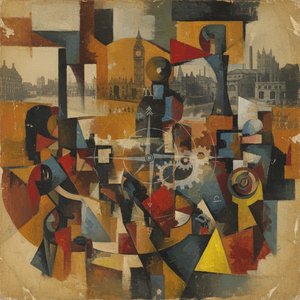
David Bomberg: Reassessing the Pioneering Spirit of Early British Abstraction
Explore the groundbreaking work of David Bomberg, a pivotal figure in British abstraction. Discover his artistic evolution, influences, and lasting legacy through insightful analysis & expert commentary.

Les 10 Chefs-d'œuvre du Paysage Romantique : Artistes et Décor d'Intérieur
Plongez dans l'émotion du Romantisme avec les 10 plus beaux paysages de Friedrich, Turner & Delacroix. Découvrez leur histoire et trouvez l'inspiration déco idéale sur OriginalUniqueArt.com !


