
 Aperçu en situation
 Envoyer
 Partager
 Détails de l'œuvre
 Guide
Guide

 Télécharger l'image
 Articles similaires
 Radiographie
 Diaporama
 Questions et réponses
 Statistiques
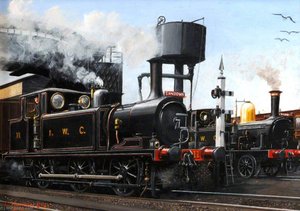
McMullen Steam Engine

- 28.0 x 37.0 cm

 Lire la suite
Obtenez un fichier prêt pour l'impression qui dépasse de loin la qualité de l'aperçu web. Chaque image numérique que nous proposons est issue d'un fichier maître haute résolution de notre base de données — mesurant généralement entre 5 000 et 15 000 pixels de large — vous permettant ainsi d'imprimer en grand format, de recadrer avec précision ou de reproduire les détails les plus fins en toute confiance.
Aucun fichier ne quitte notre studio sans être retouché. Un expert numérique vérifie la colorimétrie par rapport à l'œuvre originale et la corrige si nécessaire, puis améliore la clarté et les détails à l'aide d'outils de retouche professionnels — tout en restant toujours fidèle au coup de pinceau et au style de l'artiste. Le résultat est une image qui ressemble au tableau, et non à un simple scan filtré.
Validez avant de finaliser : notre expert vous envoie l'image par e-mail sous 72 heures pour examen. Non satisfait ? Demandez des améliorations ou des corrections, ou demandez un remboursement si la qualité ne répond pas à vos attentes.
C'est une qualité sur laquelle s'appuient éditeurs, studios de création, galeries et ateliers d'impression.
Image numérique
Téléchargez un fichier haute résolution pour votre usage personnel, l'impression et vos projets créatifs. ( Passer au format impression Commander la reproduction peinte à la main)
Inclus avec chaque commande d'image numérique
Livraison numérique experte, garantie.
En choisissant OriginalUniqueArt.com, vous n'obtenez pas seulement une simple image : vous recevez une œuvre numérique sublimée avec professionnalisme, conçue avec précision et accompagnée d'une garantie de satisfaction. Voici tout ce qui accompagne automatiquement votre commande :

Envoi rapide par e-mail
Votre fichier d'image numérique haute résolution vous sera envoyé par e-mail sous 72 heures après votre commande — prêt à un usage immédiat.

Fichier numérique optimisé par l'IA
Votre œuvre d'art bénéficie d'une optimisation professionnelle grâce à des outils d'IA avancés et une retouche manuelle, garantissant un niveau maximal de détail, de clarté et de fidélité chromatique.

Réexpédition gratuite à vie
Vous avez accidentellement supprimé ou perdu votre fichier ? Pas d'inquiétude — nous vous le renverrons gratuitement, quand vous le souhaitez.

Aucuns frais de douane — À jamais
Profitez de votre œuvre d'art instantanément sans frais de douane ni de livraison — les téléchargements numériques sont toujours exonérés de taxes.

Garantie de fidélité des couleurs
Nous garantissons que votre image numérique reproduit les couleurs de l'original aussi fidèlement que possible grâce à des outils professionnels et une gestion rigoureuse des couleurs.

Garantie de satisfaction 100 jours
Si vous n'êtes pas satisfait de votre image numérique, nous la retoucherons ou vous rembourserons 100% sous 100 jours — sans poser de questions.

Garantie de remboursement à 100%
Pas satisfait ? Obtenez un remboursement intégral dans les 100 jours suivant la réception de votre fichier numérique — sans aucune question posée.

Réductions sur les commandes groupées
Achetez 3 images, économisez 10% - Achetez 5, économisez 15% - Achetez 10+, économisez 20%. Idéal pour les projets créatifs, les galeries et les agences.
Biographie de l'artiste
Le Visionnaire de la Vapeur : La Vie et l'Héritage de Cuthbert Hamilton Ellis
Cuthbert Hamilton Ellis, affectueusement surnommé « Chip » par beaucoup, était bien plus qu'un simple chroniqueur de locomotives ; il était un poète de l'ère industrielle. Né le 29 juin 1909 à Raynes Park, dans le Surrey, son âme fut irrévocablement liée au pouls rythmique du chemin de fer dès son plus jeune âge. Ses souvenirs d'enfance, faits de voyages à vapeur à travers les paysages luxuriants de Cornouailles, servirent de fondation et d'inspiration à une vie dédiée à capturer la grandeur du cheval de fer. Cette fascination profonde allait finalement s'épanouir en un double héritage, celui d'un écrivain distingué et d'un peintre méticuleux, faisant de lui l'une des figures les plus marquantes de l'art ferroviaire du XXe siècle.
Son parcours intellectuel fut marqué par un mélange éclectique d'éducation classique et de curiosité technique. Formé dans la prestigieuse Westminster School, Ellis y cultiva un amour pour la littérature qui allait plus tard nourrir sa prose évocatrice, tout en développant un intérêt grandissant pour la mécanique de l'ingénierie. Bien que son passage à Munich et au Exeter College d'Oxford lui ait ouvert des horizons académiques plus vastes, il est célèbre pour avoir trouvé les rigueurs traditionnelles d'Oxford quelque peu peu gratifiantes, une prise de conscience qui, peut-être, le libéra pour poursuivre un engagement plus viscéral et concret avec le monde de la vapeur et de l'acier.
Un Voyage Littéraire entre Fer et Encre
Avant que ses coups de pinceau ne soient largement célébrés, Ellis s'imposa comme une voix incontournable du journalisme ferroviaire. Sa carrière littéraire débuta remarquablement tôt, en �922, lorsqu'il rejoignit l'équipe de Country Life. Cette période fut cruciale pour affiner ses capacités descriptives et tisser des liens profonds au sein de la communauté soudée des passionnés de chemin de fer et des ingénieurs. À travers ses contributions à des publications telles que Railway Gazette et Modern Transport, il devint un commentateur respecté du progrès industriel, possédant cette capacité rare de traduire des conceptions de locomotives complexes en récits qui résonnaient tant auprès des experts que des néophytes.
La profondeur de sa contribution littéraire est attestée par une production impressionnante de trente-six ouvrages, dont beaucoup demeurent des lectures essentielles pour les historiens de l'époque. Son premier roman, The Engineer-Corporal, publié en 1939, démontra son aptitude à entrelacer la précision technique et le drame humain. Son œuvre littéraire la plus durable, The Trains we Loved, fait office d'hommage nostalgique et profondément émouvant à un mode de vie en voie de disparition. Même sous l'ombre de la Seconde Guerre mondiale, la vie d'Ellis prit des proportions cinématographiques ; travaillant sous le couvert d'un journaliste en Suisse pour Modern Transport, il aurait été impliqué dans des opérations clandestines pour le MI6, ajoutant un élément d'intrigue de haut vol à sa biographie déjà légendaire.
L'Art du Réalisme et de la Nostalgie
En tant qu'artiste, le style d'Ellis se définissait par un engagement profond envers le réalisme, tempéré par une sensibilité lyrique capturant l'essence romantique de l'ère de la vapeur. Ses peintures n'étaient pas de simples diagrammes techniques de machines ; elles étaient des études atmosphériques de la lumière, du mouvement et de l'interaction entre les merveilles humaines et le monde naturel. Qu'il s'agisse de dépeindre l'éclairage dramatique d'une locomotive au crépuscule ou la dignité tranquille d'un train traversant la campagne du Kent, son travail possédait une résonance émotionnelle indéniable.
Sa maîtrise technique lui permettait de rendre les textures métalliques et lourdes des locomotives avec une précision saisissante, sans jamais perdre de vue l'« âme » de la machine. Son œuvre présente souvent :
- Un Réalisme Détaillé : Une attention méticuleuse aux subtilités mécaniques des machines à vapeur, de l'éclat du laiton poli aux volutes de vapeur blanche tourbillonnante.
- Des Paysages Atmosphériques : L'intégration de sujets industriels dans des décors évocateurs, tels que la lumière du soir à Ventnor ou les collines vallonnées des lignes de la South Eastern Railway.
- Une Nostalgie Industrielle : Un sentiment palpable de révérence pour une époque révolue, capturant la grandeur et le déclin inévitable de l'âge de la vapeur.
Grâce à sa double maîtrise de la plume et du pinceau, Cuthbert Hamilton Ellis s'est assuré que la majesté de la locomotive à vapeur ne s'efface pas dans l'obscurité de l'histoire. Il demeure une figure pivot dont le travail sert de pont entre la puissance brute de la révolution industrielle et la tendre nostalgie du XXe siècle, préservant ainsi les battements de cœur des chemins de fer pour les générations à venir.
Cuthbert Hamilton Ellis
1909 - 1987 , Royaume-Uni
En bref
- Artistic Movement Or Style: Art ferroviaire
- Artists Or Movements Influenced By This Artist: ['Art ferroviaire']
- Artists Who Influenced This Artist:
- Gilbert Dunlop
- Ian C Allen
- Date Of Birth: 1909
- Date Of Death: 1987
- Full Name: Cuthbert Hamilton Ellis
- Nationality: Britannique
- Notable Artworks:
- No.6 'Ventnor Town'
- No.31, 'Chale'
- No.2 'Isle of Wight Central'
- Place Of Birth: Raynes Park, Surrey