

 Aperçu en situation
 Partager
 Partager
 Détails
 Guide imprimable

 Télécharger
 Articles similaires
 Radiographie
 Voir le diaporama
 Statistiques
1950-W → 1950-W
 Huile sur toile
- Art mural
- 1950-W
 1950
1950 177.0 x 107.0 cm
 Metropolitan Museum of Art
 Afficher la suite
L’œuvre d'art présentée sur cette page est protégée par le droit d'auteur, ce qui signifie que nous ne pouvons légalement créer ou vendre de reproduction identique. Cette protection est appliquée en vertu d'accords internationaux tels que la Convention de Berne et par les lois nationales, notamment celles énoncées par le Loi américaine sur le droit d'auteur - Titre 17.
Cette méthode est pleinement conforme aux réglementations sur le droit d'auteur car elle ne repose pas sur la copie ou la duplication de l'œuvre protégée. Il s'agit plutôt d'une réinterprétation créative — une nouvelle peinture qui s'inspire de l'original sans pour autant lui être identique.
Giclées et impressions d'art
Impressions giclées ou sur toile de qualité musée, avec une production rapide et des finitions au choix. ( Acheter la peinture faite à la main Passer au format image numérique)




P118B €10

P118H €10

P118W €10

P438Z €10

P508JH €12

P508YH €12

P805H €10

P805Z €10

P919BZ €10

P919G €10

P919XJ €10

P959ZH €10

P968JZ €12

W106C €8

W218G €10

W218JH €8

W218Y €10

W307PJ €10

W316G €10

W316PJ €8

W316Y €10

W398PJ €8

W4111J €10

W500HY €15

W500JH €15

W692G €12

W849H €8

W940BG €15

W953PJ €8




Choisissez parmi nos formats prédéfinis qui respectent les proportions originales de l’œuvre.

Saisissez la largeur et la hauteur souhaitées pour qu'elles s'adaptent à votre cadre ou à votre mur. Une impression ne peut être que découpée, elle ne peut jamais être agrandie au-delà de l'image originale ; ainsi, un format de forme différente entraînera la perte d'une partie de l'image. Nous vous envoyons une maquette numérique pour approbation avant toute impression. L'image présentée sur cette page ne montre pas le recadrage réel — seule la maquette le permet.
Livraison dans le monde entier () en 2 semaines au lieu des 4/5 semaines habituelles. (24 octobre)

Livraison express gratuite dans le monde entier

Toile de lin de haute qualité

Assurance transport complète

Garantie de remboursement des droits de douane

Garantie de fidélité des couleurs

Garantie de retour de 100 jours (uniquement en cas de défaut)

Garantie de remboursement à 100%

Tarifs dégressifs sur quantité
 L'option verre n'est disponible que pour les dimensions inférieures à 110 cm.

1950-W → 1950-W
Giclées et impressions d'art
Format de la reproduction
-


Prix total final
€ 70
L’Œuvre : Un Paysage Intérieur Turbulent
“1950-W” de Clyfford Still est bien plus qu’une simple peinture ; c’est une immersion dans un paysage intérieur tumultueux, une projection brute et instinctive d'émotions. Née en 1950, cette œuvre emblématique du peintre américain représente un tournant majeur dans son évolution artistique, marquant une rupture définitive avec les conventions figuratives de l’époque. La composition verticale domine, dominée par des couches successives de peinture jaune et or, créant une profondeur hypnotique et une sensation constante de mouvement. L'absence totale de perspective traditionnelle invite le spectateur à se perdre dans cette masse vibrante de couleurs, à ressentir la force brute de l’expressionnisme abstrait.

L’Artiste et le Contexte : Un Pionnier de l'Abstraction
Clyfford Still (1904-1980) est une figure essentielle de l'art américain du XXe siècle, souvent méconnue mais dont l'influence sur les mouvements artistiques ultérieurs est indéniable. Né dans un environnement rural du Dakota du Nord, il a développé un style unique caractérisé par des formes géométriques simples et anguleuses, appliquées avec une intensité émotionnelle sans précédent. Son œuvre se situe à la croisée de l'expressionnisme abstrait et du color field painting, explorant les limites de la couleur et de la matière pour exprimer des sentiments profonds et universels. Il a été un pionnier dans le rejet de la figuration, ouvrant la voie à une nouvelle génération d’artistes qui cherchaient à traduire l'expérience humaine directement sur la toile, sans recours aux représentations symboliques.
La Technique : Impasto, Gestuelle et Drip
La technique employée par Still est radicale et exigeante. Il utilise une épaisse couche de peinture (l’impasto) appliquée avec des coups de pinceau énergiques et gestuels, créant une surface rugueuse et texturée qui invite le toucher. Des coulures et des accumulations de peinture témoignent de son processus intuitif et spontané. L'absence de finesse dans l'application contraste fortement avec les techniques plus raffinées de certains contemporains, renforçant l’impression d’authenticité et de vitalité. L'utilisation audacieuse du jaune et de l'or, souvent superposés à des couches de rouge et de blanc, crée un jeu de couleurs intense et vibrant, presque douloureux dans son expressivité. La présence de ces couches sous-jacentes suggère des itérations successives, des expérimentations et une recherche constante d’équilibre entre les émotions exprimées.
Symbolisme et Émotion : Un Appel à l'Introspection
L'interprétation du symbolisme dans “1950-W” est ouverte et personnelle. Certains critiques ont vu dans ces formes géométriques anguleuses des représentations de structures mentales, d’émotions refoulées ou de forces primales. La palette de couleurs dominée par le jaune et l'or peut évoquer la lumière, la chaleur, mais aussi la passion, la colère, voire la souffrance. L'œuvre ne propose pas de réponses faciles, mais invite plutôt à une introspection profonde, à une confrontation avec les propres émotions et expériences du spectateur. Elle est un cri primal, une explosion de couleur et d’énergie qui résonne au plus profond de notre être.
Questions et réponses
Un téléchargement en haute résolution de « 1950-W → 1950-W » est-il disponible ?
Une image numérique de «1950-W → 1950-W» de Clyfford Still peut être achetée sur sa page Image numérique : un téléchargement d'image numérique haute résolution.
Quelle palette et quel sentiment "1950-W → 1950-W" associe-t-il ?
Dans « 1950-W → 1950-W », des couleurs Sombre et profond accompagnent une sensation Vibrant.
À quelle période de la carrière de Clyfford Still appartient « 1950-W → 1950-W » ?
«1950-W → 1950-W» appartient à la période Mature Period de la carrière de Clyfford Still. Cette classification relie l'œuvre à l'évolution de l'artiste.
Biographie de l'artiste
A Pioneer of Abstract Expressionism: The Life and Art of Clyfford Still
Clyfford Still, born in 1904 amidst the vast landscapes of Grandin, North Dakota, stands as a pivotal figure in the evolution of American art. His journey, marked by an unwavering commitment to artistic integrity and a relentless exploration of form and color, positioned him among the leading lights of Abstract Expressionism. Though often overshadowed by contemporaries like Jackson Pollock and Mark Rothko, Still’s contribution was foundational; he ventured into non-figurative painting earlier than many of his peers, forging a path toward a new visual language that would profoundly influence modern art. His early life, spent moving between North Dakota, Washington, and Alberta, Canada, instilled in him a deep connection to the natural world – a resonance that would echo throughout his artistic career. A brief period of study at the Art Students League in New York City in 1925 offered initial exposure to the art world, but it was his subsequent experiences teaching and painting on the West Coast that truly shaped his unique vision. He wasn’t simply seeking to depict nature; he aimed to capture its raw essence, its underlying forces of creation and destruction.From Representation to Revelation: The Development of a Unique Style
The transformation from representational work to the radical abstraction for which Still is celebrated occurred between 1938 and 1942, a period of intense experimentation and self-discovery. This shift wasn’t merely stylistic; it was profoundly philosophical. He sought to strip away all recognizable imagery, believing that true artistic expression lay in confronting the fundamental elements of painting itself – color, form, and surface. Early works like PH-616 (1929) offer a glimpse into this transitional period, showcasing his initial exploration of rural life rendered with a muted palette and evocative symbolism. These paintings weren’t simply depictions; they were imbued with a sense of longing, a quiet contemplation of the human condition within the vastness of the American landscape. As he moved further toward abstraction, these representational elements gradually dissolved into jagged planes of color, fractured surfaces, and imposing vertical forms. These weren’t merely abstract shapes; they were imbued with raw emotion, existential angst, and the sublime power of nature. He worked primarily with oil paint applied with palette knives, building up layers of texture that created a dynamic interplay between light and shadow. This technique allowed him to create surfaces that seemed to pulse with energy, inviting viewers into an immersive experience—a confrontation with the very act of painting itself.The Language of Color and Form: Key Characteristics of Still’s Work
Still's mature paintings are characterized by their monumental scale and dramatic color juxtapositions. He favored large canvases, believing that only through such expansiveness could he convey the full emotional weight of his vision. His compositions typically feature irregular, fractured planes of color – often dark and brooding hues punctuated by flashes of brighter tones. These forms aren’t simply arranged on the canvas; they seem to emerge from it, creating a sense of depth and spatial ambiguity. The vertical element is particularly significant in Still's work, representing what he termed “the vertical necessity of life” – a defiant assertion of human spirit against overwhelming forces. 1957-D No. 1, with its predominantly black and yellow palette accented by white and red, exemplifies this characteristic use of color and form to evoke powerful emotional responses. He deliberately avoided titles that might suggest specific interpretations, preferring a numerical system (e.g., “1957-D No. 1”) that emphasized the painting’s purely visual qualities. This was part of his broader effort to resist categorization and maintain control over how his work was perceived. He wanted viewers to experience the paintings directly, without preconceived notions or external narratives.Legacy and Influence: A Lasting Impact on Modern Art
Clyfford Still's influence extends far beyond his own body of work. He is considered a key progenitor of Color Field painting, a movement that emphasized the expressive potential of color as an independent element in art. His uncompromising artistic vision and rejection of conventional norms paved the way for subsequent generations of abstract painters. While he often distanced himself from the New York art world, his impact on its development was undeniable. He taught at various institutions, including Washington State University and the California School of Fine Arts, inspiring countless students to explore their own creative potential. In 1959, a comprehensive retrospective of his work at the Albright-Knox Art Gallery in Buffalo, New York, solidified his reputation as a major force in American art. Perhaps one of his most significant legacies is The Clyfford Still Museum in Denver, Colorado, which houses an extraordinary collection of over 3,125 works – representing 93 percent of his lifetime output and complete archives. This museum provides unparalleled access to the breadth and depth of his artistic vision, ensuring that his contributions will continue to be studied and appreciated for generations to come. His work continues to resonate with viewers today, offering a powerful meditation on the human condition and the enduring mysteries of existence. ## Further Exploration- Explore more about Clyfford Still’s artworks at OriginalUniqueArt.com.
- Discover the Color Field art movement.
- Learn about artists like Mark Rothko and their influence on the art world.

Clyfford Still
1904 - 1980 , États-Unis
En bref
- Artistic Movement Or Style: Expressionnisme abstrait
- Artists Or Movements Influenced By This Artist: ['Color Field painting']
- Date Of Birth: 1904
- Full Name: Clyfford Elmer Still
- Nationality: Américain
- Notable Artworks:
- PS-1
- No. 37 ou No. 19
- Place Of Birth: Grandin, États-Unis
Articles connexes

Kandinsky : Les 25 Œuvres Maîtresses d'un Pionnier de l'Art Abstrait | OriginalUniqueArt
Plongez dans l'univers vibrant de Kandinsky ! Découvrez les 25 œuvres majeures du pionnier de l'art abstrait. Explorez son expressionnisme, ses couleurs audacieuses et l'histoire fascinante derrière chaque tableau. Reproductions d'exception sur OriginalUniqueArt.com.
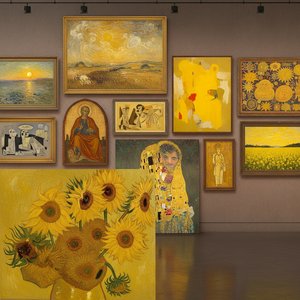
Top 10 des Tableaux Célèbres Dominés par le Jaune Chrome : Art & Décor
Plongez dans le monde vibrant du jaune chrome à travers 10 tableaux célèbres ! Découvrez l'histoire de Van Gogh, Monet et d'autres maîtres impressionnistes. Trouvez l'inspiration déco et achetez des reproductions d'art de qualité muséale sur OriginalUniqueArt.com.
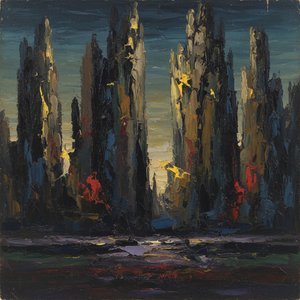
Clyfford Still's Abstract Expressionism: A Study of Color, Form & the Existential Landscape
Explore the profound world of Clyfford Still's Abstract Expressionism with OriginalUniqueArt. Discover his unique style, existential themes & investment potential. Expert analysis for discerning collectors.

Expressionnisme Abstrait : Les 10 Chefs-d'Œuvre Incontournables pour Décorer avec Art et Histoire
Plongez au cœur de l'Expressionnisme Abstrait avec ! Découvrez les 10 œuvres majeures de Pollock, Rothko et De Kooning. Histoire, techniques & inspiration déco. Explorez la collection complète en ligne.
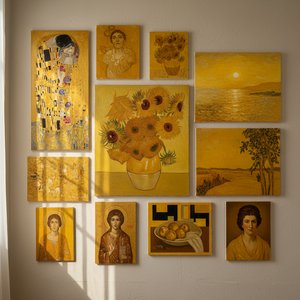
Top 10 des Tableaux Célèbres Dominés par l'Ocre Jaune : Art & Décor Intemporel
Plongez dans la magie de l'ocre jaune à travers 10 tableaux célèbres ! Découvrez les histoires, techniques et émotions derrière ces chefs-d'œuvre d'artistes comme Van Gogh & Monet. Inspirez votre décoration intérieure avec – reproductions de qualité musée.


