Passer au format impression
 Lire la suite







































 Pour les œuvres ou reproductions dont un côté mesure plus de 105 cm (environ 41 pouces), le cadre sera expédié sous forme de kit démonté. Cette méthode garantit une livraison sécurisée et prévient tout dommage pendant le transport.


La Nymphéa au Soleil Levant : Une Ode à la Lumière et à la Tranquillité
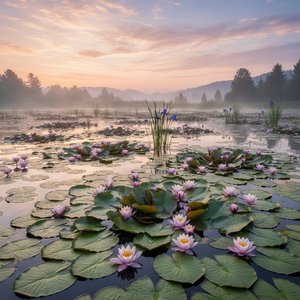
Claude Monet’s The Water-Lily Pond (left side) transcends mere depiction; it’s an immersive experience of Impressionism at its finest. Painted in 1917 during the twilight years of Monet's life—a period marked by encroaching cataracts—this monumental canvas embodies his unwavering dedication to capturing fleeting moments of beauty and transforming them into enduring art. Located prominently within the Musée Marmottan Monet in Paris, France, it stands as a testament to his artistic vision and continues to captivate audiences worldwide.- A Pioneer’s Technique: Monet revolutionized painting by prioritizing observation over meticulous detail. He embraced *plein air* painting—working outdoors directly from nature—a radical departure from the studio traditions of his time. This approach allowed him to record the subtle shifts in light and color that define a particular scene, resulting in paintings imbued with an unparalleled sense of atmosphere.
- The Essence of Impressionism: The painting’s hazy palette—dominated by greens, yellows, and muted reds—perfectly encapsulates the core principles of Impressionism. Monet skillfully blended brushstrokes to create an illusion of luminosity, mirroring the way sunlight dances on the surface of the pond and illuminating the delicate blossoms.
- Symbolic Resonance: The water lilies themselves hold profound symbolic significance. Representing purity, rebirth, and contemplation, they reflect Monet’s spiritual quest for harmony with the natural world—a pursuit that fueled his artistic endeavors throughout his life.
Historical Context & Influence
Monet's "Series paintings," like Water Lilies and Rouen Cathedrals, solidified his legacy as a pivotal figure in the artistic landscape of the late 19th and early 20th centuries. His relentless study of a single subject—transformed subtly by changing conditions—became an influential model for subsequent artists seeking to convey emotion and perception. The Musée Marmottan Monet houses a comprehensive collection showcasing Monet’s prolific output, allowing visitors to appreciate the breadth and depth of his artistic exploration.Discover More at OriginalUniqueArt.com
For those eager to delve deeper into Monet's oeuvre, OriginalUniqueArt.com offers exceptional reproductions of Claude Monet: The Water-Lily Pond (left side) and countless other masterpieces. Explore his life’s journey at Wikipedia, and immerse yourself in the beauty of Impressionism through high-quality prints available exclusively on OriginalUniqueArt.com: Claude Monet: The Water-Lily Pond (left side)A Timeless Masterpiece
Ultimately, The Water-Lily Pond (left side) remains an enduring symbol of Impressionist artistry—a celebration of light, color, and the profound connection between humanity and nature. Its serene composition invites contemplation and transports viewers to Monet’s idyllic Giverny garden, ensuring its place as a cornerstone of art history for generations to come.Questions et réponses
En quelle année et dans quel mouvement "Les nymphéas" a-t-elle été réalisée ?
«Les nymphéas» a été réalisé en 1917, au sein du mouvement Impressionist Landscape.
L'œuvre « Les nymphéas » est-elle restée dans le pays d'origine de son artiste ?
Oui — l'œuvre est conservée dans le pays d'origine de l'artiste. « Les nymphéas » est conservée en France, tandis que Claude Monet est né(e) en France.
Dans quelle pièce recommanderiez-vous d'exposer «Les nymphéas» de Claude Monet ?
L'espace recommandé pour «Les nymphéas» de Claude Monet est un Salon. Cette suggestion peut bien entendu être adaptée à votre intérieur.
 Aperçu en situation
 Envoyer
 Partager
 Détails de l'œuvre
 Guide
Guide

 Télécharger l'image
 Articles similaires
 Radiographie
 Diaporama
 Questions et réponses
 Statistiques