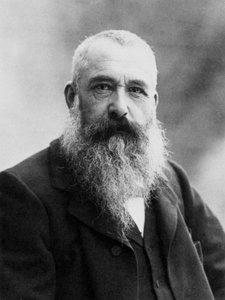
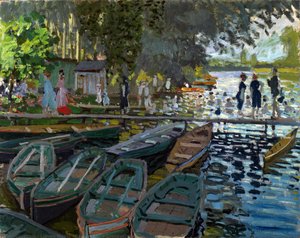
La jeunesse de Claude Monet
Pour comprendre les mécanismes de la perception moderne, il faut plonger dans les origines singulières, et souvent tumultueuses, de Claude Monet. Né le 14 novembre 1840 à Paris, en France, il était le second fils de Claude-Adolphe Monet et de Louise-Justine Aubrée Monet. Son entrée dans le monde fut marquée par un baptême formel le 20 mai 1841 à Notre-Dame-de-Lorette, à Paris, où il fut enregistré sous le nom d'Oscar-Claude. Cette première existence parisienne fut de courte durée. Dès 1845, la famille s'était installée au Havre, en Normandie, un déménagement qui déplaça son environnement du centre urbain vers l'atmosphère embrumée de sel de la côte.
La stabilité de sa jeunesse fut brisée par une perte personnelle. En janvier 1857, alors qu'il n'avait que seize ans, sa mère s'éteignit. Cet événement lui priva d'une source essentielle de soutien durant ses années de formation. Tandis que son père avait initialement envisagé pour lui une carrière dans le monde du commerce, la trajectoire de sa vie s'orientait déjà vers une préoccupation différente, plus visuelle. Le passage de la vie structurée d'un foyer parisien aux éléments imprévisibles de la Normandie lui fournit les données environnementales brutes qui allaient, finalement, définir toute son approche de la lumière et de l'atmosphère.
Formation Artistique et Premières Influences
Les fondations techniques de Claude Monet se sont bâties sur une série de leçons pratiques et sans artifice, privilégiant l'observation directe au détriment de la théorie académique. Son éducation formelle a débuté lorsqu'il a intégré l'école secondaire des arts du Havre le 1er avril 1851. Avant de s'épanouir dans le cadre structuré de l'école, il avait reçu ses premiers enseignements de dessin auprès de Jacques-François Ochard. Ces exercices de jeunesse lui ont apporté la dextérité fondamentale nécessaire à une carrière professionnelle, mais ils ne constituaient que le prélude d'une approche bien plus radicale du médium pictural.
Le véritable tournant de sa vie s'est opéré grâce à sa rencontre avec Eugène Boudin. Bien plus que de lui enseigner la maîtrise de la peinture à l'huile, Boudin lui a transmis le concept de la peinture en plein air. Cette exigence de travailler au grand air, en affrontant directement les éléments, a brisé la sécurité protectrice de l'atelier. Lorsqu'il s'installe à Paris pour étudier sous la direction de Charles Gleyre en 1862, sa trajectoire était déjà résolument tournée vers l'immédiateté et la perception sensorielle. Dans l'atelier de Gleyre, il n'était pas un étudiant isolé, mais membre d'une cohorte de peintres passionnés, parmi lesquels ses camarades Auguste Renoir et Frédéric Bazille. Ces affinités n'étaient pas de simples liens sociaux ; elles furent le creuset d'une nouvelle manière de voir, une révolution visuelle qui rejetait les environnements sombres et contrôlés du Salon traditionnel.
La Rébellion de l'Impressionnisme
L'ordre établi de l'art au XIXe siècle reposait sur les contraintes rigides et sombres du Salon académique, mais Claude Monet choisit une voie singulière. En 1874, il rejoignit un groupe d'artistes pour organiser une exposition indépendante, un défi direct lancé aux normes conservatrices de l'époque. Il ne s'agissait pas d'un simple désaccord technique, mais d'une rupture fondamentale avec la tradition. En cherchant à enregistrer le monde tel qu'il était réellement perçu par l'œil, il devint un précurseur essentiel du modernisme. Il s'éloigna du réalisme photographique et poli exigé par les académies pour se concentrer sur la sensation subjective d'une scène.
Le mouvement tira finalement son nom d'une œuvre unique : Impression, soleil levant. À l'origine, le terme « Impressionnisme » était une moquerie lancée par des critiques qui considéraient ses touches de pinceau lâches et son aspect inachevé avec dédain. Claude Monet ne chercha pas à combattre cette étiquette. Il s'en empara, utilisant le concept pour définir un style centré sur l'instant fugace et transitoire. Il remplaça les fonds sombres traditionnels par des apprêts de couleurs claires, permettant à la lumière de dicter la composition plutôt qu'à la stricte perspective linéaire.
- Impression, soleil levant (1873)
La vie à Argenteuil et Vétheuil
La période s'étendant de 1871 à 1878 à Argenteuil fut une ère d'observation intense. Installé sur les rives de la Seine, Claude Monet se concentra sur l'intimité du quotidien et l'immédiateté du regard. Cette époque vit naître des œuvres telles que La Promenade à Argenteuil, Soleil Couchant (1874), qui parvint à capturer la lumière singulière d'un crépuscule. Sa vie durant ces années fut rythmée par la présence de son épouse, Camille, et de leur fils, Jean. Cette stabilité familiale offrit un socle précieux à ses premières expérimentations sur la lumière et la couleur, avant que les pressions sociales liées au mouvement impressionniste ne s'intensifient.
Pourtant, la tragédie vint rompre ce rythme paisible. Après le décès de Camille en 1879, Claude Monet s'installa à Vétheuil, où il demeura jusqu'en 1881. Cette transition marqua un tournant décisif dans sa trajectoire personnelle et artistique. La perte de sa compagne coïncida avec une période de mutations profondes, tant dans sa vie domestique que dans sa perception du paysage. Il rejoignit ensuite Poissy, où il séjourna de 1881 à 1883. Ces années ne furent pas de simples parenthèses de transition ; elles furent essentielles pour l'artiste, affinant sa capacité unique à traduire la perception sensorielle en matière picturale.
Le Sanctuaire de Giverny
L'installation de Claude Monet à Giverny en 1883 marque un tournant décisif : il ne se contente plus d'observer la nature, il commence à la construire activement. Durant les quarante-trois années qui suivirent, il transforma cette propriété en un environnement maîtrisé, véritable laboratoire visuel conçu pour l'étude de la lumière. Il ne s'agissait pas d'un simple jardinage de plaisance, mais d'une véritable ingénierie paysagère où il façonna un décor élaboré, composé d'un bassin de nénuphars et d'un pont japonais. En manipulant le relief et l'eau, il créa un écosystème vivant où la lumière et l'élément liquide interagissaient selon ses propres termes. Il n'était plus le simple spectateur du paysage, il en était l'architecte.
L'essentiel de ses dernières années se concentra sur cet univers aquatique. Durant les trente et un dernières années de sa vie, le bassin de nénuphars devint son sujet de prédilection. Il utilisa son jardin pour documenter la manière dont la lumière dissolvait les formes et la façon dont les ombres glissaient sur la surface de l'eau. Cette période d'observation intense se traduisit par une production massive de toiles qui s'affranchissaient de la perspective traditionnelle. Son œuvre de cette époque demeure le témoignage direct de son obsession pour les qualités éphémères de sa propre création.
Technique et Style Artistique
L'approche de Claude Monet face à la toile constituait un véritable rejet des environnements sombres et contrôlés du studio traditionnel. Il privilégiait la peinture en plein air, emportant son chevalet directement au cœur des éléments imprévisibles de la nature afin de capturer la lumière dans son fonctionnement réel. Cet engagement envers l'immédiateté exigeait un vocabulaire technique bien spécifique. Il utilisait des touches rapides et visibles ainsi qu'une méthode de couleur fragmentée, appliquant des pigments non mélangés côte à côte. Ce procédé forçait l'œil du spectateur à opérer le mélange, créant une vérité optique qu'une surface lisse et estompée ne pourrait jamais atteindre. Il abandonna les fonds sombres et lourds chers à l'Académie, optant plutôt pour des apprêts de couleurs claires qui maximisaient la luminosité de sa palette.
Ses compositions délaissaient souvent la sécurité de la perspective linéaire. Au lieu de cela, il préférait les arrangements asymétriques, un choix structurel fortement influencé par les plans aplatis des estampes japonaises. Ce basculement éloigna son œuvre du modelage tridimensionnel traditionnel pour tendre vers une expérience sensorielle plus directe du sujet. Il s'intéressait moins à la forme solide d'un objet qu'à la manière dont la lumière du soleil et l'atmosphère dissolvaient ces formes en une couleur mouvante. Sa méthode était une tentative calculée d'enregistrer la sensation subjective d'une scène plutôt qu'une ressemblance photographique.
La série monumentale des Nymphéas
Les dernières décennies de la vie de Claude Monet furent consumées par une obsession singulière : le bassin aux nympheas de sa demeure de Giverny. Il ne s'agissait pas là d'un sujet de circonstance. Il produisit environ 250 peintures à l'huile de ces fleurs, une œuvre massive qui a défini sa production artistique tardive. Cette série s'est affranchie des structures paysagères traditionnelles pour se concentrer sur la surface immédiate et mouvante de l'eau. Cette période de création fut complexifiée par son déclin physique, car nombre de ces toiles furent peintes alors qu'il luttait contre la cataracte. Cette déficience visuelle a probablement influencé l'abstraction et l'importance capitale accordée à la couleur et à la lumière qui caractérisent la série.
L'échelle et la répétition des œuvres révèlent un engagement profond à documenter les qualités spécifiques et éphémères de son jardin. Il ne se contentait pas de peindre un bassin ; il enregistrait la manière dont la lumière et l'atmosphère interagissaient avec l'eau au fil du temps. La collection qui en résulte est un ensemble massif et cohérent qui privilégie l'expérience sensorielle de l'environnement au détriment des contours nets et définis. Ce fut son effort le plus soutenu, une tentative acharnée de capturer l'essence d'un sujet unique et changeant par la force même du volume et de la répétition.
Héritage et influence moderne
Claude Monet a fondamentalement altéré la trajectoire de l'art moderne. Précurseur essentiel du modernisme, il a déplacé le centre de gravité de la peinture, passant de la représentation d'objets solides à l'enregistrement de la perception visuelle pure. Ce basculement a imposé une rupture avec les contraintes rigides et sombres de la tradition académique. Son insistance à capturer la sensation subjective d'une scène a transformé la manière dont les artistes abordent la toile. Il ne se contentait pas de peindre des paysages ; il documentait la façon dont la lumière et l'atmosphère dissolvent la forme même.
Sa popularité et sa renommée ont connu un essor fulgurant durant la seconde moitié du XXe siècle. Cette résurgence a consolidé sa position d'influence majeure pour de nombreuses générations d'artistes. Sa méthode, consistant à utiliser des couleurs non mélangées et des touches fragmentées, a engendré un nouveau langage visuel tendant vers un état quasi abstrait. Cette évolution est particulièrement manifeste dans ses œuvres tardives, où la ligne d'horizon s'efface pour laisser le spectateur immergé dans un flux de couleurs mouvantes. Sa capacité à traduire la nature transitoire de la lumière dans un médium permanent demeure un point d'étude central pour quiconque explore les racines de la pensée visuelle moderne.
Où admirer ses œuvres aujourd'hui
Pour témoigner de la réalité physique de son héritage, un voyage à Paris s'impose. Le Musée Marmottan Monet abrite la plus grande collection de ses peintures au monde, offrant un regard condensé sur toute l'évolution de son génie. À proximité, le Musée d'Orsay conserve 45 de ses œuvres, présentant une densité exceptionnelle de sa production au sein d'une seule et même institution. Ces collections permettent de comparer directement la métamorphose de sa maîtrise de la lumière au fil des décennies.
L'empreinte de son influence s'étend bien au-delà des frontières françaises. Aux États-Unis, le Metropolitan Museum of Art à New York possède 25 de ses toiles, tandis que l' Art Institute of Chicago en conserve 17. Ces collections garantissent que son langage visuel demeure accessible à un public mondial. Contempler ces toiles en personne révèle la texture véritable de sa touche, qui revêt souvent un aspect bien différent sous l'éclairage des musées par rapport aux reproductions numériques.
- Impression, soleil levant (1873)
- La Promenade. La femme au parasol (1875)
- Le Pont japonais (1918)

 Passer au format impression
 Lire la suite







































 Pour les œuvres ou reproductions dont un côté mesure plus de 105 cm (environ 41 pouces), le cadre sera expédié sous forme de kit démonté. Cette méthode garantit une livraison sécurisée et prévient tout dommage pendant le transport.


 Aperçu en situation
 Envoyer
 Partager
 Détails de l'œuvre
 Guide
Guide

 Télécharger l'image
 Articles similaires
 Radiographie
 Diaporama
 Questions et réponses
 Statistiques