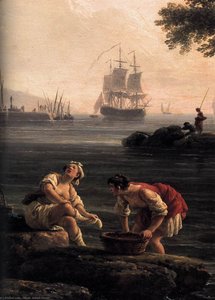
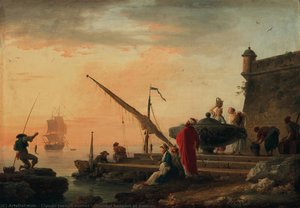
Aperçu en situation
 Partager
 Partager
 Détails
 Guide imprimable

 Télécharger
 Articles similaires
 Radiographie
 Voir le diaporama
 Statistiques
Shipwreck
 Acrylic On Canvas
- WallArt
- Rococo
 1759
1759- Late Medieval
 96.0 x 134.0 cm
 Musée Groeninge
 Afficher la suite
Giclées et impressions d'art
Impressions giclées ou sur toile de qualité musée, avec une production rapide et des finitions au choix. ( Acheter la peinture faite à la main Passer au format image numérique)




P118B €10

P118H €10

P118W €10

P438Z €10

P508JH €12

P508YH €12

P805H €10

P805Z €10

P919BZ €10

P919G €10

P919XJ €10

P959ZH €10

P968JZ €12

W106C €8

W218G €10

W218JH €8

W218Y €10

W307PJ €10

W316G €10

W316PJ €8

W316Y €10

W398PJ €8

W4111J €10

W500HY €15

W500JH €15

W692G €12

W849H €8

W940BG €15

W953PJ €8




Choisissez parmi nos formats prédéfinis qui respectent les proportions originales de l’œuvre.

Saisissez la largeur et la hauteur souhaitées pour qu'elles s'adaptent à votre cadre ou à votre mur. Une impression ne peut être que découpée, elle ne peut jamais être agrandie au-delà de l'image originale ; ainsi, un format de forme différente entraînera la perte d'une partie de l'image. Nous vous envoyons une maquette numérique pour approbation avant toute impression. L'image présentée sur cette page ne montre pas le recadrage réel — seule la maquette le permet.
Livraison dans le monde entier () en 2 semaines au lieu des 4/5 semaines habituelles. (23 octobre)

Livraison express gratuite dans le monde entier

Toile de lin de haute qualité

Assurance transport complète

Garantie de remboursement des droits de douane

Garantie de fidélité des couleurs

Garantie de retour de 100 jours (uniquement en cas de défaut)

Garantie de remboursement à 100%

Tarifs dégressifs sur quantité
 L'option verre n'est disponible que pour les dimensions inférieures à 110 cm.

Shipwreck
Giclées et impressions d'art
Format de la reproduction
-


Prix total final
€ 70
A Tempestuous Vision: The Shipwreck by Claude-Joseph Vernet
Claude-Joseph Vernet’s “Shipwreck” (1759) isn't merely a depiction of maritime disaster; it’s a visceral plunge into the heart of the sublime – that potent blend of terror, awe, and exhilaration evoked by confronting the raw power of nature. Painted during the height of the Rococo period in France, yet imbued with a dramatic intensity that anticipates Romanticism, this work transcends its subject matter to become a meditation on human vulnerability against an indifferent universe. The painting immediately commands attention with its dynamic composition, a swirling vortex of turbulent sea and bruised sky, pulling the viewer into the chaotic drama unfolding before them.
Vernet masterfully employs the techniques characteristic of his era – a meticulous attention to detail combined with a loose, expressive brushstroke. Notice how he renders the churning waves, not as smooth forms but as frothing crests and shadowed troughs, conveying an almost palpable sense of movement. The light is equally crucial; it’s fractured and diffused by the storm clouds, casting dramatic highlights on the wreckage and creating pools of deep shadow that heighten the feeling of unease. The artist's use of chiaroscuro – the stark contrast between light and dark – isn’t simply for aesthetic effect but serves to amplify the drama and underscore the precariousness of the scene.
Echoes of the Sublime: Rococo Meets Romanticism
“Shipwreck” occupies a fascinating space within art history. While firmly rooted in the decorative elegance of the Rococo style – evidenced by the vibrant palette, the intricate details of the ship’s rigging (though rendered with a slightly more rugged quality than typical for the period), and the overall sense of theatricality – it also foreshadows the Romantic movement's fascination with untamed nature. Vernet was deeply influenced by the philosophical ideas of Jean-Jacques Rousseau, who championed the beauty and power of the natural world as a counterpoint to the artificiality of courtly life. This painting embodies that sentiment, presenting a storm at sea not as a destructive force but as an overwhelming spectacle of sublime grandeur.
The historical context is equally important. Vernet’s work reflects the growing European interest in maritime exploration and trade during the 18th century. Shipwrecks were frequent occurrences, often resulting in significant loss of life and cargo – events that captured the public imagination. Vernet's painting taps into this collective anxiety about the perils of the sea while simultaneously celebrating its breathtaking beauty. It’s a reminder of humanity’s smallness within the vastness of the ocean.
Figures Amidst Ruin: Symbolism and Human Drama
Scattered along the rocky shoreline are several figures, rendered in stark silhouette against the brightly lit background. These aren't heroic rescuers; they are ordinary people – men and women – overwhelmed by the scale of the disaster. Their postures suggest a mixture of despair, frantic activity, and perhaps even a desperate hope for survival. Vernet doesn’t offer easy answers or moral judgments; he simply presents these individuals as witnesses to an event beyond their control. The inclusion of these human figures elevates the painting from a purely landscape study to a poignant meditation on mortality and resilience.
In the background, a partially obscured castle-like structure – likely a coastal fortress or lighthouse – adds another layer of symbolism. It represents both protection and vulnerability, suggesting that even the most formidable structures are ultimately subject to the forces of nature. The presence of this architectural element anchors the scene within a specific geographical context while simultaneously emphasizing the insignificance of human endeavors in the face of overwhelming natural power.
A Legacy of Dramatic Seascapes
Signed “C. J. Vernet” in the lower right corner, "Shipwreck" stands as a testament to Claude-Joseph Vernet’s mastery of marine painting. It's a work that continues to resonate with viewers today, not only for its technical brilliance but also for its profound exploration of human emotion and the sublime power of nature. Reproductions of this iconic image offer a captivating glimpse into a pivotal moment in art history – a moment when the Rococo’s decorative elegance yielded to the Romantic spirit's embrace of untamed beauty and dramatic intensity.
Questions et réponses
À quel style appartient « Shipwreck » ?
Le mouvement associé à «Shipwreck» de Claude-Joseph Vernet est Rococo. Cette classification situe l'œuvre parmi des artistes et des œuvres d'art apparentés.
Comment "Shipwreck" équilibre-t-il l'ombre et la lumière ?
Les valeurs enregistrées pour «Shipwreck» de Claude-Joseph Vernet sont : une luminosité de shadow, une luminance de Soft Shadow.
«Shipwreck» est-il une œuvre célèbre du Rococo ?
Au sein du mouvement Rococo, « Shipwreck » affiche un niveau de popularité Recognized.
Biographie de l'artiste
Premières années et formation
Claude-Joseph Vernet, peintre français renommé, est né le 14 août 1714 à Bordeaux, en France. Dès l'âge de cinq ans, il manifesta une passion extraordinaire pour le dessin de chevaux, qui deviendrait plus tard une caractéristique marquante de sa carrière artistique. Vernet suivit une formation académique traditionnelle en tant qu’élève de son père et de Nicolas-Bernard Lépicié, perfectionnant ainsi ses compétences.Réalisations notables
* En 1782, Vernet remporta le prestigieux prix de Rome, témoignant de sa prouesse artistique. * Son fils, Antoine Charles Horace Vernet, suivit également les traces de son père en devenant peintre.Œuvres emblématiques
* Intérieur du port de Marseille (1754) – Un chef-d'œuvre illustrant la capacité de Vernet à capturer l’essence des scènes maritimes. * Une vue du port de Naples avec le Vésuve en arrière-plan (1774) – Un exemple saisissant de son aptitude à équilibrer paysage et architecture.Style artistique et influences
Le style de Vernet se caractérise par une élégance équestre, révélant sa profonde compréhension des chevaux. Il fut influencé par Claude Lorrain, dont l'œuvre a inspiré ses paysages atmosphériques et son attention aux détails. Son travail témoigne également d’une observation minutieuse de la nature, combinée à un sens de l'harmonie qui confère une qualité décorative particulière à ses peintures. Vernet s'est distingué par sa capacité à intégrer des figures humaines dans ses scènes, les rendant partie intégrante du paysage et contribuant à leur narration visuelle.Héritage artistique
Les contributions de Vernet à l’art français sont indéniables, avec un héritage qui continue d'inspirer les artistes aujourd'hui. Son œuvre a marqué une génération de peintres paysagistes et marins, influençant leur approche de la composition, de la lumière et de l’atmosphère. Il est reconnu pour sa capacité à créer des scènes vivantes et dynamiques, tout en conservant un équilibre esthétique raffiné.- Explorez davantage les œuvres de Claude-Joseph Vernet sur OriginalUniqueArt
- Découvrez le musée des beaux-arts de Bordeaux, où se trouvent certaines pièces notables de Vernet, et découvrez son histoire riche sur la page du musée Thomas-Henry de OriginalUniqueArt
- Renseignez-vous sur le prix de Rome et son importance dans le monde de l’art sur Wikipédia
Conclusion
Le parcours artistique de Claude-Joseph Vernet, marqué par sa passion pour l'art équestre, a laissé une empreinte indélébile sur le monde de la peinture française. Grâce à ses œuvres, disponibles sur OriginalUniqueArt, et à son héritage, Vernet continue d’inspirer des générations d’amateurs d’art et de professionnels. Lectures recommandées : * Claude-Joseph Vernet : un paysage au coucher du soleil – une analyse approfondie de l’une de ses œuvres notables sur OriginalUniqueArt. * Le port de Bordeaux d'Édouard Manet – explorez l’œuvre d’un autre artiste français sur OriginalUniqueArt.
Claude-Joseph Vernet
1714 - 1789 , France
En bref
- Artistes Influents:
- Claude Lorrain
- Adrien Manglard
- Date De Naissance: 14 août 1714
- Lieu De Naissance: Bordeaux, France
- Mouvement Artistique: Peinture de paysage
- Nationalité: Française
- Nom Complet: Claude-Joseph Vernet
- Œuvres Notables:
- Intérieur du port de Marseille
- Vue du port de Naples
Articles connexes

Les 10 Chefs-d'Œuvre du Rococo : Artistes, Histoire & Décor Intérieur
Plongez dans l'univers raffiné du Rococo avec les 10 chefs-d'œuvre de Fragonard, Boucher & Watteau. Découvrez l'histoire, les techniques et la magie de ce mouvement artistique. Reproductions tableaux de qualité muséale sur .
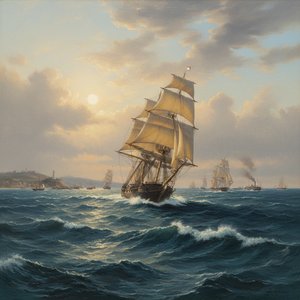
James E. Buttersworth: Navigating the Seas of Victorian Marine Painting
Explore the captivating world of James Edward Buttersworth, a foremost Victorian marine painter. Discover his meticulous ship portraits, America's Cup chronicles & enduring legacy in museums worldwide. Learn about his technique and style.

Expédition et retours
APS offre une expédition d'art experte à l'échelle mondiale, avec des soins de niveau musée, un suivi complet et une garantie de remboursement sous 100 jours. Du soutien douanier à la Production Prioritaire, faites confiance à un service transparent, un emballage sécurisé et une livraison fiable pour les collectionneurs, les designers et les galeries.

L'Esthétique Rococo : Opulence, Rébellion et la Quête du Plaisir au XVIIIe Siècle
Explorez l'esthétique rococo : opulence, rébellion et quête du plaisir au XVIIIe siècle. Découvrez les maîtres (Watteau, Boucher, Fragonard) et l'influence durable de ce style artistique raffiné. Analyse approfondie & reproductions d'exception.
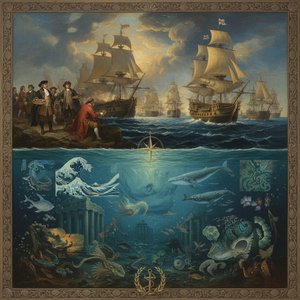
Navigating the Depths of Representation: A Historical Exploration of Marine Painting
Explore the rich history of marine painting with OriginalUniqueArt. Discover Dutch Masters, Romantic seascapes & renowned artists like Wyllie and Harris. Expert guidance for collectors & custom reproductions.