
 Aperçu en situation
 Envoyer
 Partager
 Détails de l'œuvre
 Guide
Guide

 Télécharger l'image
 Articles similaires
 Radiographie
 Diaporama
 Questions et réponses
 Statistiques
Spring - a triptych

 Lire la suite
L’œuvre d'art présentée sur cette page est protégée par le droit d'auteur, ce qui signifie que nous ne pouvons légalement créer ou vendre de reproduction identique. Cette protection est appliquée en vertu d'accords internationaux tels que la Convention de Berne et par les lois nationales, notamment celles énoncées par le Loi américaine sur le droit d'auteur - Titre 17.
Cette méthode est pleinement conforme aux réglementations sur le droit d'auteur car elle ne repose pas sur la copie ou la duplication de l'œuvre protégée. Il s'agit plutôt d'une réinterprétation créative — une nouvelle peinture qui s'inspire de l'original sans pour autant lui être identique.
Giclées et impressions d'art
Impressions giclées ou sur toile de qualité musée, avec une production rapide et des finitions au choix. ( Commander la reproduction peinte à la main Passer au format numérique)




P118B €10

P118H €10

P118W €10

P438Z €10

P508JH €12

P508YH €12

P805H €10

P805Z €10

P919BZ €10

P919G €10

P919XJ €10

P959ZH €10

P968JZ €12

W106C €8

W218G €10

W218JH €8

W218Y €10

W307PJ €10

W316G €10

W316PJ €8

W316Y €10

W398PJ €8

W4111J €10

W500HY €15

W500JH €15

W692G €12

W849H €8

W940BG €15

W953PJ €8




Choisissez parmi nos formats prédéfinis qui respectent les proportions originales de l’œuvre.

Saisissez la largeur et la hauteur souhaitées pour qu'elles s'adaptent à votre cadre ou à votre mur. Une impression peut être recadrée, mais jamais agrandie au-delà de l'image originale ; ainsi, un format de forme différente entraînera la perte d'une partie de l'image. Nous vous envoyons une maquette numérique pour approbation avant toute impression. L'image présentée sur cette page ne montre pas le recadrage réel — seule la maquette le permet.
Livraison dans le monde entier () en 2 semaines au lieu des 4/5 semaines habituelles. (15 novembre)

Livraison express gratuite dans le monde entier

Toile de lin de qualité supérieure

Assurance transport complète

Garantie de remboursement des droits de douane

Garantie de fidélité des couleurs

Politique de retour de 100 jours (uniquement en cas de défaut)

Garantie de remboursement à 100%

Offre de tarifs dégressifs
 L'option verre n'est disponible que pour les dimensions inférieures à 110 cm.

Spring - a triptych
Giclées et impressions d'art
Format de la reproduction
-


Prix total
€ 72
Biographie de l'artiste
L'Âme de l'Objectif : La Vie et l'Héritage de Clarence Hudson White
Dans la lumière douce et diffuse du début du XXe siècle, une nouvelle façon de voir venait de naître — une approche qui cherchait à élever l'appareil photo, de simple outil mécanique, au rang de pinceau capable d'une profonde expression émotionnelle. Au cœur de cette révolution se trouvait Clarence Hudson White, un artiste dont la vision a transformé le médium photographique en un langage poétique d'ombre et de lumière. Né en 1871 au milieu des paysages idylliques d'une petite ville de l'Ohio, la jeunesse de White fut imprégnée des rythmes tranquilles de l'Amérique rurale. Cette période formative, caractérisée par un lien profond avec le monde naturel et la dignité simple de la vie domestique, allait devenir le pilier de son identité artistique. Sa sensibilité fut enrichie par une fascination d'enfance pour la musique, et particulièrement pour le violon, qui lui insuffla une approche rythmique de la composition et une sensibilité à l'harmonie qui allaient définir son regard photographique.
Le voyage de White dans le monde de l'image ne fut pas le fruit d'une formation académique formelle, mais plutôt une rencontre fortuite avec la magie de la lumière. Une visite à l'Exposition universelle de Chicago en 1893 raviva une passion pour la photographie qui allait consumer sa vie. Bien qu'essentiellement autodidacte, il possédait une capacité innée à manipuler la lumière pour obtenir une qualité picturale, marque de fabrique du mouvement du Pictorialisme. Son œuvre s'éloigna de la documentation clinique et nette de la réalité, privilégiant au contraire le flou artistique et des textures évocatrices qui suggéraient l'humeur plutôt que le simple fait. Cette approche lui permit de capturer ce que beaucoup appelaient l'« esprit » de ses sujets — le jeu tendre de la lumière du soleil à travers une fenêtre, les contours délicats du visage d'un être cher, ou la beauté mélancolique d'un paysage qui s'efface.
Un Pionnier de la Photo-Secession
À mesure que la réputation de White grandissait, il se retrouva au centre d'un mouvement radical cherchant à redéfinir les frontières de l'art. Aux côtés du redoutable Alfred Stieglitz, White devint un membre fondateur de la Photo-Secession, un groupe d'élite de photographes dévoués à la promotion de la photographie en tant que Beaux-Arts. Ce fut une période de luttes créatives intenses et de triomphes, où la définition même de l'« art » était contestée dans les galeries et les salons du monde entier. La contribution de White à ce mouvement fut vitale ; ses images servaient de pont entre l'esthétique traditionnelle de la peinture et les possibilités émergentes du tirage photographique. Son travail explorait souvent les thèmes de la domesticité et de l'intimité, utilisant sa famille et ses amis comme modèles pour créer un sentiment de beauté universelle et tranquille qui résonnait profondément avec la sensibilité romantique de l'époque.
La maîtrise technique atteinte par White était tout simplement extraordinaire. Il avait compris que le véritable sujet d'une photographie n'était pas seulement ce qui se trouvait devant l'objectif, mais la vision subjective de l'artiste. Par une manipulation minutieuse de l'exposition, des processus d'impression et de la composition, il parvenait à imprégner une scène simple d'un poids symbolique profond. Ses compositions faisaient souvent écho à ses premières esquisses — des images de sphères flottantes ou de figures assises qui laissaient entrevoir une réalité métaphysique plus profonde sous la surface du quotidien. Cette capacité à insuffler l'extraordinaire dans le banal est ce qui l'a véritablement distingué comme un maître du style pictorialiste.
L'Héritage de la Clarence H. White School
Au-delà de ses accomplissements individuels derrière l'objectif, l'impact de White sur la trajectoire de la photographie américaine fut consolidé par son rôle d'éducateur. En 1914, il fonda la Clarence H. White School of Photography à New York, la première institution en Amérique dédiée à l'enseignement de la photographie en tant qu'art majeur. Cette école devint un creuset d'innovation, attirant une génération de photographes qui allaient façonner l'avenir du médium. Parmi ses étudiants figuraient des figures illustres telles que :
- Dorothea Lange, dont le travail documentaire allait définir le visage humain de la Grande Dépression ;
- Gertrude Käsebier, une autre pionnière du mouvement pictorialiste ;
- Ralph Steiner, qui apporta une sensibilité moderne et avant-gardiste à l'art de l'image.
Par son enseignement, White s'assura que sa philosophie d'une photographie expressive et subjective perdurerait longtemps après sa disparition. Bien que sa propre production photographique ait décliné durant ses dernières années en raison des exigences immenses liées à la direction de son école, son influence resta omniprésente. Sa mort en 1925, suite à une crise cardiaque alors qu'il enseignait à Mexico, marqua la fin d'une ère, pourtant les échos de sa vision continuent de se faire sentir. Clarence Hudson White a fait bien plus que prendre des photographies ; il a appris au monde comment regarder la lumière, trouvant l'extraordinaire dans l'ordinaire et changeant à jamais notre perception de la beauté de notre existence partagée.

Clarence H. White
États-Unis
L'essentiel de l'artiste
- Artistic Movement Or Style: Photographie pictorialiste
- Artists Or Movements Influenced By This Artist:
- Malevich
- John White Alexander
- Artists Who Influenced This Artist: ['Alfred Stieglitz']
- Date Of Birth: 8 avril 1871
- Date Of Death: 8 juillet 1925
- Full Name: Clarence Hudson White
- Nationality: Américaine
- Notable Artworks:
- Morning, 1905
- Drops of Rain, 1902
- The Sea [Rose Pastor Stokes, Caritas Island, Connecticut], 1909
- Place Of Birth: West Carlisle, Ohio
Articles connexes

Chef-d'œuvre de la Création : Top 10 des Œuvres qui Célèbrent l'Art
Plongez dans l'essence de la création avec notre sélection de 10 chefs-d'œuvre iconiques. De la Renaissance au Pop Art, explorez l'histoire et la technique des plus grands maîtres. Trouvez votre inspiration déco avec nos reproductions d'exception sur OriginalUniqueArt.com.

Splendeur Dorée : Les 25 Chefs-d'œuvre Incontournables de Gustav Klimt
Plongez dans l'éclat doré de Gustav Klimt. Explorez 25 chefs-d'œuvre de la Sécession viennoise, entre Art Nouveau et symbolisme. Trouvez l'inspiration pour votre décor avec nos reproductions d'art de qualité musée. Découvrez tous les chefs-d'œuvre sur OriginalUniqueArt.com.

Vernal Light and Botanical Form: The Tradition of Spring Landscapes in the Artistic Canon
Explore the evolution of spring landscapes from Monet to Patinir with expert art historical analysis. Discover the masters of seasonal light.
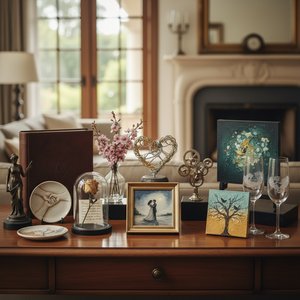
Cadeaux d'Anniversaire Significatifs : 10 Œuvres d'Art Inoubliables |
Trouvez le cadeau d'anniversaire parfait ! Découvrez 10 œuvres d'art emblématiques, de Monet à Van Gogh, et leur histoire. Reproductions de qualité muséale sur pour une décoration intérieure unique et romantique. Explorez la collection en ligne !

Les 10 Chefs-d'œuvre Impressionnistes qui ont Révolutionné le Paysage
Plongez au cœur de l'Impressionnisme avec les 10 chefs-d'œuvre qui ont révolutionné le paysage. Découvrez Monet, Renoir et plus encore sur OriginalUniqueArt.com – reproductions d'art de qualité muséale pour sublimer votre intérieur.