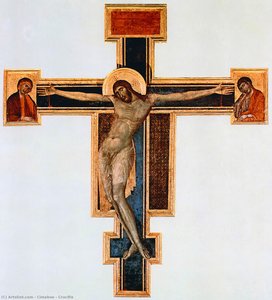
Aperçu en situation
 Envoyer
 Partager
 Détails de l'œuvre

 Télécharger
 Articles similaires
 Radiographie
 Diaporama
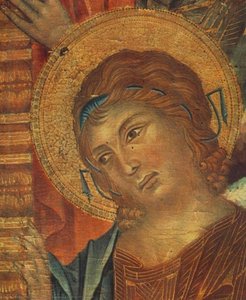
St John (detail)
 Early Renaissance
 1280
1280- Late Medieval
 450.0 x 900.0 cm
 Lire la suite
Reproduction à l'huile faite à la main
Huile sur toile peinte à la main, avec cadre et dimensions personnalisés, réalisée sur commande par nos artistes. ( Commander l'impression Télécharger l'image haute résolution)




P118B $10

P118H $10

P118W $10

P438Z $10

P508JH $12

P508YH $12

P805H $10

P805Z $10

P919BZ $10

P919G $10

P919XJ $10

P959ZH $10

P968JZ $12

W106C $8

W218G $10

W218JH $8

W218Y $10

W307PJ $10

W316G $10

W316PJ $8

W316Y $10

W398PJ $8

W4111J $10

W500HY $15

W500JH $15

W692G $12

W849H $8

W940BG $15

W953PJ $8




Choisissez parmi nos formats prédéfinis qui respectent les proportions originales de l’œuvre.

Vous pouvez saisir vos propres dimensions pour l'adapter à un cadre ou à un espace spécifique. Si la taille sélectionnée ne correspond pas aux proportions de l'image d'origine, nous recadrerons l'œuvre ou prolongerons la peinture avec des éléments peints à la main supplémentaires. Une maquette numérique vous sera envoyée pour approbation avant le début de la production.
Veuillez noter que l'aperçu à l'écran ne reflète pas le recadrage ou l'extension réels. Seule la maquette montrera fidèlement la composition finale.
Bien que des tailles personnalisées soient disponibles, nous vous recommandons de sélectionner une dimension dans la liste prédéfinie afin de préserver les proportions d'origine.
Après la commande, l’équipe OriginalUniqueArt.com contactera le client par e-mail pour recueillir ses instructions et lui fournira une maquette d’aperçu
Livraison dans le monde entier () en 3 à 4 semaines au lieu des 5 semaines habituelles. (15 août). Aucun compromis sur la qualité.

Livraison express gratuite dans le monde entier

Toile de lin de qualité supérieure

Assurance transport complète

Garantie de remboursement des droits de douane

Garantie de fidélité des couleurs

Politique de retour de 60 jours (uniquement en cas de défaut)

Garantie de remboursement à 100%

Offre de tarifs dégressifs
 L'option verre n'est disponible que pour les dimensions inférieures à 110 cm.

St John (detail)
Technique de reproduction
Format de la reproduction
-


Prix total
$ 300
Description de l'œuvre
A Glimpse into Contemplation: Cimabue’s “St John” (Detail)
Cimabue's "St John" (detail), painted around 1280, offers more than just a portrait; it presents a profound meditation on faith, solitude, and the nascent shift in artistic sensibilities that would ultimately birth the Renaissance. This intimate close-up, measuring an impressive 450 x 900 cm, invites us to linger over the figure of St John, seated thoughtfully within a richly detailed yet subtly restrained Byzantine space. The painting’s power lies not in dramatic action or vibrant color – though these elements are present – but rather in its quiet intensity and the palpable sense of introspection radiating from the subject's posture.
The image captures a pivotal moment, likely depicting St John the Evangelist in his later years, perhaps reflecting on his experiences and the revelations he received. Cimabue’s approach is distinctly Byzantine, evident in the monumental scale, the hierarchical arrangement of figures (though subtly compressed here), and the use of gold leaf to highlight key elements like the archway above the saint. However, even within this established framework, Cimabue demonstrates a remarkable willingness to experiment. The figure's pose – head bowed, absorbed in contemplation – is remarkably humanistic, a departure from the more rigidly formal depictions common in earlier Byzantine art. This subtle shift towards naturalism, coupled with the careful modeling of form and the nuanced rendering of drapery, foreshadows the artistic breakthroughs that would soon define the Italian Renaissance.
The Painter’s Hand: Technique and Materials
Cimabue's mastery is immediately apparent in his meticulous technique. He employed tempera on panel, a medium favored for its luminosity and durability – qualities crucial for preserving the delicate details of this work. The layering of paint, achieved through numerous thin glazes, creates an astonishing sense of depth and texture, particularly noticeable in the folds of the saint’s robe and the subtle variations in light across his face. Observe how he renders the fabric; it isn't simply painted flat, but sculpted with delicate brushstrokes that suggest weight and movement. The use of gold leaf is not merely decorative; it serves to draw the eye to key areas – the archway, symbolizing divine grace – and imbues the scene with a sense of sacredness.
The background, though partially obscured, reveals a carefully constructed architectural setting typical of Byzantine art. The arched doorway, reminiscent of Roman architecture but executed with a distinctly Byzantine sensibility, provides a visual anchor for the composition. Notice the use of perspective – subtly employed to create an illusion of depth and space, a technique that Cimabue was pioneering. This careful attention to detail demonstrates his growing understanding of spatial relationships, laying the groundwork for future artists to explore these concepts more fully.
Symbolism and Spiritual Resonance
Beyond its technical brilliance, “St John” is rich in symbolic meaning. The act of reading – or perhaps studying a map or scroll – suggests contemplation and learning, qualities associated with St John’s role as the author of the Gospel of Revelation. The archway above represents the gateway to divine knowledge and understanding. The figure's solitary posture speaks to the spiritual journey, highlighting the importance of inner reflection and connection with the divine. It is a scene that invites viewers to contemplate their own faith and seek solace in quiet contemplation – a theme deeply resonant within the religious context of 13th-century Florence.
A Window into a Changing World
Cimabue’s “St John” (detail) stands as a crucial document in the transition from Byzantine to Renaissance art. While firmly rooted in the traditions of his predecessors, Cimabue's subtle innovations – particularly his embrace of naturalism and his exploration of spatial relationships – represent a vital step towards the artistic revolution that would transform Western art. This reproduction offers an unparalleled opportunity to experience this pivotal work firsthand, bringing its quiet beauty and profound symbolism into your home or studio. Its scale allows for impactful display, while the meticulous detail faithfully captures Cimabue’s artistry, making it a stunning addition to any collection or a thoughtful gift for discerning art lovers.
Biographie de l'artiste
rompre le style italo-byzantin
Cimabue, né vers 1240 et décédé en 1302, était un peintre et concepteur de mosaïques italien influent originaire de Florence, également connu sous le nom de Cenni di Pepo. Pionnier dans la rupture avec le style italo-byzantin, Cimabue est célébré pour avoir introduit des proportions et des ombrages plus réalistes dans son œuvre, marquant un passage significatif vers le réalisme dans l’art médiéval.Jeunesse et formation
Peu d'informations sont connues sur la jeunesse de Cimabue. Une source qui relate sa carrière est la Vie des plus excellents peintres, sculpteurs et architectes de Giorgio Vasari, mais sa précision est incertaine. Il est né à Florence et décédé à Pise. Selon l’historien d'art Pietro Tosca, le premier œuvre attribuée à Cimabue, la crucifixion dans l'église San Domenico à Arezzo, date d’environ 1270 et présente une rupture avec le style byzantin.Œuvres notables
* Maïeutique (initialement exposée dans l'église San Francesco à Pise, maintenant au Louvre) : Cette œuvre a établi un style suivi par de nombreux artistes ultérieurement, dont Duccio di Buoninsegna dans sa Rucellai Madonna (mal attribuée par le passé à Cimabue). * Flagellation (Collection Frick) : Une peinture d'atelier qui pourrait être datée d’une période légèrement ultérieure. * Mosaïques pour le baptistère de Florence (maintenant largement restauré) : Dans un état de dégradation en raison de l'oxydation des couleurs les plus vives.Influence et héritage
L’art de Cimabue a joué un rôle crucial dans la transition du byzantin vers des représentations plus réalistes dans la peinture italienne, et son influence sur les artistes ultérieurs a été profonde. Ses œuvres, caractérisées par un mélange de techniques traditionnelles et innovantes, marquent un chapitre important dans l'histoire de l'art, reliant le style médiéval à celui de la Renaissance.- Consultez les œuvres de Cimabue sur https://OriginalUniqueArt.com/@/cimabue
- Explorez davantage le mouvement artistique du Trecento sur https://OriginalUniqueArt.com/@@/a@d3cpph
- Lisez la biographie de Cimabue sur Wikipédia à l'adresse suivante : https://en.wikipedia.org/wiki/cimabue

Cimabue
1240 - 1302 , Italie
L'essentiel de l'artiste
- Artistes Influencés: ['Giotto di Bondone']
- Artistes Influents: ['Tradition byzantine']
- Date De Décès: 1302
- Date De Naissance: c. 1240
- Lieu De Naissance: Florence, Italie
- Mouvement Artistique: Proto-Renaissance
- Nationalité: Italienne
- Nom Complet: Cimabue (Giovanni Cimabue)
- Oeuvres Notables:
- Maestà
- Flagellation
- Crucifixion (Arezzo)
Articles connexes

John Singer Sargent : Les 25 Œuvres Maîtresses d'un Portraitiste Éminent | OriginalUniqueArt
Plongez dans l'univers de John Singer Sargent : découvrez les 25 œuvres qui ont marqué l'histoire de l'art. Portraits impressionnants, réalisme exquis et couleurs vibrantes. Retrouvez ces chefs-d'œuvre en reproduction haute définition sur OriginalUniqueArt.com.

Constable : Les 25 Chefs-d'Œuvre du Maître Anglais | OriginalUniqueArt
Plongez dans l'univers de John Constable avec les 25 œuvres incontournables du maître anglais. Découvrez l'histoire, la technique et l'émotion derrière ses paysages romantiques. Reproductions de qualité muséale sur OriginalUniqueArt.com.

El Greco : Les 25 Chefs-d'Œuvre Incontournables pour une Décoration d'Exception
Plongez dans l'univers spirituel d'El Greco ! Découvrez les 25 œuvres incontournables du maître espagnol, de *L'Enterrement du Comte d'Orgaz* à ses portraits saisissants. Inspirez votre décoration intérieure avec des reproductions d'art exceptionnelles sur OriginalUniqueArt.com.
Giotto di Bondone : Les 25 Chefs-d'œuvre Incontournables pour Embellir Votre Intérieur
Plongez dans l'univers de Giotto di Bondone : découvrez les 25 fresques et chefs-d'œuvre qui ont révolutionné l'art médiéval italien. Explorez son style unique, ses couleurs vibrantes et l'histoire fascinante derrière chaque œuvre. Retrouvez des reproductions d'exception sur OriginalUniqueArt.com.
Lumières d'Éternité : Exploration approfondie de l'héritage artistique byzantin
Plongez au cœur de l'art byzantin ! Découvrez son histoire fascinante, ses mosaïques éblouissantes et son symbolisme profond. Analyse experte et reproductions d'exception sur OriginalUniqueArt.