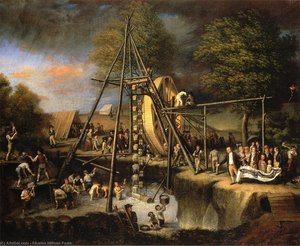
Aperçu en situation
 Partager
 Partager
 Détails
 Guide imprimable

 Télécharger
 Articles similaires
 Radiographie
 Voir le diaporama
 Statistiques
Thomas and Henry Sergeant


 Afficher la suite
Giclées et impressions d'art
Impressions giclées ou sur toile de qualité musée, avec une production rapide et des finitions au choix. ( Acheter la peinture faite à la main Passer au format image numérique)




P118B €10

P118H €10

P118W €10

P438Z €10

P508JH €12

P508YH €12

P805H €10

P805Z €10

P919BZ €10

P919G €10

P919XJ €10

P959ZH €10

P968JZ €12

W106C €8

W218G €10

W218JH €8

W218Y €10

W307PJ €10

W316G €10

W316PJ €8

W316Y €10

W398PJ €8

W4111J €10

W500HY €15

W500JH €15

W692G €12

W849H €8

W940BG €15

W953PJ €8




Choisissez parmi nos formats prédéfinis qui respectent les proportions originales de l’œuvre.

Saisissez la largeur et la hauteur souhaitées pour qu'elles s'adaptent à votre cadre ou à votre mur. Une impression ne peut être que découpée, elle ne peut jamais être agrandie au-delà de l'image originale ; ainsi, un format de forme différente entraînera la perte d'une partie de l'image. Nous vous envoyons une maquette numérique pour approbation avant toute impression. L'image présentée sur cette page ne montre pas le recadrage réel — seule la maquette le permet.
Livraison dans le monde entier () en 2 semaines au lieu des 4/5 semaines habituelles. (23 octobre)

Livraison express gratuite dans le monde entier

Toile de lin de haute qualité

Assurance transport complète

Garantie de remboursement des droits de douane

Garantie de fidélité des couleurs

Garantie de retour de 100 jours (uniquement en cas de défaut)

Garantie de remboursement à 100%

Tarifs dégressifs sur quantité
 L'option verre n'est disponible que pour les dimensions inférieures à 110 cm.

Thomas and Henry Sergeant
Giclées et impressions d'art
Format de la reproduction
-


Prix total final
€ 70
Thomas and Henry Sergeant: A Portrait of American Idealism
Charles Willson Peale’s “Thomas and Henry Sergeant,” completed in 1787, stands as a cornerstone of neoclassical portraiture and embodies the spirit of Enlightenment America. Currently residing within the Museum of Fine Arts in Boston, this oil on canvas masterpiece transcends mere likeness; it's a meticulously crafted tableau that speaks volumes about social status, familial affection, and the burgeoning aspirations for republican virtue.
Composition and Symbolism: Capturing Essence Through Detail
The painting’s central focus is undeniably its subjects – two young boys, Thomas and Henry Sergeant – positioned side by side with arms outstretched in a gesture of camaraderie. Their attire—suits adorned with satin linings and hats—reflects the formality prevalent during the era, signaling their privileged upbringing within Boston society. Beyond the visual representation, Peale skillfully employs symbolism to elevate the artwork’s significance.
- The Dog: Representing loyalty and guardianship, the dog symbolizes protection and companionship – values deeply ingrained in American ideals of citizenship.
- The Chair: Suggestive of comfort and stability, it anchors the scene and reinforces the notion of settled respectability.
- The Clock: A symbol of time’s passage and measured progress, mirroring the ambitions of a nation striving for advancement under republican governance.
- The Birds: Scattered throughout the composition, birds are emblems of liberty and aspiration—a deliberate allusion to the philosophical currents shaping the American Revolution.
Peale's Style and Influences: Echoes of European Tradition
Charles Willson Peale’s artistic approach was firmly rooted in European traditions, particularly those championed by Louis-Vincent-Léon Pallière, whose “View in the Gardens of the Villa d’Este” exemplifies similar neoclassical sensibilities. Like Pallière, Peale prioritized meticulous detail—evident in the rendering of fabrics and facial expressions—to achieve an unparalleled level of realism. However, he skillfully blended these techniques with stylistic elements derived from Rembrandt Peale and James Peale, creating a distinctive visual language that resonated powerfully with his contemporaries.
Comparative Artworks: Shared Visions of Republican Virtue
“Thomas and Henry Sergeant” finds kinship with several other notable portraits produced during the same period. Consider Ap Caledfryn’s “Michael Jones,” housed at The National Library of Wales, which similarly portrays a young gentleman embodying moral virtue and civic responsibility. Similarly, James Curnock's "Thomas Garrard" at Bristol Museum – Art Gallery captures the grandeur of aristocratic patronage while upholding standards of refinement. And John Partridge’s “Sir John Forbes” displayed at Royal College of Physicians exemplifies the meticulous craftsmanship characteristic of the era.
These artworks collectively illuminate the artistic landscape of Enlightenment America—a period defined by intellectual curiosity, republican ideals, and a fervent desire to emulate the cultural achievements of Europe. Peale's "Thomas and Henry Sergeant" stands as a testament to this ambition, securing its place as an enduring symbol of American identity.
Questions et réponses
À quel âge Charles Willson Peale a-t-il créé « Thomas and Henry Sergeant » ?
Charles Willson Peale a réalisé « Thomas and Henry Sergeant » à l'âge de 46. L'artiste est né en 1741 et l'œuvre date de 1787.
Existe-t-il une fiche informative sur «Thomas and Henry Sergeant» de Charles Willson Peale destinée aux étudiants ?
Une page Guide est disponible pour «Thomas and Henry Sergeant» de Charles Willson Peale : une fiche d'information imprimable sur l'œuvre, conçue pour les étudiants et un usage pédagogique en classe.
À qui offrir «Thomas and Henry Sergeant» de Charles Willson Peale en cadeau ?
« Thomas and Henry Sergeant » est suggéré comme cadeau pour Anniversaire.
Biographie de l'artiste
Charles Willson Peale : Une Vie d'Art, de Science et de Patriotisme
- Né : 15 avril 1741, Chester, comté de Queen Anne, Maryland
- Décédé : 22 février 1827, Philadelphie, Pennsylvanie
Première Vie et Formation Artistique
- La première vie de Peale a été marquée par des difficultés financières après la mort de son père. Il a fait un apprentissage en tant que sellier avant de découvrir sa passion pour l'art.
- Il a reçu une formation initiale auprès de John Hesselius et a brièvement étudié avec John Singleton Copley, démontrant ainsi une aptitude précoce au portrait.
- Une période cruciale dans son développement a été son séjour à Londres sous la direction de Benjamin West (1767-1770). Cette exposition aux tendances artistiques européennes a considérablement influencé son style.
Carrière Artistique et Œuvres Majeures
- Portrait : Peale est surtout connu pour ses portraits de personnalités importantes de la Révolution américaine, y compris de nombreuses représentations de George Washington (près de soixante au total). Ces portraits sont des documents historiques précieux ainsi que des réalisations artistiques.
- Style : Son style a évolué au fil du temps, initialement influencé par l'approche néoclassique de West, mais incorporant plus tard des éléments de réalisme et un désir de capturer fidèlement le portrait.
- Œuvres Notables :
- George Washington (1772) : A marqué le début de sa longue association avec Washington.
- Le Groupe sur l'Escalier (c. 1795) : Un exemple frappant du trompe-l'œil, représentant ses fils Raphaël et Titian comme faisant partie du décor architectural.
Recherches Scientifiques et le Musée Américain de Peale
- Peale était un naturaliste et scientifique passionné, organisant des expéditions pour étudier l'histoire naturelle.
- Il a fondé le Musée Américain de Peale à Philadelphie (1784), l'un des premiers musées aux États-Unis. Il abritait des spécimens botaniques, biologiques et archéologiques.
- Le musée a joué un rôle important dans la popularisation de la science et de l'éducation en Amérique. Il était particulièrement connu pour ses expositions d'os de mastodonte, acquis lors d'une expédition en 1801.
- Il s'est auto-enseigné à la taxidermie pour préserver les spécimens pour le musée, démontrant ainsi ses diverses compétences.
Héritage et Importance Historique
- L’œuvre de Peale comble le fossé entre l’art et la science, reflétant les idéaux des Lumières de son époque.
- Ses portraits fournissent des archives visuelles inestimables des figures clés de l'histoire américaine.
- La fondation du Musée Américain de Peale a été un effort pionnier qui a contribué à établir le musée comme une institution importante pour l'éducation et l'exploration scientifique.
- Il a influencé les générations futures d’artistes et de scientifiques, contribuant ainsi de manière significative au développement de la culture américaine.
- Son héritage familial s'est poursuivi par ses fils, dont James Peale et Rubens Peale, qui sont également devenus des artistes accomplis et ont contribué à la collection du musée.

Charles Willson Peale
1741 - 1827 , Royaume-Uni
En bref
- Artistes Influents:
- John Hesselius
- John Singleton Copley
- Benjamin West
- Date De Décès: 22 février 1827
- Date De Naissance: 15 avril 1741
- Lieu De Naissance: Chester, Royaume-Uni
- Mouvement Artistique: Néo-classicisme
- Nationalité: Américain
- Nom Complet: Charles Willson Peale
- Oeuvres Notables:
- Staircase Group
- George Washington (1772)
Articles connexes
Titian Ramsay Peale II: A Legacy of Botanical Precision & Artistic Innovation
Explore the life & art of Titian Ramsay Peale II, a master of botanical precision and wildlife painting. Discover his legacy bridging art & natural history at OriginalUniqueArt.

Charles Willson Peale: Portraiture, Enlightenment Ideals & Shaping American Identity
Explore the life & art of Charles Willson Peale – Revolutionary portraitist, scientist, and founder of America’s first museum. Discover his iconic paintings of Washington & the Enlightenment ideals that shaped a nation.
Le Siècle des Lumières en Peinture : 10 Chefs-d'œuvre à Redécouvrir
Plongez au cœur du XVIIIe siècle avec 10 chefs-d'œuvre incontournables ! Découvrez Fragonard, Boucher, David et les secrets de l’art rococo & néoclassique. Reproductions de qualité muséale sur OriginalUniqueArt.com.

Grant Wood & American Regionalism: Identity, Myth & the Rural Landscape
Explore the world of Grant Wood & American Regionalism with OriginalUniqueArt. Discover the symbolism behind 'American Gothic', recurring themes, and the movement's lasting impact on art history. High-quality reproductions available.

Réalisme Américain : 10 Chefs-d'œuvre Incontournables pour une Déco Inspirée
Plongez au cœur du Réalisme Américain avec 10 chefs-d'œuvre d'Edward Hopper, Andrew Wyeth et plus. Découvrez l'histoire et les techniques de ces artistes emblématiques. Reproductions de tableaux de qualité musée sur OriginalUniqueArt.com !