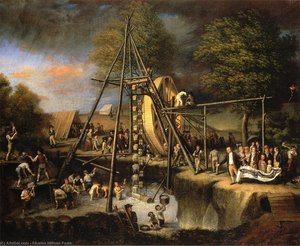
Aperçu en situation
 Partager
 Partager
 Détails
 Guide imprimable

 Télécharger
 Articles similaires
 Radiographie
 Voir le diaporama
 Statistiques
James Peale


 Afficher la suite
Reproduction à l'huile faite à la main
Huile sur toile peinte à la main, avec cadre et dimensions personnalisés, réalisée sur commande par nos artistes. ( Passer au format impression Passer au format image numérique)




P118B €10

P118H €10

P118W €10

P438Z €10

P508JH €12

P508YH €12

P805H €10

P805Z €10

P919BZ €10

P919G €10

P919XJ €10

P959ZH €10

P968JZ €12

W106C €8

W218G €10

W218JH €8

W218Y €10

W307PJ €10

W316G €10

W316PJ €8

W316Y €10

W398PJ €8

W4111J €10

W500HY €15

W500JH €15

W692G €12

W849H €8

W940BG €15

W953PJ €8




Choisissez parmi nos formats prédéfinis qui respectent les proportions originales de l’œuvre.

Saisissez la largeur et la hauteur souhaitées, pour s'adapter à votre cadre ou à votre mur. Cette œuvre est peinte à la main ; ainsi, pour un format de forme différente, l'artiste peut peindre un peu plus autour du tableau ou réduire légèrement les bords — c'est vous qui choisissez. Nous vous envoyons une maquette numérique pour approbation avant que la peinture ne commence. L'image présentée sur cette page ne reflète pas le résultat réel — seule la maquette le fait.
Après la commande, l’équipe OriginalUniqueArt.com contactera le client par e-mail pour recueillir ses instructions et lui fournira une maquette d’aperçu
Livraison dans le monde entier () en 3 à 4 semaines au lieu des 5 semaines habituelles. (21 octobre). Aucun compromis sur la qualité.

Livraison express gratuite dans le monde entier

Toile de lin de haute qualité

Assurance transport complète

Garantie de remboursement des droits de douane

Garantie de fidélité des couleurs

Garantie de retour de 100 jours (uniquement en cas de défaut)

Garantie de remboursement à 100%

Tarifs dégressifs sur quantité
 L'option verre n'est disponible que pour les dimensions inférieures à 110 cm.

James Peale
Technique de reproduction
Format de la reproduction
-


Prix total final
€ 262
A Moment Suspended in Time: Contemplation in Portraiture
This evocative portrait captures more than just the likeness of James Peale; it arrests a moment—a quiet breath taken amidst the intellectual pursuits of a gentleman of means. The subject, seated thoughtfully before a table illuminated by the soft glow of a lamp, invites the viewer into an intimate space, one steeped in the atmosphere of late-day reflection. His downward gaze suggests deep contemplation, as if wrestling with thoughts only visible to him and the artist's discerning eye. The composition is masterfully balanced, drawing us past the immediate presence of the sitter to notice the subtle details that enrich the narrative: the ticking clock on the wall, a silent sentinel marking the passage of time, and the open book resting near the lamp’s pool of light.
The Craftsmanship of Charles Willson Peale
To understand this work is to appreciate the hand of its creator, Charles Willson Peale. A figure whose life spanned the burgeoning years of American history, Peale was a portraitist of immense skill and historical significance. While his fame rests heavily on his depictions of revolutionary figures, this piece showcases his profound ability to capture the inner life as much as the outer appearance. His technique, rooted in the traditions he absorbed from masters like Benjamin West, speaks to a sophisticated understanding of light and shadow—the chiaroscuro that gives depth and drama to the scene. One can almost feel the texture of the velvet chair and the polished wood of the table through the painted surface.
Symbolism of Study and Reflection
The objects within this painting are not mere props; they are potent symbols. The lamp, casting its focused circle of light, represents knowledge and enlightenment—the pursuit of understanding that banishes the surrounding shadows. The book speaks to accumulated wisdom, while the clock serves as a poignant reminder of time’s relentless march against the backdrop of deep thought. These elements combine to create a visual meditation on the human condition: the balance between active engagement with the world and the necessary solitude required for introspection. It is a celebration of the contemplative life.
Bringing History Home: Decorating with Narrative
For the collector or designer, this reproduction offers far more than mere decoration; it offers narrative depth. Imagine this piece gracing a study, a library corner, or a quiet drawing-room nook. It anchors a space with an air of cultivated history and intellectual gravitas. The soft, warm tones inherent in the painting’s palette ensure that it complements both richly paneled traditional interiors and more subdued, classically inspired modern settings. Owning this piece is to curate a moment of timeless repose for your own dwelling.
Questions et réponses
L'œuvre « James Peale » est-elle disponible en tirage d'art ?
Une impression de «James Peale» de Charles Willson Peale peut être commandée directement sur sa page Impression d'art fine : une impression d'art sur toile de coton ou sur papier canvas d'archive.
Quelle est la saturation des couleurs de «James Peale» de Charles Willson Peale ?
Les couleurs de «James Peale» de Charles Willson Peale présentent une saturation Muted. La saturation décrit si les couleurs sont vives ou atténuées.
Quel est l'usage recommandé pour une impression de « James Peale » ?
L'utilisation recommandée d'une impression de « James Peale » est Reflective.
Biographie de l'artiste
Charles Willson Peale : Une Vie d'Art, de Science et de Patriotisme
- Né : 15 avril 1741, Chester, comté de Queen Anne, Maryland
- Décédé : 22 février 1827, Philadelphie, Pennsylvanie
Première Vie et Formation Artistique
- La première vie de Peale a été marquée par des difficultés financières après la mort de son père. Il a fait un apprentissage en tant que sellier avant de découvrir sa passion pour l'art.
- Il a reçu une formation initiale auprès de John Hesselius et a brièvement étudié avec John Singleton Copley, démontrant ainsi une aptitude précoce au portrait.
- Une période cruciale dans son développement a été son séjour à Londres sous la direction de Benjamin West (1767-1770). Cette exposition aux tendances artistiques européennes a considérablement influencé son style.
Carrière Artistique et Œuvres Majeures
- Portrait : Peale est surtout connu pour ses portraits de personnalités importantes de la Révolution américaine, y compris de nombreuses représentations de George Washington (près de soixante au total). Ces portraits sont des documents historiques précieux ainsi que des réalisations artistiques.
- Style : Son style a évolué au fil du temps, initialement influencé par l'approche néoclassique de West, mais incorporant plus tard des éléments de réalisme et un désir de capturer fidèlement le portrait.
- Œuvres Notables :
- George Washington (1772) : A marqué le début de sa longue association avec Washington.
- Le Groupe sur l'Escalier (c. 1795) : Un exemple frappant du trompe-l'œil, représentant ses fils Raphaël et Titian comme faisant partie du décor architectural.
Recherches Scientifiques et le Musée Américain de Peale
- Peale était un naturaliste et scientifique passionné, organisant des expéditions pour étudier l'histoire naturelle.
- Il a fondé le Musée Américain de Peale à Philadelphie (1784), l'un des premiers musées aux États-Unis. Il abritait des spécimens botaniques, biologiques et archéologiques.
- Le musée a joué un rôle important dans la popularisation de la science et de l'éducation en Amérique. Il était particulièrement connu pour ses expositions d'os de mastodonte, acquis lors d'une expédition en 1801.
- Il s'est auto-enseigné à la taxidermie pour préserver les spécimens pour le musée, démontrant ainsi ses diverses compétences.
Héritage et Importance Historique
- L’œuvre de Peale comble le fossé entre l’art et la science, reflétant les idéaux des Lumières de son époque.
- Ses portraits fournissent des archives visuelles inestimables des figures clés de l'histoire américaine.
- La fondation du Musée Américain de Peale a été un effort pionnier qui a contribué à établir le musée comme une institution importante pour l'éducation et l'exploration scientifique.
- Il a influencé les générations futures d’artistes et de scientifiques, contribuant ainsi de manière significative au développement de la culture américaine.
- Son héritage familial s'est poursuivi par ses fils, dont James Peale et Rubens Peale, qui sont également devenus des artistes accomplis et ont contribué à la collection du musée.

Charles Willson Peale
1741 - 1827 , Royaume-Uni
En bref
- Artistes Influents:
- John Hesselius
- John Singleton Copley
- Benjamin West
- Date De Décès: 22 février 1827
- Date De Naissance: 15 avril 1741
- Lieu De Naissance: Chester, Royaume-Uni
- Mouvement Artistique: Néo-classicisme
- Nationalité: Américain
- Nom Complet: Charles Willson Peale
- Oeuvres Notables:
- Staircase Group
- George Washington (1772)
Articles connexes
Titian Ramsay Peale II: A Legacy of Botanical Precision & Artistic Innovation
Explore the life & art of Titian Ramsay Peale II, a master of botanical precision and wildlife painting. Discover his legacy bridging art & natural history at OriginalUniqueArt.

Charles Willson Peale: Portraiture, Enlightenment Ideals & Shaping American Identity
Explore the life & art of Charles Willson Peale – Revolutionary portraitist, scientist, and founder of America’s first museum. Discover his iconic paintings of Washington & the Enlightenment ideals that shaped a nation.

The Enduring Legacy of Fine Art Prints: Technique, History & Aesthetic Impact
Explore the rich history & techniques of fine art prints. Discover investment potential, assess authenticity, and learn how to preserve your collection with expert guidance. Trusted insights for discerning collectors.

Giclée Prints: Archival Quality & Aesthetic Nuances for the Discerning Collector
Explore the world of giclée prints with OriginalUniqueArt. Learn about archival quality, aesthetic nuances & investment potential. Expert guidance for discerning art collectors seeking museum-quality reproductions and lasting value.

Charles Bird King: Capturing Native American Dignity Through Portraiture & Cultural Exchange
Explore the captivating portraits of Charles Bird King, renowned for his depictions of Native American leaders. Discover the historical context, artistic techniques, and collecting value of these significant 19th-century artworks.