

 Aperçu en situation
 Envoyer
 Partager
 Détails de l'œuvre
 Guide
Guide

 Télécharger l'image
 Articles similaires
 Radiographie
 Diaporama
 Statistiques
Spring Maiden


 Lire la suite
Giclées et impressions d'art
Impressions giclées ou sur toile de qualité musée, avec une production rapide et des finitions au choix. ( Commander la reproduction peinte à la main Passer au format numérique)




P118B €10

P118H €10

P118W €10

P438Z €10

P508JH €12

P508YH €12

P805H €10

P805Z €10

P919BZ €10

P919G €10

P919XJ €10

P959ZH €10

P968JZ €12

W106C €8

W218G €10

W218JH €8

W218Y €10

W307PJ €10

W316G €10

W316PJ €8

W316Y €10

W398PJ €8

W4111J €10

W500HY €15

W500JH €15

W692G €12

W849H €8

W940BG €15

W953PJ €8




Choisissez parmi nos formats prédéfinis qui respectent les proportions originales de l’œuvre.

Saisissez la largeur et la hauteur souhaitées pour qu'elles s'adaptent à votre cadre ou à votre mur. Une impression peut être recadrée, mais jamais agrandie au-delà de l'image originale ; ainsi, un format de forme différente entraînera la perte d'une partie de l'image. Nous vous envoyons une maquette numérique pour approbation avant toute impression. L'image présentée sur cette page ne montre pas le recadrage réel — seule la maquette le permet.
Livraison dans le monde entier () en 2 semaines au lieu des 4/5 semaines habituelles. (28 octobre)

Livraison express gratuite dans le monde entier

Toile de lin de qualité supérieure

Assurance transport complète

Garantie de remboursement des droits de douane

Garantie de fidélité des couleurs

Politique de retour de 100 jours (uniquement en cas de défaut)

Garantie de remboursement à 100%

Offre de tarifs dégressifs
 L'option verre n'est disponible que pour les dimensions inférieures à 110 cm.

Spring Maiden
Giclées et impressions d'art
Format de la reproduction
-


Prix total
€ 70
Spring Maiden: A Portrait of Transient Beauty
Charles Webster Hawthorne’s “Spring Maiden,” painted in 1925, isn't merely a depiction of a young woman; it’s a carefully constructed meditation on the fleeting nature of youth and the poignant beauty found within moments of quiet contemplation. This oil-on-canvas work, currently residing at the High Museum of Art in Atlanta, exemplifies Hawthorne’s signature Luminist style – a deliberate rejection of dramatic lighting and bold brushstrokes in favor of subtle tonal gradations and an emphasis on capturing the ephemeral quality of light and atmosphere. The painting immediately draws the viewer in with its muted palette dominated by earthy browns, soft greens, and delicate creams, creating a sense of serene stillness that belies the emotional depth at its core.
Hawthorne’s technique is remarkably restrained, yet profoundly effective. He employs a layering approach, building up color slowly to achieve a velvety texture and an almost photographic realism. Notice how he renders the fabric of her dress – not with sharp outlines but with delicate washes of color that suggest both its weight and its fluidity. The loose brushwork in the background, particularly around the suggestion of trees and foliage, contributes to the painting’s overall sense of atmospheric depth, pulling the viewer into a dreamlike state. Hawthorne's training under William Merritt Chase is evident in his masterful use of light and shadow, creating an illusion of three-dimensionality that elevates the portrait beyond a simple likeness.
The Luminist Influence and New England Roots
To fully appreciate “Spring Maiden,” it’s crucial to understand Hawthorne's artistic lineage. He was deeply influenced by the Luminist movement, which originated in post-Civil War America and sought to capture the quiet beauty of everyday life – particularly landscapes bathed in soft light. This movement rejected the grand narratives and dramatic scenes favored by earlier generations of American painters, instead focusing on capturing the subtle nuances of nature and human experience. Hawthorne’s upbringing in Maine, steeped in the traditions of shipbuilding and ice farming—his father a captain—provided him with an intimate connection to the rugged coastline and its ever-changing light, themes that would permeate his work throughout his career.
Born in Lodi, Illinois, in 1872, Hawthorne’s early years were far removed from the coastal landscapes he would later immortalize. However, a return to Maine as a child profoundly shaped his artistic vision. This connection to the sea—its power, its beauty, and its inherent melancholy—became a recurring motif in his paintings, informing both subject matter and aesthetic sensibility. His work is often described as embodying the spirit of New England, capturing not just the physical landscape but also the emotional resonance of its history and culture.
Symbolism and the Portrait’s Essence
The young woman depicted in “Spring Maiden” possesses an enigmatic quality that invites interpretation. Her slightly downturned gaze suggests a pensive mood—a moment of introspection amidst the beauty of springtime. The white flower she holds, likely a lily or similar bloom, symbolizes purity, innocence, and new beginnings – fitting themes for a portrait celebrating youth and renewal. Hawthorne’s careful attention to detail extends beyond mere representation; he imbues the painting with a sense of quiet dignity and understated grace.
The composition itself is carefully balanced, drawing the eye to the woman's face while simultaneously creating a sense of spaciousness around her. The muted colors and soft lighting contribute to this feeling of tranquility, suggesting a moment suspended in time—a fleeting glimpse of beauty that will inevitably fade with the passage of seasons. It’s a portrait not just of a young woman, but of an entire mood, a captured essence of springtime itself.
A Legacy of Light and Observation
Charles Webster Hawthorne's “Spring Maiden” stands as a testament to his skill as a painter and his deep understanding of the Luminist aesthetic. His dedication to capturing light and atmosphere, combined with his masterful technique and evocative symbolism, has secured its place as a significant work in American art history. The painting’s enduring appeal lies not only in its technical brilliance but also in its ability to evoke a sense of quiet contemplation and appreciation for the beauty of the natural world – qualities that continue to resonate with viewers today. Reproductions of this piece offer a wonderful opportunity to bring Hawthorne's evocative style into any space, capturing the spirit of New England’s coastal landscapes and the poignant beauty of fleeting moments.
Questions et réponses
Les couleurs de "Spring Maiden" sont-elles vives ou plutôt atténuées ?
Les couleurs de «Spring Maiden» de Charles Webster Hawthorne présentent une saturation Subtle Color et une intensité Monochromatic.
Que représente «Spring Maiden» de Charles Webster Hawthorne ?
Les thèmes présents dans «Spring Maiden» de Charles Webster Hawthorne incluent new england, coastline, landscape, figure, painting, hawthorne, 1925. Ensemble, ils résument le sujet de l'œuvre.
À quelle étape de la carrière de Charles Webster Hawthorne s'inscrit « Spring Maiden », compte tenu de sa date ?
Datée de 1925, l'œuvre « Spring Maiden » s'inscrit dans la période Mature Period du développement de Charles Webster Hawthorne.
Biographie de l'artiste
Première Vie et Formation
Charles Webster Hawthorne, un peintre américain renommé de portraits et de scènes de genre, est né le 8 janvier 1872 à Lodi, dans l'Illinois. Ses parents retournèrent en Maine, où son père était né, et élevèrent Charles dans cet état. À 18 ans, il déménagea à New York, travaillant comme employé de bureau pendant la journée et étudiant le soir avec Henry Siddons Mowbray et William Merritt Chase. Il étudia également à l'étranger aux Pays-Bas et en Italie.Carrière Artistique
En 1899, Hawthorne fonda la Cape Cod School of Art, qui devint une école d'art de premier plan sous sa direction pendant trente ans. Son style d'enseignement mettait l'accent sur l'importance des valeurs tonales et de la peinture à l'huile comme médium. Parmi ses élèves notables figurent Norman Rockwell, qui étudia avec Hawthorne un été, et Bertha Noyes, une figure importante de la scène artistique de Washington, D.C.Œuvres Notables et Expositions
Certaines des œuvres les plus admirées de Hawthorne sont des représentations du littoral autour de Provincetown, dans le Massachusetts. Ses peintures se trouvent dans les collections de l’Art Institute of Chicago, du Metropolitan Museum of Art à New York et du Smithsonian American Art Museum à Washington, D.C.- Les œuvres de Charles Webster Hawthorne sont visibles sur OriginalUniqueArt.com
- En savoir plus sur Charles Webster Hawthorne sur Wikipedia
- Découvrez l'histoire et l'héritage de la Cape Cod School of Art sur le blog de OriginalUniqueArt.com
Héritage
Après sa mort le 29 novembre 1930 à Baltimore, dans le Maryland, la femme de Hawthorne, Marion Campbell Hawthorne, a rassemblé ses écrits, qui ont été publiés dans le livre influent Hawthorne on Painting en 1938. Aujourd'hui, ses œuvres continuent d’être célébrées pour leurs valeurs tonales riches et son utilisation magistrale de la peinture à l'huile comme médium. Dates clés :- 8 janvier 1872 : né à Lodi, Illinois
- 1899 : fondation de la Cape Cod School of Art
- 29 novembre 1930 : décédé à Baltimore, Maryland

Charles Webster Hawthorne
1872 - 1930 , États-Unis d'Amérique
L'essentiel de l'artiste
- Artistic Movement Or Style: Impressionnisme américain, Tonalisme
- Artists Or Movements Influenced By This Artist:
- Norman Rockwell
- Bertha Noyes
- Artists Who Influenced This Artist:
- Henry Siddons Mowbray
- William Merritt Chase
- Date Of Birth: 8 janvier 1872
- Date Of Death: 29 novembre 1930
- Full Name: Charles Webster Hawthorne
- Nationality: Américain
- Place Of Birth (City And Country): Lodi, États-Unis
Articles connexes

Alfred Thompson Bricher: Luminism & the American Landscape Tradition
Explore the luminous landscapes of Alfred Thompson Bricher (1837-1908), a key figure in American Luminism and the Hudson River School. Discover his masterful maritime paintings & legacy.

Grahame Sydney: Evoking Otago's Soul Through Light & Landscape
Explore the captivating landscapes of Sir Grahame Sydney, a leading New Zealand artist renowned for his magic realism & evocative depictions of Otago's beauty. Discover key works and delve into his artistic legacy.
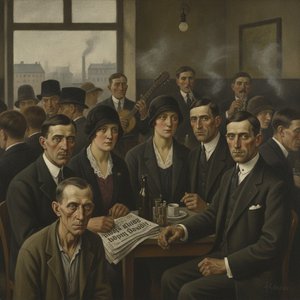
Neue Sachlichkeit: The Unflinching Realism and Social Critique of German New Objectivity
Explore the raw realism of Neue Sachlichkeit. Discover how German New Objectivity artists like Otto Dix and George Grosz captured the turbulent Weimar Republic through unflinching social critique and precise detail. A definitive guide for art historians and collectors.

Willard Leroy Metcalf: Capturing the Intimacy of American Rural Life
Explore the serene landscapes of Willard Leroy Metcalf, a key figure in American Impressionism. Discover his tranquil New England scenes & vibrant art reproductions at OriginalUniqueArt.

The Ashcan School: Capturing the Raw Spirit and Urban Realism of New York City Life
Explore the raw, evocative beauty of the Ashcan School. Discover how masters like Bellows and Glackens captured New York's urban soul through American Realism, and learn to bring this gritty, historical elegance into your modern art collection.


