

 Aperçu en situation
 Partager
 Partager
 Détails
 Guide imprimable

 Télécharger
 Articles similaires
 Radiographie
 Voir le diaporama
 Statistiques
Rural Landscape


 Afficher la suite
Giclées et impressions d'art
Impressions giclées ou sur toile de qualité musée, avec une production rapide et des finitions au choix. ( Acheter la peinture faite à la main Passer au format image numérique)




P118B €10

P118H €10

P118W €10

P438Z €10

P508JH €12

P508YH €12

P805H €10

P805Z €10

P919BZ €10

P919G €10

P919XJ €10

P959ZH €10

P968JZ €12

W106C €8

W218G €10

W218JH €8

W218Y €10

W307PJ €10

W316G €10

W316PJ €8

W316Y €10

W398PJ €8

W4111J €10

W500HY €15

W500JH €15

W692G €12

W849H €8

W940BG €15

W953PJ €8




Choisissez parmi nos formats prédéfinis qui respectent les proportions originales de l’œuvre.

Saisissez la largeur et la hauteur souhaitées pour qu'elles s'adaptent à votre cadre ou à votre mur. Une impression ne peut être que découpée, elle ne peut jamais être agrandie au-delà de l'image originale ; ainsi, un format de forme différente entraînera la perte d'une partie de l'image. Nous vous envoyons une maquette numérique pour approbation avant toute impression. L'image présentée sur cette page ne montre pas le recadrage réel — seule la maquette le permet.
Livraison dans le monde entier () en 2 semaines au lieu des 4/5 semaines habituelles. (24 octobre)

Livraison express gratuite dans le monde entier

Toile de lin de haute qualité

Assurance transport complète

Garantie de remboursement des droits de douane

Garantie de fidélité des couleurs

Garantie de retour de 100 jours (uniquement en cas de défaut)

Garantie de remboursement à 100%

Tarifs dégressifs sur quantité
 L'option verre n'est disponible que pour les dimensions inférieures à 110 cm.

Rural Landscape
Giclées et impressions d'art
Format de la reproduction
-


Prix total final
€ 70
A Serene Vision of Rural America: Charles Harold Davis’ “Rural Landscape”
Charles Harold Davis' "Rural Landscape," painted in 1905, isn’t merely a depiction of a field and trees; it’s an invitation to step into a moment of profound tranquility. Born in Amesbury, Massachusetts, in 1856, Davis honed his artistic skills under the tutelage of prominent figures like Jules Joseph Lefebvre and Gustave Boulanger in Paris, absorbing the vibrant energy of the European art scene before returning to America and embracing a distinctly American aesthetic. His work, particularly during his time in Mystic, Connecticut, shifted towards a Tonalist style, characterized by its muted colors, atmospheric perspective, and an almost meditative focus on capturing the essence of nature – a legacy deeply influenced by the Barbizon School’s emphasis on light and shadow.
The painting immediately draws the eye with its harmonious blend of blues, greens, and browns. Davis masterfully employs a technique reminiscent of Impressionism, though tempered with a Tonalist sensibility. He doesn't strive for photographic realism; instead, he uses broken brushstrokes and subtle gradations of color to evoke a feeling of atmosphere—the hazy warmth of the afternoon sun filtering through the trees, the gentle movement of clouds across the sky. The composition is carefully balanced, leading the viewer’s eye through the scene towards a distant horizon, creating a sense of depth and spaciousness. Note the delicate rendering of the foliage – not sharply defined, but rather suggested with loose, expressive strokes that capture the texture and vitality of the landscape.
The Language of Light and Shadow
Davis’s genius lies in his ability to translate light into color and form. The painting is bathed in a soft, diffused light, characteristic of the late afternoon. He skillfully uses shadows to define shapes and create a sense of volume, particularly in the trees that frame the scene. These aren't dark, ominous shadows; they are gentle, almost luminous, suggesting warmth and inviting the viewer into the heart of the landscape. The clouds themselves are rendered with remarkable subtlety, shifting between shades of gray and blue, creating an ethereal quality that elevates the painting beyond a simple depiction of weather.
The inclusion of figures in the foreground adds a layer of narrative to the scene without disrupting its overall sense of serenity. These individuals – likely farmers or laborers – are rendered with minimal detail, serving primarily as anchors for the viewer’s eye and subtly hinting at human connection within this vast landscape. They represent not just a rural life but also a timeless harmony between humanity and nature.
Symbolism and Emotional Resonance
“Rural Landscape” is more than just a pretty picture; it's imbued with symbolism. The scene evokes a sense of nostalgia for a simpler time, a longing for connection to the land, and an appreciation for the beauty of the natural world. It speaks to the values of hard work, community, and resilience – themes that were particularly resonant in America at the turn of the 20th century.
The painting’s quietude is profoundly calming. It invites contemplation and offers a respite from the stresses of modern life. Davis's masterful use of color and light creates an emotional atmosphere of peace, contentment, and connection to something larger than oneself. The scene feels both familiar and timeless, tapping into a deep-seated human desire for beauty and tranquility.
A Legacy in American Art
Charles Harold Davis’s “Rural Landscape” stands as a testament to the power of Tonalist and Impressionistic techniques to capture the essence of the American landscape. His work is represented in prominent museums, including the Metropolitan Museum of Art and the Corcoran Gallery of Art, solidifying his place as a significant figure in American art history. Reproductions of this evocative painting offer a beautiful way to bring a touch of rural serenity into any home or office – a reminder of the enduring beauty and tranquility of the natural world.
Questions et réponses
Quelle technique a été utilisée pour « Rural Landscape » et quand a-t-elle été créée ?
« Rural Landscape » a été créé en 1905 avec la technique du Oil On Canvas. Le matériau et la date décrivent comment et quand l'original a été réalisé.
Quelle saturation et quelle intensité «Rural Landscape» de Charles Harold Davis présente-t-il ?
«Rural Landscape» de Charles Harold Davis est représenté avec une saturation de Subtle Color et une intensité de Balanced.
Existe-t-il une fiche informative sur «Rural Landscape» de Charles Harold Davis destinée aux étudiants ?
Une page Guide est disponible pour «Rural Landscape» de Charles Harold Davis : une fiche d'information imprimable sur l'œuvre, conçue pour les étudiants et un usage pédagogique en classe.
Biographie de l'artiste
early life and training
Charles Harold Davis (1856-1933) était un peintre américain reconnu pour ses paysages sereins et idéaux, notamment ses célèbres œuvres impressionnistes représentant des nuages majestueux. Né à Amesbury, Massachusetts, en 1856, il reçut une éducation artistique exceptionnelle grâce à son séjour au musée d'art de Boston où il étudia les œuvres classiques et modernes. Cette expérience précoce lui ouvrit les portes de Paris en 1880 où il poursuivit ses études à l’Académie Julien sous la direction des peintres Jules Joseph Lefebvre et Gustave Boulanger, développant ainsi une maîtrise parfaite des techniques picturales européennes. Il était particulièrement fasciné par les mouvements artistiques émergents tels que l'impressionnisme et le tonalisme.artistic style and influences
L’œuvre de Davis est marquée par une sensibilité aiguë à la beauté naturelle et une précision technique remarquable. Inspiré par Barbizon, où il travailla intensivement, il adopta un style caractéristique du tonalisme, caractérisé par des couleurs douces et atténuées qui évoquent une atmosphère paisible et mélancolique. Cette esthétique fut renforcée par les enseignements de Gustave Boulanger et Jules Joseph Lefebvre à l’Académie Julien, lui permettant d'intégrer pleinement les principes de l'impressionnisme. Ses peintures sont imprégnées de la lumière et des couleurs vives propres à cette époque artistique. Il était influencé notamment par les œuvres de Jean-François Millet et Eugène Boudin, artistes pionniers du tonalisme et de l’observation directe de la nature.notable achievements and affiliations
Davis fut accueilli avec enthousiasme au National Academy of Design en 1906 où il reçut une médaille d'argent lors de l'exposition parisienne de 1889, événement majeur du mouvement artistique impressionniste. Ses œuvres sont aujourd’hui conservées dans des musées prestigieux tels que le Metropolitan Museum of Art à New York et la Galerie Nationale aux Pays-Bas, témoignant ainsi de son héritage artistique durable. Il fut également fondateur de l'Association Mystic Art en 1913, une initiative qui contribua à faire rayonner l’art colonial américain dans la région du Connecticut et à promouvoir une nouvelle génération d’artistes talentueux.legacy
Charles Harold Davis demeure une figure essentielle de l'histoire de l'art américain du XIXe siècle. Son travail continue d'inspirer les artistes contemporains et témoigne de la puissance de l'observation artistique et de la capacité à traduire la beauté naturelle dans la peinture avec une sensibilité inégalée. Il est considéré comme un précurseur du mouvement impressionniste et un représentant majeur du tonalisme, deux esthétiques qui marquèrent profondément le paysage artistique occidental.
Charles Harold Davis
1856 - 1933 , États-Unis
En bref
- Artistic Movement Or Style: Impressionnisme & Tonalisme
- Artists Or Movements Influenced By This Artist: ['Mystic Art Colony']
- Artists Who Influenced This Artist:
- Jules Joseph Lefebvre
- Gustave Boulanger
- Date Of Birth: Jan 7, 1856
- Full Name: Charles Harold Davis
- Nationality: Américain
- Notable Artworks:
- Vue de mer
- Paysage rural
- Une clairière
- Place Of Birth: AMESBURY, États-Unis
Articles connexes

Constable : Les 25 Chefs-d'Œuvre du Maître Anglais | OriginalUniqueArt
Plongez dans l'univers de John Constable avec les 25 œuvres incontournables du maître anglais. Découvrez l'histoire, la technique et l'émotion derrière ses paysages romantiques. Reproductions de qualité muséale sur OriginalUniqueArt.com.

The Unvarnished Truth: A Cultural Journey Through the Soul of American Realism
Explore the profound beauty of American Realism. From the Ashcan School's urban grit to intimate portraits, discover how artists captured the authentic soul of a nation through unvarnished truth and masterful observation.

Grant Wood & American Regionalism: Identity, Myth & the Rural Landscape
Explore the world of Grant Wood & American Regionalism with OriginalUniqueArt. Discover the symbolism behind 'American Gothic', recurring themes, and the movement's lasting impact on art history. High-quality reproductions available.

Réalisme Américain : 10 Chefs-d'œuvre Incontournables pour une Déco Inspirée
Plongez au cœur du Réalisme Américain avec 10 chefs-d'œuvre d'Edward Hopper, Andrew Wyeth et plus. Découvrez l'histoire et les techniques de ces artistes emblématiques. Reproductions de tableaux de qualité musée sur OriginalUniqueArt.com !
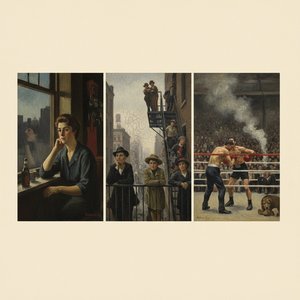
Le Réalisme Américain du XXe siècle : Un commentaire social et artistique poignant
Explorez le Réalisme Américain du XXe siècle : de l'Ashcan School à Hopper. Analyse approfondie des artistes, techniques et l'impact social de ce mouvement artistique puissant. Découvrez son héritage sur OriginalUniqueArt.