

 Aperçu en situation
 Partager
 Partager
 Détails

 Télécharger
 Articles similaires
 Radiographie
 Voir le diaporama
 Statistiques
Poor Artist's Cupboard
 Oil
Oil- WallArt
 1815
1815- 19th Century
 95.0 x 90.0 cm
 Afficher la suite
Acquérez une image numérique haute résolution et optimisée, d'une qualité bien supérieure à l'aperçu en ligne.
Chaque fichier est méticuleusement préparé par nos spécialistes internes à l'aide d'outils avancés et d'une retouche manuelle experte. Nous garantissons que chaque image possède une clarté exceptionnelle, une précision des couleurs irréprochable et un niveau de détail fin.
Le fichier final est livré par e-mail sous 72 heures, optimisé pour une utilisation immédiate dans des contextes professionnels, éditoriaux et d'impression. Il offre la même qualité de confiance que celle utilisée par les plus grands studios de création, éditeurs et galeries.
Image numérique
Téléchargez un fichier haute résolution pour votre usage personnel, l'impression et vos projets créatifs. ( Passer au format impression Acheter la peinture faite à la main)
Inclus avec chaque commande d'image numérique
Livraison numérique experte, garantie.
En choisissant OriginalUniqueArt.com, vous n'obtenez pas seulement une simple image : vous recevez une œuvre numérique sublimée avec professionnalisme, conçue avec précision et accompagnée d'une garantie de satisfaction. Voici tout ce qui accompagne automatiquement votre commande :

Livraison rapide par e-mail
Votre fichier d'image numérique haute résolution vous sera envoyé par e-mail sous 72 heures après votre commande — prêt à un usage immédiat.

Fichier numérique optimisé par l'IA
Votre œuvre d'art bénéficie d'une optimisation professionnelle grâce à des outils d'IA avancés et une retouche manuelle, garantissant un niveau maximal de détail, de clarté et de fidélité chromatique.

Réexpédition gratuite à vie
Vous avez accidentellement supprimé ou perdu votre fichier ? Pas d'inquiétude — nous vous le renverrons gratuitement, quand vous le souhaitez.

Aucuns frais de douane — À jamais
Profitez de votre œuvre d'art instantanément sans frais de douane ni de livraison — les téléchargements numériques sont toujours exonérés de taxes.

Garantie de fidélité des couleurs
Nous garantissons que votre image numérique reproduit les couleurs de l'original aussi fidèlement que possible grâce à des outils professionnels et une gestion rigoureuse des couleurs.

Garantie de satisfaction de 100 jours
Si vous n'êtes pas satisfait de votre image numérique, nous la retoucherons ou vous rembourserons 100% sous 100 jours — sans poser de questions.

Garantie de remboursement à 100%
Pas satisfait ? Obtenez un remboursement intégral dans les 100 jours suivant la réception de votre fichier numérique — sans aucune question posée.

Remises sur les commandes groupées
Achetez 3 images, économisez 10% - Achetez 5, économisez 15% - Achetez 10+, économisez 20%. Idéal pour les projets créatifs, les galeries et les agences.
A Poignant Still Life of Penury and Perseverance
In the quiet, shadowed alcove of Charles Bird King’s 1815 masterpiece, Poor Artist's Cupboard, we are invited into a deeply intimate and melancholic corner of a creative life. This nearly square still life is far more than a mere collection of objects; it is a profound narrative of struggle, intellectual hunger, and the heavy weight of financial instability. At first glance, the viewer encounters a cluttered niche, an arched space crammed with the remnants of a life lived on the edge of necessity. A crusty piece of bread sits alongside a short glass of water, symbols of the most basic sustenance, yet they are surrounded by a dense, almost overwhelming accumulation of books and papers that suggest a mind far richer than the hands that hold them.
The composition is masterfully arranged to guide the eye through a labyrinth of symbolic details. King utilizes a tight, claustrophobic arrangement to evoke the feeling of being trapped by circumstance. To the right, a red portfolio holds a sheaf of loose papers beneath the heavy weight of Lives of the Painters, a title that serves as a poignant reminder of the artist's own vocation and perhaps his precarious standing within it. The light catches the edges of a pink conch shell and the gold lettering on various spines, creating small flickers of beauty amidst the gloom. There is a tactile quality to the work; one can almost feel the rough texture of the bread, the cold smoothness of the glass, and the brittle, aging parchment of the many books that line the back of the alcove.
The Language of Symbolism and Hidden Narratives
Every object within this cupboard acts as a silent protagonist in a drama of survival. King employs a sophisticated layer of literary and social symbolism to communicate the artist's internal state. The titles found on the book spines are particularly devastating: Miseries of Life, Calamities of Author, and Unpaid Bills whisper of a reality where debt is as constant as the hunger for knowledge. Even more heartbreaking is the sight of a book titled Pleasures of Hope, where the very word "hope" has been physically ripped through by a torn page, suggesting a loss of optimism or the fragility of such a sentiment in the face of poverty.
The inclusion of calling cards addressed to "Palette," mentioning a debt of five dollars, grounds the painting in a specific, relatable human struggle. This is not an idealized, classical still life of abundance; it is a gritty, autobiographical reflection on the cost of an artistic life. The presence of a protractor and various instructional texts suggests that despite the lack of material wealth, there remains a rigorous commitment to the craft and the pursuit of technical mastery. It is this tension between the physical deprivation of the body and the intellectual expansion of the spirit that gives the painting its enduring emotional resonance.
A Timeless Addition for Discerning Collectors
For the art lover or interior designer, Poor Artist's Cupboard offers a unique opportunity to introduce a piece of profound historical depth into a contemporary space. The muted palette of browns, deep reds, and soft greens, punctuated by the rosy glow of the conch shell, provides a sophisticated tonal anchor for a room. As a high-quality reproduction, this work serves as a conversation starter, inviting guests to lean in closer and decipher the many layers of meaning hidden within its shadows.
Whether placed in a study, a library, or a curated gallery wall, this painting brings with it an atmosphere of contemplative quietude. It celebrates the resilience of the human spirit and the enduring power of art to find beauty within the most humble of circumstances. Owning a reproduction of this work is not merely about decorating a wall; it is about preserving a moment of historical empathy and honoring the complex, often difficult journey of the creative soul.
Biographie de l'artiste
Première vie et formation
Charles Bird King, un portraitiste américain de premier plan, est né le 26 septembre 1785 à Newport, dans le Rhode Island. Il était le seul enfant de Deborah Bird et du capitaine Zebulon King, un vétéran de la Révolution américaine. Après la mort prématurée de son père aux mains d'Amérindiens près de Marietta, Ohio, lorsque Charles n’avait que quatre ans, lui et sa mère retournèrent à Newport.Développement artistique
À 15 ans, King commença son parcours artistique sous la tutelle du portraitiste Edward Savage à New York. Il déménagea ensuite à Londres pour étudier auprès du célèbre Benjamin West à la Royal Academy pendant sept ans. Cette exposition aux styles artistiques européens influença considérablement son œuvre. De retour aux États-Unis en raison de la guerre de 1812, King travailla à Philadelphie, Baltimore et Richmond avant de s'installer à Washington, D.C., attiré par ses opportunités économiques.Œuvres notables et style
Les portraits de King de chefs et de membres de tribus amérindiennes sont particulièrement remarquables. Parmi ses œuvres les plus célébrées figurent :- John C. Calhoun, secrétaire à la guerre, qui témoigne de l'esprit ambitieux du politicien (actuellement au musée d’art Chrysler à Norfolk, aux États-Unis).
- Kee-shes-wa, un chef des Sioux, témoignage de son talent pour capturer les chefs amérindiens.
- Jack-o-pa, un chef Chippeway [Chippewa], autre exemple de son expertise en portraiture.
- Teh-ro-hon, un guerrier Ioway, reflétant sa capacité à capturer l'essence des guerriers amérindiens.
- Un portrait qui met en valeur sa maîtrise de divers sujets.
Héritage et impact
Le succès économique de King peut être attribué à sa capacité à socialiser avec les riches et à se rapprocher des politiciens bien éduqués. Ses mécènes comprenaient des personnalités importantes telles que John Quincy Adams, Henry Clay, James Monroe et Daniel Webster. Bien qu'il ne se soit jamais marié, King a vécu à Washington jusqu’à sa mort le 18 mars 1862. Il a laissé derrière lui une collection de peintures, de livres et d’estampes à la Redwood Library and Athenaeum. Points clés :- Élu académicien honoraire à l'Académie nationale du design en 1827.
- Connu pour ses maniérismes européens traditionnels adaptés aux sujets amérindiens.
- Son œuvre se caractérise par un mélange d’influences néerlandaises et nord-européennes, reflétant son séjour à la Royal Academy.
Références
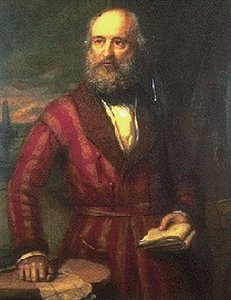
Charles Bird King
1785 - 1862 , États-Unis d'Amérique
En bref
- Artistic Movement Or Style: Portraiture, influences européennes
- Artists Who Influenced This Artist:
- Benjamin West
- Edward Savage
- Date Of Birth: 26 septembre 1785
- Date Of Death: 18 mars 1862
- Full Name: Charles Bird King
- Nationality: Américain
- Notable Artworks:
- John C. Calhoun, secrétaire de guerre
- Kee-shes-wa, un chef fox
- Jack-o-pa, un chef chippewa
- Teh-ro-hon, un guerrier ioway
- Place Of Birth (City And Country): Newport, États-Unis