

 Aperçu en situation
 Partager
 Partager
 Détails
 Guide imprimable

 Télécharger
 Articles similaires
 Radiographie
 Voir le diaporama
 Statistiques
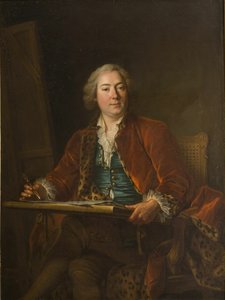
Self-Portrait
 Oil On Canvas
- WallArt
- Rococo
 1762
1762 88.0 x 72.0 cm
 Musée de l'Ermitage
 Afficher la suite
Giclées et impressions d'art
Impressions giclées ou sur toile de qualité musée, avec une production rapide et des finitions au choix. ( Acheter la peinture faite à la main Passer au format image numérique)




P118B €10

P118H €10

P118W €10

P438Z €10

P508JH €12

P508YH €12

P805H €10

P805Z €10

P919BZ €10

P919G €10

P919XJ €10

P959ZH €10

P968JZ €12

W106C €8

W218G €10

W218JH €8

W218Y €10

W307PJ €10

W316G €10

W316PJ €8

W316Y €10

W398PJ €8

W4111J €10

W500HY €15

W500JH €15

W692G €12

W849H €8

W940BG €15

W953PJ €8




Choisissez parmi nos formats prédéfinis qui respectent les proportions originales de l’œuvre.

Saisissez la largeur et la hauteur souhaitées pour qu'elles s'adaptent à votre cadre ou à votre mur. Une impression ne peut être que découpée, elle ne peut jamais être agrandie au-delà de l'image originale ; ainsi, un format de forme différente entraînera la perte d'une partie de l'image. Nous vous envoyons une maquette numérique pour approbation avant toute impression. L'image présentée sur cette page ne montre pas le recadrage réel — seule la maquette le permet.
Livraison dans le monde entier () en 2 semaines au lieu des 4/5 semaines habituelles. (16 octobre)

Livraison express gratuite dans le monde entier

Toile de lin de haute qualité

Assurance transport complète

Garantie de remboursement des droits de douane

Garantie de fidélité des couleurs

Garantie de retour de 100 jours (uniquement en cas de défaut)

Garantie de remboursement à 100%

Tarifs dégressifs sur quantité
 L'option verre n'est disponible que pour les dimensions inférieures à 110 cm.

Self-Portrait
Giclées et impressions d'art
Format de la reproduction
-


Prix total final
€ 70
A Portrait of Inner Reflection: Charles-André van Loo’s “Self-Portrait”
The year 1762 witnessed a pivotal moment in the artistic landscape of France – the creation of Charles-André van Loo's "Self-Portrait." More than simply a likeness, this painting is a carefully constructed meditation on identity, status, and the burgeoning Rococo aesthetic. Van Loo, a key figure within his family’s esteemed dynasty of painters, presents himself not as a flamboyant courtier or a heroic warrior, but as a thoughtful observer, subtly imbued with an air of quiet contemplation. The portrait immediately draws the eye to the artist's direct gaze, a deliberate act of engagement that invites the viewer into a private moment.
Van Loo’s style is quintessential Rococo – characterized by its delicate brushwork, pastel hues, and an emphasis on elegant ornamentation. He employs a loose, almost impressionistic technique, favoring soft transitions between light and shadow to create a sense of atmospheric depth. The rich fabrics of his suit—a deep burgundy velvet accented with gold embroidery—speak volumes about his position within the French court, while the subtle details – the meticulously rendered lace collar, the gleaming sword on his side – reinforce this image of refined authority. Yet, it’s not merely a display of wealth; these elements are presented with an understated grace that suggests a considered awareness of their symbolic weight.
The Context of 18th-Century Portraiture
To fully appreciate “Self-Portrait,” one must understand the evolving context of portraiture during the mid-18th century. Following the grandeur of the Baroque period, artists began to shift towards a more intimate and psychologically nuanced approach. The rise of the middle class fueled demand for portraits, but royal patronage continued to shape artistic trends. Artists like Van Loo were tasked with capturing not just physical likenesses, but also conveying an individual’s character and social standing. Van Loo's self-portrait reflects this trend – it is a carefully crafted statement about his identity as both artist and member of the elite.
Interestingly, the portrait predates the widespread popularity of the self-portrait as a genre. While artists had occasionally depicted themselves in various roles throughout history, Van Loo’s work stands out for its directness and lack of theatricality. He avoids overtly dramatic poses or elaborate settings, opting instead for a simple, uncluttered composition that focuses entirely on his own image. This deliberate restraint speaks to the artist's confidence and self-awareness – he is not seeking to impress, but rather to present himself honestly.
Symbolism and Emotional Resonance
Beyond its technical merits, “Self-Portrait” is rich in symbolic detail. The sword, a traditional emblem of power and authority, suggests Van Loo’s role as a court painter – a position that demanded both artistic skill and political savvy. However, the sword is not brandished aggressively; it rests calmly on his hip, hinting at a measured approach to wielding influence. The background—a plain wall—further emphasizes the artist's focus on himself, creating an aura of introspection.
Perhaps most powerfully, the painting evokes a sense of quiet contemplation. Van Loo’s gaze is direct and unwavering, yet there is also a hint of melancholy in his expression. It’s as if he is reflecting on his own life, his work, and the complexities of his position within society. The subtle shading around his eyes and mouth contributes to this feeling of emotional depth, inviting the viewer to share in his private thoughts. The painting isn't merely a representation of a man; it’s an invitation into his inner world.
A Timeless Masterpiece: Reproduction Possibilities
Charles-André van Loo’s “Self-Portrait” remains a captivating work of art, offering a rare glimpse into the mind and soul of a prominent 18th-century artist. High-quality reproductions capture the delicate brushwork and nuanced color palette that define this masterpiece. Whether displayed in a formal salon or a contemporary living space, this portrait continues to resonate with viewers today, reminding us of the enduring power of self-reflection and artistic expression. OriginalUniqueArt offers meticulously crafted hand-painted reproductions, allowing you to bring this timeless work into your home.
Questions et réponses
Comment puis-je obtenir une impression de «Self-Portrait» de Charles-André van Loo ?
Pour obtenir une impression de «Self-Portrait» de Charles-André van Loo, il vous suffit de la commander sur sa page Impression d'art fine : une impression d'art sur toile de coton ou sur papier canvas d'archive.
Quelle est la forme de «Self-Portrait» de Charles-André van Loo et quelles sont ses dimensions ?
«Self-Portrait» de Charles-André van Loo est une composition en Portrait mesurant 88 x 72 cm dans l'original.
À quelle période de la carrière de Charles-André van Loo appartient « Self-Portrait » ?
« Self-Portrait » représente la période Mature Period de Charles-André van Loo.
Biographie de l'artiste
Première Vie et Formation
- Naissance: 15 février 1705, à Nice, France
- Origines Familiales: Fils de Louis-Abraham van Loo et frère cadet de Jean-Baptiste van Loo. Membre d'une dynastie de peintres d'origine néerlandaise au succès reconnu.
- Première Éducation: Formation initiale à Turin, suivie d’un séjour à Rome en 1712 où il étudia sous la direction de Benedetto Luti et du sculpteur Pierre Legros.
- Études Parisiennes: Fréquenta l'Académie Royale, où il remporta le premier prix pour le dessin en 1723 et pour la peinture historique en 1727.
Carrière Artistique et Œuvres Notables
- Style: Principalement connu comme peintre rococo, caractérisé par l'élégance, la grâce et les détails ornés.
- Sujets: Diversité des sujets incluant portraits, scènes mythologiques, peintures historiques, allégories et scènes de genre.
- Œuvres Significatives:
- Vénus et Amour (Kunsthalle Bremen) – Démontre la maîtrise du style rocaille.
- Halte à la Chasse (The Metropolitan Museum of Art) – Capture les activités aristocratiques.
- Portrait de Marie Leszczynska, Reine de France – Un portrait royal notable.
- Jupiter et Antiope – Illustre des thèmes mythologiques.
- Autoportrait – Fournit un aperçu de la perception de soi de l'artiste.
- Persée et Andromède (plusieurs versions) – Démontre une compétence dans la représentation de la mythologie classique.
- Mademoiselle Clairon en Médée (petite version) - Un portrait rococo captivant datant de 1760.
Mécénat et Reconnaissance Royale
- Mécénat Royal: A bénéficié du mécénat de Madame de Pompadour et de la cour française.
- Nomination à la Cour: Devenu premier peintre du roi Louis XV en 1762, un poste prestigieux.
- Ordre de Saint-Michel: Décoré de l'ordre de Saint-Michel, signifiant la faveur royale.
Influences et Importance Historique
- Influence Familiale: Fortement influencé par son père et son frère, tous deux peintres accomplis.
- Rivalité: A été en concurrence avec François Boucher, un autre artiste rococo important.
- École Française Moderne: Sa "simplicité de style et la justesse de ses conceptions" ont considérablement influencé l'école française moderne de peinture.
- Fortune Critique: Bien que sa position critique ait fluctué au fil du temps, son talent et la diversité de son œuvre suscitent respect et admiration.
Collections Muséales et Ressources Supplémentaires
- Présence dans les Musées: Des œuvres sont présentées dans des musées prestigieux tels que le Louvre (Le Mariage de la Vierge), Kunsthalle Bremen, et The Metropolitan Museum of Art.
- Ressources Complémentaires:
- Page OriginalUniqueArt sur Charles-André van Loo : https://www.OriginalUniqueArt.com/artists/charles-andre-van-loo/
- Page OriginalUniqueArt sur les plus grands artistes de tous les temps : https://www.OriginalUniqueArt.com/greatest-artists
- Musée virtuel OriginalUniqueArt: https://www.OriginalUniqueArt.com/
- Article Wikipédia : https://en.wikipedia.org/wiki/Charles-Andr%C3%A9_van_Loo
Charles-André van Loo
1705 - 1765 , France
En bref
- Artistes Influents:
- Benedetto Luti
- Pierre Le Gros
- Date De Naissance: 15 février 1705
- Influences Artistiques: ['École française moderne']
- Lieu De Naissance: Nice, France
- Mouvement Artistique: Rococo
- Nationalité: Française
- Nom Complet: Charles-André van Loo
- Œuvres Notables:
- Vénus et Amour
- Halte à la chasse
- Portrait de Marie Leszczynska
- Jupiter et Antiope
- Autoportrait
- Persée et Andromède
Articles similaires

Les 10 Chefs-d'Œuvre du Rococo : Artistes, Histoire & Décor Intérieur
Plongez dans l'univers raffiné du Rococo avec les 10 chefs-d'œuvre de Fragonard, Boucher & Watteau. Découvrez l'histoire, les techniques et la magie de ce mouvement artistique. Reproductions tableaux de qualité muséale sur .

Les 10 Chefs-d'œuvre de la Peinture Primitif Néerlandaise : Art, Histoire & Décor
Plongez au cœur de la peinture flamande ! Découvrez les 10 chefs-d'œuvre de Jan van Eyck, Campin & Memling. Histoire, symbolisme et réalisme : trouvez l'inspiration déco et achetez des reproductions d'art exceptionnelles sur OriginalUniqueArt.com.

Rembrandt van Rijn : Les 25 Œuvres Maîtresses à Redécouvrir | OriginalUniqueArt
Plongez dans l'univers de Rembrandt van Rijn avec les 25 œuvres incontournables du maître baroque. Découvrez l'histoire, la technique et l'émotion derrière ses portraits célèbres et 'La Ronde de Nuit'. Reproductions tableaux haute qualité sur OriginalUniqueArt.com

Charles-André van Loo: A Study in Rococo Portraiture & the French Court's Artistic Dynamics
Explore the elegant world of Charles-André van Loo, a master of Rococo portraiture at the French court. Discover his life, techniques, and enduring influence on 18th-century art. Hand-painted reproductions available.

L'Esthétique Rococo : Opulence, Rébellion et la Quête du Plaisir au XVIIIe Siècle
Explorez l'esthétique rococo : opulence, rébellion et quête du plaisir au XVIIIe siècle. Découvrez les maîtres (Watteau, Boucher, Fragonard) et l'influence durable de ce style artistique raffiné. Analyse approfondie & reproductions d'exception.


