

 Aperçu en situation
 Envoyer
 Partager
 Détails de l'œuvre

 Télécharger
 Articles similaires
 Radiographie
 Diaporama
Latin Quarter, Paris
 1880
1880 25.0 x 18.0 cm
 Lire la suite
Giclées et impressions d'art
Impressions giclées ou sur toile de qualité musée, avec une production rapide et des finitions au choix. ( Commander la reproduction peinte à la main Acheter l'image haute résolution)




































Choisissez parmi nos formats prédéfinis qui respectent les proportions originales de l’œuvre.

Vous pouvez saisir vos propres dimensions pour vous adapter à un cadre ou à un espace spécifique. Si la taille sélectionnée ne correspond pas aux proportions de l'image originale, nous recadrerons l'œuvre ou étendrons l'image avec une bordure en miroir ou une couleur unie. Une maquette numérique vous sera envoyée pour approbation avant le début de la production.
Veuillez noter que l'aperçu à l'écran ne reflète pas le recadrage ou l'extension réelle. Seule la maquette montrera avec précision la composition finale.
Bien que des tailles personnalisées soient disponibles, nous vous recommandons de choisir une dimension dans la liste prédéfinie afin de préserver les proportions originales.
Livraison dans le monde entier () en 2 semaines au lieu des 4/5 semaines habituelles. (28 août)

Livraison express gratuite dans le monde entier

Toile de lin de qualité supérieure

Assurance transport complète

Garantie de remboursement des droits de douane

Garantie de fidélité des couleurs

Politique de retour de 60 jours (uniquement en cas de défaut)

Garantie de remboursement à 100%

Offre de tarifs dégressifs
 L'option verre n'est disponible que pour les dimensions inférieures à 110 cm.

Latin Quarter, Paris
Giclées et impressions d'art
Format de la reproduction
-


Prix total
$ 80
A Glimpse into the Past
The painting features a tall brick chimney stack with a weather vane on top, standing out against the sky. Two other chimneys are visible in the background, while a building with a clock is prominently displayed in the middle of the scene. The presence of three people adds a sense of life and activity to the otherwise quiet atmosphere. This artwork is not only a beautiful representation of the Latin Quarter but also a testament to Cass Gilbert's ability to convey the charm of a bygone era.Artist's Style and Technique
Cass Gilbert's use of watercolor and pencil on paper creates a unique texture and depth in the painting. The artist's attention to detail is evident in the intricate architecture and the play of light and shadow. The Latin Quarter, Paris painting is a prime example of Cass Gilbert's skill in capturing the essence of a place and transporting the viewer to another time and location.- Handmade oil paintings reproductions of Latin Quarter, Paris are available on https://OriginalUniqueArt.com, allowing art enthusiasts to own a piece of history.
- For more information on Cass Gilbert and his works, visit the Smithsonian American Art Museum website or explore the /art/list/?Filter=AQTAJX-Cass-Gilbert-Latin-Quarter-Paris page.
- To learn more about the artist's style and technique, check out the Cass Gilbert biography on Wikipedia.
The Latin Quarter, Paris painting by Cass Gilbert is a must-see for art enthusiasts and history buffs alike. With its unique blend of architecture, atmosphere, and artistic technique, this piece is sure to captivate audiences and inspire a sense of wonder and appreciation for the past.
Biographie de l'artiste
Cass Gilbert: The Architect of American Grandeur
Cass Gilbert (November 24, 1859 – May 17, 1934) stands as a towering figure in the annals of American architectural history—not merely for his prolific output but for fundamentally reshaping the aesthetic landscape of the early 20th century. Born in Troy, New York, Gilbert’s formative years instilled within him a deep appreciation for classical tradition and meticulous craftsmanship, influences that would permeate every subsequent project he undertook. He pursued formal training at Rensselaer Polytechnic Institute before embarking on a career dedicated to elevating civic spaces and celebrating the nation's aspirations. Gilbert’s architectural philosophy centered around synthesizing Beaux-Arts principles—derived from Parisian grandeur—with innovative engineering techniques. This approach, championed by figures like Auguste Choisel and Eugène Viollet-le-Duc, sought to embody ideals of democracy, law, and humanism – concepts profoundly resonant with the burgeoning American spirit of optimism during his era. Unlike many contemporaries who embraced purely decorative styles, Gilbert prioritized structural integrity alongside artistic expression, establishing him as a pioneer in skyscraper design and securing his legacy as one of the foremost architects of his time. He was particularly influenced by Richard Morris Hunt and Henry Bacon, whose sculptural mastery inspired him to elevate architectural ornamentation to new heights. His groundbreaking work began to gain prominence in the late 1880s with projects like Battle Abbey, demonstrating an early mastery of monumental scale and sculptural detailing. This dedication to craftsmanship quickly translated into commissions for significant civic buildings across the United States. The Woolworth Building, completed in 1913, remains a testament to Gilbert’s vision—a soaring edifice of limestone and terracotta that redefined skyscraper aesthetics and symbolized New York City's burgeoning economic power. Similarly, his designs for the Minnesota Capitol and Detroit Public Library exemplify the Beaux-Arts style’s commitment to grandeur and civic pride. These buildings stand as enduring symbols of American ambition and artistic achievement. Gilbert’s influence extended beyond mere stylistic innovation; he actively fostered architectural education and championed the importance of preserving historic buildings. He served as president of the American Institute of Architects from 1908–09, advocating for standards of excellence and promoting a harmonious blend of tradition and progress. His unwavering belief in upholding architectural heritage ensured that future generations would appreciate the beauty and significance of structures built during his time—a testament to his enduring impact on American cultural history. He was awarded the RIBA Gold Medal in 1924, recognizing his contributions to the field. Gilbert’s artistic development was marked by a consistent pursuit of refined elegance and technical mastery. He meticulously studied classical sculpture, absorbing lessons from artists like Michelangelo and Bernini, which informed his sculptural ornamentation and contributed to the monumental scale of his buildings. Furthermore, Gilbert's legacy is secured not only in iconic structures but also in his dedication to mentoring young architects and shaping the future of American architectural practice—a true visionary who left an indelible mark on the nation’s artistic landscape.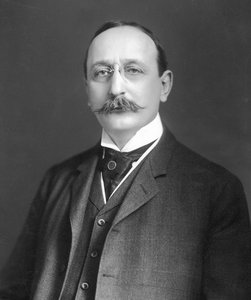
Cass Gilbert
1859 - 1934 , Massachusetts
L'essentiel de l'artiste
- Artistic Movement Or Style: Beaux-Arts
- Artists Who Influenced This Artist:
- Richard Morris Hunt
- Henry Bacon
- Date Of Birth: 24 novembre 1859
- Date Of Death: 17 mai 1934
- Full Name: Cass Gilbert
- Nationality: Américain
- Notable Artworks:
- Woolworth Building
- Supreme Court building
- Minnesota Capitol
- Detroit Public Library
- Place Of Birth: Boston, Massachusetts

