Aperçu en situation
 Partager
 Partager
 Détails
 Guide imprimable

 Télécharger
 Articles similaires
 Radiographie
 Voir le diaporama
 Statistiques
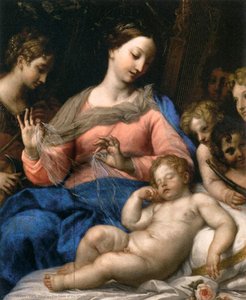
Maria Immaculata
 Oil On Canvas
- WallArt
- Baroque Classicizing Style
 1688
1688 181.0 x 128.0 cm
 Galerie de peinture Sanssouci
 Afficher la suite
Giclées et impressions d'art
Impressions giclées ou sur toile de qualité musée, avec une production rapide et des finitions au choix. ( Acheter la peinture faite à la main Passer au format image numérique)




P118B €10

P118H €10

P118W €10

P438Z €10

P508JH €12

P508YH €12

P805H €10

P805Z €10

P919BZ €10

P919G €10

P919XJ €10

P959ZH €10

P968JZ €12

W106C €8

W218G €10

W218JH €8

W218Y €10

W307PJ €10

W316G €10

W316PJ €8

W316Y €10

W398PJ €8

W4111J €10

W500HY €15

W500JH €15

W692G €12

W849H €8

W940BG €15

W953PJ €8




Choisissez parmi nos formats prédéfinis qui respectent les proportions originales de l’œuvre.

Saisissez la largeur et la hauteur souhaitées pour qu'elles s'adaptent à votre cadre ou à votre mur. Une impression ne peut être que découpée, elle ne peut jamais être agrandie au-delà de l'image originale ; ainsi, un format de forme différente entraînera la perte d'une partie de l'image. Nous vous envoyons une maquette numérique pour approbation avant toute impression. L'image présentée sur cette page ne montre pas le recadrage réel — seule la maquette le permet.
Livraison dans le monde entier () en 2 semaines au lieu des 4/5 semaines habituelles. (23 octobre)

Livraison express gratuite dans le monde entier

Toile de lin de haute qualité

Assurance transport complète

Garantie de remboursement des droits de douane

Garantie de fidélité des couleurs

Garantie de retour de 100 jours (uniquement en cas de défaut)

Garantie de remboursement à 100%

Tarifs dégressifs sur quantité
 L'option verre n'est disponible que pour les dimensions inférieures à 110 cm.

Maria Immaculata
Giclées et impressions d'art
Format de la reproduction
-


Prix total final
€ 70
A Divine Embrace: Exploring the Baroque Majesty of Maria Immaculata
Carlo Maratta’s “Maria Immaculata,” painted in 1688, isn't merely a depiction of the Virgin Mary; it’s a carefully constructed tableau of faith, grace, and the burgeoning classical ideals of the late Baroque period. The painting immediately draws the viewer into a scene brimming with serene beauty – a testament to Maratta’s mastery of light, composition, and his deep understanding of religious iconography. The work transcends simple portraiture, offering a glimpse into a world where divine presence is palpable, inviting contemplation on themes of motherhood, purity, and spiritual devotion.
Maratta, a pivotal figure in Roman art after the Mannerist style, skillfully blended the emotional intensity of the Baroque with a newfound emphasis on clarity and balance. He was deeply influenced by Andrea Sacchi, his mentor, who instilled within him a reverence for classical forms and a restraint that tempered the dramatic flourishes characteristic of earlier Baroque painters. This influence is evident in “Maria Immaculata” – the figures are rendered with elegant poise, their gestures refined and harmonious, creating an atmosphere of dignified serenity. The color palette is rich yet controlled, dominated by deep blues and golds, evoking a sense of majesty and spiritual depth.
- Subject & Composition: At the heart of the painting stands Mary, presented as a figure of profound grace and maternal tenderness. She cradles the infant Jesus, his face radiating an innocent beauty. Surrounding them are a host of angels – one hovering above her head, another descending from the heavens, and two more positioned on either side, acting as silent witnesses to this sacred moment. The composition is meticulously balanced, drawing the eye towards Mary’s central position while subtly guiding it through the intricate arrangement of figures and architectural elements.
- Technique & Style: Maratta's brushwork is remarkably smooth and polished, indicative of his meticulous attention to detail. He employs sfumato – a technique borrowed from Leonardo da Vinci – to soften edges and create an ethereal quality, particularly around Mary’s face and the infant Jesus. The use of gold leaf adds a luminous sheen to the garments and halos, further enhancing the painting's sense of grandeur.
- Historical Context: Painted in 1688, “Maria Immaculata” reflects the Counter-Reformation’s emphasis on religious art as a tool for spiritual instruction and inspiration. The Catholic Church actively commissioned artworks that reinforced its doctrines and promoted piety among the faithful. The depiction of Mary as Immaculate – signifying her sinless conception – was a key theological concept during this period, emphasizing her unique role in salvation history.
Symbolism Woven into Sacred Space
Beyond its immediate beauty, “Maria Immaculata” is laden with symbolic meaning. The angels themselves represent divine messengers and protectors, embodying the grace and guidance offered by God’s presence. Mary's pose – her hand gently shielding the infant Jesus – symbolizes protection, nurturing, and the safeguarding of faith. The architectural setting, though somewhat simplified, evokes a sense of heavenly space, suggesting the sacredness of this encounter. The inclusion of light is particularly significant; it emanates from Mary and the Christ Child, illuminating the scene and symbolizing divine grace.
Notably, the painting’s composition echoes classical ideals of harmony and proportion, reflecting Maratta's commitment to a refined aesthetic rooted in antiquity. The arrangement of figures creates a pyramidal structure, a compositional device frequently employed by Renaissance artists to convey stability and balance.A Legacy of Baroque Elegance
Carlo Maratta’s “Maria Immaculata” stands as a remarkable example of the Roman Baroque at its most refined. It showcases his ability to seamlessly blend technical mastery with profound spiritual insight, creating an artwork that continues to resonate with viewers centuries later. The painting's enduring appeal lies not only in its aesthetic beauty but also in its capacity to evoke feelings of reverence, peace, and a deep connection to the timeless themes of faith and motherhood. Reproductions of this masterpiece offer a chance to bring this serene vision into any space, fostering contemplation and reminding us of the profound beauty found within religious art.
Further Research: For more information about Carlo Maratta and “Maria Immaculata,” explore resources such as the OriginalUniqueArt website (https://OriginalUniqueArt.com/carlo-maratta-maria-immaculata) and Wikipedia’s entry on Carlo Maratta (https://en.wikipedia.org/wiki/Carlo_Maratta).
Questions et réponses
À quelle étape de la carrière de Carlo Maratta appartient « Maria Immaculata » (1688) ?
La date de 1688 inscrit « Maria Immaculata » dans la période Late Baroque du développement de Carlo Maratta.
Quelle atmosphère se dégage de « Maria Immaculata » ?
L'atmosphère générale de «Maria Immaculata» de Carlo Maratta est Calm. Cette ambiance décrit l'impression globale de l'œuvre.
Pour quelle pièce «Maria Immaculata» de Carlo Maratta est-elle recommandée, compte tenu de ses couleurs ?
Compte tenu de ses couleurs Earthy, « Maria Immaculata » est suggéré pour une Living Room.
Biographie de l'artiste
Premières années et formation
Carlo Maratta, peintre italien de renom, est né le 15 mai 1625 à Camerano, dans les États pontificaux (aujourd'hui en Italie). À l’âge de onze ans, il déménagea à Rome où il devint apprenti dans l'atelier d'Andrea Sacchi. Cet événement marqua le début de son parcours artistique, qui le mènerait à devenir une figure majeure de l'école romaine de peinture.Style artistique et influences
Les peintures de Maratta se caractérisent par un style classicisant, exécuté dans une manière baroque classique tardive. Bien qu’il fasse partie de la tradition classique issue de Raphaël, il n’était pas exempt de l’influence de la peinture baroque, en particulier dans son utilisation de la couleur. Son contemporain et ami, Giovanni Bellori, écrivit une biographie précoce sur Maratta, soulignant son approche artistique unique.Œuvres notables et commandes
Parmi les œuvres notables de Maratta figurent :- La Visitation (1656) pour Santa Maria della Pace, témoignant de sa maîtrise de la lumière et du mouvement.
- Le Mystère de la Trinité révélée à saint Augustin (vers 1655), démontrant sa capacité à équilibrer l’idéalisme classique avec des éléments baroques.
- L'Apparition de la Vierge à saint Philippe Néri (vers 1675), aujourd'hui au Palazzo Pitti à Florence, exemplifiant son interprétation talentueuse du thème.
Carrière et reconnaissance
La carrière de Maratta s’étendit sur plus de six décennies, durant lesquelles il reçut de nombreuses commandes de mécènes prestigieux, dont six papes. Il fut nommé surintendent des chambres du Vatican par Innocent XI et chargé de restaurer les fresques de Raphaël au Vatican en 1702-1703. Son atelier romain fut extrêmement prolifique et il eut de nombreux élèves et assistants. Il enseigna à l'Académie grand-ducale fondée en 1673 par Cosme III de Médicis, où le florentin Tommaso Redi (1665-1726) étudia auprès de lui entre 1690 et 1700. Il fut admiré de sir Robert Walpole, qui collectionna ses œuvres.Héritage et postérité
L'héritage de Maratta en tant que maître de la manière baroque classique continue d’être célébré à travers ses œuvres, qui peuvent être trouvées dans divers musées, dont ceux présentés sur OriginalUniqueArt.com.- Découvrez les œuvres de Maratta sur OriginalUniqueArt : les œuvres de Carlo Maratta
- Lisez davantage sur la vie et l'œuvre de Maratta sur Wikipédia : Carlo Maratta - Wikipédia
Dates clés
1625 : Né à Camerano, États pontificaux (aujourd’hui Italie) 1636 : Déménagé à Rome et devint apprenti dans l'atelier d'Andrea Sacchi 1713 : Décédé à Rome, laissant derrière lui un héritage de peintures classicisantes
Carlo Maratta
1625 - 1713 , Italie
En bref
- Artistic Movement Or Style: Baroque classique tardif
- Artists Who Influenced This Artist:
- Raphaël
- Andrea Sacchi
- Date Of Birth: 15 mai 1625
- Date Of Death: 15 décembre 1713
- Full Name: Carlo Maratta
- Nationality: Italienne
- Notable Artworks:
- La Visitation
- Le Mystère de la Trinité
- L'Apparition de la Vierge
- Place Of Birth (City And Country): Camerano, Italie
Articles connexes

The Dramatic Flourish: Exploring the Baroque Movement's Enduring Legacy in Art History
Explore the dramatic world of Baroque art! Discover iconic artists like Caravaggio & Rubens, defining techniques, and its lasting impact on art history. Expert insights for collectors & enthusiasts at OriginalUniqueArt.

Baroque Classicism: The Grandeur of Order and Drama in 17th-Century Art History
Explore the profound elegance of Baroque Classicism. Discover how 17th-century masters synthesized dramatic emotion with classical order through the lens of the Counter-Reformation and the works of legends like Carlo Maratta and Andrea Sacchi.

Le Drame Baroque : L'Art qui Apporte la Splendeur dans Votre Intérieur
Plongez dans l'univers somptueux du baroque ! Découvrez son histoire, comment l'intégrer à votre intérieur et les œuvres incontournables. : reproductions d'art de qualité supérieure.

The Visceral Stage: Exploring Dramatic Narratives & Emotional Intensity in Baroque Art
Explore the dramatic world of Baroque art! Discover iconic masters like Caravaggio & Rembrandt, their techniques, and the movement's lasting impact. Expert insights for collectors & enthusiasts at OriginalUniqueArt.

Les 10 Chefs-d'œuvre Baroques qui ont Révolutionné l'Art |
Plongez au cœur du baroque avec les 10 chefs-d'œuvre de Caravaggio, Rembrandt et Rubens. Découvrez l'histoire fascinante de ces artistes et leurs tableaux célèbres. Reproductions d'art de qualité muséale sur – Explorez la collection !