

 Aperçu en situation
 Partager
 Partager
 Détails
 Guide imprimable

 Télécharger
 Articles similaires
 Radiographie
 Voir le diaporama
 Statistiques
Virgin and Child Enthroned
 Tempera On Panel
- WallArt
- Baroque art
 1476
1476- Renaissance
 107.0 x 55.0 cm
 Musée des Beaux-Arts de Budapest
 Afficher la suite
Giclées et impressions d'art
Impressions giclées ou sur toile de qualité musée, avec une production rapide et des finitions au choix. ( Acheter la peinture faite à la main Passer au format image numérique)




P118B $10

P118H $10

P118W $10

P438Z $10

P508JH $12

P508YH $12

P805H $10

P805Z $10

P919BZ $10

P919G $10

P919XJ $10

P959ZH $10

P968JZ $12

W106C $8

W218G $10

W218JH $8

W218Y $10

W307PJ $10

W316G $10

W316PJ $8

W316Y $10

W398PJ $8

W4111J $10

W500HY $15

W500JH $15

W692G $12

W849H $8

W940BG $15

W953PJ $8




Choisissez parmi nos formats prédéfinis qui respectent les proportions originales de l’œuvre.

Vous pouvez saisir vos propres dimensions pour vous adapter à un cadre ou à un espace spécifique. Si la taille sélectionnée ne correspond pas aux proportions de l'image originale, nous recadrerons l'œuvre ou étendrons l'image avec une bordure en miroir ou une couleur unie. Une maquette numérique vous sera envoyée pour approbation avant le début de la production.
Veuillez noter que l'aperçu à l'écran ne reflète pas le recadrage ou l'extension réelle. Seule la maquette montrera avec précision la composition finale.
Bien que des tailles personnalisées soient disponibles, nous vous recommandons de choisir une dimension dans la liste prédéfinie afin de préserver les proportions originales.
Livraison dans le monde entier () en 2 semaines au lieu des 4/5 semaines habituelles. (26 septembre)

Livraison express gratuite dans le monde entier

Toile de lin de haute qualité

Assurance transport complète

Garantie de remboursement des droits de douane

Garantie de fidélité des couleurs

Garantie de retour de 100 jours (uniquement en cas de défaut)

Garantie de remboursement à 100%

Tarifs dégressifs sur quantité
 L'option verre n'est disponible que pour les dimensions inférieures à 110 cm.

Virgin and Child Enthroned
Giclées et impressions d'art
Format de la reproduction
-


Prix total final
$ 80
A Regal Vision of Faith: The Luminous World of Carlo Crivelli
In the quiet sanctity of the late 15th century, few artists could command the eye with as much decorative splendor and spiritual intensity as Carlo Crivelli. His masterpiece, "Virgin and Child Enthroned," completed around 1476, stands as a breathtaking portal into the Late Gothic soul. This is not merely a painting; it is an immersive experience of divine presence. As one gazes upon this exquisite work, the viewer is immediately struck by a sense of profound majesty. The Virgin Mary, crowned and richly dressed as the Queen of Heaven, sits regally upon a marble throne, cradling the Christ Child in her arms. The composition radiates a celestial calm, yet it is charged with a meticulous, almost hyper-real detail that pulls the observer into a world where the sacred and the material intersect.
Crivelli’s unique artistic journey provides the essential backdrop for such a captivating creation. Born in Venice around 1435, he was steeped in the Venetian tradition, absorbing the luminous color palettes and linear precision of masters like Vivarini and Mantegna. However, as he moved toward the Marche region, his style evolved into something entirely singular. While his contemporaries in Florence were embracing the sweeping humanism of the High Renaissance, Crivulously embraced a more conservative, decorative Late Gothic aesthetic. This choice allowed him to master the trompe l’oeil technique—a skillful manipulation of perspective that creates an illusion of three-dimensional reality. Through thin, layered glazes of tempera on wood, he achieved a textural depth so profound that the viewer can almost feel the weight of the crown and the smoothness of the marble throne.
Symbolism and the Art of Detail
Every element within this composition serves a higher theological purpose, woven into a tapestry of symbolic meaning. The presence of the apples, positioned with deliberate care near the edges of the frame, acts as a poignant reminder of the Fall of Man, contrasting sharply with the purity of the Virgin and the promise of salvation embodied by the Christ Child. This interplay between sin and redemption is central to the emotional impact of the piece. Crivelli’s attention to detail—from the intricate patterns on the garments to the subtle shadows cast by the figures—creates a sense of "materiality" that makes the divine feel tangibly present in our own world.
For the discerning collector or interior designer, this artwork offers more than just historical significance; it provides a focal point of unparalleled elegance. The painting’s ability to balance heavy, ornamental detail with a serene, meditative atmosphere makes it a versatile choice for sophisticated spaces. Whether placed in a gallery-style setting or as a centerpiece in a classically designed room, a high-quality reproduction of this work brings with it an aura of timelessness and intellectual depth. It is a piece that invites long periods of contemplation, rewarding the viewer with new discoveries of light and shadow upon every encounter.
Biographie de l'artiste
Premières années et formation
Carlo Crivelli, peintre de la Renaissance italienne, est né à Venise vers 1430-35. Issu d'une famille de peintres, il a reçu sa formation artistique à Venise et Padoue. La formation précoce de Crivelli aurait été dispensée par Jacobello del Fiore, encore actif en 1436. Il a également étudié à l'école de Vivarini à Venise.Carrière et style
Crivelli a passé ses premières années dans le Vénétien, s'imprégnant des influences de Vivarini, Squarcione et Mantegna. En 1458, il quitta le Vénétien et passa la majeure partie de sa carrière dans les Marches d’Ancône, développant un style personnel distinctif qui contraste avec celui de son contemporain vénitien Giovanni Bellini. Le travail de Crivelli se caractérise par une sensibilité décorative gothique tardive et conservatrice, marquée par une qualité linéaire, une attention aux détails et l'utilisation de techniques de "trompe-l'oeil".Œuvres notables et collaborations
- La peinture "Madone et l’Enfant Trônés" (106 x 55 cm, Musée des Beaux-Arts de Budapest, Hongrie) de Carlo Crivelli est un exemple parfait de son style.
- Il a collaboré avec son jeune frère Vittorio Crivelli sur plusieurs projets.
- Pietro Alemanno, un peintre immigré dans les Marches d’Ancône en provenance de l'Allemagne/Autriche, fut son élève et collaborateur.
Musées et collections
- La Pinacothèque de Brera à Milan, en Italie, présente plusieurs œuvres de Crivelli, dont la "Piéta" (128 x 241 cm).
- Le Musée San Giovanni in Bragora à Venise, en Italie, possède une collection d'œuvres d'art de différentes périodes et styles, dont certaines sont attribuées à Crivelli.

Carlo Crivelli
1435 - 1495 , Italie
En bref
- Artistic Movement Or Style: Gothique tardif/Renaissance
- Artists Who Influenced This Artist:
- Vivarini
- Squarcione
- Mantegna
- Date Of Birth: vers 1430-35
- Date Of Death: 1495
- Full Name: Carlo Crivelli
- Nationality: Italienne
- Notable Artworks:
- Madone et Enfant Enthronés
- Pieta
- Place Of Birth (City And Country): Venise, Italie
Articles similaires
Jacob Henricus Maris: A Master of Dutch Atmospheric Realism & the Intimate Landscape
Explore the captivating world of Jacob Henricus Maris, a leading figure of the Dutch Hague School. Discover his atmospheric landscapes, signature brushstrokes & lasting influence on 19th-century art. Learn more at OriginalUniqueArt.
Divine Grace: A Journey Through the Most Iconic Depictions of the Virgin Mary in Art History
Embark on a profound journey through art history with our exploration of the most iconic depictions of the Virgin Mary. Discover the divine grace, symbolism, and masterful techniques found in Renaissance masterpieces and sacred iconography.

Divine Grace: An Art Historian's Journey Through Iconic Masterpieces of the Virgin Mary
Explore the profound beauty of Marian iconography through an art historian's lens. Discover iconic masterpieces by Raphael and Renaissance masters, celebrating the divine grace and timeless elegance of the Virgin Mary in classical fine art.
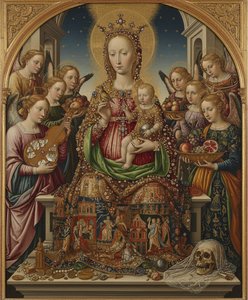
Carlo Crivelli: Mysticism & Materiality in Renaissance Venice
Explore the captivating world of Carlo Crivelli, a Renaissance master blending Gothic detail with profound symbolism. Discover his unique style & lasting influence on Venetian art history.
Fra Angelico : Les 25 Chefs-d'œuvre Incontournables pour une Décoration Spirituelle
Plongez dans l'univers spirituel de Fra Angelico avec les 25 œuvres incontournables du maître italien. Découvrez l'histoire, la technique et la beauté intemporelle de ses fresques Renaissance. Reproductions d'art exceptionnelles sur OriginalUniqueArt.com.


