

 Aperçu en situation
 Envoyer
 Partager
 Détails de l'œuvre

 Télécharger
 Articles similaires
 Radiographie
 Diaporama
The immaculate conception


 Lire la suite
Reproduction à l'huile faite à la main
Huile sur toile peinte à la main, avec cadre et dimensions personnalisés, réalisée sur commande par nos artistes. ( Commander l'impression Acheter l'image haute résolution)




P118B $10

P118H $10

P118W $10

P438Z $10

P508JH $12

P508YH $12

P805H $10

P805Z $10

P919BZ $10

P919G $10

P919XJ $10

P959ZH $10

P968JZ $12

W106C $8

W218G $10

W218JH $8

W218Y $10

W307PJ $10

W316G $10

W316PJ $8

W316Y $10

W398PJ $8

W4111J $10

W500HY $15

W500JH $15

W692G $12

W849H $8

W940BG $15

W953PJ $8




Choisissez parmi nos formats prédéfinis qui respectent les proportions originales de l’œuvre.

Vous pouvez saisir vos propres dimensions pour l'adapter à un cadre ou à un espace spécifique. Si la taille sélectionnée ne correspond pas aux proportions de l'image d'origine, nous recadrerons l'œuvre ou prolongerons la peinture avec des éléments peints à la main supplémentaires. Une maquette numérique vous sera envoyée pour approbation avant le début de la production.
Veuillez noter que l'aperçu à l'écran ne reflète pas le recadrage ou l'extension réels. Seule la maquette montrera fidèlement la composition finale.
Bien que des tailles personnalisées soient disponibles, nous vous recommandons de sélectionner une dimension dans la liste prédéfinie afin de préserver les proportions d'origine.
Après la commande, l’équipe OriginalUniqueArt.com contactera le client par e-mail pour recueillir ses instructions et lui fournira une maquette d’aperçu
Livraison dans le monde entier () en 3 à 4 semaines au lieu des 5 semaines habituelles. (2 septembre). Aucun compromis sur la qualité.

Livraison express gratuite dans le monde entier

Toile de lin de qualité supérieure

Assurance transport complète

Garantie de remboursement des droits de douane

Garantie de fidélité des couleurs

Politique de retour de 60 jours (uniquement en cas de défaut)

Garantie de remboursement à 100%

Offre de tarifs dégressifs
 L'option verre n'est disponible que pour les dimensions inférieures à 110 cm.

The immaculate conception
Technique de reproduction
Format de la reproduction
-


Prix total
$ 300
A Vision of Divine Grace
In the quiet, contemplative realm of the Italian Renaissance, few works capture the intersection of earthly detail and celestial devotion as profoundly as Carlo Crivelli’s The Immaculate Conception. This masterpiece invites the viewer into a sacred space, where the Virgin Mary is depicted not merely as a historical figure, but as an eternal symbol of purity and grace. Clad in a striking black robe adorned with intricate gold embellishments, her hands are pressed together in a gesture of profound prayer, drawing the observer into her silent communion with the divine. The composition is a masterclass in atmosphere, where the solemnity of a church setting meets a delicate, almost whimsical naturalism, creating a scene that feels both monumental and intimately personal.
Crivelli, a painter whose soul was rooted in the Venetian tradition but whose spirit flourished in the Marches of Ancona, employs a distinctive late Gothic sensibility that sets this work apart from the softer, more atmospheric works of his contemporary, Giovanni Bellini. His technique is characterized by an extraordinary attention to detail and a masterful use of trompe l'oeil—a method designed to trick the eye into perceiving three-dimensional reality on a flat surface. This precision is evident in the way light interacts with the textures of the fabric and the subtle presence of objects within the frame, such as the delicate vase and the scattered birds that inhabit this holy landscape.
Symbolism and the Language of Detail
Every element within Crivelli’s composition serves a higher narrative purpose, weaving a complex tapestry of theological meaning. The presence of birds throughout the scene adds a layer of vitality and movement, perhaps representing the souls of the faithful or the breath of the Holy Spirit moving through creation. Even the seemingly simple inclusion of apples—one positioned near the top left and another toward the center-right—carries heavy symbolic weight; they serve as a poignant reminder of the Fall of Man, contrasting sharply with the purity of the Immaculate Conception being celebrated. This tension between original sin and divine redemption is central to the emotional resonance of the piece.
For the discerning collector or interior designer, this painting offers more than just visual beauty; it provides a focal point of profound intellectual and spiritual depth. The interplay of dark, rich tones against shimmering gold accents makes it an ideal centerpiece for spaces that demand elegance and gravitas. Whether placed in a curated gallery or as a statement piece in a sophisticated residential setting, the artwork commands attention through its meticulous craftsmanship and its ability to evoke a sense of timelessness. To possess a reproduction of such a work is to bring a fragment of Renaissance devotion into the modern era, fostering an environment of reflection, peace, and unparalleled artistic prestige.
Biographie de l'artiste
Premières années et formation
Carlo Crivelli, peintre de la Renaissance italienne, est né à Venise vers 1430-35. Issu d'une famille de peintres, il a reçu sa formation artistique à Venise et Padoue. La formation précoce de Crivelli aurait été dispensée par Jacobello del Fiore, encore actif en 1436. Il a également étudié à l'école de Vivarini à Venise.Carrière et style
Crivelli a passé ses premières années dans le Vénétien, s'imprégnant des influences de Vivarini, Squarcione et Mantegna. En 1458, il quitta le Vénétien et passa la majeure partie de sa carrière dans les Marches d’Ancône, développant un style personnel distinctif qui contraste avec celui de son contemporain vénitien Giovanni Bellini. Le travail de Crivelli se caractérise par une sensibilité décorative gothique tardive et conservatrice, marquée par une qualité linéaire, une attention aux détails et l'utilisation de techniques de "trompe-l'oeil".Œuvres notables et collaborations
- La peinture "Madone et l’Enfant Trônés" (106 x 55 cm, Musée des Beaux-Arts de Budapest, Hongrie) de Carlo Crivelli est un exemple parfait de son style.
- Il a collaboré avec son jeune frère Vittorio Crivelli sur plusieurs projets.
- Pietro Alemanno, un peintre immigré dans les Marches d’Ancône en provenance de l'Allemagne/Autriche, fut son élève et collaborateur.
Musées et collections
- La Pinacothèque de Brera à Milan, en Italie, présente plusieurs œuvres de Crivelli, dont la "Piéta" (128 x 241 cm).
- Le Musée San Giovanni in Bragora à Venise, en Italie, possède une collection d'œuvres d'art de différentes périodes et styles, dont certaines sont attribuées à Crivelli.

Carlo Crivelli
1435 - 1495 , Italie
L'essentiel de l'artiste
- Artistic Movement Or Style: Gothique tardif/Renaissance
- Artists Who Influenced This Artist:
- Vivarini
- Squarcione
- Mantegna
- Date Of Birth: vers 1430-35
- Date Of Death: 1495
- Full Name: Carlo Crivelli
- Nationality: Italienne
- Notable Artworks:
- Madone et Enfant Enthronés
- Pieta
- Place Of Birth (City And Country): Venise, Italie
Articles connexes
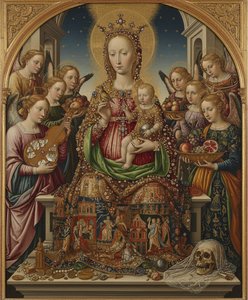
Carlo Crivelli: Mysticism & Materiality in Renaissance Venice
Explore the captivating world of Carlo Crivelli, a Renaissance master blending Gothic detail with profound symbolism. Discover his unique style & lasting influence on Venetian art history.

Golden Glow: How to Use Metallic Gold Artworks to Elevate Your Home Decor with Timeless Luxury
Discover how to elevate your home with the timeless elegance of metallic gold artworks. From sculptural metal pieces to gilded oil paintings, learn expert interior design tips for integrating luxurious gold accents into your space with sophistication and grace.
The Allure of Gold in Art History: Symbolism, Technique & Cultural Significance
Explore the rich history of gold in art! Discover symbolism, techniques & cultural significance from ancient civilizations to Klimt's masterpieces. Expert insights for collectors at OriginalUniqueArt.
The Sacred Glow: Mastering Gold Leaf and Gilding in Byzantine Art
Explore the divine mastery of Byzantine gold leaf and gilding. Discover how ancient artisans used gold ground and mosaics to create celestial light, a timeless legacy of spiritual splendor and technical excellence in sacred art history.
Gilded Glory: The High-Impact Art of Gold Leaf and Byzantine Masterpieces
Explore the celestial brilliance of Byzantine masterpieces. Discover the sacred alchemy of gold leaf, the spiritual depth of Orthodox icons, and how this high-impact gilded glory continues to inspire awe in fine art history and modern luxury interiors.



