

 Partager
 Partager
 Détails
 Guide imprimable

 Télécharger
 Articles similaires
 Voir le diaporama
 Statistiques
Chambre noire


 Afficher la suite
Giclées et impressions d'art
Impressions giclées ou sur toile de qualité musée, avec une production rapide et des finitions au choix. ( Acheter la peinture faite à la main Passer au format image numérique)




































Choisissez parmi nos formats prédéfinis qui respectent les proportions originales de l’œuvre.

Saisissez la largeur et la hauteur souhaitées pour qu'elles s'adaptent à votre cadre ou à votre mur. Une impression ne peut être que découpée, elle ne peut jamais être agrandie au-delà de l'image originale ; ainsi, un format de forme différente entraînera la perte d'une partie de l'image. Nous vous envoyons une maquette numérique pour approbation avant toute impression. L'image présentée sur cette page ne montre pas le recadrage réel — seule la maquette le permet.
Livraison dans le monde entier () en 2 semaines au lieu des 4/5 semaines habituelles. (23 octobre)

Livraison express gratuite dans le monde entier

Toile de lin de haute qualité

Assurance transport complète

Garantie de remboursement des droits de douane

Garantie de fidélité des couleurs

Garantie de retour de 100 jours (uniquement en cas de défaut)

Garantie de remboursement à 100%

Tarifs dégressifs sur quantité
 L'option verre n'est disponible que pour les dimensions inférieures à 110 cm.

Chambre noire
Giclées et impressions d'art
Format de la reproduction
-


Prix total final
€ 70
Canaletto's Intimate Glimpse: The Camera Obscura
Giovanni Antonio Canal, better known as Canaletto, was a master of observation, a chronicler of Venice and its surrounding landscapes with an unparalleled eye for detail. This remarkable painting, depicting a camera obscura – a device he himself possessed and meticulously documented – offers a rare and intimate window into the artist’s creative process and the burgeoning science of optics in the early 18th century. The image, currently housed within the Museo Correr in Venice, isn't merely a representation of a scientific instrument; it’s a testament to Canaletto’s intellectual curiosity and his pioneering approach to landscape painting.
- The Mechanics of Vision: The camera obscura, essentially a darkened room with a pinhole lens, projected an inverted image of the outside world onto its walls. Canaletto's depiction captures this phenomenon precisely – a wooden box constructed with a glass front, meticulously arranged to capture and display this ethereal projection.
- A Tool for Observation: Canaletto utilized the camera obscura not just as a scientific curiosity but as an invaluable tool for his artistic practice. It allowed him to study light, shadow, perspective, and composition before committing them to canvas, resulting in the remarkably accurate and detailed renderings that define his style.
- Historical Context: Created around 1700, this painting reflects a period of intense scientific inquiry into optics and visual perception. The camera obscura was gaining popularity among artists and scientists alike, offering a new method for understanding and replicating the natural world.
Canaletto’s Topographical Style & Artistic Technique
Canaletto's artistic style is immediately recognizable – characterized by its meticulous detail, precise perspective, and atmospheric clarity. This particular depiction of the camera obscura exemplifies his mastery of topographical painting, a genre he essentially invented. The artist employed a technique of layering thin glazes of oil paint, building up color gradually to achieve remarkable luminosity and depth. Note the subtle gradations in tone, particularly within the wooden construction of the device itself, demonstrating Canaletto’s painstaking attention to texture and form. The inverted projection is rendered with astonishing accuracy, showcasing his keen observational skills and his ability to translate three-dimensional reality onto a two-dimensional surface.
- Oil on Panel: The artwork is executed in oil paint on a wooden panel, a common medium for Canaletto’s work during this period.
- Layered Glazes: The use of numerous thin layers of translucent paint creates a rich and luminous effect, characteristic of Canaletto's style.
- Precise Perspective: The meticulous rendering of perspective demonstrates Canaletto’s mastery of linear perspective, a key element in creating the illusion of depth and realism.
Symbolism & Emotional Resonance
Beyond its technical brilliance, the painting carries symbolic weight. It represents not just a scientific instrument but also the artist's relentless pursuit of knowledge and his desire to capture the beauty and complexity of the world around him. The camera obscura itself can be interpreted as a metaphor for artistic creation – a device that transforms an external reality into an internal representation. The image evokes a sense of quiet contemplation, inviting viewers to consider the fundamental principles of vision and the creative process. Canaletto’s work consistently conveys a feeling of serene order and intellectual curiosity, reflecting his deep connection to Venice and its rich cultural heritage.
A Legacy of Observation
This reproduction offers an exceptional opportunity to own a piece of art history – a tangible link to one of the most celebrated topographical painters of all time. Whether you are an art collector seeking to expand your collection, an interior designer looking for a unique and historically significant artwork to adorn your space, or simply someone captivated by Canaletto’s genius, this painting provides a profound connection to the artist's world and his remarkable ability to capture the essence of Venice.
Questions et réponses
Où puis-je voir un aperçu de « Chambre noire » ?
La page Aperçu de « Chambre noire » vous permet de prévisualiser l'œuvre avant de passer commande.
L'œuvre « Chambre noire » présente-t-elle des contrastes ombre et lumière marqués ?
Le contraste clair-obscur de « Chambre noire » est évalué à Niveau de contraste. Le contraste décrit l'intensité de la différence entre les zones claires et les zones sombres.
Les couleurs de «Chambre noire» de Giovanni Antonio Canal sont-elles saturées ou atténuées ?
Les couleurs de «Chambre noire» de Giovanni Antonio Canal présentent une saturation Atténué. La saturation décrit si les couleurs sont vives ou atténuées.
Biographie de l'artiste
Giovanni Antonio Canal
Giovanni Antonio Canal, commonly known as canaletto, was born in Venice on October 18, 1697, to Bernardo Canal, a painter of theatrical scene settings, and Artemisia Barbieri. He was the son of a noble family steeped in artistic tradition—Bernardo Canal himself had been a respected artist, establishing a lineage dedicated to visual representation. Canaletto’s early training commenced with his father, who instilled within him the fundamental principles of painting, shaping his formative years into an immersion in artistic craftsmanship. This familial influence would prove pivotal in nurturing his innate talent and guiding his subsequent artistic pursuits.The Making of a Master
In 1718, Canaletto embarked on a transformative journey to Rome—a city renowned for its artistic fervor and intellectual dynamism. During this period, he actively participated in the production of scenery for two operas by Alessandro Scarlatti, immersing himself in the theatrical world and honing his skills in designing immersive environments. This experience profoundly impacted his artistic development, exposing him to innovative techniques and fostering a keen understanding of visual storytelling—a cornerstone of his distinctive style. The collaboration with Scarlatti wasn’t merely professional; it was an encounter with the very essence of Baroque aesthetics. Upon returning to Venice, Canaletto swiftly established himself as a leading figure in Venetian landscape painting, adopting a technique that would soon earn him international acclaim: *veduta*. He meticulously crafted detailed depictions of the city's architectural grandeur and bustling public life—capturing not just what was seen but conveying an emotional resonance. His preparatory drawings were remarkably precise, reflecting his unwavering commitment to accuracy while simultaneously allowing for artistic interpretation. Canaletto’s method mirrored that of Giovanni Paolo Pannini, a Venetian artist who pioneered topographical art, emphasizing observation and meticulous documentation.Notable Works and Collaborations
Canaletto's oeuvre comprises numerous masterpieces that exemplify the zenith of Venetian landscape painting—a genre characterized by its luminous palette and masterful perspective. Among his most celebrated works are “The Stonemason’s Yard” (c. 1725), a captivating portrayal of Venetian craftsmanship, and “Regatta on the Grand Canal” (c. 1730), which vividly captures the splendor of Venice's ceremonial processions—a testament to Canaletto’s ability to convey both visual accuracy and emotional depth. His depiction of Eton College (1746-1756) stands as a poignant reminder of his influence in England, where he collaborated closely with Bernardo Bellotto, who became an equally accomplished artist. Together, they produced breathtaking panoramas of Dresden and Vienna—works that continue to inspire admiration for their compositional elegance and technical virtuosity.Artistic Style and Technique
Canaletto’s distinctive artistic style is inextricably linked to his pioneering use of the camera obscura—a darkened room equipped with a lens that projects an inverted image of the outside world onto a surface illuminated by candlelight. This ingenious device allowed him to achieve unparalleled topographical accuracy, ensuring that his paintings faithfully reproduced the contours and textures of Venice and London. However, Canaletto’s artistic vision extended beyond mere replication; he skillfully manipulated perspective and employed subtle tonal variations to create atmospheric effects—transforming ordinary scenes into emotionally evocative landscapes. His meticulous attention to detail—from the reflections in windows to the folds of drapery—elevated his paintings to levels of artistic sophistication rarely achieved by his contemporaries. Canaletto’s legacy resides not only in his technical prowess but also in his ability to imbue his works with a palpable sense of place and time—capturing the spirit of an era with remarkable sensitivity and artistry.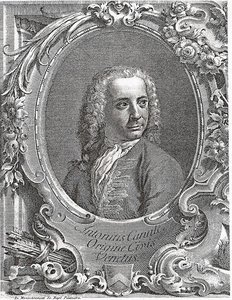
Giovanni Antonio Canal
1697 - 1768 , Italie
En bref
- Artistic Movement Or Style: Vedute Venice
- Artists Or Movements Influenced By This Artist: ['Tintoretto']
- Artists Who Influenced This Artist: ['Giovanni Paolo Pannini']
- Date Of Birth: October 18, 1697
- Date Of Death: April 19, 1768
- Full Name: Giovanni Antonio Canal
- Nationality: Italian
- Notable Artworks:
- The Stonemason's Yard
- Regatta on the Grand Canal
- Eton College
- Place Of Birth: Venice, Italy
Articles connexes

Canaletto : Lumière, Espace et Observation Sociale dans la Venise du XVIIIe Siècle
Explorez l'œuvre de Canaletto et découvrez la magie de Venise au XVIIIe siècle. Analyse approfondie de sa technique, son observation sociale et son héritage artistique. Un voyage visuel incontournable pour les amateurs d'art.

The Dramatic Flourish: Exploring the Baroque Movement's Enduring Legacy in Art History
Explore the dramatic world of Baroque art! Discover iconic artists like Caravaggio & Rubens, defining techniques, and its lasting impact on art history. Expert insights for collectors & enthusiasts at OriginalUniqueArt.

Le Drame Baroque : L'Art qui Apporte la Splendeur dans Votre Intérieur
Plongez dans l'univers somptueux du baroque ! Découvrez son histoire, comment l'intégrer à votre intérieur et les œuvres incontournables. : reproductions d'art de qualité supérieure.

Pietro Longhi's Venetian Scenes: A Study of Rococo Society & Domestic Life
Explore the captivating world of Pietro Longhi's Venetian scenes! Discover insightful analysis of his Rococo masterpieces & social commentary on 18th-century life. Learn about this 'Venetian Hogarth' and his lasting artistic legacy.

Jacopo Tintoretto : Les 25 Chefs-d'œuvre du Maître Vénitien | OriginalUniqueArt
Plongez dans l'univers dramatique de Jacopo Tintoretto ! Découvrez les 25 œuvres incontournables du maître vénitien, ses techniques uniques et son style baroque. Reproductions de qualité muséale sur OriginalUniqueArt.com.


