
 Aperçu en situation
 Envoyer
 Partager
 Détails de l'œuvre
 Guide
Guide

 Télécharger l'image
 Articles similaires
 Radiographie
 Diaporama
 Questions et réponses
 Statistiques
Daniel In The Lions Den


 Lire la suite
Giclées et impressions d'art
Impressions giclées ou sur toile de qualité musée, avec une production rapide et des finitions au choix. ( Commander la reproduction peinte à la main Passer au format numérique)




P118B €10

P118H €10

P118W €10

P438Z €10

P508JH €12

P508YH €12

P805H €10

P805Z €10

P919BZ €10

P919G €10

P919XJ €10

P959ZH €10

P968JZ €12

W106C €8

W218G €10

W218JH €8

W218Y €10

W307PJ €10

W316G €10

W316PJ €8

W316Y €10

W398PJ €8

W4111J €10

W500HY €15

W500JH €15

W692G €12

W849H €8

W940BG €15

W953PJ €8




Choisissez parmi nos formats prédéfinis qui respectent les proportions originales de l’œuvre.

Saisissez la largeur et la hauteur souhaitées pour qu'elles s'adaptent à votre cadre ou à votre mur. Une impression peut être recadrée, mais jamais agrandie au-delà de l'image originale ; ainsi, un format de forme différente entraînera la perte d'une partie de l'image. Nous vous envoyons une maquette numérique pour approbation avant toute impression. L'image présentée sur cette page ne montre pas le recadrage réel — seule la maquette le permet.
Livraison dans le monde entier () en 2 semaines au lieu des 4/5 semaines habituelles. (9 novembre)

Livraison express gratuite dans le monde entier

Toile de lin de qualité supérieure

Assurance transport complète

Garantie de remboursement des droits de douane

Garantie de fidélité des couleurs

Politique de retour de 100 jours (uniquement en cas de défaut)

Garantie de remboursement à 100%

Offre de tarifs dégressifs
 L'option verre n'est disponible que pour les dimensions inférieures à 110 cm.

Daniel In The Lions Den
Giclées et impressions d'art
Format de la reproduction
-


Prix total
€ 72
A Moment of Divine Stillness: Reimagining Briton Rivière’s Masterpiece
In the quiet, monochromatic depths of Briton Rivière’s Daniel In The Lions Den, we are invited into a space where the ferocious meets the faithful. This evocative work transcends a mere biblical illustration, offering instead a profound meditation on peace amidst peril. The composition draws the viewer into a shadowy, subterranean realm where the heavy atmosphere of the den is palpable. Here, the artist utilizes a striking black and white palette to strip away the distractions of color, forcing our gaze to focus entirely on the interplay of light, texture, and the raw tension between man and beast. The lions, rendered with a masterful command of form, do not appear as mindless predators but as silent witnesses to a miracle, their presence creating a sense of heavy, breathing stillness that surrounds the central figure.
The technical brilliance of this piece lies in Rivière’s ability to manipulate light to create depth and narrative weight. Through delicate gradations of grey and stark contrasts of black, the artist breathes life into the fur of the lions and the weathered contours of Daniel’s form. The inclusion of a small, unexpected bird near the bottom corner serves as a subtle masterstroke of composition; it provides a delicate counterpoint to the massive, muscular presence of the predators, adding a layer of fragile life that enhances the overall sense of a self-contained, miraculous ecosystem. This meticulous attention to detail ensures that every element, no matter how small, contributes to the atmospheric density of the scene.
The Narrative Soul and Symbolic Resonance
As a pivotal figure of the Victorian era, Briton Rivière was far more than a painter of animals; he was a visual storyteller capable of imbuing his subjects with deep psychological complexity. In Daniel In The Lions Den, he taps into the profound themes of vulnerability and divine protection. The painting captures that breathless moment of suspension—the heartbeat before the roar, or perhaps the eternal silence of a miracle in progress. For the collector, this work offers more than just aesthetic beauty; it provides a window into the Victorian fascination with the intersection of nature and morality. The lions represent the untamed, chaotic forces of the world, while Daniel embodies the steadfastness of the human spirit under trial.
For interior designers and connoisseurs of fine art reproductions, this piece serves as a commanding focal point that brings a sense of historical gravity and intellectual depth to any space. Its monochromatic elegance allows it to integrate seamlessly into both classical and contemporary settings, acting as a sophisticated anchor in a room. Whether placed in a library, a study, or a grand gallery, the painting invites contemplation, prompting viewers to reflect on themes of resilience and the quiet strength found in moments of extreme solitude. To possess a reproduction of this caliber is to bring a piece of narrative history into the modern home, ensuring that the emotive power of Rivière’s vision continues to inspire generations.
Questions et réponses
«Daniel In The Lions Den» de Briton Rivière utilise-t-il des contrastes marqués ou des harmonies douces ?
La composition chromatique de «Daniel In The Lions Den» de Briton Rivière allie un contraste Statement à une harmonie Balanced Harmony.
Qui est l'artiste derrière « Daniel In The Lions Den » ?
« Daniel In The Lions Den » est attribué à Briton Rivière.
Quelle est la teinte dominante de « Daniel In The Lions Den » ?
«Daniel In The Lions Den» tend vers une nuance Ochre to Sepia.
Biographie de l'artiste
Briton Rivière (1840–1920) – Une Vie Immersion dans la Nature et le récit : Le Monde de Briton Rivière
Briton Rivière, né à Londres en 1840, est apparu comme une figure essentielle de l’art victorien, célébré pour ses peintures animales profondément émouvantes et ses explorations antérieures des thèmes historiques et littéraires. Il ne se contentait pas de peindre les animaux ; il était un conteur qui imprégnait ses sujets d’une profondeur psychologique et d’une résonance narrative, capturant des moments de vulnérabilité, de loyauté et de la relation complexe entre l’homme et la nature sauvage. Le parcours artistique de Rivière fut profondément façonné par son héritage familial : son père, William Rivière, était professeur d’art et maître dessinant, tandis que son frère Henry Parsons Rivière était aquarelliste respecté. Cette fondation familiale lui fournissait un encouragement précoce et une orientation, bien que sa formation soit restée principalement au sein de cet cercle intimiste plutôt qu’à des institutions académiques formelles. Il reçut son enseignement au Cheltenham College puis à Oxford Université, complétant son diplôme en 1867, une voie atypique pour un artiste dédié mais qui pouvait favoriser une curiosité intellectuelle unique reflétée dans son œuvre.Les Premières Explorations Artistiques et les Influences Familiales
Rivière débuta sa carrière avec des œuvres historiques et littéraires ambitieuses, notamment « L’Eve de l’Armada espagnole » et des scènes inspirées par Shakespeare « Roméo et Juliette ». Cependant, un changement majeur survint vers 1865 : il concentra progressivement ses efforts artistiques sur la peinture animale, une décision qui allait définir sa carrière et lui assurer une place de premier plan dans ce genre. Cette démarche ne fut pas seulement une nouvelle orientation artistique ; elle représentait une approfondissement de l’intention artistique. Rivière ne se contentait pas de représenter les animaux ; il cherchait à donner aux animaux leur vie intérieure, leurs émotions et leurs interactions avec le monde qui les entoure. Il possédait une capacité exceptionnelle à saisir non seulement la similitude physique mais aussi le caractère et le sentiment, présentant souvent ses sujets animales dans des circonstances dramatiques ou poétiques qui résonnaient profondément avec les sensibilités victoriennes. Cette aptitude particulière était renforcée par son héritage familial : son père lui avait transmis une passion pour l’art dès son plus jeune âge, et son frère Henry Parsons Rivière partageait sa sensibilité artistique. Cette famille avait une grande influence sur son parcours artistique.La Mutation vers la Peinture Animale et les Préraphaelites
Vers 1865 Rivière abandonna les œuvres historiques et littéraires pour se consacrer à la peinture animale, une décision qui allait marquer le reste de sa vie et lui faire entrer dans l’histoire comme un pionnier de ce genre artistique. Cette orientation ne fut pas seulement une nouvelle voie artistique ; elle reflétait une profonde compréhension des préoccupations esthétiques de son temps. Rivière était particulièrement sensible aux idées du mouvement Préraphaelite, qui avait une grande influence sur son travail : il partageait avec les Préraphaelites une même attention au détail, à la naturalisme et à la narration. Cette sensibilité artistique lui permettait d’intégrer dans ses œuvres des éléments caractéristiques de cette esthétique particulière. Il était notamment inspiré par les peintres Sir Edwin Landseer et Théodore Rückert.Ses Œuvres Marquées par l'Émotion et le Réalisme
Rivière est reconnu pour sa capacité à donner aux animaux une profondeur psychologique et émotionnelle remarquable, comme il en témoignent ses tableaux emblématiques tels que « Son seul ami » où un jeune garçon trouve réconfort dans l’affection inconditionnelle d’un chien. Parmi les autres œuvres notables de Rivière figurent « Daniel dans le Lionceau », « Temps de guerre », « La dernière garnison » et « Un exile du ’45 ». Il maîtrisait parfaitement la technique picturale, notamment la représentation anatomique précise des animaux et l’utilisation subtile des couleurs pour exprimer leurs émotions. Ses peintures sont caractérisées par une atmosphère dramatique et une attention aux détails qui témoignent de sa maîtrise artistique et de son souci du réalisme. Il avait une grande sensibilité artistique et une capacité à transmettre les sentiments exprimés dans ses tableaux avec une puissance émotionnelle remarquable.Reconnaissance et Héritage Artistique
Rivière fut largement reconnu pendant sa vie : il débuta par exposer au British Institution en 1857 et devint régulièrement contributeur aux expositions royales de Londres à partir de 1863, consolidant ainsi sa position dans le monde artistique établi. En 1878 il fut élu membre associé de la Royal Academy puis membre plein en 1881 – des réalisations importantes qui témoignaient de son mérite artistique. Il reçut même une licence honorifique de droit civil à Oxford Université en 1891, un hommage à ses contributions intellectuelles plus larges. Une candidature à la présidence de la Royal Academy en 1896 fut finalement rejetée, mais elle confirma sa stature au sein de la communauté artistique. Aujourd’hui, les peintures de Rivière sont conservées dans des collections publiques prestigieuses telles que le Tate, le Metropolitan Museum of Art et Royal Holloway, Université de Londres, assurant ainsi que son œuvre continue d'inspirer et de captiver les publics contemporains. Il demeure un artiste célébré dont la contribution à l’élévation de la peinture animale en genre artistique respecté est incontestable, et son héritage dépasse ses propres réalisations artistiques : son fils Hugh Goldwin Rivière fut également peintre portraitiste, tandis que sa fille épouse Sigmund Freud et traduisait les œuvres du célèbre psychanalyste. Briton Rivière reste un artiste dont l’œuvre continue d'être admirée pour sa maîtrise technique, sa profondeur émotionnelle et sa représentation évocatrice du monde animal – une véritable œuvre d’art !
Briton Rivière
1840 - 1920 , Royaume-Uni
L'essentiel de l'artiste
- Artistic Movement Or Style: Préraphaelite
- Artists Who Influenced This Artist:
- William Rivière
- Henry Parsons Rivière
- Date Of Birth: 1840
- Date Of Death: 1920
- Full Name: Briton Rivière
- Nationality: Britannique
- Notable Artworks:
- His Only Friend
- Daniel dans les lions
- La guerre
- Le dernier du garnison
- L'exilé de 1845
- Place Of Birth: Londres
Articles connexes
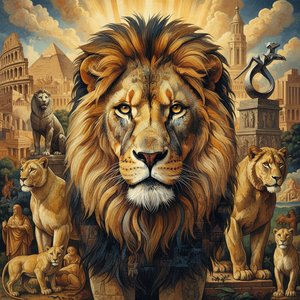
Majestic Lions: Capturing the Power and Soul of the King of Beasts through Art History
Explore the majesty of the King of Beasts through art history. From Baroque drama to Romantic realism, discover how master painters capture the power and soul of lions in exquisite oil reproductions and fine art prints for discerning collectors.

L'Art de l'Éternité : Transformez vos Souvenirs en Chefs-d'œuvre Impressionnistes grâce à la Magie de l'IA et du Pinceau
Sublimez vos photos en véritables chefs-d'œuvre impressionnistes. Grâce à l'IA et au talent de nos maîtres peintres, transformez vos souvenirs en peintures à l'huile uniques sur toile. Un héritage artistique personnalisé, réalisé avec passion pour une décoration d'exception.
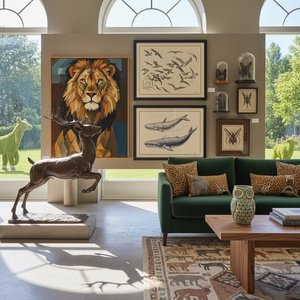
Animalia : L'empreinte durable des animaux dans l'art et le design d'intérieur
Explorez l'histoire fascinante de la représentation animale dans l'art et le design d'intérieur. Découvrez le symbolisme, les tendances et comment intégrer l'image animale chez vous avec .
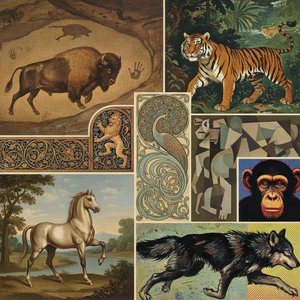
Beastly Brushstrokes: A Historical Journey Through Animal Painting & Aesthetic Movements
Explore the rich history of animal painting across cultures & movements. Discover iconic artists, symbolism, collecting trends & expert art consultation at OriginalUniqueArt.com.

L'Art de l'Éternité : Transformez vos Souvenirs en Chefs-d'œuvre d'Anime avec la Maîtrise de la Peinture à l'Huile OriginalUniqueArt
Sublimez vos photos avec OriginalUniqueArt : l'alliance unique entre l'esthétique Anime et la noblesse de la peinture à l'huile. Commandez une reproduction artisanale sur toile, un véritable héritage visuel réalisé par nos maîtres peintres pour transformer votre intérieur en galerie d'exception.

