Aperçu en situation
 Partager
 Partager
 Détails
 Guide imprimable

 Télécharger
 Articles similaires
 Radiographie
 Voir le diaporama
 Statistiques
Haymaking


 Afficher la suite
Reproduction à l'huile faite à la main
Huile sur toile peinte à la main, avec cadre et dimensions personnalisés, réalisée sur commande par nos artistes. ( Passer au format impression Passer au format image numérique)




P118B €10

P118H €10

P118W €10

P438Z €10

P508JH €12

P508YH €12

P805H €10

P805Z €10

P919BZ €10

P919G €10

P919XJ €10

P959ZH €10

P968JZ €12

W106C €8

W218G €10

W218JH €8

W218Y €10

W307PJ €10

W316G €10

W316PJ €8

W316Y €10

W398PJ €8

W4111J €10

W500HY €15

W500JH €15

W692G €12

W849H €8

W940BG €15

W953PJ €8




Choisissez parmi nos formats prédéfinis qui respectent les proportions originales de l’œuvre.

Saisissez la largeur et la hauteur souhaitées, pour s'adapter à votre cadre ou à votre mur. Cette œuvre est peinte à la main ; ainsi, pour un format de forme différente, l'artiste peut peindre un peu plus autour du tableau ou réduire légèrement les bords — c'est vous qui choisissez. Nous vous envoyons une maquette numérique pour approbation avant que la peinture ne commence. L'image présentée sur cette page ne reflète pas le résultat réel — seule la maquette le fait.
Après la commande, l’équipe OriginalUniqueArt.com contactera le client par e-mail pour recueillir ses instructions et lui fournira une maquette d’aperçu
Livraison dans le monde entier () en 3 à 4 semaines au lieu des 5 semaines habituelles. (25 octobre). Aucun compromis sur la qualité.

Livraison express gratuite dans le monde entier

Toile de lin de haute qualité

Assurance transport complète

Garantie de remboursement des droits de douane

Garantie de fidélité des couleurs

Garantie de retour de 100 jours (uniquement en cas de défaut)

Garantie de remboursement à 100%

Tarifs dégressifs sur quantité
 L'option verre n'est disponible que pour les dimensions inférieures à 110 cm.

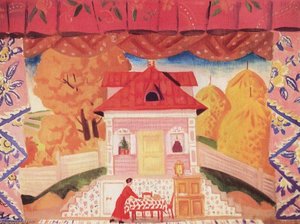
Haymaking
Technique de reproduction
Format de la reproduction
-


Prix total final
€ 263
A Window into Rural Russia: Boris Kustodiev’s “Haymaking”
Boris Mikhailovich Kustodiev's "Haymaking," painted in 1917, isn’t merely a depiction of agricultural labor; it’s a vibrant portal into the soul of rural Russia at a pivotal moment in its history. Born in Astrakhan in 1878 and tragically cut short by illness in 1927, Kustodiev possessed an extraordinary ability to capture the essence of everyday life, imbuing even the most commonplace scenes with profound emotion and a distinctive visual language. This particular painting, rendered in a style that blends elements of Realism, Symbolism, and touches of Art Nouveau, offers a captivating glimpse into a world steeped in tradition, community, and the rhythms of the land. The scene unfolds within a sun-drenched field, dominated by six figures engaged in the arduous task of harvesting hay – a process central to the survival and prosperity of countless Russian villages.The Palette of Tradition: Style and Technique
Kustodiev’s masterful technique is immediately striking. He employs a rich, saturated palette—deep greens, earthy browns, and vibrant yellows—that evokes the warmth of the sun and the abundance of the harvest. The brushstrokes are bold and expressive, creating a sense of movement and vitality within the composition. Notice how he utilizes impasto – applying thick layers of paint directly to the canvas – particularly in the depiction of the haystacks, lending them a tangible weight and presence. This textural approach is further enhanced by his skillful use of color gradients, subtly shifting tones to create depth and volume. The figures themselves are rendered with a remarkable degree of detail, each individual possessing a unique character and posture that speaks volumes about their roles within the collective effort. The painting’s style leans heavily into the traditions of Russian folk art, evident in the stylized forms and the emphasis on communal labor – a cornerstone of rural Russian identity.A Chronicle of Change: Historical Context
“Haymaking” was painted during a period of immense social and political upheaval in Russia—the twilight years of the Tsarist regime and the nascent days of the Bolshevik Revolution. The painting’s subject matter, the simple act of harvesting hay, becomes imbued with symbolic significance. It represents not just sustenance but also community, resilience, and the enduring values of rural life. Kustodiev himself was deeply affected by these changes, documenting the lives of ordinary people in a time of dramatic transformation. His work often reflects a nostalgic longing for a disappearing world, while simultaneously capturing its beauty and dignity. The painting’s creation coincided with a period where traditional village life was facing increasing pressure from industrialization and urbanization – making this image all the more poignant.Symbolism in the Field: Figures and Meaning
The six figures within the scene are not merely laborers; they embody a complex tapestry of roles and relationships. A young boy, likely assisting his father, stands prominently near the foreground, representing the future generation. An older man, possibly the patriarch of the family, directs the work with authority. Others carry bundles of hay, their faces etched with concentration and determination. The arrangement suggests a harmonious collaboration—a testament to the importance of collective effort in Russian rural society. The vastness of the field itself symbolizes abundance and prosperity, while the golden hue of the haystacks evokes feelings of warmth, security, and the promise of a bountiful harvest. Kustodiev’s ability to imbue such a seemingly simple scene with layers of symbolic meaning is what elevates “Haymaking” beyond mere representation—it becomes a powerful meditation on life, labor, and community.An Echo of Russia: Emotional Impact
Ultimately, "Haymaking" resonates deeply because it taps into universal human experiences – the satisfaction of hard work, the bonds of family and community, and the connection to the land. The painting’s vibrant colors and dynamic composition evoke a sense of warmth, optimism, and nostalgia. It's a reminder of a time when life moved at a slower pace, when communities were tightly knit, and when the rhythms of nature dictated the seasons. Reproductions of this iconic work offer a beautiful way to bring a piece of authentic Russian culture into any space, serving as both an artistic statement and a poignant reflection on the enduring spirit of rural Russia.Questions et réponses
Quels sont les droits de reproduction pour « Haymaking » au Musée Régional d’Art de Donetsk ?
Le statut des droits d'auteur de «Haymaking» de Boris Mikhaïlovitch Koustodiev est clair : l'œuvre est dans le dans le domaine public - ses droits d'auteur ont expiré. Sa présence au Musée Régional d’Art de Donetsk ne modifie pas ce statut.
Quelle nuance dominante traverse «Haymaking» de Boris Mikhaïlovitch Koustodiev ?
Une nuance Green to Violet Spectrum traverse «Haymaking» de Boris Mikhaïlovitch Koustodiev.
Quel format choisir pour l'impression de "Haymaking" afin qu'il s'adapte à ma pièce ?
L'association recommandée pour «Haymaking» de Boris Mikhaïlovitch Koustodiev : une impression de Medium dans un(e) Living Room.
Biographie de l'artiste
Boris Mikhaïlovitch Koustodiev : Une Vie Dédiée à la Russie
Né le 7 mars 1878 à Astrakhan, en Russie (23 février selon l'ancien calendrier), Boris Mikhaïlovitch Koustodiev est un peintre et décorateur de théâtre russe dont l’œuvre célèbre la culture et la vie quotidienne russes avec une vibrante palette de couleurs et un style distinctif. Il décède le 28 mai 1927.
Jeunesse, Formation et Premières Influences
Koustodiev est issu d'une famille intellectuelle : son père était professeur de philosophie, littérature et logique au séminaire théologique local. L’éducation précoce du jeune Boris est marquée par la mort de son père, laissant sa mère seule pour subvenir aux besoins de la famille. Cette expérience des difficultés financières de la classe marchande provinciale influencera profondément ses thèmes artistiques ultérieurs. Entre 1893 et 1896, il étudie au séminaire théologique d'Astrakhan tout en prenant des cours privés d’art auprès de Pavel Vlasov, un élève de Vassili Perov. En 1896, il entre à l'Académie impériale des arts de Saint-Pétersbourg, où il étudie dans l'atelier d'Ilya Repine jusqu'en 1903. L’influence de Repine est notable dans ses premières œuvres, mais Koustodiev développe rapidement son propre style distinct.
Un Artiste aux Multiples Facettes : Portraits, Genres et Illustrations
La carrière artistique de Koustodiev se caractérise par sa polyvalence. Il excelle dans les portraits, les scènes de genre et les illustrations de livres. Ses portraits, tels que ceux d'Ivan Bilibin (1901), Daniil Mordovtsev (1901) et Mate le graveur (1902), témoignent de sa capacité à saisir l’essence de ses sujets. Ses scènes de genre, comme La Marchande (1918), sont parmi ses œuvres les plus célèbres, capturant la vie quotidienne des marchands russes avec une attention particulière aux détails et un sens du mouvement. Il est également reconnu pour ses illustrations pour des œuvres classiques de la littérature russe, notamment Les Âmes Mortes de Gogol et Le Lay d'Ivan Vassilievitch le Tsar de Lermontov. Des œuvres telles que Fontanka (1916) et Maslenitsa (Mardi gras) (1916) illustrent sa capacité à dépeindre la vie russe avec une vitalité et un optimisme contagieux.
Défis Personnels et Évolution Artistique
En 1916, Koustodiev est victime d'une paraplégie suite à une maladie grave. Malgré ce handicap physique dévastateur, il continue de peindre avec une productivité remarquable. Ses œuvres ultérieures se caractérisent par des couleurs encore plus vives et un style plus décoratif, presque théâtral. Il semble que l’adversité qu'il a rencontrée ait renforcé son désir d'exprimer la joie et la beauté dans ses peintures. Son influence est visible chez des artistes postérieurs comme Alexeï Bogolioukov, dont Le Marché témoigne de cette continuité.
Héritage et Importance Historique
Boris Mikhaïlovitch Koustodiev occupe une place importante dans l'histoire de l'art russe. Son œuvre offre un témoignage précieux de la vie quotidienne, des traditions et de la culture russes au début du XXe siècle. Son style unique, combinant réalisme et éléments décoratifs, a influencé de nombreux artistes. Ses peintures sont aujourd’hui exposées dans les principaux musées d'art russe, notamment le musée Kramskoï des beaux-arts à Voronezh et le musée d'art de Kharkiv. Il est considéré comme un maître du genre pictural russe, célébrant la richesse et la vitalité de son pays natal.
Collections Notables
- Musée Kramskoï des Beaux-Arts (Voronej, Russie)
- Musée d'Art de Kharkiv (Ukraine)

Boris Mikhaïlovitch Koustodiev
1878 - 1927 , Russie
En bref
- Artistes Influents:
- Ilya Repine
- Vasily Perov
- Date De Décès: 28 mai 1927
- Date De Naissance: 7 mars 1878
- Lieu De Naissance: Astrakhan, Russie
- Mouvement Artistique: Réalisme, Art nouveau
- Nationalité: Russe
- Nom Complet: Boris Mikhaïlovitch Koustodiev
- Œuvres Notables:
- La Marchande
- Fontanka
- Mardi gras (Maslenitsa)
Articles connexes

Les 10 Chefs-d'œuvre du Paysage Romantique : Artistes et Décor d'Intérieur
Plongez dans l'émotion du Romantisme avec les 10 plus beaux paysages de Friedrich, Turner & Delacroix. Découvrez leur histoire et trouvez l'inspiration déco idéale sur OriginalUniqueArt.com !
Evoking Arcadia: A Historical & Aesthetic Exploration of Rural Landscape Art
Explore the rich history of pastoral landscape art, from classical Arcadia to Impressionism & beyond. Discover key artists, movements, and how to collect serene rural scenes for your home. Expert insights at OriginalUniqueArt.

Échos de l'Arcadie : Nostalgie et Transformation dans l'Art Paysager Vintage
Explorez l'École du Hudson : un mouvement artistique américain emblématique. Découvrez les maîtres romantiques, leur quête du sublime et l'influence durable de leurs paysages exceptionnels. OriginalUniqueArt vous guide.

Cultivating Visions: A Historical Journey Through Rural Landscapes in Art
Explore the rich history of rural landscape painting with OriginalUniqueArt. Discover Impressionist masterpieces, key artists & movements. Find your perfect serene artwork and bring nature's beauty home.

Constable : Les 25 Chefs-d'Œuvre du Maître Anglais | OriginalUniqueArt
Plongez dans l'univers de John Constable avec les 25 œuvres incontournables du maître anglais. Découvrez l'histoire, la technique et l'émotion derrière ses paysages romantiques. Reproductions de qualité muséale sur OriginalUniqueArt.com.