- Accueil

- Image numérique
- Bill Traylor
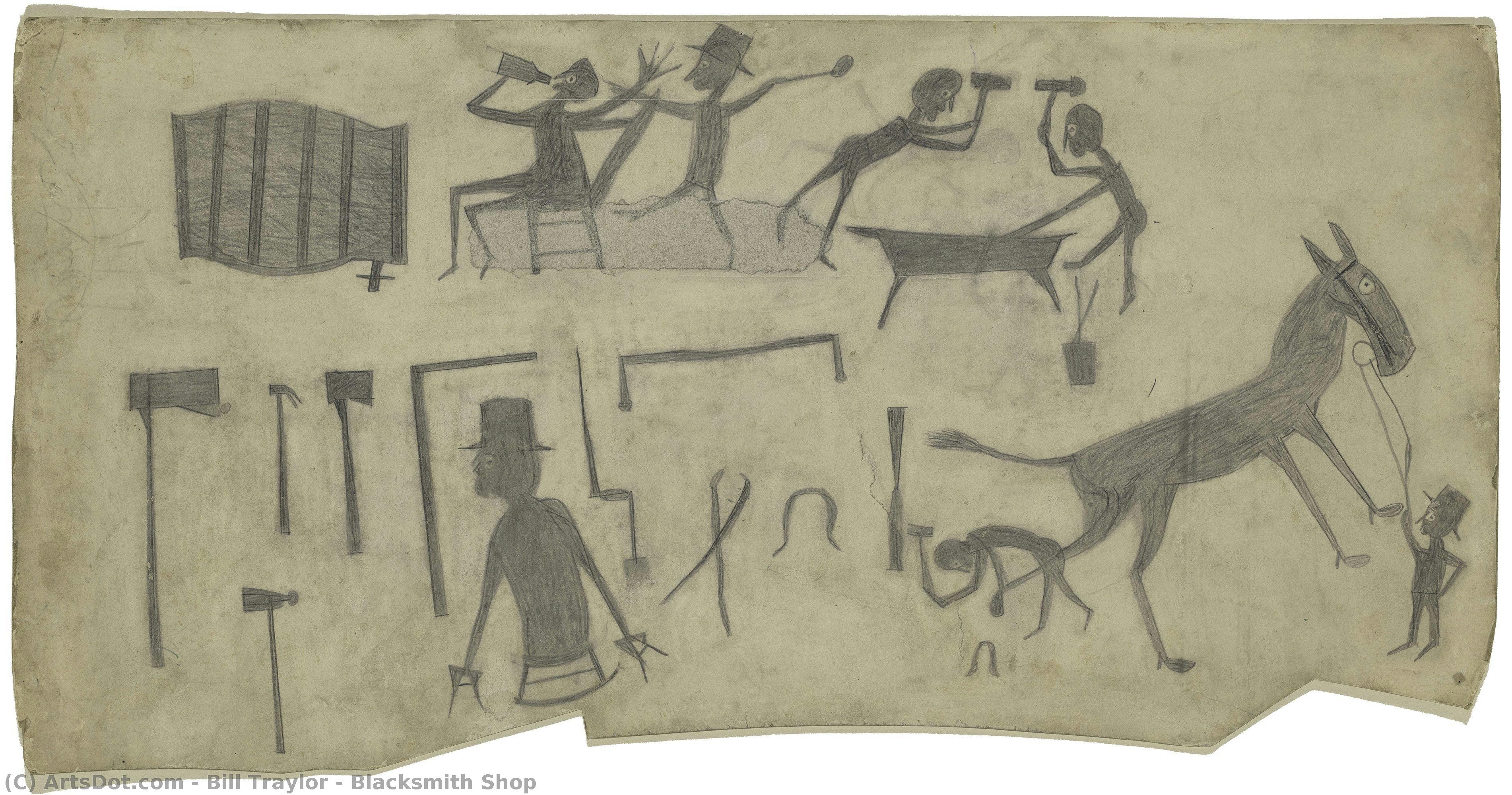
- Blacksmith Shop
 Commander l'impression Commander la reproduction
 Partager
 Partager
 Détails de l'œuvre
 Ajouter aux favoris

 Télécharger
 Articles similaires
 Radiographie
 Diaporama
Blacksmith Shop


 Afficher la suite
Acquérez une image numérique haute résolution et améliorée, bien supérieure à l'aperçu en ligne.
Chaque fichier est méticuleusement préparé par nos spécialistes internes à l'aide d'outils avancés et d'une retouche manuelle experte. Nous garantissons que chaque image possède une clarté exceptionnelle, une précision des couleurs irréprochable et un niveau de détail fin.
Le fichier final est livré par e-mail sous 72 heures, optimisé pour une utilisation immédiate dans des contextes professionnels, éditoriaux et d'impression. Il offre la même qualité de confiance que celle utilisée par les plus grands studios de création, éditeurs et galeries.
Image numérique
Téléchargez un fichier haute résolution pour un usage personnel, l'impression et vos projets créatifs.
Inclus avec chaque achat d'image numérique
Livraison numérique experte, garantie.
En choisissant OriginalUniqueArt.com, vous n'obtenez pas seulement une simple image : vous recevez une œuvre numérique sublimée avec professionnalisme, conçue avec précision et accompagnée d'une garantie de satisfaction. Voici tout ce qui accompagne automatiquement votre commande :

Livraison rapide par e-mail
Votre fichier d'image numérique haute résolution vous sera envoyé par e-mail sous 72 heures après votre commande — prêt à un usage immédiat.

Fichier numérique optimisé par l'IA
Votre œuvre d'art bénéficie d'une optimisation professionnelle grâce à des outils d'IA avancés et une retouche manuelle, garantissant un niveau maximal de détail, de clarté et de fidélité chromatique.

Réexpédition gratuite à vie
Vous avez accidentellement supprimé ou perdu votre fichier ? Pas de panique — nous vous le renverrons gratuitement, quand vous le souhaitez.

Aucun frais de douane - À jamais
Profitez de votre œuvre d'art instantanément sans frais de douane ni de livraison — les téléchargements numériques sont toujours exonérés de taxes.

Garantie de fidélité des couleurs
Nous garantissons que votre image numérique reproduit les couleurs de l'original aussi fidèlement que possible grâce à des outils professionnels et une gestion rigoureuse des couleurs.

Garantie de satisfaction de 60 jours
Si vous n'êtes pas satisfait de votre image numérique, nous la réviserons ou vous rembourserons 100% sous 60 jours - sans poser de questions.

Garantie de remboursement à 100%
Pas satisfait ? Obtenez un remboursement intégral dans les 60 jours suivant la réception de votre fichier numérique — sans aucune question posée.

Réductions sur les commandes groupées
Achetez 3 images, économisez 10% - Achetez 5, économisez 15% - Achetez 10+, économisez 20%. Idéal pour les projets créatifs, les galeries et les agences.
Biographie de l'artiste
Bill Traylor: The Voice of Alabama Folklore
William “Bill” Traylor (April 1, c. 1853 – October 23, 1949) remains an enigma to art historians and critics alike—a self-taught African American artist whose extraordinary drawings emerged from the obscurity of rural Alabama during the Great Depression. Despite initial dismissals as “primitive” or “outsider,” Traylor’s work has undergone a dramatic reassessment in recent decades, securing its rightful place within the burgeoning fields of “self-taught” and modern art. This rediscovery owes much to the tireless efforts of Charles Shannon, who first encountered Traylor's captivating vision in 1940, bringing him to the attention of a wider artistic audience and sparking ongoing scholarly debate about his life’s journey and creative legacy.Early Life and Family Roots
Born into slavery on the plantation of George Hartwell Traylor—a white cotton grower—Traylor's formative years were marked by profound social upheaval. His parents, Sally (1815–1880) and Bill Calloway (1805–1860+), endured the hardships inherent in the Jim Crow South, shaping Traylor’s understanding of resilience and perseverance from a young age. He possessed five siblings: Liza (1837), Henry (1845), Frank (1846), Jim (1847), and Emet (1854). The emancipation proclamation in 1865 irrevocably altered Traylor’s circumstances, yet he continued to grapple with the economic realities of post-bellum Alabama. He labored on the plantation as a sharecropper, facing systemic discrimination that would define much of his adult life. Despite this challenging backdrop, Traylor established a sizable family—approximately twenty children—a testament to his unwavering determination and familial devotion. His marriages to Larisa Dunklin (1872–) and Laura Williams (1870-) solidified his role as a patriarch within his community.The Emergence of Artistic Expression
Traylor’s artistic career began unexpectedly in 1939, following his relocation to Montgomery, Alabama. Driven by an innate impulse to document his experiences and observations—a habit he cultivated with a simple pencil and scrap cardboard—he embarked on a prolific creative outpouring that yielded nearly 1,500 drawings during the Depression years. Shannon’s initial encounter in 1940 proved pivotal, introducing Traylor's distinctive style to a broader artistic sphere and initiating a transformative period of recognition. The Ross-Clayton Funeral Home provided him with modest financial support, allowing him to continue his work on Monroe Street. His drawings—characterized by bold lines, unsettling imagery, and evocative symbolism—captured the essence of Alabama folklore and everyday life, reflecting both personal trauma and profound artistic insight. Traylor drew and painted, mostly on discarded pieces of paperboard from the neighborhood, from around 1939 until shortly before his death in 1949. His images attest to his existence and point of view; they describe his memories of a hard, rural, racially fraught past, as well as the evolving African American urban culture that was taking shape before his eyes. Traylor never became literate, but his pictures became a language unto themselves. His visual depictions are steeped in a life of folkways: storytelling, singing, local healing, and survival. As these modes of expression are well known to do, Traylor’s imagery often holds veiled meanings and lessons underneath the veneer of simplicity or hilarity. Traylor became adept at creating pliable narratives; he experimented with allegory and abstraction and was able to convey a volume of meaning in deceptively simple images. The racial terrorism of lynching peaked between 1877 and 1950—Traylor’s adult lifetime. It was illegal, but in Jim Crow America it was rampant, and far too often, tolerated.Style and Technique: A Singular Vision
Traylor’s technique was remarkably unconventional for its time. He eschewed formal training, relying instead on instinct and observation to translate his inner world onto paper. His drawings often depict grotesque figures—yawping women, pigs, skeletons—rendered with meticulous detail and imbued with palpable emotion. Recurring motifs included birds, skulls, and unsettling landscapes—elements that resonate with primal anxieties and celebrate the beauty of the natural world simultaneously. Traylor’s distinctive visual language distinguishes him from mainstream artistic conventions, establishing him as a pioneer of “self-taught” art and cementing his legacy as an artist who defied categorization. He utilized a simple pencil or colored pencil on scrap cardboard—discarded materials readily available in Montgomery—to create images that conveyed profound psychological depth despite their apparent simplicity.Legacy and Recognition
Despite initial obscurity, Bill Traylor's work gained considerable acclaim in the late 1970s—thirty years after his death—thanks to renewed interest in American folk art and a growing appreciation for unconventional artistic voices. Critics recognized Traylor’s profound contribution to modern art, acknowledging his ability to convey complex emotions and narratives without relying on traditional stylistic approaches. His drawings continue to inspire artists today, demonstrating the enduring power of creativity born from lived experience and unwavering dedication—a testament to Bill Traylor's singular vision and lasting impact on the artistic landscape. Shannon’s tireless advocacy ensured that Traylor’s oeuvre was rediscovered and celebrated internationally, marking a pivotal moment in art historical scholarship and reaffirming his place among the most influential figures of twentieth-century American art.
Bill Traylor
1854 - 1949 , États-Unis
Informations clés
- Artistic Movement Or Style: Self-taught Folk Art
- Date Of Birth: April 1853
- Date Of Death: October 23, 1949
- Full Name: William Traylor
- Nationality: African American
- Notable Artworks:
- Untitled (Construction with Yawping Woman)
- Untitled (Pig)
- Untitled (Legs Construction with Blue Man
- Place Of Birth: Benton, Alabama

