

 Aperçu en situation
 Partager
 Partager
 Détails
 Guide imprimable

 Télécharger
 Articles similaires
 Radiographie
 Voir le diaporama
 Statistiques
Holy Trinity, Coventry
 Social Realism
 1943
1943 45.0 x 30.0 cm
 Galerie d’art Herbert - Musée
 Afficher la suite
L’œuvre d'art présentée sur cette page est protégée par le droit d'auteur, ce qui signifie que nous ne pouvons légalement créer ou vendre de reproduction identique. Cette protection est appliquée en vertu d'accords internationaux tels que la Convention de Berne et par les lois nationales, notamment celles énoncées par le Loi américaine sur le droit d'auteur - Titre 17.
Cette méthode est pleinement conforme aux réglementations sur le droit d'auteur car elle ne repose pas sur la copie ou la duplication de l'œuvre protégée. Il s'agit plutôt d'une réinterprétation créative — une nouvelle peinture qui s'inspire de l'original sans pour autant lui être identique.
Giclées et impressions d'art
Impressions giclées ou sur toile de qualité musée, avec une production rapide et des finitions au choix. ( Acheter la peinture faite à la main Passer au format image numérique)




































Choisissez parmi nos formats prédéfinis qui respectent les proportions originales de l’œuvre.

Saisissez la largeur et la hauteur souhaitées pour qu'elles s'adaptent à votre cadre ou à votre mur. Une impression ne peut être que découpée, elle ne peut jamais être agrandie au-delà de l'image originale ; ainsi, un format de forme différente entraînera la perte d'une partie de l'image. Nous vous envoyons une maquette numérique pour approbation avant toute impression. L'image présentée sur cette page ne montre pas le recadrage réel — seule la maquette le permet.
Livraison dans le monde entier () en 2 semaines au lieu des 4/5 semaines habituelles. (22 octobre)

Livraison express gratuite dans le monde entier

Toile de lin de haute qualité

Assurance transport complète

Garantie de remboursement des droits de douane

Garantie de fidélité des couleurs

Garantie de retour de 100 jours (uniquement en cas de défaut)

Garantie de remboursement à 100%

Tarifs dégressifs sur quantité
 L'option verre n'est disponible que pour les dimensions inférieures à 110 cm.

Holy Trinity, Coventry
Giclées et impressions d'art
Format de la reproduction
-


Prix total final
€ 70
Biographie de l'artiste
Beryl Clifton Bowyer: A Chronicle of Coventry’s Urban Tapestry
Beryl Clifton Bowyer (1914-2001) wasn't a name immediately recognized in the grand halls of the art world, yet her canvases hold a remarkable power—a quiet, observant record of a city undergoing profound transformation. Born in Coventry, England, during a period marked by industrial growth and subsequent wartime devastation, Bowyer’s artistic journey was inextricably linked to the very fabric of her hometown. Her work isn't about dramatic narratives or sweeping landscapes; instead, she meticulously documented the everyday realities of urban life, capturing the resilience, the decay, and the enduring spirit of Coventry through a distinctly post-impressionistic lens.
Bowyer’s early artistic training remains somewhat elusive, suggesting a self-taught approach honed by keen observation. She began her career as a commercial artist, working for local firms producing advertising and publicity materials. This experience undoubtedly shaped her eye for detail and her understanding of composition – skills she later applied to her more ambitious paintings. However, it was the post-war years that truly ignited her artistic passion. The Blitz had left Coventry scarred, its streets choked with rubble and its inhabitants grappling with loss and rebuilding. It was in this environment of profound change that Bowyer began to seriously pursue painting, initially as a means of personal expression but quickly evolving into a dedicated project documenting the city’s recovery.
The Lens on Coventry: Themes and Techniques
Bowyer's paintings are overwhelmingly focused on Coventry itself. She didn’t seek grand vistas or romanticized views; instead, she chose to depict the gritty realities of working-class neighborhoods, market squares, and the remnants of a once-proud industrial city. Her subjects ranged from humble street scenes – Shored Up Houses, capturing the resilience of ordinary dwellings amidst the ruins – to iconic landmarks like Holy Trinity Church, rendered with poignant detail against a backdrop of devastation. A recurring motif is the ‘Spon End’ area, a densely populated district that she portrayed repeatedly, offering a series of intimate portraits of its residents and architecture.
Technically, Bowyer's style leans heavily on post-impressionism, particularly in her use of color and brushwork. She favored muted earth tones – browns, greys, ochres – to reflect the somber mood of the era, punctuated by occasional bursts of brighter hues that hinted at hope and renewal. Her brushstrokes were often loose and expressive, conveying a sense of immediacy and capturing the texture of brick, stone, and weathered timber. She wasn't interested in photographic realism; rather, she aimed to evoke an emotional response through her interpretation of the scene.
Key Works and Historical Context
Several paintings stand out as particularly significant examples of Bowyer’s work. ‘Holy Trinity, Coventry,’ painted in 1943, is arguably her most famous piece. It's a powerful depiction of the church after the bombing raids, its skeletal frame standing defiant against the smoke-filled sky. The painting isn’t simply a record of destruction; it’s an assertion of faith and community spirit. ‘Spon End, Coventry,’ painted in 1936, offers a more intimate glimpse into the lives of ordinary people, capturing the bustling atmosphere of the market square and the faces of its residents. ‘Bayley Lane and the Ruined East End of St Michael’s, Coventry’, created in 1942/43, powerfully illustrates the immediate aftermath of the war, showing the devastation alongside glimpses of rebuilding efforts.
Bowyer's work is deeply rooted in its historical context. Coventry was a major industrial center during the early 20th century, and her paintings reflect the city’s role as a manufacturing hub. The wartime destruction exposed the vulnerability of urban centers to conflict, prompting a re-evaluation of community values and priorities. Bowyer's art serves as a valuable historical document, offering insights into the experiences of ordinary people during a turbulent period.
Legacy and Recognition
Despite her consistent output and undeniable talent, Beryl Clifton Bowyer remained largely unknown outside of Coventry for much of her life. Her work was primarily exhibited locally at the Herbert Art Gallery & Museum in Coventry, where it continues to be celebrated as a significant contribution to British art. In recent years, there has been a growing recognition of her importance as an urban chronicler and a skilled observer of everyday life. Her paintings provide a unique and poignant perspective on a city grappling with war, loss, and renewal – a testament to the enduring power of observation and artistic expression.
Today, Bowyer’s work is increasingly being studied and appreciated for its honesty, sensitivity, and remarkable ability to capture the spirit of a community. She represents a vital voice in British art history, offering a valuable glimpse into the lives and experiences of ordinary people during a pivotal moment in the 20th century.

Beryl Clifton Bowyer
1914 - 2001
En bref
- Artistic Movement Or Style: Post-Impressionism
- Artists Or Movements Influenced By This Artist:
- British Modernism
- Urban Landscape Art
- Artists Who Influenced This Artist:
- Turner
- Rossetti
- Date Of Birth: 1914
- Date Of Death: 2001
- Full Name: Beryl Clifton Bowyer
- Nationality: British
- Notable Artworks:
- Shored Up Houses, Coventry
- Holy Trinity, Coventry
- Spon End, Coventry
- Place Of Birth: Coventry, England
Articles connexes
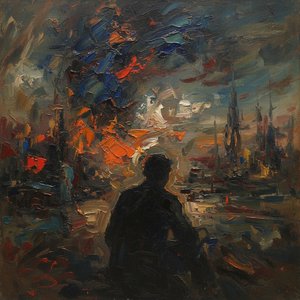
Henry Wolf: A Legacy of Abstract Expressionism & Emotional Resonance in Post-War Art
Explore the profound legacy of Henry Wolf, a pivotal figure in Abstract Expressionism and post-war visual culture. Discover his impact on graphic design, photography, and art collecting with OriginalUniqueArt.

William Owen: A Poetic Vision of War & Landscape in British Modernism
Explore the poignant war poetry of Wilfred Owen, a key figure in British Modernism. Discover his innovative style, themes of loss & camaraderie, and lasting impact on 20th-century literature. Analysis & historical context included.

Echoes of Trauma & Hope: Representing Transformation in Artworks of 1918
Explore the profound artistic responses to World War I's trauma & hope. Discover Expressionist masterpieces by Bacon, de Kooning & more. Expert insights for collectors & art enthusiasts at OriginalUniqueArt.
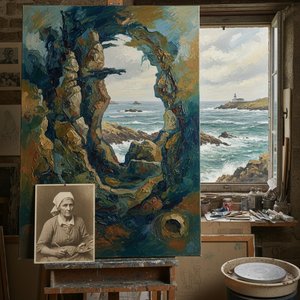
Yvonne Jean Haffen: A Breton Vision of Post-War Abstraction
Discover the captivating world of Yvonne Jean Haffen, a leading figure in post-war French abstraction. Explore her unique style, vibrant color palettes, and investment potential with OriginalUniqueArt.
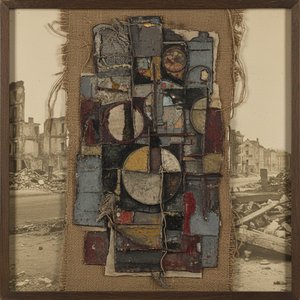
Lech Jankowski: Polish Abstraction & the Materiality of Post-War Identity
Explore the compelling work of Lech Jankowski, a leading figure in Polish post-war abstraction. Discover his unique exploration of materiality, identity, and surreal landscapes – a valuable addition to any discerning art collection.