

 Aperçu en situation
 Partager
 Partager
 Détails
 Guide imprimable

 Télécharger
 Articles similaires
 Radiographie
 Voir le diaporama
 Statistiques
Saint Jérôme le pénitent
 Acrylique sur toile
- Art mural
- High Renaissance
 1520
1520 90.0 x 67.0 cm
 Museo Poldi Pezzoli
 Afficher la suite
Giclées et impressions d'art
Impressions giclées ou sur toile de qualité musée, avec une production rapide et des finitions au choix. ( Acheter la peinture faite à la main Passer au format image numérique)




P118B €10

P118H €10

P118W €10

P438Z €10

P508JH €12

P508YH €12

P805H €10

P805Z €10

P919BZ €10

P919G €10

P919XJ €10

P959ZH €10

P968JZ €12

W106C €8

W218G €10

W218JH €8

W218Y €10

W307PJ €10

W316G €10

W316PJ €8

W316Y €10

W398PJ €8

W4111J €10

W500HY €15

W500JH €15

W692G €12

W849H €8

W940BG €15

W953PJ €8




Choisissez parmi nos formats prédéfinis qui respectent les proportions originales de l’œuvre.

Saisissez la largeur et la hauteur souhaitées pour qu'elles s'adaptent à votre cadre ou à votre mur. Une impression ne peut être que découpée, elle ne peut jamais être agrandie au-delà de l'image originale ; ainsi, un format de forme différente entraînera la perte d'une partie de l'image. Nous vous envoyons une maquette numérique pour approbation avant toute impression. L'image présentée sur cette page ne montre pas le recadrage réel — seule la maquette le permet.
Livraison dans le monde entier () en 2 semaines au lieu des 4/5 semaines habituelles. (22 octobre)

Livraison express gratuite dans le monde entier

Toile de lin de haute qualité

Assurance transport complète

Garantie de remboursement des droits de douane

Garantie de fidélité des couleurs

Garantie de retour de 100 jours (uniquement en cas de défaut)

Garantie de remboursement à 100%

Tarifs dégressifs sur quantité
 L'option verre n'est disponible que pour les dimensions inférieures à 110 cm.

Saint Jérôme le pénitent
Giclées et impressions d'art
Format de la reproduction
-


Prix total final
€ 70
Bernardino Luini’s “Saint Jerome the Penitent”: A Study in Quiet Suffering
The painting "Saint Jerome the Penitent" by Bernardino Luini stands as a testament to Lombard Renaissance spirituality and an exemplar of Luini's distinctive artistic style—characterized by graceful female figures imbued with elongated eyes, a hallmark that earned him the moniker “Luinesque” from Vladimir Nabokov. Executed around 1520-25 during Luini’s prolific period in Milan, this intimate devotional work resides within the Museo Poldi Pezzoli, offering visitors a rare glimpse into the artistic sensibilities of a pivotal era.- Subject Matter: The composition centers on Saint Jerome, depicted seated upon the ground with his hands clasped together in solemn prayer—a posture reflecting profound penitence and introspection. Accompanying him is a dog, symbolizing loyalty and companionship, adding an element of pastoral serenity to the scene. Two additional figures – one standing to the left and another receding into the background on the right – subtly enrich the narrative context, hinting at a broader depiction of monastic life.
- Style: Luini’s approach aligns closely with Leonardo da Vinci's influence, prioritizing a serene stillness and conveying an aura of contemplative melancholy. The artist eschews dramatic gestures or flamboyant ornamentation, opting instead for understated elegance—a stylistic choice that prioritizes psychological depth over visual spectacle.
- Technique: Painted in oil on panel, Luini employs meticulous brushwork to achieve remarkable textural nuance. Layers of glaze contribute to the luminous quality of the painting, capturing subtle variations in tone and color with exceptional precision. The artist’s masterful handling of light and shadow enhances the expressive power of the image, emphasizing Jerome's vulnerability and conveying a palpable sense of sorrow.
- Historical Context: Luini’s work emerged during Milan’s artistic zenith—a period marked by patronage from influential families like Visconti and Borromeo. The painting reflects the humanist preoccupation with moral virtue and spiritual contemplation prevalent throughout Europe at the time, aligning seamlessly with the broader intellectual currents of the Renaissance.
- Symbolism: Jerome's posture embodies Christian penitence—the deliberate renunciation of worldly pleasures in favor of divine devotion. The dog represents faithfulness and steadfastness, mirroring Jerome’s unwavering commitment to prayer and ascetic practice. Furthermore, the muted color palette reinforces the painting’s solemn mood, underscoring its profound emotional impact on the viewer.
Detailed Analysis: Leonardo's Legacy and Luini's Artistic Vision
Luini’s stylistic choices demonstrate a conscious engagement with Leonardo da Vinci’s artistic principles—particularly his emphasis on sfumato, or subtle gradations of tone—to achieve an unparalleled level of realism. The artist skillfully captures the nuances of human anatomy and drapery, mirroring Leonardo's meticulous attention to detail. However, Luini distinguishes himself through his profound psychological insight—a characteristic that transcends mere technical virtuosity. He succeeds in conveying Jerome’s inner turmoil with remarkable sensitivity—creating a portrait that resonates deeply with viewers who appreciate the power of art to evoke emotion and contemplation.The Museo Poldi Pezzoli Setting: A Sanctuary for Artistic Appreciation
Located in Bergamo, Italy, the Museo Poldi Pezzoli houses an extraordinary collection of paintings and sculptures spanning centuries—a testament to the enduring legacy of Lombard Renaissance art. Visitors can immerse themselves in a captivating environment where masterpieces coexist harmoniously—inspiring awe and fostering intellectual curiosity. The museum’s carefully curated exhibitions illuminate the artistic achievements of prominent artists like Luini, Botticelli, Titian and Canaletto—providing invaluable insights into the cultural landscape of their time.Reproductions and Interior Design Considerations
High-quality reproductions of “Saint Jerome the Penitent” can elevate interior spaces—creating serene atmospheres conducive to reflection and spiritual contemplation. Selecting a print crafted from archival pigment ensures that the artwork retains its vibrancy and luminosity over generations—preserving its artistic integrity for posterity. When incorporating Luini’s masterpiece into an architectural setting, consider complementing its muted palette with earthy tones—enhancing its visual impact while maintaining a harmonious aesthetic balance.Questions et réponses
Pour quel usage une reproduction de «Saint Jérôme le pénitent» de Bernardino Luini est-elle recommandée ?
L'utilisation suggérée pour «Saint Jérôme le pénitent» de Bernardino Luini est Ambiance. Elle peut également servir à d'autres fins.
Puis-je prévisualiser «Saint Jérôme le pénitent» de Bernardino Luini avant de commander ?
Un aperçu de «Saint Jérôme le pénitent» de Bernardino Luini est disponible sur la page Aperçu de l'œuvre.
Quels sont les droits de reproduction pour « Saint Jérôme le pénitent » au Museo Poldi Pezzoli ?
Le statut des droits d'auteur de «Saint Jérôme le pénitent» de Bernardino Luini est clair : l'œuvre est dans le dans le domaine public - ses droits d'auteur ont expiré. Sa présence au Museo Poldi Pezzoli ne modifie pas ce statut.
Biographie de l'artiste
Début de vie et formation
Bernardino Luini, un peintre important du nord de l'Italie, est né à Runo, près du lac Majeur, vers 1480. Sa jeunesse n'est pas bien documentée, mais on sait qu'il a déménagé à Milan avec son père en 1500. Selon certaines sources, Luini s'est formé auprès de Giovan Stefano Scotto, tandis que d'autres suggèrent qu'il était un élève d'Ambrogio Bergognone.
Style artistique et influences
L'œuvre de Luini a été fortement influencée par Leonardo da Vinci, avec qui il aurait travaillé directement. Cette influence se voit dans son utilisation du sfumato, une technique qui crée un effet doux et brumeux en superposant de fines couches de peinture. Le style de Luini reflète également le mouvement maniériste, caractérisé par ses qualités dramatiques et émotionnelles.
Œuvres notables
- L'Adoration des mages (vers 1505) à San Pietro, Luino
- Saint Antoine de Padoue (années 1510) au Museo Poldi Pezzoli, influencé par le polyptyque de Cantù de Bernardino Zenale
- Fresques pour la Villa Pelucca (1509-1514), maintenant à la Pinacoteca di Brera, Milan
Collections muséales et ressources en ligne
- Pinacoteca di Brera, Milan: présente plusieurs œuvres de Luini, dont ses fresques pour la Villa Pelucca.
- OriginalUniqueArt.com: Bernardino Luini: offre une collection complète des œuvres de Luini, y compris des reproductions de haute qualité et des informations détaillées.
- Découvrez-en davantage sur la vie et l'œuvre de Luini sur Wikipédia
- Explorez le musée du Duomo de Sienne, en Italie, qui abrite certaines des œuvres d'art les plus belles et les plus importantes du Moyen Âge, notamment des œuvres contemporaines de Luini.
- Apprenez-en davantage sur le mouvement artistique maniériste, un style apparu au XVIe siècle en Italie et s'étant répandu dans toute l'Europe, caractérisé par ses qualités dramatiques et émotionnelles.
Héritage
La contribution de Luini à la peinture du nord de l'Italie est indéniable. Son œuvre, marquée par ses élégantes figures féminines aux yeux allongés, connues sous le nom de "luinesques", a été largement admirée et imitée. Le fils de Luini, Aurelio, est également devenu un peintre accompli, perpétuant l'héritage artistique familial.
Dates importantes:
- Né: vers 1480, Runo, Italie
- Décédé: juin 1532, Milan, Italie

Bernardino Luini
1480 - 1532 , Italie
En bref
- Artistes Influents: ['Léonard de Vinci']
- Date De Décès: Juin 1532
- Date De Naissance: vers 1480
- Influencé Par Cet Artiste: Aurelio Luini
- Lieu De Naissance: Runo, Italie
- Mouvement Artistique: Renaissance italienne
- Nationalité: Italienne
- Nom Complet: Bernardino Luini
- Œuvres Notables:
- Adoration des mages
- Saint Antoine de Padoue
- Fresques Villa Pelucca
Articles connexes
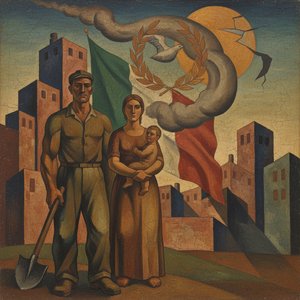
Mario Sironi: A Poetic of Modern Italian Identity Through Symbolism & Social Commentary
Explore the profound works of Mario Sironi, a key figure in Italian Modernism. Discover his evolution from Futurism to Metaphysical painting and his powerful social commentary. Learn about his legacy at OriginalUniqueArt.

Mastering Devotion: The Most Iconic Depictions of Saint Jerome in Art History
Explore the profound iconography of Saint Jerome through art history's most iconic masterpieces. From Renaissance serenity to Baroque drama, discover how legendary painters captured divine devotion in breathtaking oil paintings and fine art reproductions.

Divine Legacy: Exploring the Most Powerful Masterpieces of Saint Peter through Art History
Embark on a sophisticated journey through art history with our exploration of Saint Peter's most powerful masterpieces. Discover the profound emotional depth and technical brilliance of Renaissance and Baroque icons, curated for the discerning classic art enthusiast.

Carlo Carrà: Futurist Visions & Metaphysical Transformations in Early 20th-Century Italian Painting
Explore the artistic journey of Carlo Carrà, a pivotal figure in Italian Futurism & Metaphysical painting. Discover his dynamic compositions, collaborations with de Chirico, and lasting influence on modern art history.

Giovanni Fattori: Realism, Identity & the Tuscan Landscape – A Macchiaioli Master
Explore the life & art of Giovanni Fattori, a leading figure of the Macchiaioli movement. Discover his revolutionary realism, captivating Tuscan landscapes, and lasting impact on Italian painting. Learn more at OriginalUniqueArt.


