

 Aperçu en situation
 Partager
 Partager
 Détails
 Guide imprimable

 Télécharger
 Articles similaires
 Radiographie
 Voir le diaporama
 Statistiques
LE SILENCE


 Afficher la suite
Giclées et impressions d'art
Impressions giclées ou sur toile de qualité musée, avec une production rapide et des finitions au choix. ( Acheter la peinture faite à la main Passer au format image numérique)




P118B €10

P118H €10

P118W €10

P438Z €10

P508JH €12

P508YH €12

P805H €10

P805Z €10

P919BZ €10

P919G €10

P919XJ €10

P959ZH €10

P968JZ €12

W106C €8

W218G €10

W218JH €8

W218Y €10

W307PJ €10

W316G €10

W316PJ €8

W316Y €10

W398PJ €8

W4111J €10

W500HY €15

W500JH €15

W692G €12

W849H €8

W940BG €15

W953PJ €8




Choisissez parmi nos formats prédéfinis qui respectent les proportions originales de l’œuvre.

Vous pouvez saisir vos propres dimensions pour vous adapter à un cadre ou à un espace spécifique. Si la taille sélectionnée ne correspond pas aux proportions de l'image originale, nous recadrerons l'œuvre ou étendrons l'image avec une bordure en miroir ou une couleur unie. Une maquette numérique vous sera envoyée pour approbation avant le début de la production.
Veuillez noter que l'aperçu à l'écran ne reflète pas le recadrage ou l'extension réelle. Seule la maquette montrera avec précision la composition finale.
Bien que des tailles personnalisées soient disponibles, nous vous recommandons de choisir une dimension dans la liste prédéfinie afin de préserver les proportions originales.
Livraison dans le monde entier () en 2 semaines au lieu des 4/5 semaines habituelles. (10 octobre)

Livraison express gratuite dans le monde entier

Toile de lin de haute qualité

Assurance transport complète

Garantie de remboursement des droits de douane

Garantie de fidélité des couleurs

Garantie de retour de 100 jours (uniquement en cas de défaut)

Garantie de remboursement à 100%

Tarifs dégressifs sur quantité
 L'option verre n'est disponible que pour les dimensions inférieures à 110 cm.

LE SILENCE
Giclées et impressions d'art
Format de la reproduction
-


Prix total final
€ 69
Le Silence: A Renaissance Portrait of Introspection
Bernardino Luini’s “Le Silence” is not merely a portrait; it's an invitation into the quietude of the human spirit, a remarkably evocative work that speaks volumes through its deliberate restraint. Painted in Milan around 1527-1530, during the twilight years of his prolific career, this piece embodies Luini’s signature style – a graceful blend of Renaissance idealism and a subtly melancholic realism. It's a painting that whispers rather than shouts, inviting prolonged contemplation and revealing layers of meaning with each careful observation.
The subject is a young woman, likely depicted in the guise of a noblewoman or perhaps a pious lady of the court. Her pose—a gentle inclination of her head, a delicate hand resting lightly upon her lips—immediately establishes an atmosphere of profound stillness. The cropped composition, focusing intently on her face and upper torso, draws the viewer into this intimate space of introspection. Luini masterfully employs soft, diffused lighting, casting subtle shadows that enhance the contours of her features without resorting to dramatic contrasts. This deliberate lack of harshness contributes significantly to the painting’s overall sense of serenity.
The Language of Restraint: Technique and Materials
Luini's technique is characterized by a remarkable mastery of *sfumato*, a subtle blurring of edges that creates an almost dreamlike quality. He achieves this through meticulous layering of thin, translucent glazes of oil paint—a hallmark of his approach. The colors are muted and earthy – warm beiges, browns, and reddish hues dominate the palette, creating a sense of timelessness and understated elegance. There’s no flamboyant display of color here; instead, Luini utilizes a restrained range to amplify the painting's emotional impact.
The use of lines is equally deliberate. They are soft and blended, avoiding sharp outlines that would disrupt the overall feeling of tranquility. The head covering—a triangular shape—adds a touch of visual interest while remaining perfectly integrated within the composition’s harmonious flow. The surface texture suggests a smooth, almost polished quality, achieved through careful blending and manipulation of the paint – an impression of refined elegance and quiet dignity.
Symbolism and Emotional Resonance
The title itself, “Le Silence,” is profoundly symbolic. It immediately establishes the painting’s central theme: introspection, discretion, and perhaps even a plea for quietude. The woman's gesture—placing her finger to her lips—is universally understood as a symbol of secrecy or silence, reinforcing this thematic core. Luini doesn’t explicitly state these meanings; he trusts the viewer to interpret them through careful observation and emotional response.
Beyond the immediate symbolism, “Le Silence” evokes a broader sense of melancholy and contemplation. It's reminiscent of Leonardo da Vinci’s *sfumato* technique, which similarly creates an atmosphere of ambiguity and mystery. The painting invites us to consider the inner life of the subject—her thoughts, her feelings, her unspoken desires. It’s a portrait that transcends mere likeness, offering instead a glimpse into the soul.
A Legacy of Grace: Historical Context
Bernardino Luini was a pivotal figure in the artistic landscape of Renaissance Milan, deeply influenced by Leonardo da Vinci. His work represents a unique synthesis of classical ideals and northern European sensibilities. Luini’s style is often described as “Luinesque,” characterized by its graceful figures, elongated eyes, and subtle emotional depth. He worked primarily for religious institutions and private patrons, producing a vast body of paintings that continue to captivate viewers today.
“Le Silence” stands as one of Luini’s most poignant achievements—a testament to his artistic skill and profound understanding of the human condition. It's a painting that rewards careful study and invites repeated contemplation, offering a timeless meditation on beauty, silence, and the mysteries of the inner world.
Questions et réponses
Quels sujets apparaissent dans «LE SILENCE» de Bernardino Luini ?
Les sujets de « LE SILENCE » sont portrait, renaissance, silence, woman, contemplation, graceful, italian, fresco.
Quelle est l'orientation de «LE SILENCE» de Bernardino Luini ?
«LE SILENCE» de Bernardino Luini présente un format Portrait. Le format décrit les proportions de la composition.
Où puis-je acheter une impression de «LE SILENCE» de Bernardino Luini ?
«LE SILENCE» est disponible en tant que une impression d'art sur toile de coton ou sur papier canvas d'archive. Les commandes s'effectuent sur cette page, dans le format de votre choix.
Où puis-je acheter une image numérique de «LE SILENCE» de Bernardino Luini ?
Une image numérique de «LE SILENCE» de Bernardino Luini peut être achetée sur cette page : un téléchargement d'image numérique haute résolution.
De quel type d'œuvre s'agit-il pour "LE SILENCE" ?
« LE SILENCE » est une œuvre de type WallArt.
Qui vend des reproductions peintes à la main de «LE SILENCE» de Bernardino Luini ?
Vous pouvez commander une reproduction peinte à la main de «LE SILENCE» de Bernardino Luini directement sur cette page : une reproduction à l'huile peinte à la main sur toile de lin, réalisée sur commande.
Qui a créé "LE SILENCE" ?
L'artiste à l'origine de « LE SILENCE » est Bernardino Luini. L'œuvre est répertoriée sous le nom de Bernardino Luini.
Biographie de l'artiste
Début de vie et formation
Bernardino Luini, un peintre important du nord de l'Italie, est né à Runo, près du lac Majeur, vers 1480. Sa jeunesse n'est pas bien documentée, mais on sait qu'il a déménagé à Milan avec son père en 1500. Selon certaines sources, Luini s'est formé auprès de Giovan Stefano Scotto, tandis que d'autres suggèrent qu'il était un élève d'Ambrogio Bergognone.
Style artistique et influences
L'œuvre de Luini a été fortement influencée par Leonardo da Vinci, avec qui il aurait travaillé directement. Cette influence se voit dans son utilisation du sfumato, une technique qui crée un effet doux et brumeux en superposant de fines couches de peinture. Le style de Luini reflète également le mouvement maniériste, caractérisé par ses qualités dramatiques et émotionnelles.
Œuvres notables
- L'Adoration des mages (vers 1505) à San Pietro, Luino
- Saint Antoine de Padoue (années 1510) au Museo Poldi Pezzoli, influencé par le polyptyque de Cantù de Bernardino Zenale
- Fresques pour la Villa Pelucca (1509-1514), maintenant à la Pinacoteca di Brera, Milan
Collections muséales et ressources en ligne
- Pinacoteca di Brera, Milan: présente plusieurs œuvres de Luini, dont ses fresques pour la Villa Pelucca.
- OriginalUniqueArt.com: Bernardino Luini: offre une collection complète des œuvres de Luini, y compris des reproductions de haute qualité et des informations détaillées.
- Découvrez-en davantage sur la vie et l'œuvre de Luini sur Wikipédia
- Explorez le musée du Duomo de Sienne, en Italie, qui abrite certaines des œuvres d'art les plus belles et les plus importantes du Moyen Âge, notamment des œuvres contemporaines de Luini.
- Apprenez-en davantage sur le mouvement artistique maniériste, un style apparu au XVIe siècle en Italie et s'étant répandu dans toute l'Europe, caractérisé par ses qualités dramatiques et émotionnelles.
Héritage
La contribution de Luini à la peinture du nord de l'Italie est indéniable. Son œuvre, marquée par ses élégantes figures féminines aux yeux allongés, connues sous le nom de "luinesques", a été largement admirée et imitée. Le fils de Luini, Aurelio, est également devenu un peintre accompli, perpétuant l'héritage artistique familial.
Dates importantes:
- Né: vers 1480, Runo, Italie
- Décédé: juin 1532, Milan, Italie

Bernardino Luini
1480 - 1532 , Italie
En bref
- Artistes Influents: ['Léonard de Vinci']
- Date De Décès: Juin 1532
- Date De Naissance: vers 1480
- Influencé Par Cet Artiste: Aurelio Luini
- Lieu De Naissance: Runo, Italie
- Mouvement Artistique: Renaissance italienne
- Nationalité: Italienne
- Nom Complet: Bernardino Luini
- Œuvres Notables:
- Adoration des mages
- Saint Antoine de Padoue
- Fresques Villa Pelucca
Articles similaires
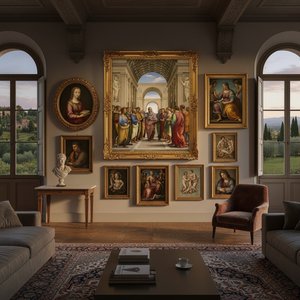
Raphaël : Les 25 Chefs-d'œuvre Incontournables pour une Décoration d'Exception
Plongez dans l'univers de Raphaël avec les 25 œuvres incontournables du maître italien. Découvrez l'histoire, la technique et la beauté intemporelle de ses chefs-d'œuvre Renaissance. Reproductions de qualité muséale sur OriginalUniqueArt.com.

The Subdued Palette: Exploring Emotional Resonance & Aesthetic Impact in Muted Artworks
Explore the power of muted colors in art! Discover the history, psychology & techniques behind serene palettes. Find inspiration & expert advice for creating emotionally resonant spaces with OriginalUniqueArt.
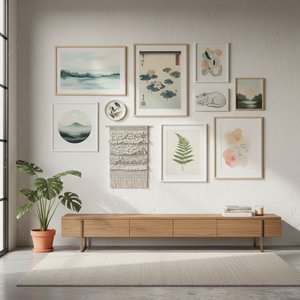
Top 10 des œuvres d'art pour une ambiance sereine |
Plongez dans la sérénité avec notre sélection des 10 œuvres d'art les plus apaisantes. Découvrez Monet, Renoir et d’autres maîtres classiques. Trouvez l'inspiration déco zen et achetez des reproductions de tableaux de qualité musée sur
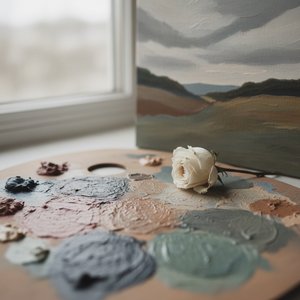
The Subdued Resonance: Exploring Emotional Depth & Artistic Nuance within Muted Color Palettes
Explore the captivating world of muted colors in art & design! Discover historical context, psychological effects, techniques, and inspiration for creating serene spaces. Elevate your aesthetic with OriginalUniqueArt.
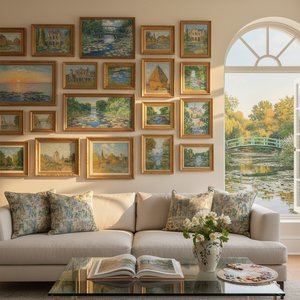
Claude Monet : Les 25 Chefs-d'Œuvre Impressionnistes à Redécouvrir | OriginalUniqueArt
Plongez dans l'univers impressionniste de Claude Monet ! Découvrez les 25 œuvres les plus célèbres du maître, de 'Impression soleil levant' aux 'Nymphéas'. Inspirez votre décoration intérieure avec OriginalUniqueArt.com et trouvez la reproduction parfaite.


