Aperçu en situation
 Partager
 Partager
 Détails
 Guide imprimable

 Télécharger
 Articles similaires
 Radiographie
 Voir le diaporama
 Statistiques
Triptych


 Afficher la suite
Reproduction à l'huile faite à la main
Huile sur toile peinte à la main, avec cadre et dimensions personnalisés, réalisée sur commande par nos artistes. ( Passer au format impression Passer au format image numérique)




P118B €10

P118H €10

P118W €10

P438Z €10

P508JH €12

P508YH €12

P805H €10

P805Z €10

P919BZ €10

P919G €10

P919XJ €10

P959ZH €10

P968JZ €12

W106C €8

W218G €10

W218JH €8

W218Y €10

W307PJ €10

W316G €10

W316PJ €8

W316Y €10

W398PJ €8

W4111J €10

W500HY €15

W500JH €15

W692G €12

W849H €8

W940BG €15

W953PJ €8




Choisissez parmi nos formats prédéfinis qui respectent les proportions originales de l’œuvre.

Saisissez la largeur et la hauteur souhaitées, pour s'adapter à votre cadre ou à votre mur. Cette œuvre est peinte à la main ; ainsi, pour un format de forme différente, l'artiste peut peindre un peu plus autour du tableau ou réduire légèrement les bords — c'est vous qui choisissez. Nous vous envoyons une maquette numérique pour approbation avant que la peinture ne commence. L'image présentée sur cette page ne reflète pas le résultat réel — seule la maquette le fait.
Après la commande, l’équipe OriginalUniqueArt.com contactera le client par e-mail pour recueillir ses instructions et lui fournira une maquette d’aperçu
Livraison dans le monde entier () en 3 à 4 semaines au lieu des 5 semaines habituelles. (22 octobre). Aucun compromis sur la qualité.

Livraison express gratuite dans le monde entier

Toile de lin de haute qualité

Assurance transport complète

Garantie de remboursement des droits de douane

Garantie de fidélité des couleurs

Garantie de retour de 100 jours (uniquement en cas de défaut)

Garantie de remboursement à 100%

Tarifs dégressifs sur quantité
 L'option verre n'est disponible que pour les dimensions inférieures à 110 cm.

Triptych
Technique de reproduction
Format de la reproduction
-


Prix total final
€ 263
A Vision in Wood: The Devotional Splendor of the Triptych
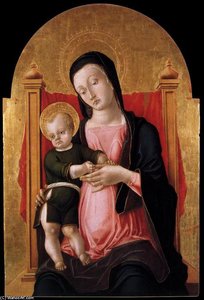
To stand before this magnificent triptych is to step directly into the hushed, sacred atmosphere of a late Gothic chapel. This work, dating from 1460, is not merely a painting; it is a devotional portal, crafted with painstaking reverence for the divine narrative. The structure itself—the three hinged panels—invites an intimate viewing experience, suggesting that the viewer must physically open the piece to reveal its full spiritual scope. At its heart lies the central panel, where the Virgin Mary cradles the infant Jesus Christ, surrounded by celestial attendants and saints whose gazes seem to follow the eye across centuries of faith.
Mastery in Tempera: Technique and Detail
The technical brilliance evident in this piece speaks volumes about the skill of its creator. Executed in tempera on wood panels, the medium lends a characteristic luminosity and permanence to the colors. One can almost feel the subtle texture of the aged wood beneath the vibrant pigments. Observe the meticulous rendering of the drapery; the folds of the garments are not simply painted but seem to possess weight and life, catching the light as if they were woven from silk and prayer. The attention paid to every detail, from the delicate wings of the surrounding angels to the rich embroidery on the saints' vestments, speaks to an era where art was considered a form of sacred labor.
Symbolism Woven into Sacred Scenes
The narrative complexity is breathtaking. On the left wing, St. John the Baptist stands in contemplative repose, his traditional attire and the presence of the lamb serving as potent symbols of innocence and prophecy. The right panel offers a contrasting scene, perhaps within the cool embrace of a cloister, where another saint engages in deep study from a manuscript, suggesting the enduring power of scripture and contemplation. These flanking scenes do not merely decorate; they frame the central mystery—the Incarnation—with supporting pillars of Christian virtue: prophecy, devotion, and wisdom. The pointed Gothic arches framing each section further anchor the piece within an architectural vocabulary that speaks of heavenly aspiration.
Historical Echoes and Enduring Piety
This triptych belongs to a period when religious art served as both high art and essential teaching tool for the faithful. It captures the profound piety characteristic of the late Gothic era, a time deeply invested in personal spiritual experience. While the artist's hand may have been guided by the traditions of masters like Bartolomeo Vivarini, the emotional resonance is universal. For the modern collector or designer, owning such a reproduction offers more than mere decoration; it provides an immediate connection to the deep currents of European spirituality and artisanal excellence.
Questions et réponses
Qui a créé « Triptych », et en quelle année ?
L'auteur de « Triptych » est Bartolomeo Vivarini, et l'œuvre date de 1460.
Dans quel mouvement et à quelle époque s'inscrit «Triptych» de Bartolomeo Vivarini ?
Dans «Triptych» de Bartolomeo Vivarini, le mouvement Late Gothic rencontre l'époque Renaissance.
De quel type d'œuvre s'agit-il pour "Triptych" ?
Dans le catalogue, «Triptych» de Bartolomeo Vivarini est répertorié comme wall art. Cette catégorie permet de trouver des œuvres similaires.
Biographie de l'artiste
Un héritage de lumière et de dévotion vénitienne
Dans l'atmosphère vibrante et scintillante du Quattrocento, Bartolomeo Vivarini s'est imposé comme une figure charnière de l'évolution de la peinture vénitienne. Né au cœur du célèbre centre verrier de Murano, en Italie, il faisait partie d'une dynastie d'artistes influents qui ont contribué à façonner l'identité visuelle de la République de Venise. En tant que membre de la famille Vivarini, sa vie et son œuvre étaient profondément liées au pouls artistique de sa patrie, orchestrant la transition entre les traditions dorées et ornées de la fin de la période gothique et l'humanisme naissant de la première Renaissance.
L'art de Vivarini se caractérise par un profond sentiment de profondeur spirituelle et une précision technique remarquable. Bien qu'il fût un maître de la tempera, utilisant souvent la feuille d'or pour imprégner ses compositions d'un luxe céleste, il fut également un innovateur dans l'usage de nouveaux médiums. On note qu'il apprit l'art de la peinture à l'huile auprès d'Antonello da Messina, et on lui attribue la production de ce qui est considéré comme la première peinture à l'huile à Venise vers 1473. Cette maîtrise lui permit de manipuler la lumière et la texture d'une manière qui insuffla une nouvelle dimension d'intimité et de sérénité à ses sujets religieux.
Maîtrise de la forme et symbolisme
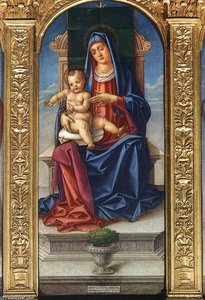
L'œuvre de Vivarini présente souvent un équilibre frappant entre des contours nets et définis et une palette de couleurs riche et émotive. Ses figures possèdent fréquemment une expression digne et dévote, capturant la solennité requise pour les retables qui ornaient les basiliques vénitiennes. Cette capacité à transmettre l'émotion humaine à travers des formes structurées fit de lui un peintre très sollicité pour d'importantes commandes religieuses. Un exemple notable de son talent se trouve dans sa Madone à l'Enfant, où il utilise la lumière pénétrant par les fenêtres et des draperies rouge profond pour créer un sentiment d'espace sacré.
Au-delà des figures elles-mêmes, les peintures de Vivarini sont souvent imprégnées de significations symboliques :
- L'usage de l'or : Son application fréquente de la feuille d'or ne sert pas seulement de décoration, mais agit comme un médium pour représenter la lumière divine.
- Motifs naturels : Dans un clin d'œil charmant à son nom — puisque vivarino se traduit par chardonneret en italien — il incluait occasionnellement ce petit oiseau comme une signature subtile au sein de ses œuvres.
- Profondeur architecturale : Ses compositions, telles que le Polyptyque de Conversano, démontrent une compréhension sophistiquée de la perspective et l'intégration de figures sacrées dans des structures complexes à plusieurs panneaux.
Importance historique et influence artistique
L'importance historique de Bartolomeo Vivarini réside dans son rôle de pont entre les époques. Il se trouvait au carrefour des traditions d'influence byzantine de ses prédécesseurs et des styles révolutionnaires de la Renaissance apportés par des artistes tels que Fra Angelico et Giovanni Bellini. En fusionnant ces diverses influences, il a aidé à établir un langage visuel vénitien unique, privilégiant la couleur lumineuse et la résonance émotionnelle.
Son influence s'est étendue à travers sa lignée familiale, impactant notamment le travail de son neveu, Alvise Vivarini, qui deviendra un artiste de premier plan à Venise avant l'ascension de Bellini. Par la minutie de ses détails et son adoption pionnière des techniques à l'huile, Bartolomeo Vivarini a laissé une marque indélébile dans l'histoire de l'art italien, garantissant que la grandeur spirituelle et esthétique de Murano et de Venise soit préservée pour les générations à venir.

Bartolomeo Vivarini
1440 - 1499 , Italie
En bref
- Artistic Movement Or Style: Renaissance vénitienne
- Artists Or Movements Influenced By This Artist: ['Alvise Vivarini']
- Artists Who Influenced This Artist:
- Antonello da Messina
- Fra Angelico
- Date Of Birth: 1440
- Date Of Death: 1499
- Full Name: Bartolomeo Vivarini
- Nationality: Italien
- Notable Artworks:
- Madone et l'Enfant
- Polyptyque de Conversano
- Triptyque (détail)
- Place Of Birth: Murano, Italie
Articles connexes

The Beauty of Late Gothic Art: Elegance, Intricate Detail, and the Dawn of the Renaissance
Explore the exquisite elegance of Late Gothic art. Discover how masters like Carlo Crivelli and Stefan Lochner blended intricate detail and religious devotion to bridge the Middle Ages and the Renaissance in this expert art history guide for true connoisseurs.
The Radiant Dusk of Medieval Vision: Exploring Late Gothic Art's Synthesis of Faith, Form & Emotionality (c. 1300-1500)
Explore the exquisite beauty & spiritual depth of Late Gothic art (c. 1300-1500). Discover key artists, symbolism, and its lasting influence on the Renaissance. Expert insights at OriginalUniqueArt.
Late Gothic Art: The Divine Transition from Medieval Symbolism to Renaissance Naturalism
Explore the profound transition of Late Gothic art from medieval symbolism to Renaissance naturalism. Discover the elegance of International Gothic, the legacy of Master Theodoric, and the evolution of European courtly masterpieces through an expert art-historical lens.

Giclée Prints: Archival Quality & Aesthetic Nuances for the Discerning Collector
Explore the world of giclée prints with OriginalUniqueArt. Learn about archival quality, aesthetic nuances & investment potential. Expert guidance for discerning art collectors seeking museum-quality reproductions and lasting value.

Gothic Glamour Reimagined: How Late Medieval Aesthetics are Driving the Next Big Interior Design Trend
Discover how Late Medieval art is revolutionizing modern interiors. From Gothic drama to Renaissance naturalism, learn to integrate high-impact, historical aesthetics into your urban space with expert trend forecasts and design inspiration.