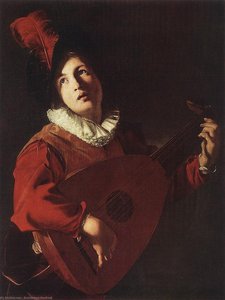
Lire la suite


 Pour les œuvres ou reproductions dont un côté mesure plus de 105 cm (environ 41 pouces), le cadre sera expédié sous forme de kit démonté. Cette méthode garantit une livraison sécurisée et prévient tout dommage pendant le transport.


En savoir plus sur cette peinture
Format du texte

() ·
A print made for you, with care
Giclées et impressions d'art
Impressions giclées ou sur toile de qualité musée, avec une production rapide et des finitions au choix. ( Commander la reproduction peinte à la main Passer au format numérique)
Biographie de l'artiste
Bartolomeo Manfredi (1582-1622) : peintre italien majeur du caravaggisme, connu pour le clair-obscur dramatique et les scènes de genre réalistes. Figure clé dans la diffusion de l'œuvre caravaggesque en France et aux Pays-Bas.
à partir du ·
Chapitre 1
On which medium should it be printed?
Canvas is printed with giclée inks and can be stretched or framed like a painting; paper comes flat, or framed behind glass.
Chapitre 2
Quelle dimension choisir ?
Faites glisser pour modifier la taille ; l'image de gauche présente le cadre à sa largeur réelle. Les proportions de l'original sont conservées.
Format standard
sur mesure
CM
INCH
Choisissez parmi nos formats prédéfinis qui respectent les proportions originales de l’œuvre.
Chargement des formats...

largeur
hauteur
Saisissez la largeur et la hauteur souhaitées pour qu'elles s'adaptent à votre cadre ou à votre mur. Une impression peut être recadrée, mais jamais agrandie au-delà de l'image originale ; ainsi, un format de forme différente entraînera la perte d'une partie de l'image. Nous vous envoyons une maquette numérique pour approbation avant toute impression. L'image présentée sur cette page ne montre pas le recadrage réel — seule la maquette le permet.
Chapitre 3
Comment souhaitez-vous qu'il vous soit livré ?
Choisissez le type de bordure pour votre toile tendue
Choisissez votre cadre

Bords blancs €1

Bords estompés €1

Bords imprimés €1

P118B €10

P118H €10

P118W €10

P438Z €10

P508JH €12

P508YH €12

P805H €10

P805Z €10

P919BZ €10

P919G €10

P919XJ €10

P959ZH €10

P968JZ €12

W106C €8

W218G €10

W218JH €8

W218Y €10

W307PJ €10

W316G €10

W316PJ €8

W316Y €10

W398PJ €8

W4111J €10

W500HY €15

W500JH €15

W692G €12

W849H €8

W940BG €15

W953PJ €8

H24-GOLD €30

H24-SILVER €30

H36-GOLD €45

H36-SILVER €45
Sous cadre
Baguette : . Dimensions hors tout avec le cadre : .
Chapitre 4
Livraison dans le monde entier () en 2 semaines au lieu des 4/5 semaines habituelles. (22 novembre)
Les dernières touches
Une plaque nominative, comme au musée ?
Détails de la plaque en bronze gravée
This elegant plaque features the artist's name and the title of the artwork, finely engraved for a timeless presentation.
It is made from bronze with a refined, elegant finish. The text is precisely laser-engraved for a sharp and permanent result. Measuring 9x2 cm, the plaque is compact yet easy to read. It's built to be durable and scratch-resistant, offering a professional, museum-quality look. Mounting is simple thanks to the included adhesive backing.
Détails de la plaque en acrylique transparent
The plaque includes essential engraved details such as the artist's name, the title of the artwork, the date it was created, the type of media used-like oil on canvas or watercolor-a brief description of the piece, and a QR code that links to the complete artwork information.
It is crafted from clear acrylic, offering a sleek, modern appearance. The text is UV-engraved in black to ensure strong visual contrast. With a size of 10x15 cm, it ensures optimal readability. It comes equipped with two metal hooks for secure wall mounting. The plaque is designed to be weather-resistant, making it suitable for various environments, and it includes interactive features that work seamlessly with smartphone scanning.
Détails de la plaque en acrylique noir
This elegant plaque includes engraved information such as the artist's name, the title of the artwork, the date it was created, the type of media used (like oil on canvas or watercolor), a short description of the artwork, and a QR code for quick access to more information.
The plaque itself is made from refined black acrylic with a premium finish. The text is laser-engraved in white for high contrast and readability. Its size is 10x15 cm, designed to be easy to read. It comes with two metal hooks for professional mounting. The design is sleek and fits any interior style. It is also weather-resistant and durable, with built-in digital integration for mobile compatibility.
Un vernis protecteur ?
Pour quand en avez-vous besoin ?
Chapitre 5
Your print, as you ordered it
A man
Technique de reproduction
Format de la reproduction
-
Cadre de reproduction
-
-
Pour les œuvres ou reproductions dont un côté mesure plus de 105 cm (environ 41 pouces), le cadre sera expédié sous forme de kit démonté. Cette méthode garantit une livraison sécurisée et prévient tout dommage pendant le transport.
Assemblage professionnel requis - ce produit n'est pas destiné au bricolage (DIY).
Le kit doit être assemblé et la toile tendue par un encadreur professionnel expérimenté, en utilisant de la colle à bois (non fournie), une pince à tendre la toile et des serre-joints pour maintenir les traverses d'équerre pendant le séchage de la colle. Un assemblage incorrect ou une tension inégale de la toile peut endommager l'œuvre de manière irréversible et n'est pas couvert par notre garantie.
Toutes les baguettes en bois massif sont incluses, découpées avec précision à la taille requise.
À assembler avec les vis fournies, ainsi qu'avec de la colle à bois pour les assemblages d'angles (non fournie), à prévoir par votre encadreur.
L'utilisation d'outils professionnels est requise et non incluse : une pince à tendre la toile (tendeur) et des serre-joints pour maintenir les baguettes bien d'équerre pendant le séchage de la colle.
Important :
L'assemblage des angles nécessite de la colle à bois, les barres doivent être maintenues avec des serre-joints jusqu'au séchage complet de la colle, et le tendage de la toile sur le châssis assemblé nécessite une pince à tendre la toile. Aucun de ces éléments n'est inclus dans le kit. Veuillez consulter un encadreur professionnel expérimenté avant de commander ce format.
Cartel
-
-
Vernis de protection
Vernis brillant (intensifie les couleurs, protège de la lumière et de l'humidité)
-
Livraison urgente
Livraison dans le monde entier () en 2 semaines au lieu des 4/5 semaines habituelles. (22 novembre)
-
Livraison express
Livraison dans le monde entier () sous 4 à 5 semaines. (29 novembre).
Inclus
Prix total
€ 72
L'option verre n'est disponible que pour les dimensions inférieures à 110 cm.
Inclus avec chaque commande
- Livraison express gratuite dans le monde entier
- Toile de lin de qualité supérieure
- Assurance transport complète
- Garantie de remboursement des droits de douane
- Garantie de fidélité des couleurs
- Politique de retour de 100 jours (uniquement en cas de défaut)
- Garantie de remboursement à 100%
- Offre de tarifs dégressifs
 Aperçu en situation
 Envoyer
 Partager
 Détails de l'œuvre
 Guide
Guide

 Télécharger l'image
 Articles similaires
 Radiographie
 Diaporama
 Questions et réponses
 Statistiques
En chiffres
- 1500l'année de création
- 29cadres au choix
- formats standards, dans leurs propres proportions
- 5semaines de travail et de livraison
À propos de l'original


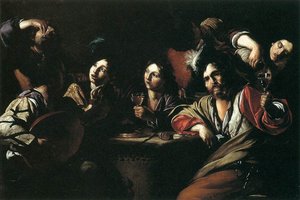
Bartolomeo Manfredi
1582 - 1622, Italie
Informations clés sur Bartolomeo Manfredi
- Artistic Movement Or Style: Caravaggisti
- Artists Or Movements Influenced By This Artist: ['Dirck van Baburen']
- Artists Who Influenced This Artist: ['Michelangelo Merisi da Caravaggio']
- Date Of Birth: 1582
- Date Of Death: 1622
- Full Name: Bartolomeo Manfredi
- Nationality: Italien
- Notable Artworks:
- La négation de Saint Pierre
- Scène taverne avec un joueur d'luth
- Caïn tue Abel
- Place Of Birth: Ostiano, Italie
Biographie de l'artiste
Bartolomeo Manfredi : L'Ombre de Caravage
Bartolomeo Manfredi (1582-1622) s'impose comme une figure charnière du paysage baroque naissant en Italie, indissociablement lié à l'héritage de Michelangelo Merisi da Caravaggio. Bien que Manfredi lui-même soit resté largement silencieux sur la toile — dépourvu d'œuvres signées et ne laissant qu'une poignée de pièces attribuées avec certitude — son impact sur les cercles artistiques fut profond, le consacrant comme le disciple le plus influent de Caravage et façonnant la trajectoire de la peinture italienne pour les décennies à venir. Né à Ostiano, près de Crémone, sa jeunesse demeure enveloppée d'obscurité, bien que les récits biographiques suggèrent une éducation aristocratique et l'appui d'un mécénat considérable.- Influences précoces et lien avec Caravage : Les détails précis entourant les années de formation de Manfredi sont rares. Cependant, des preuves probantes désignent Caravage comme un mentor majeur, l'ayant peut-mêtre même instruit à Rome vers 1603. Le propre témoignage de Caravage lors de son procès faisait allusion au service de Manfredi sous son emploi, renforçant la théorie d'un apprentissage artistique direct. Cette connexion l'a immédiatement placé dans l'orbite du style révolutionnaire de Caravage, caractérisé par un clair-obscur dramatique, un réalisme intense et une manipulation magistrale de l'émotion à travers le geste et l'expression.
- Style caravagiste et innovation artistique : Manfredi a embrassément les innovations de Caravage, privilégiant une narration viscérale au détriment de la beauté idéalisée. Contra Unlike de nombreux contemporains qui cherchaient à émuler la grandeur de Caravage, Manfredi s'est concentré sur la représentation de scènes brutes du quotidien — tavernes, marchés et confrontations entre personnages — souvent imprégnées d'une profondeur psychologique. Ses toiles pulsaient d'une énergie palpable, capturant des instants fugaces de drame et transmettant une profonde résonance émotionnelle.
Œuvres Majeures et Développement Artistique
Malgré l'absence de pièces signées documentées, Manfredi a produit un corpus substantiel durant sa carrière relativement brève (environ 1600-1610). Les érudits estiment qu'environ quarante peintures lui sont aujourd'hui attribuées, bien que leur authenticité ait fait l'objet de débats passionnés. Le processus d'attribution s'est avéré complexe en raison du penchant de Caravage pour le camouflage de ses propres œuvres et de la tendance de Manfredi à collaborer avec des assistants. Néanmoins, l'œuvre de Manfredi démontre une remarquable cohérence stylistique — marque de fabrique de la peinture caravagiste — et révèle une maîtrise technique exceptionnelle. Parmi ses tableaux notables, on trouve « Le reniement de Saint Pierre », illustrant le remords agonisant de l'apôtre après avoir renié le Christ ; « Scène de taverne avec un joueur de luth », capturant l'atmosphère animée d'une taverne vénitienne et révélant des interactions humaines nuancées ; ainsi que « Caïn tue Abel », une représentation brutale du fratricide débordante de tension dramatique. Ces œuvres illustrent la capacité de Manfredi à distiller les principes caravaggesques dans des compositions puissamment expressives.- Une influence au-delà de Rome : La vision artistique de Manfredi a transcendé les limites de Rome, exerçant une influence considérable sur les peintres de toute l'Europe, particulièrement en France et aux Pays-Bas. Des artistes tels que Dirck van Baburen ont absorbé les innovations stylistiques de Manfredi, les adaptant à leurs propres traditions nationales tout en conservant les principes esthétiques fondamentaux de Caravage. Cette transmission de l'héritage caravaggesque a consolidé la position de Manfredi comme pierre angulaire de l'art baroque.
- Héritage et importance historique : On attribue à Manfredi le mérite d'avoir popularisé la peinture de genre représentant les classes populaires parmi la seconde génération de caravagistes, faisant de lui sans doute le conduit le plus important des idées artistiques de Caravage. Son dévouement inébranlable au réalisme et à l'expression dramatique a contribué de manière significative à façonner la culture visuelle de son époque — un témoignage de la puissance durable de l'influence de Caravage.
Reconnaissance et Réputation Artistique
Les récits contemporains dépeignent Manfredi comme un homme d'un talent et d'un raffinement considérables, décrit par le biographe Giulio Mancini comme « un homme d'apparence distinguée et de fin comportement ». Bien qu'il ait évité les commandes publiques — préférant s'adresser à des clients privés — les peintures de Manfredi ont reçu un large éloge de son vivant. Ses œuvres étaient exposées dans des galeries de premier plan et collectionnées par des mécènes influents, lui assurant une place respectée au sein de la communauté artistique. Malgré l'absence de preuve définitive concernant sa signature, les historiens de l'art reconnaissent sa contribution indéniable à l'héritage artistique de Caravage et admettent son influence durable sur les générations suivantes de peintres.Pour Aller Plus Loin
Pour approfondir votre connaissance de la vie et de l'œuvre de Bartolomeo Manfredi, envisagez une visite à San Bartolomeo in Pantano, à Pistoia — une église romane du XIIe siècle abritant des chefs-d'œuvre de Gruamonte et Guido da Como. Explorez les reproductions des peintures de Manfredi en ligne sur OriginalUniqueArt.com et découvrez le drame captivant et l'intensité émotionnelle qui caractérisent son style artistique distinctif.Articles connexes
Andrea del Sarto: Florentine Grace, Technical Mastery & Artistic Ambition
Explore the life & art of Andrea del Sarto, a Florentine Renaissance master renowned for harmonious compositions & technical brilliance. Discover his frescoes, portraits, and lasting influence on art history.
Explorez des œuvres d'art classées par thèmes, styles et caractéristiques.