
 Aperçu en situation
 Partager
 Partager
 Détails
 Guide imprimable

 Télécharger
 Articles similaires
 Radiographie
 Voir le diaporama
 Statistiques
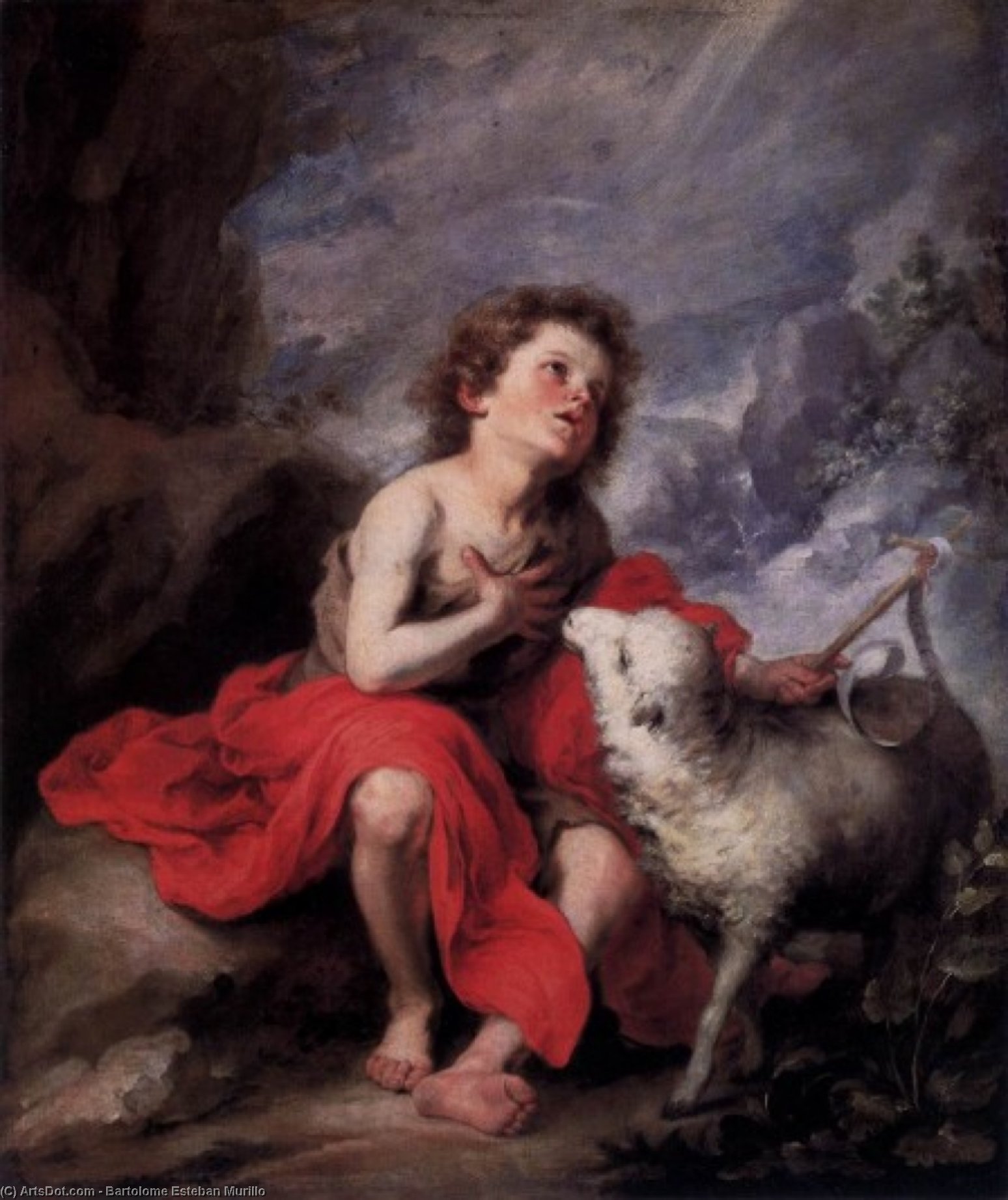
St. John the Baptist as a Child
 Oil On Canvas
- WallArt
- Spanish Baroque
 1665
1665 121.0 x 99.0 cm
 Afficher la suite
Giclées et impressions d'art
Impressions giclées ou sur toile de qualité musée, avec une production rapide et des finitions au choix. ( Acheter la peinture faite à la main Passer au format image numérique)




P118B $10

P118H $10

P118W $10

P438Z $10

P508JH $12

P508YH $12

P805H $10

P805Z $10

P919BZ $10

P919G $10

P919XJ $10

P959ZH $10

P968JZ $12

W106C $8

W218G $10

W218JH $8

W218Y $10

W307PJ $10

W316G $10

W316PJ $8

W316Y $10

W398PJ $8

W4111J $10

W500HY $15

W500JH $15

W692G $12

W849H $8

W940BG $15

W953PJ $8




Choisissez parmi nos formats prédéfinis qui respectent les proportions originales de l’œuvre.

Vous pouvez saisir vos propres dimensions pour vous adapter à un cadre ou à un espace spécifique. Si la taille sélectionnée ne correspond pas aux proportions de l'image originale, nous recadrerons l'œuvre ou étendrons l'image avec une bordure en miroir ou une couleur unie. Une maquette numérique vous sera envoyée pour approbation avant le début de la production.
Veuillez noter que l'aperçu à l'écran ne reflète pas le recadrage ou l'extension réelle. Seule la maquette montrera avec précision la composition finale.
Bien que des tailles personnalisées soient disponibles, nous vous recommandons de choisir une dimension dans la liste prédéfinie afin de préserver les proportions originales.
Livraison dans le monde entier () en 2 semaines au lieu des 4/5 semaines habituelles. (26 septembre)

Livraison express gratuite dans le monde entier

Toile de lin de haute qualité

Assurance transport complète

Garantie de remboursement des droits de douane

Garantie de fidélité des couleurs

Garantie de retour de 100 jours (uniquement en cas de défaut)

Garantie de remboursement à 100%

Tarifs dégressifs sur quantité
 L'option verre n'est disponible que pour les dimensions inférieures à 110 cm.

St. John the Baptist as a Child
Giclées et impressions d'art
Format de la reproduction
-


Prix total final
$ 80
A Portrait of Innocence: Exploring Bartolomé Esteban Murillo’s St. John the Baptist as a Child
Bartolomé Esteban Murillo's “St. John the Baptist as a Child,” painted in 1665, transcends mere depiction; it embodies the very essence of Baroque idealism—a masterful distillation of piety and pastoral beauty that continues to resonate with audiences centuries later. This oil on canvas masterpiece resides within the Galleria Corsini in Rome, offering visitors a glimpse into a hidden gem of Italian art alongside its broader European counterparts from the sixteenth and seventeenth centuries. Its quiet contemplation speaks volumes about Murillo’s profound understanding of human emotion and his unwavering commitment to capturing fleeting moments of grace.Subject Matter and Composition
The painting presents a tender tableau: a young boy, believed to be Saint John the Baptist, seated upon weathered rocks amidst a verdant landscape populated by trees—a deliberate echo of biblical imagery celebrating the innocence and purity associated with childhood. Before him rests a sheep, symbolizing humility and pastoral virtue – elements frequently employed in Baroque art to convey moral lessons and spiritual contemplation. Murillo’s compositional choices prioritize serenity and balance; the boy dominates the frame, positioned centrally against the backdrop of nature, drawing the viewer's eye into this serene scene. The subtle diagonal lines created by the rocks contribute to a sense of dynamism within the stillness of the composition.Stylistic Influences and Technique
Murillo’s style is undeniably rooted in the Baroque tradition, yet he distinguishes himself through an exceptional sensitivity to light and shadow—a technique perfected during his formative years under Juan del Castillo. Like Murillo's celebrated “The Good Shepherd Child,” this painting utilizes chiaroscuro – dramatic contrasts between illumination and darkness – to sculpt form and imbue the scene with palpable emotion. The artist meticulously renders textures, from the rough stone beneath the boy’s feet to the fleece of the sheep, demonstrating a remarkable command of artistic craft. Furthermore, Murillo's influence extends beyond his immediate stylistic peers; he shares similarities with Diego Velázquez’s “Prince Baltasar Carlos with the Count-Duke of Olivares,” showcasing a similar preoccupation with capturing psychological realism alongside formal elegance.Symbolism and Spiritual Significance
Beyond its aesthetic beauty, "St. John the Baptist as a Child" carries considerable symbolic weight. The boy represents Christ himself at infancy—a pivotal moment in Christian theology signifying divine humility and foreshadowing redemption. The sheep serves as an emblem of innocence and meekness, mirroring Saint John’s prophetic role as herald of Jesus's arrival. Murillo skillfully employs these symbols to elevate the painting beyond a simple portrait; it becomes a meditation on faith, virtue, and the transformative power of childhood—themes central to Baroque spirituality.Emotional Impact and Legacy
The painting’s enduring appeal lies in its ability to evoke feelings of compassion and tranquility. Murillo achieves this through masterful use of color – muted hues dominate the palette, creating an atmosphere of understated grandeur. The boy's gaze is direct yet gentle, conveying a profound sense of inner peace—a characteristic that distinguishes Baroque art from earlier Renaissance styles. “St. John the Baptist as a Child” remains a testament to Murillo’s artistic genius and his unwavering dedication to portraying human emotion with exquisite subtlety. Its presence in Galleria Corsini ensures its continued appreciation by discerning collectors and interior designers alike, offering a timeless glimpse into the heart of Baroque artistry.Biographie de l'artiste
Premières années et formation
Bartolomé Esteban Murillo, un peintre baroque espagnol de premier plan, est né à Séville, en Espagne, fin décembre 1617 et a été baptisé le 1er janvier 1618. Il était le plus jeune des quatorze enfants de Gaspar Esteban et María Pérez. Après la mort de ses parents en 1627 et 1628, Murillo devint l'ami de son beau-frère, Juan Agustín Lagares. Murillo commença ses études artistiques à Séville sous la direction de Juan del Castillo, un parent de sa mère qui était également artiste. Ses premières œuvres furent influencées par l’approche réaliste et forte de Zurbarán, Jusepe de Ribera et Alonzo Cano.Évolution artistique et style
Le style artistique de Murillo évolua au fil du temps, initialement influencé par la peinture flamande et le « traité sur les images sacrées » de Molanus. À mesure qu'il mûrit, son travail développa un style raffiné qui convenait aux goûts bourgeois et aristocratiques de l’époque, en particulier dans ses œuvres religieuses catholiques romaines.- Jeune homme avec un panier de fruits ou Personification de l'été (c. 1640-50), illustrant son approche réaliste précoce.
- Le Jeune Mendiant (c. 1645, Musée du Louvre, Paris, France), démontrant l’influence de Velázquez.
- Saint Jérôme (c. 1650-52), exemplifiant son style mature, doucement lumineux.
Œuvres majeures et thèmes
Murillo est particulièrement connu pour ses représentations touchantes de l'Enfant Jésus, souvent dépeint comme un enfant jouant ou distribuant de la nourriture aux pauvres. Ces œuvres, empreintes d’une tendresse particulière, captivent par leur réalisme et leur émotion. Il a également peint des scènes de la Vierge Marie avec l'Enfant Jésus, ainsi que des saints et des figures religieuses, toujours caractérisées par une lumière douce et une composition harmonieuse. Ses tableaux de genre, comme Le Jeune Mendiant, témoignent de son intérêt pour les sujets contemporains et de sa capacité à capturer la vie quotidienne avec réalisme et compassion.Collections et héritage
Les peintures de Murillo se trouvent dans divers musées du monde entier, notamment :- Le Museo del Prado (Madrid, Espagne)
- L’Ermitage (Saint-Pétersbourg, Russie)
- La Wallace Collection (Londres)
- Le Timken Museum of Art (San Diego, présentant le Christ sur la croix)
- Le Krannert Art Museum (Champaign, Illinois, présentant le Christ après la flagellation)

Bartolomé Esteban Murillo
1618 - 1682 , Espagne
En bref
- Artistic Movement Or Style: Baroque espagnol
- Artists Or Movements Influenced By This Artist:
- Gainsborough
- Greuze
- Artists Who Influenced This Artist:
- Zurbarán
- Jusepe de Ribera
- Alonzo Cano
- Velázquez
- Date Of Birth: 1618
- Date Of Death: 1682
- Full Name: Bartolomé Esteban Murillo
- Nationality: Espagnol
- Notable Artworks:
- Jeune homme avec un panier de fruits
- Le Jeune Mendiant
- Saint Jérôme
- L'Adoration des bergers
- Place Of Birth (City And Country): Séville, Espagne
Articles similaires

Les 10 Chefs-d'œuvre Baroques qui ont Révolutionné l'Art |
Plongez au cœur du baroque avec les 10 chefs-d'œuvre de Caravaggio, Rembrandt et Rubens. Découvrez l'histoire fascinante de ces artistes et leurs tableaux célèbres. Reproductions d'art de qualité muséale sur – Explorez la collection !

Constable : Les 25 Chefs-d'Œuvre du Maître Anglais | OriginalUniqueArt
Plongez dans l'univers de John Constable avec les 25 œuvres incontournables du maître anglais. Découvrez l'histoire, la technique et l'émotion derrière ses paysages romantiques. Reproductions de qualité muséale sur OriginalUniqueArt.com.

The Dramatic Flourish: Exploring the Baroque Movement's Enduring Legacy in Art History
Explore the dramatic world of Baroque art! Discover iconic artists like Caravaggio & Rubens, defining techniques, and its lasting impact on art history. Expert insights for collectors & enthusiasts at OriginalUniqueArt.

John Singer Sargent : Les 25 Œuvres Maîtresses d'un Portraitiste Éminent | OriginalUniqueArt
Plongez dans l'univers de John Singer Sargent : découvrez les 25 œuvres qui ont marqué l'histoire de l'art. Portraits impressionnants, réalisme exquis et couleurs vibrantes. Retrouvez ces chefs-d'œuvre en reproduction haute définition sur OriginalUniqueArt.com.

Le Drame Baroque : L'Art qui Apporte la Splendeur dans Votre Intérieur
Plongez dans l'univers somptueux du baroque ! Découvrez son histoire, comment l'intégrer à votre intérieur et les œuvres incontournables. : reproductions d'art de qualité supérieure.


