

 Aperçu en situation
 Partager
 Partager
 Détails
 Guide imprimable

 Télécharger
 Articles similaires
 Radiographie
 Voir le diaporama
 Statistiques
Classical Landscape with Ruins
 Watercolor
- WallArt
- Romantic Landscape Painting
 1629
1629- Early Modern
 21.0 x 21.0 cm
 Fitzwilliam College
 Afficher la suite
Reproduction à l'huile faite à la main
Huile sur toile peinte à la main, avec cadre et dimensions personnalisés, réalisée sur commande par nos artistes. ( Passer au format impression Passer au format image numérique)




P118B $10

P118H $10

P118W $10

P438Z $10

P508JH $12

P508YH $12

P805H $10

P805Z $10

P919BZ $10

P919G $10

P919XJ $10

P959ZH $10

P968JZ $12

W106C $8

W218G $10

W218JH $8

W218Y $10

W307PJ $10

W316G $10

W316PJ $8

W316Y $10

W398PJ $8

W4111J $10

W500HY $15

W500JH $15

W692G $12

W849H $8

W940BG $15

W953PJ $8




Choisissez parmi nos formats prédéfinis qui respectent les proportions originales de l’œuvre.

Vous pouvez saisir vos propres dimensions pour l'adapter à un cadre ou à un espace spécifique. Si la taille sélectionnée ne correspond pas aux proportions de l'image d'origine, nous recadrerons l'œuvre ou prolongerons la peinture avec des éléments peints à la main supplémentaires. Une maquette numérique vous sera envoyée pour approbation avant le début de la production.
Veuillez noter que l'aperçu à l'écran ne reflète pas le recadrage ou l'extension réels. Seule la maquette montrera fidèlement la composition finale.
Bien que des tailles personnalisées soient disponibles, nous vous recommandons de sélectionner une dimension dans la liste prédéfinie afin de préserver les proportions d'origine.
Après la commande, l’équipe OriginalUniqueArt.com contactera le client par e-mail pour recueillir ses instructions et lui fournira une maquette d’aperçu
Livraison dans le monde entier () en 3 à 4 semaines au lieu des 5 semaines habituelles. (26 septembre). Aucun compromis sur la qualité.

Livraison express gratuite dans le monde entier

Toile de lin de haute qualité

Assurance transport complète

Garantie de remboursement des droits de douane

Garantie de fidélité des couleurs

Garantie de retour de 100 jours (uniquement en cas de défaut)

Garantie de remboursement à 100%

Tarifs dégressifs sur quantité
 L'option verre n'est disponible que pour les dimensions inférieures à 110 cm.

Classical Landscape with Ruins
Technique de reproduction
Format de la reproduction
-


Prix total final
$ 300
A Vision of Roman Decay: The Melancholy Beauty of Breenbergh
In the quiet corners of the Fitzwilliam Museum, there exists a window into a lost era—a watercolor titled Classical Landscape with Ruins by the Dutch master Bartholomeus Breenbergh. Created around 1629, this delicate work is far more than a mere topographical record; it is a profound meditation on the passage of time and the inevitable triumph of nature over human ambition. As one gazes upon the crumbling stone structures in the foreground, there is an immediate sense of the sublime—that intoxicating mixture of awe and terror that comes from witnessing the slow, relentless decay of once-great civilizations. Breenbergh captures a moment where the grandeur of Rome meets the quiet persistence of the earth, inviting the viewer to contemplate their own place within the vast, cyclical rhythm of history.
The composition is masterfully orchestrated to lead the eye through a narrative of light and shadow. In the foreground, the skeletal remains of classical architecture serve as a poignant memento mori, while life continues in its humble, unbothered forms around them. Two figures wander near the ruins, perhaps travelers or shepherds lost in thought, their small scale emphasizing the monumental weight of the past. Scattered throughout this pastoral scene are the gentle rhythms of rural life: cows and sheep graze peacefully, a horse rests in the mid-ground, and a solitary bird drifts through the sky. Even the presence of a tranquil body of water near the right edge of the frame adds a layer of reflective stillness, mirroring the contemplative mood that permeates the entire landscape.
The Alchemy of Light and Italianate Grace
Technically, Breenbergh departs from the rigid, microscopic realism often associated with his Dutch contemporaries. Instead, he embraces an Italianate sensibility, characterized by a soft, atmospheric perspective that breathes life into the paper. His brushwork is loose and expressive, eschewing sharp outlines in favor of luminous transitions. Light is the true protagonist of this piece; shafts of sunlight pierce through the architectural debris, illuminating patches of verdant foliage and casting long, dramatic shadows that stretch across the terrain. This manipulation of light creates a sense of depth and drama, pulling the viewer into a world where the air feels heavy with humidity and history.
The color palette is a sophisticated study in muted elegance. Dominated by earthy browns, deep ochres, and mossy greens, the painting evokes the feeling of an ancient, sun-drenched landscape. Yet, Breenbergh punctuates these somber tones with subtle splashes of crimson and gold, reminiscent of the dramatic chiaroscuro found in the works of Caravaggio. For the discerning collector or interior designer, this piece offers a remarkable versatility. Its tonal depth and classical subject matter allow it to serve as a sophisticated focal point in a traditional study, a serene anchor in a contemporary minimalist space, or a soulful addition to a gallery wall dedicated to the Golden Age of painting.
An Eternal Echo for the Modern Collector
To possess a reproduction of this work is to bring a piece of the 17th-century soul into the modern home. Breenbergh’s ability to weave together the architectural ghosts of antiquity with the living, breathing pulse of nature creates an emotional resonance that transcends centuries. The painting does not merely depict a scene; it evokes a feeling of nostalgia for a greatness we can no longer touch, yet still deeply admire. It is an invitation to slow down, to observe the play of light upon stone, and to find beauty in the ephemeral. Whether you are drawn to its historical significance, its masterful use of atmospheric perspective, or its quiet, melancholic grace, this artwork remains a timeless testament to the enduring power of the classical spirit.
Biographie de l'artiste
Jeunesse et Formation
- Nom: Bartholomeus Breenbergh
- Né: Avant le 13 novembre 1598, à Deventer, aux Pays-Bas
- Décédé: Après le 3 octobre 1657, à Amsterdam, aux Pays-Bas
- Les détails de sa vie précoce sont rares. La famille a déménagé à Hoorn après la mort de son père en 1607.
- Il était contemporain de Jacques Waben et a probablement reçu une formation initiale là-bas.
- Ses professeurs enregistrés incluent Pieter Lastman et Jacob Symonsz Pynas.
Carrière : Rome et le Style Italianisant
- Enregistré pour la première fois comme peintre à Amsterdam en 1619.
- En 1619, il a voyagé à Rome, où il est resté jusqu'à environ 1630.
- Il a travaillé avec le peintre flamand Frans van de Kasteele et a été fortement influencé par Paul Bril.
- Il a développé un style distinctif de paysage italianisant, caractérisé par des représentations idéalisées de la Campagne romaine (la campagne).
- Influencé par les paysages de Cornelis van Poelenburgh ; leurs styles sont devenus difficiles à distinguer à certains moments.
- Il est devenu l'un des fondateurs des Bentvueghels ("Guilde des peintres") à Rome, obtenant le surnom de "het fret" (le furet).
Retour à Amsterdam et Développement Artistique
- Est retourné à Amsterdam vers 1630.
- S'est marié en 1633 et a reçu un salaire annuel du roi Charles Ier de Grande-Bretagne.
- Son travail a commencé à incorporer des figures mythologiques et bibliques dans les paysages italiens, influencé par des artistes comme Pieter Lastman.
- Il a développé un style plus monumental avec des types de personnages expressifs.
- Seul élève enregistré était Jan de Bisschop, qui a étudié avec lui dans les années 1640.
Influences et Héritage
- Influences: Pieter Lastman, Nicolaes Moeyaert, Paul Bril, Cornelis van Poelenburgh, Claude Lorrain.
- Influence sur d'autres: Jan Linsen, Scipione Compagno, Laurens Barata, Charles Cornelisz. de Hooch, Pieter Anthonisz. van Groenewegen, Francois van Knibbergen et Catharina van Knibbergen.
- Breenbergh était une figure clé dans le développement du style de paysage italianisant aux Pays-Bas.
- Son travail a contribué à populariser les représentations de ruines classiques et de paysages idéalisés parmi les artistes européens du nord.
- Il a comblé le fossé entre les maîtres néerlandais précédents et les peintres de paysage ultérieurs, plus raffinés.
Signification Historique
- La contribution de Breenbergh réside dans son rôle pionnier dans l'établissement du style italianisant au sein de l'art néerlandais.
- Sa capacité à synthétiser les influences de divers artistes - Lastman, Moeyaert, Bril, Poelenburgh - a créé une voix artistique unique et reconnaissable.
- Il a joué un rôle important dans la formation des préférences esthétiques de l'âge d'or néerlandais, inspirant les générations futures de peintres paysagistes.
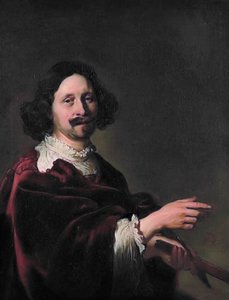
Bartholomeus Breenbergh
1598 - 1657 , Pays-Bas
En bref
- Artistes Influents:
- Paul Bril
- Cornelis van Poelenburgh
- Date De Décès: 5 octobre 1657
- Date De Naissance: 13 novembre 1598
- Influence Sur D'Autres: ['Claude Lorrain']
- Lieu De Naissance: Deventer, Pays-Bas
- Mouvement Artistique: Paysages italianisants
- Nationalité: Néerlandais
- Nom Complet: Bartholomeus Breenbergh
Articles similaires

L'Âge d'Or Néerlandais : 10 Chefs-d'œuvre Incontournables pour Décorer avec Art et Histoire
Plongez au cœur de l'Âge d'Or néerlandais ! Découvrez 10 chefs-d'œuvre intemporels de Rembrandt, Vermeer et autres maîtres hollandais. Explorez leur histoire, technique & trouvez l'inspiration déco sur

Golden Light & Dutch Skies: The Timeless Magic of Dutch Golden Age Landscapes
Discover the breathtaking beauty of Dutch Golden Age landscapes. Explore the mastery of light, chiaroscuro, and 17th-century realism through an expert art history lens, celebrating the enduring legacy of the Dutch Masters for discerning collectors and art lovers.

Golden Light & Dutch Skies: Bringing the Magic of Dutch Golden Age Landscapes into Your Home
Transform your home with the breathtaking light of Dutch Golden Age landscapes. Discover how hand-painted oil reproductions of masterworks like Ruisdael and Vermeer bring timeless elegance, atmosphere, and soulful texture to modern interiors. Elevate your space with museum-quality art.

L'Âge d'Or Néerlandais : Splendeur Baroque et Révolution Artistique
Explorez l'Âge d'Or néerlandais : découvrez les maîtres baroques (Rembrandt, Fabritius) et leur révolution artistique. Analyse approfondie, contexte historique et héritage durable. Un voyage au cœur de la peinture du XVIIe siècle.
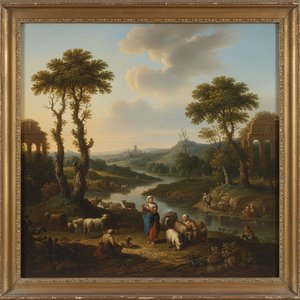
Nicolaes Berchem: Dutch Golden Age Pastoralism & the Evolution of Landscape Painting
Explore the captivating world of Nicolaes Berchem, a leading Dutch Golden Age painter. Discover his idyllic landscapes, masterful technique & lasting influence on art history. Learn more at OriginalUniqueArt.
