

 Aperçu en situation
 Envoyer
 Partager
 Détails de l'œuvre
 Guide
Guide

 Télécharger l'image
 Articles similaires
 Radiographie
 Diaporama
 Statistiques
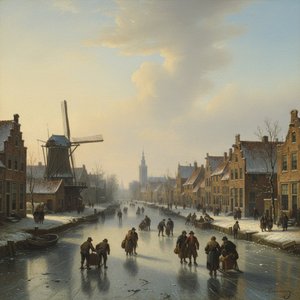
Winter landscape
 Oil On Panel
- Romantic Landscape Painting
 1838
1838- 19th Century
 62.0 x 75.0 cm
 Rijksmuseum
 Lire la suite
Reproduction à l'huile faite à la main
Huile sur toile peinte à la main, avec cadre et dimensions personnalisés, réalisée sur commande par nos artistes. ( Passer au format impression Passer au format numérique)




P118B €10

P118H €10

P118W €10

P438Z €10

P508JH €12

P508YH €12

P805H €10

P805Z €10

P919BZ €10

P919G €10

P919XJ €10

P959ZH €10

P968JZ €12

W106C €8

W218G €10

W218JH €8

W218Y €10

W307PJ €10

W316G €10

W316PJ €8

W316Y €10

W398PJ €8

W4111J €10

W500HY €15

W500JH €15

W692G €12

W849H €8

W940BG €15

W953PJ €8




Choisissez parmi nos formats prédéfinis qui respectent les proportions originales de l’œuvre.

Saisissez la largeur et la hauteur souhaitées, pour s'adapter à votre cadre ou à votre mur. Cette œuvre est peinte à la main ; ainsi, pour un format de forme différente, l'artiste peut peindre un peu plus autour du tableau ou réduire légèrement les bords — c'est vous qui choisissez. Nous vous envoyons une maquette numérique pour approbation avant que la peinture ne commence. L'image présentée sur cette page ne reflète pas le résultat réel — seule la maquette le fait.
Après la commande, l’équipe OriginalUniqueArt.com contactera le client par e-mail pour recueillir ses instructions et lui fournira une maquette d’aperçu
Livraison dans le monde entier () en 3 à 4 semaines au lieu des 5 semaines habituelles. (26 octobre). Aucun compromis sur la qualité.

Livraison express gratuite dans le monde entier

Toile de lin de qualité supérieure

Assurance transport complète

Garantie de remboursement des droits de douane

Garantie de fidélité des couleurs

Politique de retour de 100 jours (uniquement en cas de défaut)

Garantie de remboursement à 100%

Offre de tarifs dégressifs
 L'option verre n'est disponible que pour les dimensions inférieures à 110 cm.

Winter landscape
Technique de reproduction
Format de la reproduction
-


Prix total
€ 263
A Winter's Embrace: Exploring Barend Cornelis Koekkoek’s “Winter Landscape”
The Dutch Romantic landscape painter Barend Cornelis Koekkoek’s “Winter Landscape,” completed in 1833, transcends mere depiction; it embodies the spirit of a bygone era and speaks to enduring themes of resilience and beauty amidst adversity. Executed on wood with oil paint—a technique favored by Koekkoek for its ability to capture subtle tonal variations—the painting presents a serene yet poignant tableau of a snowy road winding through a sparsely populated Dutch countryside.Style and Technique: Romantic Precision
Koekkoek’s artistic vision aligns perfectly with the tenets of Romanticism, prioritizing emotional intensity alongside meticulous observation. Unlike earlier Baroque landscapes that sought to impose grandeur upon nature, Koekkoek embraced its inherent wildness, conveying a sense of contemplative solitude rather than triumphant dominion. His brushstrokes are deliberate and controlled, blending seamlessly to create luminous washes of color—primarily blues and whites—that dominate the composition. The artist skillfully utilizes chiaroscuro—the interplay between light and shadow—to sculpt the forms of trees, snowdrifts, and distant buildings, enhancing depth and creating a palpable atmosphere of coldness and stillness.Historical Context: Reflecting Dutch Identity
“Winter Landscape” emerged during a period of significant artistic ferment in Holland, mirroring broader cultural anxieties surrounding the Napoleonic Wars and the subsequent Restoration. The painting served as a powerful emblem of Dutch national identity—a celebration of its pastoral heritage and an assertion of moral fortitude in the face of political upheaval. Koekkoek’s depiction of a quiet rural scene resonated deeply with viewers who longed for stability and continuity amidst turbulent times, reflecting a desire to reconnect with simpler values and traditions.Symbolism: Resilience Amidst Winter's Grip
Beyond its aesthetic qualities, “Winter Landscape” is laden with symbolic significance. The snow itself represents hardship and purification—a blank slate upon which new beginnings can emerge. Yet, despite the bleakness of the winter season, Koekkoek’s careful rendering of trees bearing fruit underscores the promise of fecundity and renewal. Furthermore, the solitary figures traversing the road symbolize perseverance and determination—individuals striving onward despite obstacles, mirroring the broader human experience of confronting challenges with courage and grace.Emotional Impact: A Momentary Pause for Reflection
Ultimately, Koekkoek’s “Winter Landscape” invites contemplation and introspection. Its muted palette and tranquil composition evoke a profound sense of peace and melancholy—a recognition of beauty found in vulnerability and solitude. The painting compels viewers to pause amidst the frenetic pace of modern life, encouraging them to appreciate the quiet grandeur of nature and to contemplate the enduring power of resilience and hope. It remains an exquisite testament to Koekkoek’s artistic prowess and a timeless masterpiece capturing the essence of Romantic sensibility.Questions et réponses
Quelle est la technique utilisée pour "Winter landscape" et quelles sont ses dimensions ?
L'œuvre originale «Winter landscape» de Barend Cornelis Koekkoek est une Oil On Panel mesurant 62 x 75 cm. La technique et les dimensions correspondent à l'œuvre originale.
Quelle est la taille d'impression recommandée pour «Winter landscape» de Barend Cornelis Koekkoek ?
La taille d'impression recommandée pour «Winter landscape» de Barend Cornelis Koekkoek est Medium.
Quelle est la forme et les dimensions de «Winter landscape» de Barend Cornelis Koekkoek ?
«Winter landscape» de Barend Cornelis Koekkoek est une composition en Landscape mesurant 62 x 75 cm dans l'original.
Biographie de l'artiste
Premières années et débuts artistiques (1803-1824)
- Naissance : 11 octobre 1803, à Middelburg, Zeeland, aux Pays-Bas
- Origines familiales : Fils de Johannes Hermanus Koekkoek, un peintre maritime renommé, et Anna van Koolwijk. A grandi dans un environnement artistique avec plusieurs frères artistes (Hermanus, Johannes et Marinus).
- Première éducation : Inscrit à l'Académie de dessin de Middelburg sous la direction d'Abraham Krayestein.
- Déménagement à Amsterdam : Étudie pendant quatre ans à la Koninklijke Academie van Beeldende Kunsten à Amsterdam (1822-1826).
- Ambition précoce : Exprime son ambition de devenir peintre paysagiste dès 1824.
- Influences : La formation initiale sous la direction de son père et de Krayestein a jeté les bases de son développement artistique.
Développement du style et déménagement à Clèves (1826-1836)
- Influences romantiques : Inspiré par le mouvement romantique qui balayait l'Europe, Koekkoek a développé un style distinctif caractérisé par des paysages dramatiques et des effets atmosphériques.
- Séjour à Hilversum (1826-1827) : Passe deux ans à Hilversum, un cadre rural connu pour sa colonie de peintres de paysages et de bétail, renforçant ainsi son engagement envers l'art du paysage.
- Reconnaissance : Reçoit une médaille d'or de la société amstellodamienne Felix Meritis en 1829 pour l'un de ses paysages estivaux.
- Mariage : Épouse Elise Thérèse Daiwaille en 1833, fille de l'artiste Jean Augustin Daiwaille.
- Déménagement à Clèves (1836) : S'installe à Clèves, en Allemagne, à la recherche du sujet idéal pour ses paysages romantiques – la région des rivières Ahr, Ruhr et Rhine.
Période artistique de pointe et fondation du Zeichen Collegium (1837-1859)
- Romantisme clévien : S'est établi comme une figure de proue de l'école de peinture de paysage "Romantisme clévien".
- Sujets : Se concentre sur des vallées fluviales étendues, des vues idylliques de forêts dominées par des chênes et des paysages dramatiques soulignant la puissance de la nature.
- Philosophie artistique : Défendait une observation méticuleuse de la nature et un dessin rigoureux, comme l'expose son livre Herinneringen en mededeelingen van eenen landschapsschilder (Souvenirs et communications d'un peintre paysagiste) publié en 1841.
- Zeichen Collegium : A fondé sa propre académie de dessin (Zeichen Collegium) à Clèves, attirant de nombreux artistes aspirants qui ont adopté ses principes. Parmi ses élèves notables, on compte Frederik Marinus Kruseman, Lodewijk Johannes Kleijn et Johann Bernard Klombeck.
- Influence sur les élèves : A guidé les étudiants à étudier la nature de près, à observer les conditions d'éclairage et à examiner les œuvres des maîtres hollandais du XVIIe siècle.
Dernières années et héritage (1860-1862)
- Accident vasculaire et déclin : A subi un grave accident vasculaire cérébral en novembre 1859, mettant fin à sa carrière de peintre.
- Décès : Décède le 5 avril 1862 à Clèves.
- Signification artistique : Reconnu comme le "Prince de la peinture de paysage" et considéré comme le père fondateur de la peinture de paysage romantique hollandaise.
- Influence : Son œuvre a considérablement influencé les générations futures d'artistes paysagistes néerlandais grâce à ses élèves et à son insistance sur l'observation détaillée et le rendu atmosphérique.
- Héritage : Les peintures de Koekkoek sont aujourd'hui conservées dans des musées du monde entier, témoignant de son héritage artistique durable.

Barend Cornelis Koekkoek
1803 - 1862 , Pays-Bas
L'essentiel de l'artiste
- Artistes Influencés:
- Frederik Marinus Kruseman
- Lodewijk Johannes Kleijn
- Johann Bernard Klombeck
- Artistes Influents:
- Hobbema
- Cuyp
- Ruisdael
- Date De Décès: 5 avril 1862
- Date De Naissance: 11 octobre 1803
- Lieu De Naissance: Middelburg, Pays-Bas
- Mouvement Artistique: Peinture de paysage romantique néerlandaise
- Nationalité: Néerlandais
- Nom Complet: Barend Cornelis Koekkoek
- Oeuvres Notables:
- Paysage d'été
- Scène hivernale avec patineurs
Articles connexes

Hokusai : Les 25 Œuvres Maîtresses d'un Génie Japonais | OriginalUniqueArt
Plongez dans l'univers de Katsushika Hokusai avec les 25 œuvres incontournables du maître japonais. Découvrez l'histoire, les techniques d'ukiyo-e et la beauté intemporelle de 'La Grande Vague'. Reproductions tableaux de qualité muséale sur OriginalUniqueArt.com.

Les 10 Chefs-d'œuvre du Paysage Romantique : Artistes et Décor d'Intérieur
Plongez dans l'émotion du Romantisme avec les 10 plus beaux paysages de Friedrich, Turner & Delacroix. Découvrez leur histoire et trouvez l'inspiration déco idéale sur OriginalUniqueArt.com !

Golden Light & Dutch Skies: Bringing the Magic of Dutch Golden Age Landscapes into Your Home
Transform your home with the breathtaking light of Dutch Golden Age landscapes. Discover how hand-painted oil reproductions of masterworks like Ruisdael and Vermeer bring timeless elegance, atmosphere, and soulful texture to modern interiors. Elevate your space with museum-quality art.

Golden Light & Dutch Skies: The Timeless Magic of Dutch Golden Age Landscapes
Discover the breathtaking beauty of Dutch Golden Age landscapes. Explore the mastery of light, chiaroscuro, and 17th-century realism through an expert art history lens, celebrating the enduring legacy of the Dutch Masters for discerning collectors and art lovers.
Charles Leickert: Capturing the Dutch Golden Age Light – A Comprehensive Study of Technique, Context, and Legacy
Explore the captivating winter landscapes of Charles Leickert, a master of Dutch Golden Age light & atmosphere. Discover his techniques, symbolism, and lasting legacy – a comprehensive study for art enthusiasts and collectors.