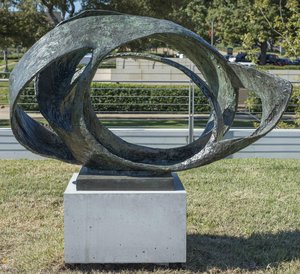
Aperçu en situation
 Envoyer
 Partager
 Détails de l'œuvre
 Guide
Guide

 Télécharger l'image
 Articles similaires
 Radiographie
 Diaporama
 Q&A
Q&A Statistiques
Genesis III

- 111.0 x 76.0 cm


 Lire la suite
L’œuvre d'art présentée sur cette page est protégée par le droit d'auteur, ce qui signifie que nous ne pouvons légalement créer ou vendre de reproduction identique. Cette protection est appliquée en vertu d'accords internationaux tels que la Convention de Berne et par les lois nationales, notamment celles énoncées par le Loi américaine sur le droit d'auteur - Titre 17.
Cette méthode est pleinement conforme aux réglementations sur le droit d'auteur car elle ne repose pas sur la copie ou la duplication de l'œuvre protégée. Il s'agit plutôt d'une réinterprétation créative — une nouvelle peinture qui s'inspire de l'original sans pour autant lui être identique.
Giclées et impressions d'art
Impressions giclées ou sur toile de qualité musée, avec une production rapide et des finitions au choix. ( Commander la reproduction peinte à la main Passer au format numérique)




P118B €10

P118H €10

P118W €10

P438Z €10

P508JH €12

P508YH €12

P805H €10

P805Z €10

P919BZ €10

P919G €10

P919XJ €10

P959ZH €10

P968JZ €12

W106C €8

W218G €10

W218JH €8

W218Y €10

W307PJ €10

W316G €10

W316PJ €8

W316Y €10

W398PJ €8

W4111J €10

W500HY €15

W500JH €15

W692G €12

W849H €8

W940BG €15

W953PJ €8




Choisissez parmi nos formats prédéfinis qui respectent les proportions originales de l’œuvre.

Saisissez la largeur et la hauteur souhaitées pour qu'elles s'adaptent à votre cadre ou à votre mur. Une impression peut être recadrée, mais jamais agrandie au-delà de l'image originale ; ainsi, un format de forme différente entraînera la perte d'une partie de l'image. Nous vous envoyons une maquette numérique pour approbation avant toute impression. L'image présentée sur cette page ne montre pas le recadrage réel — seule la maquette le permet.
Livraison dans le monde entier () en 2 semaines au lieu des 4/5 semaines habituelles. (3 novembre)

Livraison express gratuite dans le monde entier

Toile de lin de qualité supérieure

Assurance transport complète

Garantie de remboursement des droits de douane

Garantie de fidélité des couleurs

Politique de retour de 100 jours (uniquement en cas de défaut)

Garantie de remboursement à 100%

Offre de tarifs dégressifs
 L'option verre n'est disponible que pour les dimensions inférieures à 110 cm.

Genesis III
Giclées et impressions d'art
Format de la reproduction
-


Prix total
€ 71
A Quiet Universe of Circles
Barbara Hepworth’s Genesis III, a seminal work from 1966, isn't merely a depiction of two circles; it’s an invitation to contemplate the fundamental geometries of existence. Created during a period of profound personal and artistic evolution for the sculptor, this piece embodies her signature exploration of form, texture, and the interplay between abstraction and suggestion. The stark white background acts as a luminous void, amplifying the presence of the circular forms and drawing the viewer into their contained space. It’s a deliberate choice – Hepworth often favored simplicity to allow the inherent qualities of materials and shapes to speak for themselves.
- Material & Technique: Crafted primarily in oil paint on canvas, Genesis III showcases Hepworth's masterful control over layering and texture. The circles aren’t rendered with sharp edges but rather possess a subtly eroded quality, as if sculpted from memory or suggestion. The application of paint is deliberately loose, creating a sense of movement and dynamism that contrasts sharply with the stillness implied by the forms themselves.
- Compositional Balance: The asymmetrical arrangement of the circles – one positioned slightly higher left, the other lower right – generates an immediate visual tension. This imbalance isn’t jarring but rather creates a subtle push and pull, preventing the composition from feeling static or predictable. It mirrors Hepworth's broader interest in exploring balance and equilibrium within her sculptures.
- Color Palette: The restrained color palette—a dominant white punctuated by terracotta and grey—further emphasizes the forms’ presence. These earthy tones evoke a sense of grounding, anchoring the abstract shapes within a more tangible realm. The strategic use of black spots adds an element of spontaneity and visual interest, hinting at the underlying process of creation.
Echoes of Modernism & Sculpture
To fully appreciate Genesis III, it’s crucial to understand Hepworth's place within the broader context of mid-20th century art. She was a key figure in the movement towards abstraction, influenced by European avant-garde artists like Piet Mondrian and Constantin Brâncuși. However, unlike purely geometric abstractions, Hepworth retained a deep connection to her sculptural roots. The circular forms resonate with the organic shapes found in her three-dimensional works – particularly her celebrated “oval forms.” This piece can be seen as a translation of sculptural principles into a two-dimensional format, demonstrating how she explored similar themes of form, space, and material through different mediums.
Historical Context:Created in 1966, the artwork reflects a period of significant artistic experimentation. Hepworth was increasingly focused on exploring the relationship between surface and volume, often referencing her own sculptural practice. The work also aligns with the broader trends of Minimalism and Abstract Expressionism that were gaining prominence during this time.
Symbolic Resonance & Emotional Depth
The circles themselves are open to interpretation, inviting viewers to project their own meanings onto the artwork. They can be seen as representations of wholeness, cycles, or interconnectedness – fundamental concepts explored throughout Hepworth’s career. The scattered black spots, like fleeting moments in time, suggest spontaneity and energy, hinting at the dynamic process of creation. The overall mood is one of quiet contemplation—a serene invitation to lose oneself within the simplicity of form and color.
A Legacy of Form & Texture
Genesis III stands as a testament to Barbara Hepworth’s enduring legacy as one of the most innovative sculptors of the 20th century. It's a deceptively simple work, yet brimming with subtle complexities and emotional depth. Reproductions capture the delicate texture and layered application of paint that are so vital to the original’s impact. It remains a powerful example of how abstraction can be used to explore profound philosophical questions about existence, form, and the human experience.
Questions et réponses
Pour quel usage une reproduction de «Genesis III» de Barbara Hepworth est-elle recommandée ?
Cette impression de « Genesis III » est idéale pour Statement.
Pour quelle pièce «Genesis III» de Barbara Hepworth est-il recommandé ?
L'espace recommandé pour «Genesis III» de Barbara Hepworth est un Living Room. Cette suggestion peut bien entendu être adaptée à votre intérieur.
Est-il possible de télécharger l'image de « Genesis III » ?
L'image de «Genesis III» de Barbara Hepworth peut être téléchargée sur la page de téléchargement de l'œuvre : Téléchargement (téléchargement d'une image numérique haute résolution).
Biographie de l'artiste
Premières années et formation
Dame Barbara Hepworth, une artiste et sculptrice anglaise de renom, est née le 10 janvier 1903 à Wakefield, dans le Yorkshire. Elle a fréquenté la Leeds School of Art à partir de 1920 puis a remporté une bourse du comté pour étudier à la Royal College of Art (RCA) à Londres de 1921 jusqu'à ce qu'elle obtienne le diplôme en 1924.Carrière artistique
- L’œuvre de Dame Barbara Hepworth exemplifie le modernisme, en particulier la sculpture moderne. Elle était l'une des rares artistes féminines à atteindre une reconnaissance internationale.
- En 1933, elle a cofondé le mouvement artistique Unit One avec Ben Nicholson, Paul Nash et d'autres, cherchant à unir le surréalisme et l'abstraction dans l'art britannique.
- Le travail précoce de Hepworth était caractérisé par l'abstraction et son implication avec le mouvement artistique parisien, Abstraction-Création.
Œuvres notables et expositions
- Oval Form (Trezion), une sculpture en bronze, fait partie de la collection du Kimball Art Museum à Fort Worth, aux États-Unis. (voir sur OriginalUniqueArt)
- Two Forms, une sculpture, est exposée au Hepworth Wakefield à Wakefield, dans le Yorkshire. (voir sur OriginalUniqueArt)
- Totem, une sculpture en marbre, fait également partie de la collection du Hepworth Wakefield. (voir sur OriginalUniqueArt)
Évolution artistique et influences
L'œuvre de Hepworth a évolué au fil des ans, passant d'abstractions influencées par le cubisme et le surréalisme à des formes plus organiques et abstraites. Son séjour en France dans les années 1930, où elle a rencontré des artistes comme Brancusi et Arp, a été déterminant pour son développement artistique. Elle s’est intéressée aux formes naturelles, notamment celles trouvées dans la mer et le paysage de Cornouailles, où elle a vécu pendant une grande partie de sa carrière.
Héritage et collections muséales
L'œuvre de Barbara Hepworth est largement reconnue, ses sculptures et peintures faisant partie de diverses collections de musées dans le monde. Le Hepworth Wakefield, du nom de l'artiste, abrite de nombreux chefs-d'œuvre d'artistes renommés, dont les propres œuvres de Hepworth. (découvrez davantage sur le Hepworth Wakefield sur OriginalUniqueArt)Conclusion
Dame Barbara Hepworth’s pioneering work in modern British sculpture has left an indelible mark on the art world. Her legacy continues to inspire artists and art enthusiasts alike, with her works remaining a testament to her innovative spirit and artistic genius. more about barbara hepworth on wikipedia
Barbara Hepworth
1903 - 1975 , Royaume-Uni
L'essentiel de l'artiste
- Artistes Influents:
- Brancusi
- Henry Moore
- Ben Nicholson
- Date De Naissance: 10 janvier 1903
- Lieu De Naissance: Wakefield, Royaume-Uni
- Mouvement Artistique: Modernisme, Sculpture abstraite
- Nationalité: Britannique
- Nom Complet: Barbara Hepworth
- Oeuvres Notables:
- Oval Form (Trezion)
- Two Forms
- Totem
Articles connexes

Les 10 Chefs-d'œuvre Bronzes Qui Ont Révolutionné la Sculpture | OriginalUniqueArt
Plongez dans l'univers fascinant des 10 sculptures en bronze les plus emblématiques de l'histoire de l'art. Rodin, Degas et autres maîtres révélés ! Découvrez leur histoire, leurs techniques et trouvez l'œuvre parfaite pour sublimer votre intérieur sur OriginalUniqueArt.com.

Les 25 chefs-d'œuvre de Kandinsky : l'éveil de l'art abstrait
Explorez les 25 chefs-d'œuvre de Kandinsky et l'éveil de l'abstraction. Découvrez toute la collection sur OriginalUniqueArt.com.

The Enduring Form: Exploring Themes & Techniques in Sculpture Across Historical Periods
Explore the rich history of sculpture from ancient masterpieces to contemporary innovations. Discover key techniques, influential artists & investment potential for discerning art collectors.

L'Évolution du Volume : Analyse des Procédés et de l'Histoire de la Sculpture
Explorez l'évolution technique de la sculpture, du marbre classique à l'art cinétique. Maîtrisez l'histoire du volume dès maintenant.
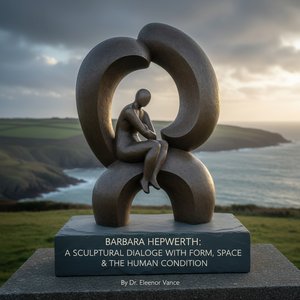
Barbara Hepworth: A Sculptural Dialogue with Form, Space & the Human Condition
Explore the profound world of Barbara Hepworth's sculpture. Discover her artistic evolution, iconic forms, and lasting influence on modern art. A guide for collectors & enthusiasts.