Aperçu en situation
 Partager
 Partager
 Détails
 Guide imprimable

 Télécharger
 Articles similaires
 Radiographie
 Voir le diaporama
 Statistiques
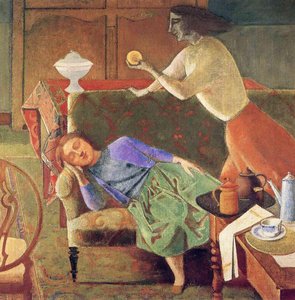
The Dream
 Oil On Canvas
- WallArt
- Expressionism
 1955
1955 162.0 x 130.0 cm
 Afficher la suite
L’œuvre d'art présentée sur cette page est protégée par le droit d'auteur, ce qui signifie que nous ne pouvons légalement créer ou vendre de reproduction identique. Cette protection est appliquée en vertu d'accords internationaux tels que la Convention de Berne et par les lois nationales, notamment celles énoncées par le Loi américaine sur le droit d'auteur - Titre 17.
Cette méthode est pleinement conforme aux réglementations sur le droit d'auteur car elle ne repose pas sur la copie ou la duplication de l'œuvre protégée. Il s'agit plutôt d'une réinterprétation créative — une nouvelle peinture qui s'inspire de l'original sans pour autant lui être identique.
Giclées et impressions d'art
Impressions giclées ou sur toile de qualité musée, avec une production rapide et des finitions au choix. ( Acheter la peinture faite à la main Passer au format image numérique)




P118B €10

P118H €10

P118W €10

P438Z €10

P508JH €12

P508YH €12

P805H €10

P805Z €10

P919BZ €10

P919G €10

P919XJ €10

P959ZH €10

P968JZ €12

W106C €8

W218G €10

W218JH €8

W218Y €10

W307PJ €10

W316G €10

W316PJ €8

W316Y €10

W398PJ €8

W4111J €10

W500HY €15

W500JH €15

W692G €12

W849H €8

W940BG €15

W953PJ €8




Choisissez parmi nos formats prédéfinis qui respectent les proportions originales de l’œuvre.

Saisissez la largeur et la hauteur souhaitées pour qu'elles s'adaptent à votre cadre ou à votre mur. Une impression ne peut être que découpée, elle ne peut jamais être agrandie au-delà de l'image originale ; ainsi, un format de forme différente entraînera la perte d'une partie de l'image. Nous vous envoyons une maquette numérique pour approbation avant toute impression. L'image présentée sur cette page ne montre pas le recadrage réel — seule la maquette le permet.
Livraison dans le monde entier () en 2 semaines au lieu des 4/5 semaines habituelles. (25 octobre)

Livraison express gratuite dans le monde entier

Toile de lin de haute qualité

Assurance transport complète

Garantie de remboursement des droits de douane

Garantie de fidélité des couleurs

Garantie de retour de 100 jours (uniquement en cas de défaut)

Garantie de remboursement à 100%

Tarifs dégressifs sur quantité
 L'option verre n'est disponible que pour les dimensions inférieures à 110 cm.

The Dream
Giclées et impressions d'art
Format de la reproduction
-


Prix total final
€ 70
The Enigmatic Stillness of Balthus's "The Dream"
To stand before Balthus’s The Dream is to step across the threshold into a meticulously constructed, yet deeply unsettling, private moment. This painting, dating from around 1955, captures an atmosphere so thick with unspoken narrative that it feels less like paint on canvas and more like captured memory itself. The scene centers on a woman reclined upon a couch, her head surrendered to the soft embrace of a pillow—a portrait steeped in vulnerability and repose. Nearby, another figure observes this slumber, their presence adding a layer of complex tension to what initially appears to be a simple tableau of rest.
A Study in Atmosphere and Composition
Balthus’s technique here is masterful in its ability to render the palpable weight of silence. The composition guides the eye through carefully placed objects: the elegant curve of the couch, the suggestion of a nearby chair, the delicate placement of a vase, and the solitary cup near the edge. These elements are not mere props; they are anchors in a dreamlike reality. While the painting is categorized within Expressionism—a style that allows for heightened emotional resonance over strict realism—Balthus grounds his vision with an almost classical attention to form. The interplay between the languid curves of the sleeping figure and the vertical lines suggested by the standing observer creates a subtle, yet profound, visual rhythm.
Symbolism Woven into Slumber
The very title, The Dream, invites endless interpretation, which is perhaps Balthus’s greatest gift to the viewer. Sleep itself becomes a potent symbol—a liminal space where consciousness dissolves and deeper truths surface. The dynamic between the sleeping subject and the watchful observer hints at themes of voyeurism, intimacy, and the complex dynamics of observation. Artistically, these moments often explore the delicate boundary between desire and detachment. For collectors and those seeking art for a sophisticated interior, this piece offers depth; it does not simply decorate a wall, but rather initiates a conversation within the room itself.
Echoes of Tradition in Modern Sensibility
Balthus’s career is often read as a dialogue with history. Though his work feels intensely modern, there are echoes of Old Master painting traditions—a reverence for figure study and narrative weight—filtered through a distinctly 20th-century lens. This tension between classical structure and psychological unease is what gives the piece its enduring power. Owning a reproduction of The Dream allows one to bring this sophisticated, emotionally charged dialogue into your own space. It speaks to an appreciation for art that rewards prolonged contemplation, suggesting that true beauty often resides in the moments just before waking.
Questions et réponses
Quand et avec quels matériaux The Dream a-t-il été réalisé ?
La technique de «The Dream» de Balthus est Oil On Canvas, et l'œuvre date de 1955.
Quel sujet et quelle atmosphère «The Dream» de Balthus associe-t-elle ?
«The Dream» de Balthus représente sleeping woman, intimate scene, figurative painting, nude figure, dreamlike state, interior setting, dans une atmosphère Mystical. Le sujet et l'ambiance définissent ensemble l'œuvre.
Comment le mouvement et l'époque se rencontrent-ils dans «The Dream» de Balthus ?
« The Dream » appartient au mouvement Expressionism, et son créateur a œuvré à l'époque Époque moderne.
Biographie de l'artiste
Premières années et influences
Balthasar Klossowski de Rola, plus connu sous le nom de Balthus, est né à Paris le 29 février 1908. Son enfance fut marquée par un environnement culturel riche et stimulant. Son père, Erich Klossowski, était historien de l'art, spécialiste d’Honoré Daumier, et sa mère, Elisabeth Dorothée Spiro (connue sous le nom de Baladine Klossowska), était elle-même peintre. La maison familiale accueillait régulièrement des figures importantes du monde artistique et littéraire comme André Gide et Pierre Bonnard.
Carrière artistique
La carrière artistique de Balthus a débuté sérieusement avec sa première exposition à Paris en 1934, présentant des œuvres telles que La Leçon de guitare, qui suscita une vive controverse en raison de sa représentation sensuelle et explicite. Son style était influencé par les peintres pré-Renaissance et par les écrits d'Emily Brontë, Lewis Carroll et Simone Martini.
- La Rue (1933) et La Toilette de Cathy (1933) sont des œuvres notables de cette période, illustrant le style unique de Balthus.
- Il avait une profonde affection pour Wolfgang Amadeus Mozart, ce qui reflète son appréciation pour les aspects classiques et sensuels de l'art.
Controverses et vie ultérieure
La vie ultérieure de Balthus a été marquée par des controverses concernant ses origines familiales. Bien qu’il ait nié avoir des ascendance juive, la véritable lignée de sa mère reste un sujet de débat.
- Son mariage avec Setsuko Ideta, une Japonaise, en 1967, a ajouté au mystère qui entourait sa personne.
- La Fondation Balthus, créée par sa veuve, la Comtesse Setsuko Klossowska de Rola, en 1998, continue de promouvoir son œuvre et son héritage.
Héritage et influence
L'influence de Balthus se retrouve dans divers artistes contemporains tels que Jan Saudek, Will Barnet, Duane Michals, John Currin, Eli Levin, Emile Chambon et Elena Zolotnitsky.
- Son style, principalement classique, a été influencé par de nombreux artistes, notamment Masaccio, Piero della Francesca, Simone Martini, Poussin, Jean-Baptiste Camille Corot, Courbet, Edgar Degas, Félix Vallotton et Paul Cézanne.
- En tant qu'artiste majeur du XXe siècle, son œuvre continue d’être largement reconnue et admirée.
Œuvres notables et expositions
- Girl at a Window (1957), présentée dans le film de François Truffaut, Domicile conjugal (Bed & Board, 1970).
- Des expositions au Museum of Modern Art (1956) et à la Galerie Pierre Matisse (1934) ont mis en valeur son style unique.
- Découvrez plus d'œuvres de Balthus sur OriginalUniqueArt : https://OriginalUniqueArt.com/@/balthasar-klossowski
- Explorez la collection du Museum of Modern Art sur OriginalUniqueArt : https://OriginalUniqueArt.com/@@/a@d3aqwm-the-museum-of-modern-art-(united-states)-a-comprehensive-overview
- Découvrez plus sur la vie et l'œuvre de Balthus sur Wikipédia : https://en.wikipedia.org/wiki/balthazar_klossowski

Balthus
1908 - 2001 , France
En bref
- Artistes Influents:
- Piero della Francesca
- Simone Martini
- Courbet
- Date De Naissance: 29 février 1908
- Influence Sur D'Autres Artistes:
- Jan Saudek
- John Currin
- Lieu De Naissance: Paris, France
- Nationalité: Français
- Nom Complet: Balthasar Klossowski de Rola
- Oeuvres Notables:
- La rue
- Roberte devant le miroir
- Garçon avec Chat
- Style Artistique: Classique, surréaliste
Articles connexes

OriginalUniqueArt.com F.A.Q.: Elevate Your Decor with Premium Textured Giclée Prints
Discover the distinction of OriginalUniqueArt.com premium textured Giclée prints. Expertly crafted with archival 12-color pigments and museum-grade substrates, our prints offer unparalleled vividness for the discerning collector seeking luxury, durability, and timeless elegance.