

 Aperçu en situation
 Partager
 Partager
 Détails
 Guide imprimable

 Télécharger
 Articles similaires
 Radiographie
 Voir le diaporama
 Statistiques
Red house in park
 Oil On Canvas
- WallArt
- German Expressionism
 1914
1914- Modern
 60.0 x 80.0 cm
 Afficher la suite
Reproduction à l'huile faite à la main
Huile sur toile peinte à la main, avec cadre et dimensions personnalisés, réalisée sur commande par nos artistes. ( Passer au format impression Passer au format image numérique)




P118B €10

P118H €10

P118W €10

P438Z €10

P508JH €12

P508YH €12

P805H €10

P805Z €10

P919BZ €10

P919G €10

P919XJ €10

P959ZH €10

P968JZ €12

W106C €8

W218G €10

W218JH €8

W218Y €10

W307PJ €10

W316G €10

W316PJ €8

W316Y €10

W398PJ €8

W4111J €10

W500HY €15

W500JH €15

W692G €12

W849H €8

W940BG €15

W953PJ €8




Choisissez parmi nos formats prédéfinis qui respectent les proportions originales de l’œuvre.

Saisissez la largeur et la hauteur souhaitées, pour s'adapter à votre cadre ou à votre mur. Cette œuvre est peinte à la main ; ainsi, pour un format de forme différente, l'artiste peut peindre un peu plus autour du tableau ou réduire légèrement les bords — c'est vous qui choisissez. Nous vous envoyons une maquette numérique pour approbation avant que la peinture ne commence. L'image présentée sur cette page ne reflète pas le résultat réel — seule la maquette le fait.
Après la commande, l’équipe OriginalUniqueArt.com contactera le client par e-mail pour recueillir ses instructions et lui fournira une maquette d’aperçu
Livraison dans le monde entier () en 3 à 4 semaines au lieu des 5 semaines habituelles. (24 octobre). Aucun compromis sur la qualité.

Livraison express gratuite dans le monde entier

Toile de lin de haute qualité

Assurance transport complète

Garantie de remboursement des droits de douane

Garantie de fidélité des couleurs

Garantie de retour de 100 jours (uniquement en cas de défaut)

Garantie de remboursement à 100%

Tarifs dégressifs sur quantité
 L'option verre n'est disponible que pour les dimensions inférieures à 110 cm.

Red house in park
Technique de reproduction
Format de la reproduction
-


Prix total final
€ 263
A Moment Frozen in Tranquility: The Vibrant Soul of August Macke
In the fleeting moments before the world was irrevocably changed by the shadows of the Great War, August Macke captured a vision of peace that remains as luminous today as it was in 1914. His masterpiece, "Red House in Park," is far more than a mere landscape; it is a profound emblem of German Expressionism’s brief but incandescent flowering. At first glance, the viewer is greeted by a deceptally simple scene—a solitary red house nestled within a lush, verdant sanctuary. Yet, beneath this tranquil surface lies an intense emotional resonance, a deliberate attempt to distill the very spirit of life through color and form. The painting serves as a poignant window into a pivotal era, capturing a sense of stability and warmth even as the historical tides began to turn toward uncertainty.
The brilliance of Macke’s technique lies in his ability to prioritize feeling over meticulous detail. Eschewing the rigid accuracy of traditional realism, he employs loose, expressive brushstrokes that breathe life into the canvas. The composition is a masterclass in harmonious balance, where the commanding vibrant red of the house acts as a heartbeat for the entire piece, strategically positioned against a textured tapestry of deep greens and earthy browns. Through the skillful use of geometric shapes—squares and rectangles that provide structural integrity—Mackeb creates a sense of permanence. This is further heightened by his use of chiaroscuro, where the delicate interplay of light and shadow sculpts the contours of the trees and the architecture, lending a three-dimensional drama to an otherwise serene setting.
Symbolism and the Language of Color
For the discerning collector or interior designer, "Red House in Park" offers a sophisticated palette that can transform any space. The color choices are not merely descriptive but deeply symbolic; the warmth of the red hue serves as a defiant counterpoint to the pervasive gloom of the early 20th century. This fascination with Fauvist-inspired color palettes allows the artwork to evoke sensations of vitality and joy, making it an ideal centerpiece for rooms designed to inspire energy and calm simultaneously. The pathway leading toward the house invites the viewer’s eye into the scene, creating a sense of depth and dimension that draws one into the heart of the park.
Beyond its aesthetic appeal, the painting carries a heavy historical weight. As a prominent member of Der Blaue Reiter (The Blue Rider) movement, Macke sought to integrate the avant-garde elements of his time—such as the rhythmic energy of Impressionism and the bold color theory of Post-Impressionism—into a cohesive emotional experience. The house itself can be viewed as a symbol of domesticity and sanctuary, a quiet refuge amidst the encroaching chaos of the modern world. To possess a reproduction of this work is to hold a fragment of history—a beautiful, defiant moment of peace captured by an artist whose life was tragically cut short, leaving behind a legacy of light that continues to illuminate the halls of art history.
Questions et réponses
Quelle est la tonalité émotionnelle de «Red house in park» de August Macke ?
Le ton émotionnel relevé pour «Red house in park» de August Macke est Tranquil. Il résume le sentiment exprimé par l'œuvre.
Quelle est la saturation des couleurs de «Red house in park» de August Macke ?
Les couleurs de «Red house in park» de August Macke présentent une saturation Balanced Soft. La saturation décrit si les couleurs sont vives ou atténuées.
Quelle émotion «Red house in park» de August Macke exprime-t-il au sein du mouvement German Expressionism ?
L'émotion Tranquil de « Red house in park » accompagne son style German Expressionism.
Biographie de l'artiste
Premières années et carrière artistique
August Robert Ludwig Macke, un peintre expressionniste allemand renommé, est né le 3 janvier 1887 à Meschede, en Westphalie. Son parcours artistique a débuté à la Kunstakademie de Düsseldorf (1904-1906), sous la direction d'Adolf Maennchen. Le style de Macke a été façonné par l’impressionnisme français et le post-impressionnisme, influencé plus tard par le fauvisme.Influences artistiques et style
La rencontre avec Robert Delaunay à Paris (1912) a initié Macke au cubisme chromatique, également connu sous le nom d'orphisme. Cette influence se manifeste dans sa peinture "Les fenêtres de la boutique", une interprétation personnelle du style de Delaunay combinée à la simultanéité des images que l’on retrouve dans le futurisme italien. Macke a fait partie du groupe expressionniste allemand *Der Blaue Reiter* (Le Cavalier bleu), aux côtés de Wassily Kandinsky, Franz Marc et Paul Klee. Ses peintures, telles que "Jeunes filles se baignant avec la ville en arrière-plan" (100 x 80 cm, Staatsgalerie moderner Kunst, Munich, Allemagne), illustrent son style unique caractérisé par des couleurs vives et un dessin audacieux.Œuvres notables et héritage
- “Femme à la veste verte” (1913, Museum Ludwig Cologne, Allemagne), une pièce exemplaire de l'expressionnisme.
- "Paysage avec des vaches et un chameau" (1914, Kunsthaus Zürich, Suisse), un exemple essentiel du style de Macke.
- “Türkisches Café” (1914), un chef-d’œuvre mettant en valeur son approche luministe pendant sa dernière période.
Fin tragique et impact durable
La vie de Macke a été brutalement interrompue lorsqu'il est décédé le 26 septembre 1914, au front à Champagne, en France. Sa dernière peinture, "Adieu", capture l’ambiance de morosité qui s’est abattue sur l’Europe pendant la Première Guerre mondiale. Explorez davantage les œuvres d'August Macke et le mouvement expressionniste allemand sur OriginalUniqueArt :- Femme à la veste verte
- Formes combattantes de Franz Marc (montrant la collaboration au sein du *Der Blaue Reiter*)
- Page de l'artiste August Macke sur OriginalUniqueArt
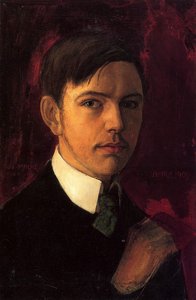
August Macke
1887 - 1914 , Allemagne
En bref
- Artistes Influents:
- Robert Delaunay
- Wassily Kandinsky
- Franz Marc
- Paul Klee
- Date De Décès: 26 septembre 1914
- Date De Naissance: 3 janvier 1887
- Lieu De Naissance: Meschede, Allemagne
- Mouvement Artistique: Expressionnisme allemand
- Nationalité: Allemande
- Nom Complet: August Macke
- Œuvres Notables:
- Femme avec une veste verte
- Paysage avec des vaches et un chameau
- Jeunes filles se baignant
- La Boutique de Chapeaux
- Türkisches Café
Articles connexes

Les 10 Chefs-d'œuvre du Paysage Romantique : Artistes et Décor d'Intérieur
Plongez dans l'émotion du Romantisme avec les 10 plus beaux paysages de Friedrich, Turner & Delacroix. Découvrez leur histoire et trouvez l'inspiration déco idéale sur OriginalUniqueArt.com !

Constable : Les 25 Chefs-d'Œuvre du Maître Anglais | OriginalUniqueArt
Plongez dans l'univers de John Constable avec les 25 œuvres incontournables du maître anglais. Découvrez l'histoire, la technique et l'émotion derrière ses paysages romantiques. Reproductions de qualité muséale sur OriginalUniqueArt.com.

Crimson Threads of Narrative: Exploring Symbolism & Representation in Artworks Featuring the Red Dress
Explore the rich symbolism of the red dress in art history! From ancient power displays to iconic portraits like Cézanne’s 'Madame Cezanne', discover the cultural and artistic significance behind this captivating color. Expert analysis & insights.

Évocations de Lieux : Un Voyage Historique à Travers l'Art du Paysage
Explorez l'histoire fascinante de la peinture de paysage romantique ! Découvrez les maîtres (Friedrich, Turner) et le concept du sublime. Conseils d'experts pour collectionner et apprécier cet art intemporel.

Évocations de lieux : Un voyage historique à travers l'art du paysage
Explorez l'histoire fascinante de la peinture de paysage à travers les chefs-d'œuvre du Romantisme. Découvrez Friedrich, Turner et Aivazovski et laissez-vous inspirer par la beauté sauvage et le sublime. Reproduction d'art de qualité chez OriginalUniqueArt.


