

 Aperçu en situation
 Envoyer
 Partager
 Détails de l'œuvre
 Guide
Guide

 Télécharger l'image
 Articles similaires
 Radiographie
 Diaporama
 Statistiques
Man Reading in a Park


 Lire la suite
Giclées et impressions d'art
Impressions giclées ou sur toile de qualité musée, avec une production rapide et des finitions au choix. ( Commander la reproduction peinte à la main Passer au format numérique)




P118B €10

P118H €10

P118W €10

P438Z €10

P508JH €12

P508YH €12

P805H €10

P805Z €10

P919BZ €10

P919G €10

P919XJ €10

P959ZH €10

P968JZ €12

W106C €8

W218G €10

W218JH €8

W218Y €10

W307PJ €10

W316G €10

W316PJ €8

W316Y €10

W398PJ €8

W4111J €10

W500HY €15

W500JH €15

W692G €12

W849H €8

W940BG €15

W953PJ €8




Choisissez parmi nos formats prédéfinis qui respectent les proportions originales de l’œuvre.

Saisissez la largeur et la hauteur souhaitées pour qu'elles s'adaptent à votre cadre ou à votre mur. Une impression peut être recadrée, mais jamais agrandie au-delà de l'image originale ; ainsi, un format de forme différente entraînera la perte d'une partie de l'image. Nous vous envoyons une maquette numérique pour approbation avant toute impression. L'image présentée sur cette page ne montre pas le recadrage réel — seule la maquette le permet.
Livraison dans le monde entier () en 2 semaines au lieu des 4/5 semaines habituelles. (27 octobre)

Livraison express gratuite dans le monde entier

Toile de lin de qualité supérieure

Assurance transport complète

Garantie de remboursement des droits de douane

Garantie de fidélité des couleurs

Politique de retour de 100 jours (uniquement en cas de défaut)

Garantie de remboursement à 100%

Offre de tarifs dégressifs
 L'option verre n'est disponible que pour les dimensions inférieures à 110 cm.

Man Reading in a Park
Giclées et impressions d'art
Format de la reproduction
-


Prix total
€ 70
A Moment Suspended in Time: The Leisure of August Macke
To gaze upon Man Reading in a Park is to step through a veil into a perfect afternoon—a moment so richly imbued with quiet contemplation that it feels almost suspended outside the rush of modern life. This painting by August Macke captures more than just a man on a bench; it encapsulates the very essence of leisure, the profound luxury of simply being present amidst the vibrant chaos of nature and society. The composition draws the eye immediately to the central figure, absorbed in the narrative held within his newspaper, yet the surrounding park life—the distant figures, the delicate perch of a bird against the foliage—reminds us that solitude is often found within community.
The Luminous Brushwork of German Expressionism
Macke’s technique here is a masterful blend of Impressionistic light play and the emotional depth characteristic of early German Expressionism. While his style hints at the bright, almost joyous palette associated with the movement, there is an underlying sense of poignant introspection. Observe the handling of the paint; it possesses a palpable texture, suggesting Macke’s skilled use of impasto that allows the sunlight filtering through the leaves to become visible pigment itself. The background is not merely painted scenery; it breathes. It vibrates with color and suggestion, allowing the viewer's own imagination to fill in the details of conversation or activity happening just beyond our direct focus.
Context and the Fleeting Nature of Joy
Painted in 1914, this work carries the bittersweet resonance of its time. August Macke’s life was tragically cut short by the looming shadow of global conflict, making works like this an artifact imbued with a poignant nostalgia for peace and simple pleasures. The park setting becomes a sanctuary—a temporary haven before the storm. It speaks to a yearning for permanence in an era defined by rapid change, suggesting that true beauty resides in these small, unrepeatable pockets of calm.
Symbolism of Solitude Amidst Life
The symbolism within Man Reading in a Park is wonderfully layered. The newspaper itself acts as a barrier and a portal; it connects the man to the outside world's discourse while simultaneously isolating him in his personal bubble of thought. Meanwhile, the surrounding activity—the other figures enjoying their day—serves as a beautiful counterpoint, reminding us that even when we seek quietude, we are always part of a larger, interconnected human tapestry. The bird perched overhead is nature’s silent witness, observing the ritual of human repose.
Bringing Macke's Atmosphere Home
For collectors and designers alike, this piece offers more than mere decoration; it offers an emotional anchor. Reproducing the luminosity and evocative mood of Man Reading in a Park allows one to infuse a space with sophisticated tranquility. Imagine this scene rendered on a wall—a vibrant conversation starter that whispers tales of sun-drenched afternoons and thoughtful repose, transforming any room into a curated retreat.
Questions et réponses
Puis-je voir «Man Reading in a Park» de August Macke sur mon propre mur avant de l'acheter ?
« Man Reading in a Park » dispose d'un aperçu en réalité augmentée : la page Aperçu en RA de l'œuvre vous permet de la visualiser dans votre propre espace sur un appareil compatible.
Puis-je voir «Man Reading in a Park» de August Macke sous différents éclairages ?
La vue X de «Man Reading in a Park» de August Macke est disponible sur la page Radiographie de l'œuvre : une exploration interactive de l'image à travers onze couches optiques.
Qui a créé « Man Reading in a Park » et en quelle année ?
L'œuvre « Man Reading in a Park » est signée August Macke et date de 1914.
Biographie de l'artiste
Premières années et carrière artistique
August Robert Ludwig Macke, un peintre expressionniste allemand renommé, est né le 3 janvier 1887 à Meschede, en Westphalie. Son parcours artistique a débuté à la Kunstakademie de Düsseldorf (1904-1906), sous la direction d'Adolf Maennchen. Le style de Macke a été façonné par l’impressionnisme français et le post-impressionnisme, influencé plus tard par le fauvisme.Influences artistiques et style
La rencontre avec Robert Delaunay à Paris (1912) a initié Macke au cubisme chromatique, également connu sous le nom d'orphisme. Cette influence se manifeste dans sa peinture "Les fenêtres de la boutique", une interprétation personnelle du style de Delaunay combinée à la simultanéité des images que l’on retrouve dans le futurisme italien. Macke a fait partie du groupe expressionniste allemand *Der Blaue Reiter* (Le Cavalier bleu), aux côtés de Wassily Kandinsky, Franz Marc et Paul Klee. Ses peintures, telles que "Jeunes filles se baignant avec la ville en arrière-plan" (100 x 80 cm, Staatsgalerie moderner Kunst, Munich, Allemagne), illustrent son style unique caractérisé par des couleurs vives et un dessin audacieux.Œuvres notables et héritage
- “Femme à la veste verte” (1913, Museum Ludwig Cologne, Allemagne), une pièce exemplaire de l'expressionnisme.
- "Paysage avec des vaches et un chameau" (1914, Kunsthaus Zürich, Suisse), un exemple essentiel du style de Macke.
- “Türkisches Café” (1914), un chef-d’œuvre mettant en valeur son approche luministe pendant sa dernière période.
Fin tragique et impact durable
La vie de Macke a été brutalement interrompue lorsqu'il est décédé le 26 septembre 1914, au front à Champagne, en France. Sa dernière peinture, "Adieu", capture l’ambiance de morosité qui s’est abattue sur l’Europe pendant la Première Guerre mondiale. Explorez davantage les œuvres d'August Macke et le mouvement expressionniste allemand sur OriginalUniqueArt :- Femme à la veste verte
- Formes combattantes de Franz Marc (montrant la collaboration au sein du *Der Blaue Reiter*)
- Page de l'artiste August Macke sur OriginalUniqueArt
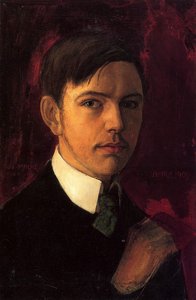
August Macke
1887 - 1914 , Allemagne
L'essentiel de l'artiste
- Artistes Influents:
- Robert Delaunay
- Wassily Kandinsky
- Franz Marc
- Paul Klee
- Date De Décès: 26 septembre 1914
- Date De Naissance: 3 janvier 1887
- Lieu De Naissance: Meschede, Allemagne
- Mouvement Artistique: Expressionnisme allemand
- Nationalité: Allemande
- Nom Complet: August Macke
- Œuvres Notables:
- Femme avec une veste verte
- Paysage avec des vaches et un chameau
- Jeunes filles se baignant
- La Boutique de Chapeaux
- Türkisches Café
Articles connexes

Unmasking Emotion: A Journey Through the Raw Power and Visceral Beauty of German Expressionism
Explore the raw emotional power of German Expressionism. From Kirchner to Die Brücke, discover how artists used distortion and vibrant color to unmask the human psyche. A deep dive into art history for the discerning collector and enthusiast.

Expressionnisme Allemand : 10 Chefs-d'œuvre Révolutionnaires à Découvrir | OriginalUniqueArt
Plongez au cœur de l'Expressionnisme Allemand avec OriginalUniqueArt. Découvrez 10 chefs-d'œuvre de Kandinsky, Munch et Kirchner. Explorez l'histoire, les couleurs et l'émotion derrière ces tableaux iconiques. Reproductions de qualité muséale disponibles sur OriginalUniqueArt.com
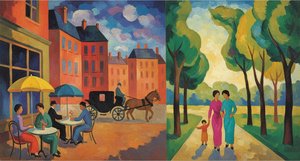
August Macke : Visions expressionnistes d'harmonie et de vie moderne
Explorez l'univers vibrant d'August Macke, figure clé de l'Expressionnisme allemand et du Blaue Reiter. Découvrez son parcours artistique, ses thèmes emblématiques et conseils pour collectionner ses œuvres avec OriginalUniqueArt.

Les 10 Chefs-d'œuvre Impressionnistes qui ont Révolutionné le Paysage
Plongez au cœur de l'Impressionnisme avec les 10 chefs-d'œuvre qui ont révolutionné le paysage. Découvrez Monet, Renoir et plus encore sur OriginalUniqueArt.com – reproductions d'art de qualité muséale pour sublimer votre intérieur.
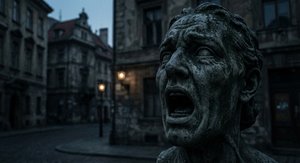
Le Cri Viscéral d'une Nation : Exploration de l'Émotion et de la Distortion dans l'Expressionnisme Allemand
Explorez l'Expressionnisme allemand avec OriginalUniqueArt : Kirchner, Die Brücke, Der Blaue Reiter… Analyse approfondie des chefs-d'œuvre et de leur impact émotionnel. Reproductions de haute qualité disponibles.


