
 Aperçu en situation
 Envoyer
 Partager
 Détails de l'œuvre
 Guide
Guide

 Télécharger l'image
 Articles similaires
 Radiographie
 Diaporama
 Q&A
Q&A Statistiques
Fashion Shop

- 60.0 x 50.0 cm


 Lire la suite
Giclées et impressions d'art
Impressions giclées ou sur toile de qualité musée, avec une production rapide et des finitions au choix. ( Commander la reproduction peinte à la main Passer au format numérique)




P118B €10

P118H €10

P118W €10

P438Z €10

P508JH €12

P508YH €12

P805H €10

P805Z €10

P919BZ €10

P919G €10

P919XJ €10

P959ZH €10

P968JZ €12

W106C €8

W218G €10

W218JH €8

W218Y €10

W307PJ €10

W316G €10

W316PJ €8

W316Y €10

W398PJ €8

W4111J €10

W500HY €15

W500JH €15

W692G €12

W849H €8

W940BG €15

W953PJ €8




Choisissez parmi nos formats prédéfinis qui respectent les proportions originales de l’œuvre.

Saisissez la largeur et la hauteur souhaitées pour qu'elles s'adaptent à votre cadre ou à votre mur. Une impression peut être recadrée, mais jamais agrandie au-delà de l'image originale ; ainsi, un format de forme différente entraînera la perte d'une partie de l'image. Nous vous envoyons une maquette numérique pour approbation avant toute impression. L'image présentée sur cette page ne montre pas le recadrage réel — seule la maquette le permet.
Livraison dans le monde entier () en 2 semaines au lieu des 4/5 semaines habituelles. (1 novembre)

Livraison express gratuite dans le monde entier

Toile de lin de qualité supérieure

Assurance transport complète

Garantie de remboursement des droits de douane

Garantie de fidélité des couleurs

Politique de retour de 100 jours (uniquement en cas de défaut)

Garantie de remboursement à 100%

Offre de tarifs dégressifs
 L'option verre n'est disponible que pour les dimensions inférieures à 110 cm.

Fashion Shop
Giclées et impressions d'art
Format de la reproduction
-


Prix total
€ 71
August Macke’s Fashion Shop – A Snapshot of Modern Life in Expressionist Color
August Robert Ludwig Macke (1887-1914) stands as one of the most poignant figures within German Expressionism, a movement born from anxieties surrounding the burgeoning industrial age and fueled by an urgent desire to convey raw emotion. His painting “Fashion Shop,” completed in 1913, encapsulates this spirit perfectly—a deceptively simple depiction of a bustling street scene transformed into a vibrant testament to artistic innovation and psychological depth. This artwork isn’t merely a representation of commerce; it's a carefully constructed visual dialogue about the relationship between humanity and its environment during a period of profound societal change.- Style: Macke’s “Fashion Shop” firmly establishes itself within the Orphism movement, a stylistic offshoot of Fauvism championed by artists like Henri Matisse. Unlike Impressionists who sought to capture fleeting moments of light and color, Orphists prioritized pure pigment—unmixed hues applied directly onto canvas—to achieve an emotional resonance that transcended mere visual accuracy. This bold chromatic approach distinguishes Macke’s work from its contemporaries and underscores his commitment to conveying feeling rather than observation.
- Technique: Macke employed a distinctive layering technique, applying thin washes of color over thicker impasto strokes. The resulting surface texture is palpable—a deliberate choice designed to heighten the painting's expressive power. Notice how the dominant reds and yellows pulsate with energy, mirroring the dynamism of the street scene while simultaneously projecting an inner turmoil that hints at Macke’s own preoccupation with existential themes.
- Historical Context: Created in 1913, “Fashion Shop” arrived during a turbulent period marked by escalating tensions leading up to World War I. The painting reflects the anxieties of its time—the rapid urbanization and industrialization reshaping European society—but also embodies a yearning for beauty and harmony amidst chaos. Macke’s deliberate use of color serves as an antidote to the grim realities of the era, offering instead a glimpse into a world brimming with vitality and potential.
- Symbolism: The inclusion of a bird perched atop the building is significant. Birds often symbolize freedom and aspiration in Symbolist art—a tradition Macke embraced—representing a desire for transcendence beyond the confines of everyday life. Simultaneously, it introduces an element of nature into the urban landscape, subtly suggesting that even amidst industrial progress, beauty and contemplation can endure.
- Emotional Impact: Viewing “Fashion Shop” evokes a feeling of both excitement and unease. The vibrant colors are invigorating, capturing the energy of the street, yet they’re tempered by the textured surface and Macke's masterful manipulation of pigment—a technique that conveys profound psychological depth. It’s a painting that invites contemplation on the complexities of modern existence and celebrates the transformative power of artistic vision.
Questions et réponses
En quelle année «Fashion Shop» de August Macke a-t-il été créé ?
«Fashion Shop» date de 1914. Cette date inscrit l'œuvre dans la carrière de August Macke ainsi que dans son époque.
Quel sujet et quelle atmosphère «Fashion Shop» de August Macke associe-t-elle ?
«Fashion Shop» de August Macke allie cityscape, urban life, people walking, storefront, bird, color palette, harmony à une atmosphère Serene.
Quelle est la forme et les dimensions de «Fashion Shop» de August Macke ?
L'œuvre « Fashion Shop » est au format Landscape et l'original mesure 60 x 50 cm. Ces deux informations sont utiles lors de la planification d'une reproduction.
Biographie de l'artiste
Premières années et carrière artistique
August Robert Ludwig Macke, un peintre expressionniste allemand renommé, est né le 3 janvier 1887 à Meschede, en Westphalie. Son parcours artistique a débuté à la Kunstakademie de Düsseldorf (1904-1906), sous la direction d'Adolf Maennchen. Le style de Macke a été façonné par l’impressionnisme français et le post-impressionnisme, influencé plus tard par le fauvisme.Influences artistiques et style
La rencontre avec Robert Delaunay à Paris (1912) a initié Macke au cubisme chromatique, également connu sous le nom d'orphisme. Cette influence se manifeste dans sa peinture "Les fenêtres de la boutique", une interprétation personnelle du style de Delaunay combinée à la simultanéité des images que l’on retrouve dans le futurisme italien. Macke a fait partie du groupe expressionniste allemand *Der Blaue Reiter* (Le Cavalier bleu), aux côtés de Wassily Kandinsky, Franz Marc et Paul Klee. Ses peintures, telles que "Jeunes filles se baignant avec la ville en arrière-plan" (100 x 80 cm, Staatsgalerie moderner Kunst, Munich, Allemagne), illustrent son style unique caractérisé par des couleurs vives et un dessin audacieux.Œuvres notables et héritage
- “Femme à la veste verte” (1913, Museum Ludwig Cologne, Allemagne), une pièce exemplaire de l'expressionnisme.
- "Paysage avec des vaches et un chameau" (1914, Kunsthaus Zürich, Suisse), un exemple essentiel du style de Macke.
- “Türkisches Café” (1914), un chef-d’œuvre mettant en valeur son approche luministe pendant sa dernière période.
Fin tragique et impact durable
La vie de Macke a été brutalement interrompue lorsqu'il est décédé le 26 septembre 1914, au front à Champagne, en France. Sa dernière peinture, "Adieu", capture l’ambiance de morosité qui s’est abattue sur l’Europe pendant la Première Guerre mondiale. Explorez davantage les œuvres d'August Macke et le mouvement expressionniste allemand sur OriginalUniqueArt :- Femme à la veste verte
- Formes combattantes de Franz Marc (montrant la collaboration au sein du *Der Blaue Reiter*)
- Page de l'artiste August Macke sur OriginalUniqueArt
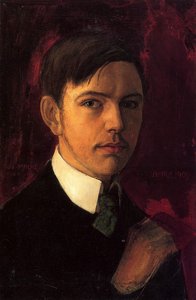
August Macke
1887 - 1914 , Allemagne
L'essentiel de l'artiste
- Artistes Influents:
- Robert Delaunay
- Wassily Kandinsky
- Franz Marc
- Paul Klee
- Date De Décès: 26 septembre 1914
- Date De Naissance: 3 janvier 1887
- Lieu De Naissance: Meschede, Allemagne
- Mouvement Artistique: Expressionnisme allemand
- Nationalité: Allemande
- Nom Complet: August Macke
- Œuvres Notables:
- Femme avec une veste verte
- Paysage avec des vaches et un chameau
- Jeunes filles se baignant
- La Boutique de Chapeaux
- Türkisches Café
Articles connexes

Expressionnisme Allemand : 10 Chefs-d'œuvre Révolutionnaires à Découvrir | OriginalUniqueArt
Plongez au cœur de l'Expressionnisme Allemand avec OriginalUniqueArt. Découvrez 10 chefs-d'œuvre de Kandinsky, Munch et Kirchner. Explorez l'histoire, les couleurs et l'émotion derrière ces tableaux iconiques. Reproductions de qualité muséale disponibles sur OriginalUniqueArt.com
Au-delà de la Vue : Exploration des Dimensions Tactiles et de l'Illumination dans la Peinture Abstraite
Explorez les dimensions tactiles et l'illumination en peinture abstraite. Analyse experte, histoire de l'art & conseils pour collectionneurs avertis. Découvrez l'émotion cachée des œuvres.

L'Émotion en Relief : Le Secret de la Texture et du Pinceau de Van Gogh
Explorez le secret de l'impasto et la force du relief chez Van Gogh ou Moreau. Plongez dans l'émotion de la matière dès maintenant.
The Eloquent Brushstroke: A Historical & Technical Exploration of Texture, Intent & Expression in Painting
Explore the rich history & techniques of impasto painting – from Renaissance masters to Van Gogh's expressive strokes. Discover how artists use texture to convey emotion and create lasting impact. Learn more!
The Tactile Canvas: Exploring Texture as Subject, Materiality & Meaning in Art History
Explore the rich history of texture in art! Discover how artists from Van Gogh to contemporary masters use materiality & technique to create captivating tactile experiences. Deepen your art appreciation with OriginalUniqueArt.


