

 Aperçu en situation
 Envoyer
 Partager
 Détails de l'œuvre
 Guide
Guide

 Télécharger l'image
 Articles similaires
 Radiographie
 Diaporama
 Statistiques
Cour de villa à Saint-Germain


 Lire la suite
Reproduction à l'huile faite à la main
Huile sur toile peinte à la main, avec cadre et dimensions personnalisés, réalisée sur commande par nos artistes. ( Passer au format impression Passer au format numérique)




P118B €10

P118H €10

P118W €10

P438Z €10

P508JH €12

P508YH €12

P805H €10

P805Z €10

P919BZ €10

P919G €10

P919XJ €10

P959ZH €10

P968JZ €12

W106C €8

W218G €10

W218JH €8

W218Y €10

W307PJ €10

W316G €10

W316PJ €8

W316Y €10

W398PJ €8

W4111J €10

W500HY €15

W500JH €15

W692G €12

W849H €8

W940BG €15

W953PJ €8




Choisissez parmi nos formats prédéfinis qui respectent les proportions originales de l’œuvre.

Saisissez la largeur et la hauteur souhaitées, pour s'adapter à votre cadre ou à votre mur. Cette œuvre est peinte à la main ; ainsi, pour un format de forme différente, l'artiste peut peindre un peu plus autour du tableau ou réduire légèrement les bords — c'est vous qui choisissez. Nous vous envoyons une maquette numérique pour approbation avant que la peinture ne commence. L'image présentée sur cette page ne reflète pas le résultat réel — seule la maquette le fait.
Après la commande, l’équipe OriginalUniqueArt.com contactera le client par e-mail pour recueillir ses instructions et lui fournira une maquette d’aperçu
Livraison dans le monde entier () en 3 à 4 semaines au lieu des 5 semaines habituelles. (27 octobre). Aucun compromis sur la qualité.

Livraison express gratuite dans le monde entier

Toile de lin de qualité supérieure

Assurance transport complète

Garantie de remboursement des droits de douane

Garantie de fidélité des couleurs

Politique de retour de 100 jours (uniquement en cas de défaut)

Garantie de remboursement à 100%

Offre de tarifs dégressifs
 L'option verre n'est disponible que pour les dimensions inférieures à 110 cm.

Cour de villa à Saint-Germain
Technique de reproduction
Format de la reproduction
-


Prix total
€ 264
A Moment Frozen in Orphism’s Embrace
August Macke's “Courtyard of a Villa at St. Germain,” painted in 1914, encapsulates the spirit of German Expressionism’s final, fervent gasp before succumbing to the horrors of World War I. More than just a depiction of an idyllic garden scene—though undeniably beautiful—the painting represents a pivotal moment in artistic history, embodying the stylistic innovations of Orphism and reflecting anxieties about modernity.
The Style of Vibrant Color
- Orphism, born from the ashes of Fauvist experimentation, championed pure color as its primary expressive tool. Macke’s masterful application of watercolor captures this ethos brilliantly; he eschews meticulous detail in favor of flattened planes of pigment—primarily shades of yellow and orange—that shimmer with an almost hallucinatory intensity.
- This deliberate simplification isn't merely stylistic choice; it serves to heighten the emotional impact. The colors aren’t meant to represent reality but rather to convey feeling, mirroring the psychological landscape of a time fraught with uncertainty and impending conflict.
A Window into Weimar Culture
The courtyard itself speaks volumes about the cultural milieu of Weimar Germany—a period characterized by artistic dynamism alongside social unrest. The figures depicted – two women seated beneath a tree, accompanied by a man and child – represent a snapshot of bourgeois life, yet their presence is subtly unsettling. Macke’s careful composition draws attention to the interplay between stillness and movement; the birds circling overhead symbolize freedom and aspiration against the backdrop of impending doom.
Symbolism Beneath the Surface
The Tree:Emotional Resonance
Ultimately, “Courtyard of a Villa at St. Germain” transcends its visual description to offer a profound meditation on human experience. Macke's ability to distill complex emotions into simple forms—a testament to his artistic genius—continues to resonate with viewers today. Reproductions of this artwork provide an opportunity not only to appreciate its aesthetic beauty but also to contemplate the anxieties and aspirations of a generation grappling with momentous change.
Questions et réponses
Qui est l'auteur de "Cour de villa à Saint-Germain" ?
« Cour de villa à Saint-Germain » a été créé par August Macke. Les informations présentes sur cette page décrivent l'œuvre originale de August Macke.
Quelle intensité lumineuse les couleurs de "Cour de villa à Saint-Germain" semblent-elles refléter ?
«Cour de villa à Saint-Germain» de August Macke présente une luminance de Équilibre lumineux. La luminance décrit la quantité de lumière que les couleurs semblent réfléchir.
Où puis-je acheter une reproduction peinte à la main de «Cour de villa à Saint-Germain» de August Macke ?
Les reproductions peintes à la main de «Cour de villa à Saint-Germain» de August Macke sont disponibles sur ce site : une reproduction à l'huile peinte à la main sur toile de lin, via sa page Reproduction peinte à la main.
Biographie de l'artiste
Premières années et carrière artistique
August Robert Ludwig Macke, un peintre expressionniste allemand renommé, est né le 3 janvier 1887 à Meschede, en Westphalie. Son parcours artistique a débuté à la Kunstakademie de Düsseldorf (1904-1906), sous la direction d'Adolf Maennchen. Le style de Macke a été façonné par l’impressionnisme français et le post-impressionnisme, influencé plus tard par le fauvisme.Influences artistiques et style
La rencontre avec Robert Delaunay à Paris (1912) a initié Macke au cubisme chromatique, également connu sous le nom d'orphisme. Cette influence se manifeste dans sa peinture "Les fenêtres de la boutique", une interprétation personnelle du style de Delaunay combinée à la simultanéité des images que l’on retrouve dans le futurisme italien. Macke a fait partie du groupe expressionniste allemand *Der Blaue Reiter* (Le Cavalier bleu), aux côtés de Wassily Kandinsky, Franz Marc et Paul Klee. Ses peintures, telles que "Jeunes filles se baignant avec la ville en arrière-plan" (100 x 80 cm, Staatsgalerie moderner Kunst, Munich, Allemagne), illustrent son style unique caractérisé par des couleurs vives et un dessin audacieux.Œuvres notables et héritage
- “Femme à la veste verte” (1913, Museum Ludwig Cologne, Allemagne), une pièce exemplaire de l'expressionnisme.
- "Paysage avec des vaches et un chameau" (1914, Kunsthaus Zürich, Suisse), un exemple essentiel du style de Macke.
- “Türkisches Café” (1914), un chef-d’œuvre mettant en valeur son approche luministe pendant sa dernière période.
Fin tragique et impact durable
La vie de Macke a été brutalement interrompue lorsqu'il est décédé le 26 septembre 1914, au front à Champagne, en France. Sa dernière peinture, "Adieu", capture l’ambiance de morosité qui s’est abattue sur l’Europe pendant la Première Guerre mondiale. Explorez davantage les œuvres d'August Macke et le mouvement expressionniste allemand sur OriginalUniqueArt :- Femme à la veste verte
- Formes combattantes de Franz Marc (montrant la collaboration au sein du *Der Blaue Reiter*)
- Page de l'artiste August Macke sur OriginalUniqueArt
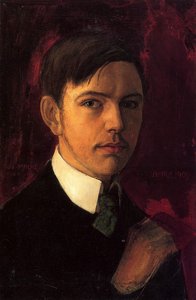
August Macke
1887 - 1914 , Allemagne
L'essentiel de l'artiste
- Artistes Influents:
- Robert Delaunay
- Wassily Kandinsky
- Franz Marc
- Paul Klee
- Date De Décès: 26 septembre 1914
- Date De Naissance: 3 janvier 1887
- Lieu De Naissance: Meschede, Allemagne
- Mouvement Artistique: Expressionnisme allemand
- Nationalité: Allemande
- Nom Complet: August Macke
- Œuvres Notables:
- Femme avec une veste verte
- Paysage avec des vaches et un chameau
- Jeunes filles se baignant
- La Boutique de Chapeaux
- Türkisches Café
Articles connexes

Ephemeral Visions: Exploring the Artistic Legacy & Contemporary Practice of Watercolor Painting
Explore the captivating world of watercolor painting! Discover its rich history, essential techniques, influential artists & collecting tips. A comprehensive guide for art enthusiasts from OriginalUniqueArt.

Les 10 Chefs-d'œuvre de l'Aquarelle qui ont Révolutionné l'Art | OriginalUniqueArt
Plongez dans l'univers fascinant des 10 chefs-d'œuvre de l'aquarelle qui ont marqué l'histoire de l'art. Découvrez Turner, Monet, Goya et bien d'autres ! Retrouvez ces œuvres emblématiques en reproductions exceptionnelles sur OriginalUniqueArt.com.
Renoir : 25 Chefs-d'œuvre Incontournables – L’Art de la Lumière
Plongez au cœur de l'univers vibrant de Pierre-Auguste Renoir ! Découvrez 25 chefs-d’œuvre emblématiques, explorant la lumière, les couleurs et la joie de vivre. Reproductions d'art de qualité musée sur OriginalUniqueArt.com.
August Macke : Visions expressionnistes d'harmonie et de vie moderne
Explorez l'univers vibrant d'August Macke, figure clé de l'Expressionnisme allemand et du Blaue Reiter. Découvrez son parcours artistique, ses thèmes emblématiques et conseils pour collectionner ses œuvres avec OriginalUniqueArt.

Éphémères Visions : L'Aquarelle, Histoire et Résonance Émotionnelle d'un Art Intemporel
Explorez l'histoire fascinante de l'aquarelle, des origines à nos jours. Découvrez les techniques, les artistes emblématiques et nos conseils d'experts pour collectionner ces œuvres éphémères. OriginalUniqueArt.


