Aperçu en situation
 Partager
 Partager
 Détails
 Guide imprimable

 Télécharger
 Articles similaires
 Radiographie
 Voir le diaporama
 Statistiques
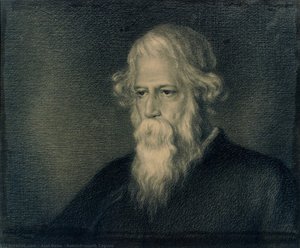
Rabindranath Tagore
 Oil On Canvas
- WallArt
- Contemporary Realism
 1952
1952- 19th Century
 60.0 x 50.0 cm
 Victoria Memorial Hall
 Afficher la suite
L’œuvre d'art présentée sur cette page est protégée par le droit d'auteur, ce qui signifie que nous ne pouvons légalement créer ou vendre de reproduction identique. Cette protection est appliquée en vertu d'accords internationaux tels que la Convention de Berne et par les lois nationales, notamment celles énoncées par le Loi américaine sur le droit d'auteur - Titre 17.
En tant qu'alternative respectueuse et légale, nous proposons des œuvres d'art personnalisées, peintes à la main et inspirées de l'original. Nos artistes talentueux et professionnels étudient avec soin le style, l'ambiance et l'essence artistique de l'œuvre originale pour créer une pièce nouvelle et unique qui évoque la même émotion — tout en restant une création originale en soi.
Cette méthode est pleinement conforme aux réglementations sur le droit d'auteur car elle ne repose pas sur la copie ou la duplication de l'œuvre protégée. Il s'agit plutôt d'une réinterprétation créative — une nouvelle peinture qui s'inspire de l'original sans pour autant lui être identique.
Reproduction à l'huile faite à la main
Huile sur toile peinte à la main, avec cadre et dimensions personnalisés, réalisée sur commande par nos artistes. ( Passer au format impression Passer au format image numérique)




P118B €10

P118H €10

P118W €10

P438Z €10

P508JH €12

P508YH €12

P805H €10

P805Z €10

P919BZ €10

P919G €10

P919XJ €10

P959ZH €10

P968JZ €12

W106C €8

W218G €10

W218JH €8

W218Y €10

W307PJ €10

W316G €10

W316PJ €8

W316Y €10

W398PJ €8

W4111J €10

W500HY €15

W500JH €15

W692G €12

W849H €8

W940BG €15

W953PJ €8




Choisissez parmi nos formats prédéfinis qui respectent les proportions originales de l’œuvre.

Saisissez la largeur et la hauteur souhaitées, pour s'adapter à votre cadre ou à votre mur. Cette œuvre est peinte à la main ; ainsi, pour un format de forme différente, l'artiste peut peindre un peu plus autour du tableau ou réduire légèrement les bords — c'est vous qui choisissez. Nous vous envoyons une maquette numérique pour approbation avant que la peinture ne commence. L'image présentée sur cette page ne reflète pas le résultat réel — seule la maquette le fait.
Après la commande, l’équipe OriginalUniqueArt.com contactera le client par e-mail pour recueillir ses instructions et lui fournira une maquette d’aperçu
Livraison dans le monde entier () en 3 à 4 semaines au lieu des 5 semaines habituelles. (25 octobre). Aucun compromis sur la qualité.

Livraison express gratuite dans le monde entier

Toile de lin de haute qualité

Assurance transport complète

Garantie de remboursement des droits de douane

Garantie de fidélité des couleurs

Garantie de retour de 100 jours (uniquement en cas de défaut)

Garantie de remboursement à 100%

Tarifs dégressifs sur quantité
 L'option verre n'est disponible que pour les dimensions inférieures à 110 cm.

Rabindranath Tagore
Technique de reproduction
Format de la reproduction
-


Prix total final
€ 263
A Portrait of Intellectual Grace: Rabindranath Tagore by Atul Basu
This evocative portrait of Rabindranath Tagore, rendered in 1952 by the esteemed Indian painter Atul Basu, transcends a simple likeness; it’s an embodiment of the poet and philosopher's profound intellect and contemplative spirit. Painted during a pivotal period of his life – shortly after receiving the Nobel Prize for Literature – the artwork captures Tagore not merely as a celebrated figure, but as a man steeped in wisdom and perhaps a touch of melancholy, qualities that resonate deeply within the painting’s carefully constructed composition.
Artistic Technique and Historical Context
- Style & Medium: The work exemplifies representational portraiture executed with a mastery of oil paint on canvas. Basu's brushwork, subtly visible in the photograph, reveals a traditional technique rooted in post-impressionist influences, particularly evident in Walter Sickert’s approach to capturing human emotion through light and shadow.
- Artist Background: Atul Basu (1898-1977), born in Mymensingh, India, was a significant figure in the development of Indian modern art. His training at the Royal Academy in London exposed him to European artistic trends while firmly grounding his work within an Eastern sensibility. He played a crucial role in establishing and directing institutions like the Indian School of Oriental Art, contributing significantly to the preservation and promotion of traditional Indian artistic values.
- Historical Significance: Created in 1952, the painting reflects a moment of international recognition for Tagore’s literary achievements, solidifying his place as one of the world's most influential thinkers and writers. The artwork serves as a visual testament to this legacy.
Compositional Elements and Symbolism
The portrait adheres to a classic bust-length format, centering Tagore’s face and upper torso – a deliberate choice that fosters a direct connection with the viewer. The dark, indistinct background serves to heighten the subject's presence, emphasizing his dignified gaze. Notably, Tagore is depicted in a red robe, a color often associated with spirituality and authority within Indian traditions, subtly reinforcing his role as a respected intellectual leader and perhaps hinting at his Upanishadic ideals of education.
Color Palette and Emotional Impact
Basu’s masterful use of warm tones – reds, yellows, and whites – creates an atmosphere of serenity and contemplation. The soft, diffused lighting eliminates harsh shadows, further contributing to the painting's sense of wisdom and introspection. Tagore’s expression, a blend of intelligence and melancholy, invites viewers to contemplate the complexities of human thought and experience. The layering of colors within the robe adds depth and texture, enhancing the overall visual richness of the piece.
Dimensions and Materials
This reproduction is presented in a substantial 60 x 50 cm format, ensuring that it will make a significant statement within any interior space. The artwork is meticulously crafted using high-quality materials to faithfully replicate the original’s texture and color depth, offering collectors and art enthusiasts alike an authentic representation of Atul Basu's remarkable talent.
Questions et réponses
Où et pour quel usage l'œuvre "Rabindranath Tagore" est-elle recommandée ?
«Rabindranath Tagore» de Atul Basu est recommandé pour Reflective, idéalement dans une Living Room. L'usage et l'espace permettent de déterminer où placer une reproduction.
Comment puis-je prévisualiser une reproduction de «Rabindranath Tagore» de Atul Basu ?
La page Aperçu de « Rabindranath Tagore » vous permet de prévisualiser l'œuvre avant de passer commande.
Quelle est l'intensité des couleurs dans «Rabindranath Tagore» de Atul Basu ?
L'intensité des couleurs de « Rabindranath Tagore » est Monochromatic. L'intensité décrit la force avec laquelle les couleurs apparaissent.
Biographie de l'artiste
premières années et formation
atul basu, peintre indien de renom, vit le jour le 22 février 1898 à mymensingh, au sein de la présidence du bengale de l'époque. son enfance dans la ville de mymensingh posa les jalons de ses futures aspirations artistiques. son parcours éducatif débuta au sein de la branche de mymensingh du national council of education, avant de se poursuivre par des études approfondies à la jubilee art academy de kolkata.carrière et influences
grâce à une bourse obtenue auprès de l'université de calcutta, basu s'envola pour étudier l'art à la royal academy de Londres (1924-1926), où il fut profondément marqué par le post-impressionniste walter sickert. fait remarquable de sa carrière, basu refusa une invitation prestigieuse visant à décorer le pavillon de l'exposition de l'empire britannique, témoignant ainsi d'un engagement indéfectible envers sa propre vision artistique. cofondateur de l'indian school of oriental art en 1921 aux côtés de bhabani charan laha, il devint plus tard le directeur du government college of art & craft. ses œuvres emblématiques, telles que sphinx (huile sur contreplaqué) et autoportrait (1945), illustrent avec brio sa maîtrise magistrale de la couleur à l'huile.œuvres notables et collections
* sphinx (huile sur contreplaqué) * autoportrait (1945) * des portraits issus des collections originales du château de windsor et du palais de buckingham, commandés par le gouvernement indien- kiran nadar museum of art (knma)
- national gallery of modern art
- indian museum
- parliament house, new delhi
- raj bhavan, kolkata
distinctions et reconnaissance
basu fut honoré par l'obtention d'un doctorat (d.litt) de la rabindra bharati university de calcutta en 1970. découvrez plus d'œuvres d'atul basu sur OriginalUniqueArt.com : * atul basu | œuvres * la collection vera bluemner kouba à la national gallery of modern art, inde explorez d'autres artistes indiens et leurs œuvres sur OriginalUniqueArt.com : * pathik sahoo | artiste * pierre-jean david d'angers: émile-jean-horace vernet (1789-1863)
Atul Basu
1898 - 1977 , Inde
En bref
- Artistic Movement Or Style: Art graphique, Estampe
- Artists Or Movements Influenced By This Artist:
- Rene Magritte
- Martin Gardner
- Artists Who Influenced This Artist:
- George Arnold Escher
- Frank Reaugh
- Date Of Birth: 17 juin 1898
- Date Of Death: 27 mars 1972
- Full Name: Maurits Cornelis Escher
- Nationality: Néerlandais
- Notable Artworks:
- Main avec sphère réfléchissante
- Mains dessinantes
- Relativité
- Cascade
- Ascendant et descendant
- Place Of Birth: Leeuwarden, Pays-Bas
Articles connexes
George Catlin: Witnessing & Representing Indigenous Life on the American Frontier
Explore the captivating art of George Catlin, renowned for his vivid portraits & landscapes documenting Native American life on the frontier. Discover a vanishing world through stunning paintings and historical context.
Joseph Henry Sharp: Capturing the Spirit of the Plains – Life, Art & Legacy
Explore the life & art of Joseph Henry Sharp, a founding member of the Taos Society of Artists renowned for his realistic depictions of Native American culture and Western landscapes. Discover his legacy with OriginalUniqueArt.

Panoramic Visions of Empire: The Daniells’ Artistic Collaboration & Legacy
Explore the captivating 'Oriental Scenery' by Thomas & William Daniell. Discover their pioneering aquatint prints of India, imperial context, artistic collaboration, and lasting legacy. A deep dive for history lovers.
Shadow Catcher: Edward S. Curtis & the Ethnographic Portraiture of a Vanishing West
Explore the life & work of Edward S. Curtis, the 'Shadow Catcher,' and his groundbreaking photographic documentation of Native American cultures. Discover iconic images from *The North American Indian* and a critical look at his lasting legacy.

Raja Ravi Varma: Bridging Tradition & Modernity in 19th-Century Indian Art
Explore the life & art of Raja Ravi Varma, a pioneer who fused European techniques with Indian iconography. Discover his iconic paintings, lasting legacy, and influence on modern Indian art at OriginalUniqueArt.