

 Aperçu en situation
 Partager
 Partager
 Détails
 Guide imprimable

 Télécharger
 Articles similaires
 Radiographie
 Voir le diaporama
 Statistiques
A Sycamore Tree, Plaaterkill Clove (also known as The Sycamore, Kaaterskill Clove)


 Afficher la suite
Reproduction à l'huile faite à la main
Huile sur toile peinte à la main, avec cadre et dimensions personnalisés, réalisée sur commande par nos artistes. ( Passer au format impression Passer au format image numérique)




P118B $10

P118H $10

P118W $10

P438Z $10

P508JH $12

P508YH $12

P805H $10

P805Z $10

P919BZ $10

P919G $10

P919XJ $10

P959ZH $10

P968JZ $12

W106C $8

W218G $10

W218JH $8

W218Y $10

W307PJ $10

W316G $10

W316PJ $8

W316Y $10

W398PJ $8

W4111J $10

W500HY $15

W500JH $15

W692G $12

W849H $8

W940BG $15

W953PJ $8




Choisissez parmi nos formats prédéfinis qui respectent les proportions originales de l’œuvre.

Vous pouvez saisir vos propres dimensions pour l'adapter à un cadre ou à un espace spécifique. Si la taille sélectionnée ne correspond pas aux proportions de l'image d'origine, nous recadrerons l'œuvre ou prolongerons la peinture avec des éléments peints à la main supplémentaires. Une maquette numérique vous sera envoyée pour approbation avant le début de la production.
Veuillez noter que l'aperçu à l'écran ne reflète pas le recadrage ou l'extension réels. Seule la maquette montrera fidèlement la composition finale.
Bien que des tailles personnalisées soient disponibles, nous vous recommandons de sélectionner une dimension dans la liste prédéfinie afin de préserver les proportions d'origine.
Après la commande, l’équipe OriginalUniqueArt.com contactera le client par e-mail pour recueillir ses instructions et lui fournira une maquette d’aperçu
Livraison dans le monde entier () en 3 à 4 semaines au lieu des 5 semaines habituelles. (25 septembre). Aucun compromis sur la qualité.

Livraison express gratuite dans le monde entier

Toile de lin de haute qualité

Assurance transport complète

Garantie de remboursement des droits de douane

Garantie de fidélité des couleurs

Garantie de retour de 100 jours (uniquement en cas de défaut)

Garantie de remboursement à 100%

Tarifs dégressifs sur quantité
 L'option verre n'est disponible que pour les dimensions inférieures à 110 cm.

A Sycamore Tree, Plaaterkill Clove (also known as The Sycamore, Kaaterskill Clove)
Technique de reproduction
Format de la reproduction
-


Prix total final
$ 300
The Enduring Majesty of American Nature
To gaze upon Asher Brown Durand's A Sycamore Tree, Plaaterkill Clove is to be transported across time and space, standing at the threshold of a sublime moment in the American wilderness. This painting, executed in 1858, transcends mere depiction; it is an eloquent meditation on nature’s enduring power and the human spirit's yearning for its embrace. Durand, whose early life was steeped in the meticulous craft of engraving, channeled that same profound attention to detail into his canvases, allowing every moss-covered curve of the sycamore trunk and every distant fold of the mountain range to speak volumes. The composition immediately draws the eye to the foreground, where the magnificent sycamore stands as a sentinel—its gnarled, textured bark whispering tales of decades spent weathering seasons unknown.
A Masterclass in Landscape Technique
Durand’s handling of light and atmosphere is nothing short of breathtaking. He employs color not just to record what was seen, but to evoke how it felt to be there—the cool dampness rising from the valley floor, the golden slant of afternoon sun filtering through the canopy. Observe the depth achieved in the background; the receding mountains seem to dissolve into a hazy blue distance, a masterful use of aerial perspective that gives the scene an almost palpable sense of vastness and tranquility. The inclusion of figures, small and contemplative near the right side, serves not as a focal point, but rather as a crucial measure of scale, reminding us just how immense and overwhelming this natural cathedral truly is.
Symbolism and the American Sublime
More than just a beautiful vista, A Sycamore Tree speaks to the Romantic ideal of the American Sublime. For Durand, nature was not merely scenery; it was a moral teacher and a repository of spiritual truth. The sycamore itself, with its venerable appearance, often symbolizes resilience and deep roots—a steadfast presence against the flux of time. Standing before such grandeur, as the distant figure seems to do, one is prompted toward introspection. It suggests that true understanding and peace are found not in the clamor of civilization, but in quiet communion with the enduring rhythms of the earth.
Bringing the Wilderness Home
For those who wish to capture this profound sense of pastoral grandeur within the intimacy of a modern dwelling, a high-quality reproduction of this work offers an unparalleled connection to art history and natural beauty. Owning such a piece is to curate a sanctuary; it transforms a wall into a window overlooking Plaaterkill Clove itself. It allows the viewer, daily, to pause, breathe deeply, and reconnect with the quiet majesty that Asher Brown Durand so brilliantly preserved for us over a century ago.
Biographie de l'artiste
Premières années et carrière
Asher Brown Durand, peintre américain de renom, est né le 19 août 1796 à New York City. Il était le fils d'un graveur de cartes à succès, ce qui lui a permis une exposition précoce au monde de l’art et de la gravure. Le parcours artistique de Durand a commencé par un apprentissage dans l'atelier de son père, avant de se tourner vers la peinture à l'huile.Style artistique et influences
Le travail de Durand se caractérise par son insistance sur les paysages et la nature sauvage américaine. Il fut l’un des premiers membres de l’école du fleuve Hudson, un groupe d'artistes connus pour leurs représentations romantiques et atmosphériques des paysages américains. Cette association n’a pas seulement influencé son style, mais lui a également offert la possibilité d’explorer la beauté intacte des États-Unis.Œuvres notables et expositions
- Paysage, composition, forenoon, exposé au Musée d’Art de la Nouvelle-Orléans, met en valeur la maîtrise de Durand dans la capture de l’essence sereine du paysage américain. - Une autre œuvre notable, Cagots dans les rapides, rivière Saguenay, bien qu’elle ne soit pas exclusivement de Durand, reflète la fascination de l'époque pour la nature sauvage et ses défis.Héritage et impact
Les contributions de Durand à l'art américain sont multiples. Il a non seulement contribué à établir l'école du fleuve Hudson, mais il a également joué un rôle crucial dans la popularisation de la peinture de paysage comme genre artistique. Son travail continue d’inspirer les artistes et les amateurs d’art, offrant un aperçu de la beauté immaculée de l’Amérique du XIXe siècle.- Mouvement artistique clé : École du fleuve Hudson
- Œuvres notables : Paysage, composition, forenoon ; Cagots dans les rapides, rivière Saguenay (collaborative)
- Musées présentant son œuvre : Musée d'Art de la Nouvelle-Orléans, entre autres
- Influences artistiques : Thomas Cole, La tragédie de Willey et la nature sauvage américaine.
Exploration supplémentaire sur OriginalUniqueArt.com
- Pour en savoir plus sur l’œuvre d’Asher Brown Durand, visitez son profil à https://OriginalUniqueArt.com/@/asherbrowndurand - Explorez l'école du fleuve Hudson et son influence sur l'art américain : le musée d’art de la Nouvelle-Orléans, aux États-Unis - un guide complet
Asher Brown Durand
1796 - 1886 , États-Unis d'Amérique
En bref
- Artistes Influents: ['Thomas Cole']
- Date De Décès: 17 septembre 1886
- Date De Naissance: 21 août 1796
- Lieu De Naissance: Maplewood, États-Unis
- Mouvement Artistique: École du fleuve Hudson
- Nationalité: Américaine
- Nom Complet: Asher Brown Durand
- Œuvres Notables:
- Landscape, Composition, Forenoon
- Canoes in Rapids, Saguenay River
Articles similaires
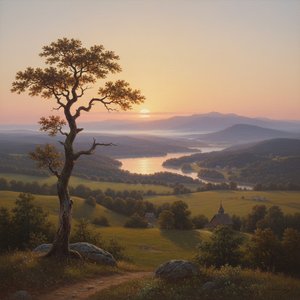
Asher Brown Durand: Luminism, Landscape & the American Ideal – A Comprehensive Exploration
Explore the life & art of Asher Brown Durand, a founding member of the Hudson River School. Discover his masterful landscapes, Luminist techniques, and lasting impact on American painting. Learn about key works like 'Kindred Spirits' & collecting Durand today.

Arboreal Echoes: A Historical & Artistic Exploration of Trees in Painting
Explore the rich history of trees in painting! Discover symbolism, Romantic masterpieces by Caspar David Friedrich & beyond. A curated journey for art enthusiasts.

Les 10 Chefs-d'œuvre du Paysage Romantique : Artistes et Décor d'Intérieur
Plongez dans l'émotion du Romantisme avec les 10 plus beaux paysages de Friedrich, Turner & Delacroix. Découvrez leur histoire et trouvez l'inspiration déco idéale sur OriginalUniqueArt.com !
Arboreal Echoes: A Historical & Artistic Exploration of Trees in Painting
Explore the rich history of trees in painting! Discover symbolism, Romantic masterpieces by Caspar David Friedrich & beyond. A curated journey for art enthusiasts.

Constable : Les 25 Chefs-d'Œuvre du Maître Anglais | OriginalUniqueArt
Plongez dans l'univers de John Constable avec les 25 œuvres incontournables du maître anglais. Découvrez l'histoire, la technique et l'émotion derrière ses paysages romantiques. Reproductions de qualité muséale sur OriginalUniqueArt.com.


